AVAILABLE 24x7
888.662.2724
AVAILABLE 24x7
(888) 66CARAH
Fast & Accurate
Request A Quote

Quick Response
Chat With Us



Thank you for your interest in this resource!
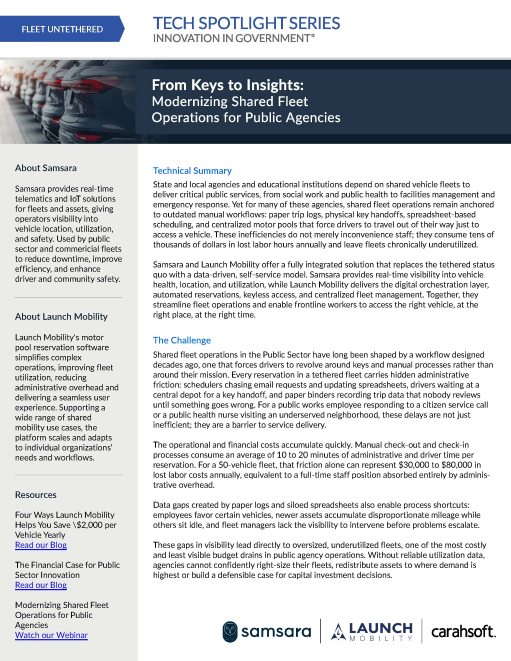
State and local agencies and educational institutions depend on shared vehicle fleets to deliver critical public services, from social work and public health to facilities management and emergency response. Yet for many of these agencies, shared fleet operations remain anchored to outdated manual workflows: paper trip logs, physical key handoffs, spreadsheet-based scheduling, and centralized motor pools that force drivers to travel out of their way just to access a vehicle.