


Modernizing Federal Infrastructure with Compliant Private Cloud
Mission demands, security mandates, and budget pressures continue to evolve. Hybrid operating models can provide greater control, cost predictability, and flexibility across environments.
A secure private cloud model built on Dell Technologies infrastructure, integrated with enterprise virtualization platforms, and deployed within the FedHIVE FedRAMP High (Class D), IL4, and IL5 security boundary.
Rethinking Infrastructure Deployment in a Compliance-First Context
Traditional cloud migration strategies often require agencies to retrofit compliance requirements onto infrastructure after deployment or adapt to rigid architectures. In contrast, this model introduces a pre-authorized environment where security and compliance are inherent to the design.
Through collaboration with Dell Technologies and FedHIVE, Carahsoft delivers an infrastructure ecosystem that integrates:
- Enterprise-grade Dell compute, storage, and networking capabilities
- Virtualization and cloud orchestration layers
- A hardened security boundary aligned to FedRAMP High, IL4, and IL5
FedHIVE acts as the governing compliance framework, allowing agencies to deploy workloads into a validated environment without rebuilding controls or reengineering architectures for accreditation.
This fundamentally changes how agencies approach infrastructure—shifting from compliance as a burden to compliance as an embedded feature.
FAQs
-
What is the Modern Private Cloud?
Storage and Compute secured at FedRAMP High (D), IL4 & IL5. This solution can connect to on prem environments and hyperscalers (AWS, AZURE,GCP). All connections occur at the necessary security level allowing agencies to be “cloud-smart.”
-
Carahsoft has a process for creating FedRAMP certified hardware?
Yes. Through FedHIVE’s authorized boundary, Dell PowerStore, PowerEdge, and PowerSwitch have been assessed and approved at FedRAMP High (D) IL4 & IL5
-
What is FedHIVE?
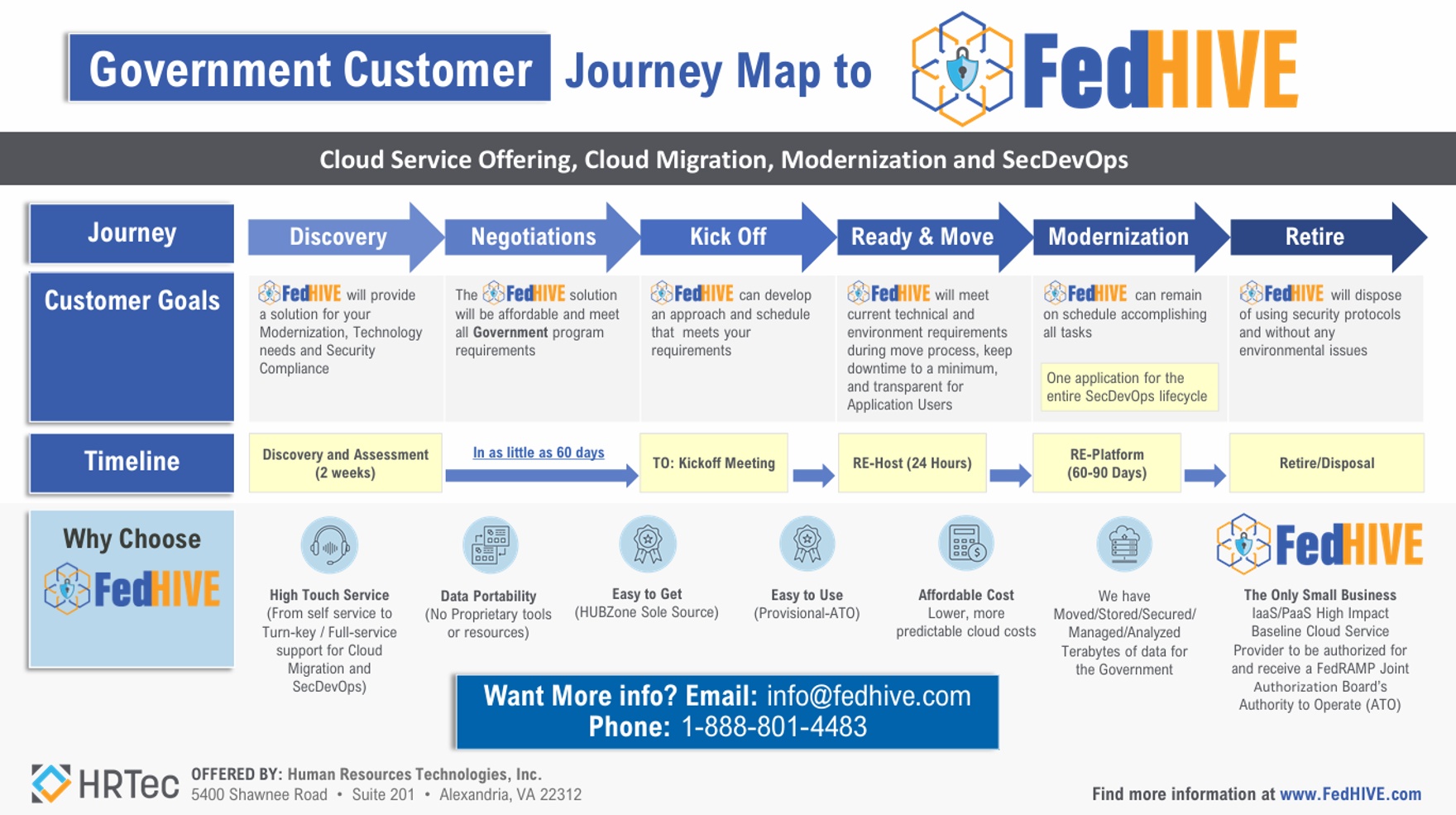
FedHIVE (Federal High Impact Virtualized Environment) is a FedRAMP High-authorized boundary encompassing SaaS, PaaS, and IaaS. It enables government agencies and contractors to securely host applications and data while meeting stringent federal compliance requirements.
-
Is FedHIVE the same thing as FedRAMP?
No. FedRAMP is the federal government’s standardized security authorization framework. FedHIVE is a service provider that has achieved a FedRAMP High authorization — meaning its environment has been independently validated to meet the government’s most rigorous security standards across SaaS, PaaS, and IaaS service models.
-
What is FedHIVE’s role in the process?
FedHIVE owns and operates the FedRAMP-authorized boundary. They manage security controls, continuous monitoring, and compliance documentation required to maintain authorization. When the hardware is deployed within this boundary, it inherits FedHIVE’s authorization — eliminating the need for vendors or agencies to pursue their own independent FedRAMP ATO.
Agencies can trust that the Modern Private Cloud implements all required security controls and continuous monitoring as mandated by FedRAMP and DoW. In practical terms, using the Modern Private Cloud allows government customers to inherit this strong security baseline rather than starting from scratch. The result is that agencies and their vendors can more easily meet federal security standards (FISMA, NIST, FedRAMP, DoD SRG).
-
When I purchase the Modern Private Cloud, how long does it take to be authorized?
Deployment Model Timeline Modern Private Cloud in FedHIVE Co-location Authorized and secured as soon as the equipment is deployed and running Modern Private Cloud in your data center ~90 days DIY 1-2 years -
Can the equipment scale after initial deployment?
Yes, now that the hardware has been added to FedHIVE’s boundary additional capacity can be seamlessly added without delay — a “do once, use many” approach. When installed in a FedHIVE Colo, the equipment is FedRAMP High, DoD IL4, or DoD IL5 certified — depending on customer need — as soon as it is installed and running. No additional Significant Change Request (SCR) process is required.
-
What Deployment Models are Supported?
Three models: (1) FedHIVE Colo (Equinix) fastest deployment (2) Customer-Owned Data Center on-site at agency; (3) Hybrid mix of colo, on-prem, and hyperscaler connectivity.
-
Is continuous monitoring included?
Yes. FedHIVE operates a 24/7/365 continuous monitoring program with an integrated SOC. Automated daily, weekly, and monthly monitoring results are reported to the authorizing body on a regular basis.