


Secure AI Acceleration Requires Microsegmentation
The most recent Executive Order 14409 (Promoting Advanced Artificial Intelligence Innovation and Security) underscores the Administration’s drive for AI innovation and security across federal systems.
However, AI-based attacks have changed the rules. AI models can accelerate the kill chain from vulnerability discovery to exploitation, chaining together vulnerabilities faster than human teams can respond.
Once inside, AI agents can run reconnaissance and move laterally across workloads, identities, and environments within minutes.
Govern What AI Agents Can Reach
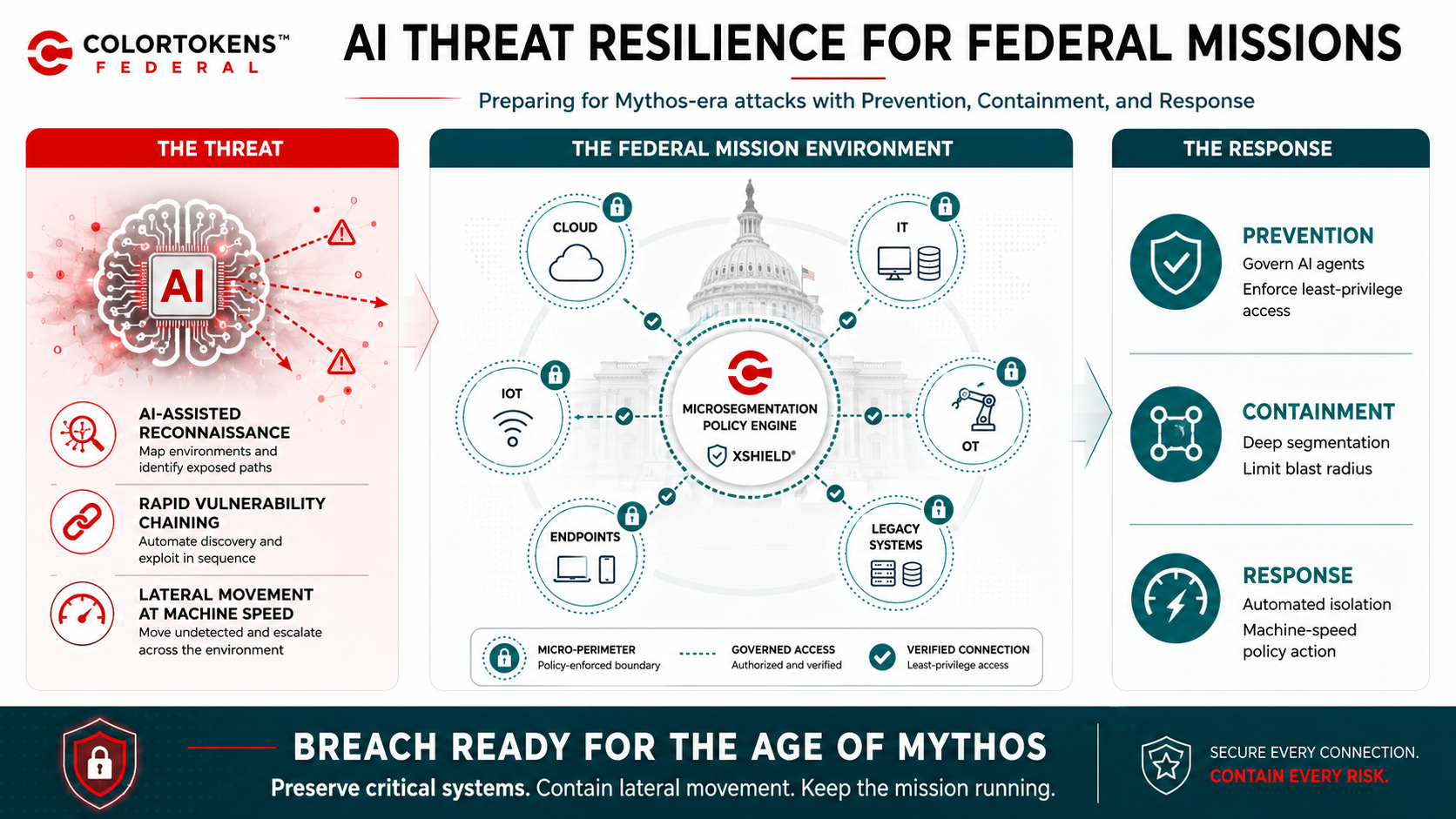
Fast, secure federal AI adoption depends on more than approving tools. Agencies need to safely connect AI agents, automated workflows, service accounts, applications, APIs, data, and mission infrastructure without creating broad internal exposure.
ColorTokens helps agencies define, simulate, and enforce micro-perimeters that support secure AI acceleration.
AI Agents Create a New Access Problem, Microsegmentation Defeats It
AI agents, automated workflows, service accounts, and machine-to-machine processes need access to systems in order to do useful work. But if that access is too broad, a compromised or misdirected actor can reach far more than intended.
Identity helps agencies know who or what the actor is. Microsegmentation governs what that actor can reach.
Prevention and Patching Are Not Enough for AI-Era Resilience
AI adoption increases the need for containment-first cyber resilience. Agencies will continue to need vulnerability management, patching, and identity controls, but those controls cannot fully eliminate exposure or prevent every misuse.
ColorTokens helps agencies limit the blast radius by creating micro-perimeters around applications, workloads, data, APIs, and infrastructure that AI-connected actors may need to access.
A Practical Model for Secure AI Acceleration
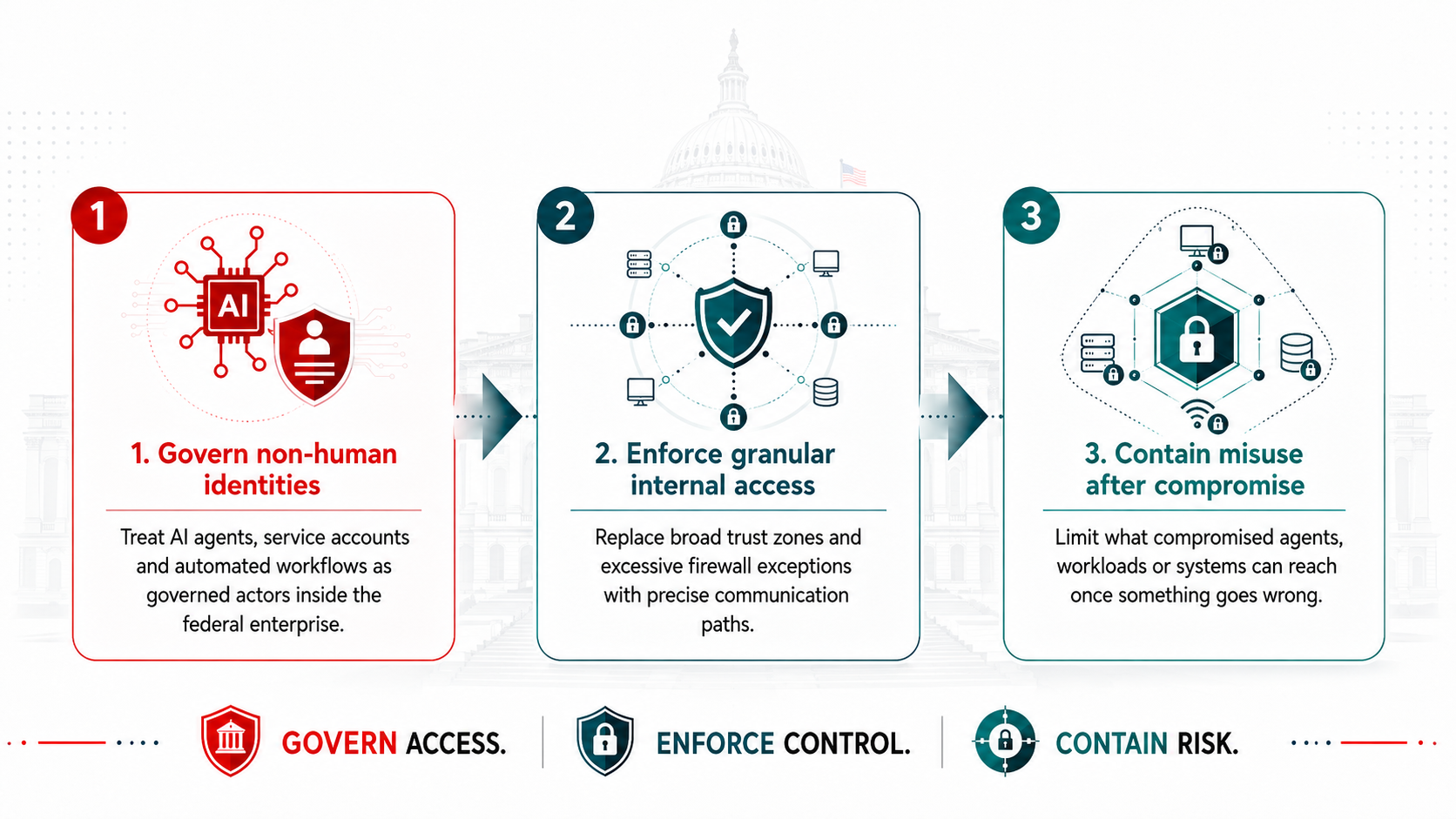
How ColorTokens Supports the Model
ColorTokens Xshield helps agencies visualize communication paths, define least-privilege policies, simulate enforcement, and progressively contain risk across IT, OT, IoT, cloud, container, endpoint, and legacy environments.
This gives agencies a practical control layer for secure AI adoption: AI can operate where it is approved, but broad internal reach is constrained.
Build Cyber Confidence for AI Adoption
Secure AI adoption requires more than approving tools. It requires internal controls that limit what agents, workflows, and connected systems can reach.