Smart Guarding: How AI can be Used to Enhance Vacant Building Security

After 2020, the landscape of corporate real estate changed dramatically. Companies across multiple sectors, including technology, transitioned from working in office to either hybrid or totally remote models. Vacancy rates on corporate campuses increased to 15-20%, opening companies up to a multitude of liabilities and operational challenges. Artificial intelligence (AI) has brought a new edge to vacant building security. Smart guarding and solar guards elevate the security posture of vacant buildings, defend corporate assets and subsequently deliver a Return on Investment (ROI) through effective security measures.

Risks of Vacant Building Stewardship

Vacant buildings come with a series of unique risks to the company that either owns or leases the building. These locations are particularly attractive for criminal activity, especially trespassing and vandalism. Companies also face other risks such as copper theft and squatting that result in higher insurance claims, causing rising premiums. Further challenges come from the range in potential responses from law enforcement. The crime rate in the area will greatly affect how quickly police respond to the call, or whether they will respond at all if there is not an active incident.

Traditional security models for vacant buildings rely heavily on human patrols and come with their own operational drawbacks. A commonly used term in security, “warm bodyguards,” describes guards that are physically present but only do the bare minimum required to complete the job; in other words, these guards are just a warm body whose physical presence alone is deemed to be enough to deter criminal activity. Depending on the size and scope of the campus, these security measures can cost up to $25,000 per month. The ROI is negligible at best, and companies are often left with an expensive yet ineffective security protocol.

With property vacancy on the rise, companies need a solution that is cost effective but does not sacrifice protection or increase their risk profile. That solution lies in the integration of cutting-edge technology with human security.

The Modern Security Guard: Smart Guarding and Solar Guard

Prior to the existence of AI, the Silicon Valley Model sought to enhance building security by combining electronic access control in a building with a fleshed out in-person security protocol. This gives companies the opportunity to employ security guards with relevant prior experience, such as ex-law enforcement and ex-military members, who have effective communication and customer support skills. The key to success is a combination of the right people on site and the proper technological processes in place.

Sentry AI’s Smart Guarding takes this approach a step further by integrating AI agents into the security protocols. A various range of sensors are installed across the building. These can include:

  • Cameras
  • Microphones
  • Motion sensors
  • Turnstiles
  • Fire detection (smoke detectors, heat detectors, etc.)

With the number of sensors that exist in a singular building, a Security Operations Center (SOC) analyst can get easily overwhelmed by the sheer volume of alerts. An AI agent established at the core of this alert system can absorb the information, interpret the incoming data and pass on the relevant security alerts to the SOC analysts.

The AI agent itself can also be proactive and mitigate ongoing security risks. The AI can impersonate a human guard, using any language, tone of voice or even slang if required. By voicing details such as the intruder’s clothing or appearance, the agent creates the impression of an on-site security guard without actually engaging physically with the intruder. After announcing a security presence, the agent will tell the intruder to leave and threaten police intervention if they do not. The agent can also activate sirens and lights to trigger a flight response from the intruder. This is all managed without human intervention.

Periodically, companies need to install a security solution that does not rely on the network, property owner or landlord. Sentry AI has the Solar Guard solution for these exact situations. The Solar Guard is a self-contained mobile unit with a tall mast and several solar panels. Energy collected throughout the day is stored in batteries contained within the unit to power it throughout the night or in adverse weather conditions. At the top of the mast, the Solar Guard has lights, speakers, a cellular modem and dual lens cameras that give a 360-degree field of vision.

As vacancy rates in corporate buildings continue to climb, companies continue to search for new impactful and cost-effective ways to improve their security posture in their buildings. AI-powered security protocols such as Solar Guard and Smart Guarding decrease the risk to personnel and cut through alert fatigue. By combining modern technological advancements with knowledgeable SOC analysts, companies gain ROI and protect their assets when personnel are not present.

To discover how Smart Guarding can elevate security in your vacant facilities, watch Sentry AI’s webinar, “Using AI to Protect Vacant Facilities.”

Carahsoft Technology Corp. is The Trusted Government IT Solutions Provider, supporting Public Sector organizations across Federal, State and Local Government agencies and Education and Healthcare markets. As the Master Government Aggregator for our vendor partners, including Sentry AI, we deliver solutions for Geospatial, Cybersecurity, MultiCloud, DevSecOps, Artificial Intelligence, Customer Experience and Engagement, Open Source and more. Working with resellers, systems integrators and consultants, our sales and marketing teams provide industry leading IT products, services and training through hundreds of contract vehicles. Explore the Carahsoft Blog to learn more about the latest trends in Government technology markets and solutions, as well as Carahsoft’s ecosystem of partner thought-leaders.

Securing AI Adoption in Government: From Mandates to Implementation

One of today’s top trends is artificial intelligence (AI), specifically how the Public Sector can adopt it while maintaining the security, governance and oversight essential for mission-critical operations. With AI jumping from number three to one on Federal Chief Information Officers’ (CIO) priority lists and 80% of CIOs under explicit cost savings mandates, the question is no longer whether to deploy AI but how to do so securely at scale.

The recent overhaul of the Federal Acquisition Regulation (FAR) marks the most significant rewrite in over 40 years, fundamentally shifting how Federal agencies operate and procure technology. As generative AI (GenAI) deployments move into mission-critical environments, agencies need practical frameworks that balance speed with verification.

Moving From Speed to Velocity

As The Public Sector enters the age of AI, with $4 trillion in Private Sector investment in data centers, agencies face a fundamental design challenge: design AI systems that adapt to human workflows rather than forcing humans to adapt to systems. This distinction matters most in Government and defense contexts where lives depend on maintaining human oversight for deliberate decisions.

The Department of War’s (DoW) Acquisition Transformation Strategy (ATS) offers a proven model of buying outcomes in increments. Instead of funding calendar time through traditional program structures, agencies should fund missions through portfolios that deliver outcomes in weeks or months. This approach structures procurement in modular increments that integrate with evolving architecture while funding capability and delivery, not timelines.

Velocity differs from speed in its directional precision. Agencies can accelerate procurement through fast-lane processes while maintaining governance through evidence gates that verify operational performance, user adoption, cyber risk posture and sustainment realities. This framework preserves ethical obligations while delivering measurable results.

Prerequisites for Secure AI Implementation

Before deploying AI tools in production environments, agencies need foundational elements in place:

GitLab, Securing AI Adoption in Government blog, embedded image, 2026

Policy frameworks that define where AI can be a part of the process and establish clear boundaries for all personnel. Training and enablement programs ensure teams understand governance requirements and security policies. Several Federal agencies have already created AI centers of excellence to help establish standards and create processes around how they are implementing AI.

End-to-end visibility across the entire software delivery process enables agencies to track where AI agents operate and what actions they perform. Without comprehensive visibility, governance becomes theoretical rather than operational.

Contextual accuracy determines output quality, AI systems deliver accurate, usable results only when provided with the right context, making data quality and integration critical prerequisites.

Built-in guardrails must exist before AI implementation. Security scans on every code change and controls preventing critical vulnerabilities from merging into production branches become essential as agencies move into the agentic AI era.

Practical AI Use Cases That Deliver Value

GitLab’s most recent DevSecOps survey reports that AI currently handles about 25% of the work in Public Sector organizations, with leadership targeting 50% automation. The most successful implementations focus on code generation, testing and documentation, areas where AI delivers immediate, measurable impacts.

Federal customers using GitLab’s AI capabilities report significant efficiency gains in code review processes. AI-powered first-pass reviews reduce time while maintaining quality standards. Test generation and legacy code modernization have proven particularly effective.

Compliance automation represents an emerging high-value use case. GitLab teams are developing compliance agents that access code repositories, Continuous Integration/Continuous Deployment (CI/CD) pipelines and security vulnerability data to automatically populate Security Technical Implementation Guide (STIG) checklists. Security team leaders review and adjust outputs as necessary, reducing administrative burden while allowing teams to focus on strengthening application security posture.

Prioritizing AI Governance Frameworks

With 35% of Public Sector professionals using unofficial AI tools at work, agencies governance frameworks that address shadow IT risks without stifling innovation. A risk-based approach identifies high-impact systems within critical infrastructure and implements controls that prevent systemic failures.

Effective governance prioritizes AI adoption around innovation while maintaining public trust. Agencies must identify high-impact areas and understand system interdependencies, as more systems connect, understanding how one system impacts another becomes essential for appropriate segmentation and risk management.

Building on Secure Foundations

Agencies cannot build on a shaky foundation. Federal AI and cybersecurity strategies must align around building responsibility into the process from the start. This requires shifting from governing static systems to engineering systems that can evolve safely, integrating assurances, accountability and human judgment as foundational design constraints instead of downstream checks.

Before deploying advanced AI capabilities, agencies should strengthen foundational practices, standardizing workflows, implementing security by design and ensuring basic guardrails are in place. AI cannot compensate for weak foundations in the software development lifecycle. The path forward requires doubling down on fundamentals while strategically adopting AI where it delivers clear value.

To learn more about implementing secure AI solutions, watch GitLab’s full webinar, “Cyber in the AI Era: Building Foundations for Secure Adoption.”

Carahsoft Technology Corp. is The Trusted Government IT Solutions Provider, supporting Public Sector organizations across Federal, State and Local Government agencies and Education and Healthcare markets. As the Master Government Aggregator for our vendor partners, including GitLab, we deliver solutions for Geospatial, Cybersecurity, MultiCloud, DevSecOps, Artificial Intelligence, Customer Experience and Engagement, Open Source and more. Working with resellers, systems integrators and consultants, our sales and marketing teams provide industry leading IT products, services and training through hundreds of contract vehicles. Explore the Carahsoft Blog to learn more about the latest trends in Government technology markets and solutions, as well as Carahsoft’s ecosystem of partner thought-leaders.

10 Healthcare Technology Predictions Shaping 2026 

Carahsoft, The Trusted IT Solutions Provider for the Healthcare Industry™, supports healthcare organizations in their mission to deliver efficient, high-quality care across the enterprise. Our comprehensive portfolio of healthcare solutions addresses critical needs across clinical systems, patient experience, enterprise operations, infrastructure and more. We help healthcare organizations streamline workflows, reduce administrative burden and improve security, maximizing the value of technology investments. As healthcare continues to evolve through regulatory changes, innovation and shifting care delivery models, these 10 trends represent the most significant opportunities and challenges facing the industry in 2026. 

Interoperability: From Compliance Exercise to Strategic Asset 

The 21st Century Cures Act and the Office of the National Coordinator’s (ONC) Health Data, Technology and Interoperability (HTI)-1 Final Rule have pushed standardized Fast Healthcare Interoperability Resources (FHIR)-based Application Programming Interfaces (APIs) and expanded data classes into the market. The Center for Medicare and Medicaid Services’ (CMS) Interoperability and Prior Authorization Final Rule adds pressure on both payers and providers to exchange information seamlessly. In 2026, however, organizations that treated these regulations as checkbox compliance activities will watch competitors turn interoperability into operational advantage. 

Real-time data feeds reduce prior authorization delays. Integration platforms surface insights that drive value-based care arrangements. Data warehouses built for exchange, not just storage, become the foundation for population health management. The early adopters are not just meeting regulatory requirements. They are using data exchange to reduce administrative burden, improve care coordination across settings and unlock revenue opportunities that siloed systems leave on the table.  

The Transparent Use of AI in Healthcare 

In 2026, healthcare leaders will shift from asking should they use AI to how to document and explain it. The HTI-1 Final Rule introduced algorithm transparency requirements: disclosure when artificial intelligence (AI) and machine Learning (ML) algorithms influence clinical decisions. Clinical teams need to understand when AI-driven insights are guiding care recommendations, and patients deserve to know when algorithms influence their treatment plans.  

Regulatory bodies expect organizations to prove their AI tools meet safety and efficiency standards. The organizations that move early on AI governance frameworks, establish clear documentation standards and train clinicians on algorithm literacy will be ready when transparency moves from recommended to required.  

AI will also be used as the voice of healthcare. Call center staff miss operational targets by spending 25 minutes on a single call, AI, however, can make 50+ simultaneous calls while giving each patient the time they need. This capability transforms patient engagement at scale. AI enables follow-up with 100% of discharges, identifying interventions that prevent readmissions and materially impact the quadruple aim: better outcomes, better patient experiences, lower costs and improved clinician satisfaction. 

Telemedicine Shifts to Integrated Care Model 

Telemedicine exploded during the pandemic as an emergency solution. In 2026, leading organizations will stop treating telehealth as a separate channel and start embedding it into the care continuum. Digital front doors guide patients to the right care setting, whether that is video, in-person or asynchronous messaging. 

The technology exists and the patient demand has been proven, but what is missing is the operational maturity to weave virtual care into clinical workflows, reimbursement models and quality measurement. Organizations that integrate this technology into their environments will deliver better access without fracturing the care experience. 

The Revenue Cycle  

Healthcare organizations have been exploring AI in clinical settings (ambient documentation, diagnostic support, care coordination), but the revenue cycle may deliver faster more measurable returns. Prior authorization is a prime target. AI can automate the documentation assembly, predict approval likelihood and flag missing information before submission. 

Coding accuracy is another opportunity. Natural Language Processing (NLP) tools can analyze clinical documentation and suggest appropriate diagnosis and procedure codes, reducing claim denials and capturing revenue that incomplete documentation would lead to. The Chief Financial Officer (CFO) conversation around AI will shift in 2026. Revenue cycle leaders will demonstrate tangible Return on Investment (ROI): fewer denials, faster reimbursement and reduced administrative costs. These wins will fund broader AI adoption across the enterprise. 

Value-Based Care 

The shift to value-based care has been talked about for years, but 2026 is when data infrastructure limitations become impossible to ignore. Value-based contracts require organizations to track outcomes across care settings, measure quality metrics in real time and identify high-risk patients before they become high cost. Siloed Electronic Health Records (EHRs), fragmented data warehouses and manual reporting processes cannot support these requirements. 

Organizations need integration platforms that pull data from multiple sources, such as inpatient, outpatient, lab, pharmacy and claims. They need analytics tools that surface actionable insights, not just dashboards, and they need governance frameworks that ensure data quality and consistency. 

The healthcare organization succeeding in value-based arrangements are not necessarily the largest or best-resourced. They are the ones that invested early in data infrastructure and developed the analytical capabilities to turn information into action. 

Cybersecurity: From IT Issue to Board-Level Risk 

The proposed changes to the Health Insurance Portability and Accountability Act (HIPAA) Security Rule published December 2024 represents a significant escalation in regulatory expectations. If finalized in 2026, covered entities will face requirements for data encryption, Multi-Factor Authentication (MFA), network segmentation, vulnerability scanning and penetration testing. The Department of Health and Human Services’ (DHHS) Cybersecurity Performance Goals provide a voluntary framework, but the proposed HIPAA updates suggest these practices may become mandatory. 

Chief Information Security Officers (CISOs) who can translate technical risks into business impacts will gain influence. Organizations that invest in both technology controls and governance frameworks will build resilience that extends beyond compliance checkboxes. Organizations that elevate cybersecurity to a strategic priority will be better prepared when threats escalate. 

The Digital Front Door 

Patient expectations have changed. People expect to schedule appointments, complete intake forms and access their health information online. The digital front door is more than a patient portal. It is a comprehensive strategy to meet patients where they are. In 2026, leading organizations will integrate digital patient engagement tools into a seamless experience, reducing administrative burden on staff, improving patient access and generating operational efficiencies. 

However, digital tools that do not connect to existing workflows create more problems than they solve. Integration of patient-facing technology with operational systems eliminates duplicate work and improves patient and staff experiences. 

Rural Healthcare Transformation 

The Rural Health Transformation Program represents the most significant Federal investment in rural healthcare infrastructure with $50 billion over five years, starting in 2026. This funding creates opportunities for technology investments that rural hospitals and health systems, particularly patient-facing solutions, technical assistance for IT and cybersecurity and innovative care models that often depend on digital tools. 

Rural organizations that prepare strong applications will access resources that can transform their operational capabilities. However, rural organizations often lack the IT staff, strategic planning capacity and vendor relationships that larger systems have. The organizations that succeed in securing and deploying these funds will be those that partner with experienced implementation teams, prioritize high-impact use cases and build sustainable technology roadmaps. 

Technology vendors and solution providers should pay attention to this program. It represents a market opportunity to support underserved communities with solutions that improve access, reduce costs and strengthen resilience. 

Workforce Solutions Beyond Scheduling and Talent Management 

Healthcare’s workforce crisis continues as burnout and turnover remains high. Traditional solutions help but do not solve the underlying challenges and impact staffing shortages have on care delivery and patient experience. In 2026, forward-thinking organizations will expand their workforce technology strategy beyond administrative efficiency to include tools that directly reduce clinician burden and improve job satisfaction. 

Clinical and operational technologies improve the work experience, and organizations that recognize this and invest accordingly will differentiate themselves in competitive labor markets. Workforce development technology such as training platforms, competency management systems and career advancement tools can help organizations grow talent internally rather than recruiting externally. This is especially valuable for rural hospitals that cannot compete with compensation alone. The organizations that treat workforce challenges as technology opportunities will build more resilient, engaged and effective teams. 

The Role of Process Automation 

Healthcare has embraced automation is administrative functions like claims processing, appointment reminders and billing. These applications deliver clear ROI and do not require clinical engagement. Clinical applications, however, require different considerations than back-office automation. These workflows involve judgement, variability and patient safety concerns. 

Automation in clinical settings requires trust. Clinicians need to understand how automated processes work, when to intervene and how to escalate exceptions. IT and operational leaders need to ensure automation enhances workflows rather than creating workarounds that introduce new risks. Healthcare organizations that approach automation thoughtfully will reduce burden, improve efficiency and demonstrate that technology can support instead of complicate clinical work. 

These trends represent opportunities for healthcare organizations to leverage technology in pursuit of better outcomes, improved efficiency and stronger financial performance. The organizations with clear priorities, engaged leadership and commitment to implementation will position themselves for success. As regulatory requirements evolve and patient expectations rise, technology partnerships become essential to delivering high-quality care while managing costs and operational complexity. 

Explore Carahsoft’s Healthcare Technology solutions portfolio to discover compliant, secure solutions tailored for healthcare organizations.  

Download Carahsoft’s Healthcare Buyer’s Guide to evaluate solutions that meet your organization’s operational and compliance requirements. 

Contact the Healthcare Team at (571) 591-6080 or Healthcare@carahsoft.com to discuss solutions that accelerate your technology adoption. 

From Chaos to Confidence: Building Modern Data Strategy for Government Agencies

Government agencies hold vast amounts of data but struggle to extract value from it. Historically, agencies prioritized completeness over usefulness, resulting in years of manual efforts to organize data without surfacing valuable insights. Information remained trapped in siloed systems and inaccessible formats. As artificial intelligence (AI) transforms Government operations, its success depends not on new technology but on organized, accessible and secure data. Moving from reactive data management to a proactive strategy requires rethinking how data is classified, shared and protected.

The Evolution from Data Chaos to Strategic Data Organization

Agencies have long battled data disorganization, often with approaches that created more problems. Mandating perfect data organization before system development proved counterproductive. Projects stalled as teams pursued an impossible standard of completeness through governance structures that prioritized control over utility.

Rather than starting with comprehensive inventories, agencies should ask: What do I need to know that I cannot answer today? This question identifies the data that actually matters, assigns ownership and establishes automated processes to keep information current. Focusing on real business questions, not theoretical perfection, revealing the most-used data and delivering immediate value.

This shift reframes data as a strategic asset rather than a compliance burden. Modern data organization requires data domains that map to major key functions, establishing governance that enables access and early wins. The goal is speed and relevance over exhaustive documentation.

The Complexity and Criticality of Unstructured Data

Unstructured data, including Office documents, PDFs, imagery, drone footage, building blueprints, redlined contracts and multimedia recordings, poses a great challenge as it continues to grow dramatically. Construction agencies hold scanned blueprints from the 1950s alongside modern Computer-Aided Design (CAD) files. Legal teams generate years of contract negotiations with intelligence hidden in redlines and clause changes. Contact centers produce customer feedback that defies easy categorization yet contains critical insights. Emerging technologies like drones for monitoring or automated transcription continually introduce new data formats.

Extracting value requires technologies that classify, tag and analyze at scale. Optical Character Recognition (OCR) must identify Social Security numbers in images; classification engines need to distinguish between Controlled Unstructured Information (CUI) and Federal Contract Information (FCI) for Cybersecurity Maturity Model Certification (CMMC); multimodal tools must process audio, video and geospatial content. The challenge is organizing today’s data while preparing for tomorrow’s formats and making legacy information accessible and actionable.

Security, Access Control and Zero Trust in Modern Data Environments

As data moves into cloud, mobile and collaborative platforms, agencies face heightened security concerns. Traditional perimeter-based models, designed to secure from the outside in, no longer fit work patterns where employees access sensitive information from multiple devices and locations.

Egnyte, Building Modern Data Strategy for Government blog, embedded image, 2026

Zero Trust Architecture (ZTA) reframes security by treating trust as a vulnerability. Every access request requires continuous verification. Field-level encryption at rest and in transit becomes essential. Authentication must balance robust security with usability to avoid workarounds. Agencies must evaluate whether solutions meet FedRAMP requirements, CMMC standards and other frameworks while implementing least-privilege access and continuous monitoring.

Effective security requires a layered design across three dimensions:

  • Storage – encryption and data handling
  • Systems – secure communications between platforms
  • Access – authentication and authorization

Agencies that succeed build security into workflows rather than adding it afterward, enabling legitimate access while preventing exposure.

Trust, Governance and the Fear of Sharing

Agencies hesitate to share data because they distrust its accuracy, currency or interpretation. Data owners understand nuances and limitations, but this context rarely transfers to others, leading to misinterpretation and errors. These issues stem from inconsistent definitions across systems, incomplete or outdated records and uncertainty about whether data reflects current operations.

Fear and misuse leads to data hoarding, which protects teams but limits organizational intelligence. Breaking this cycle requires comprehensive governance that enables rather than restricts. Effective approaches include:

  • Automating processes to ensure information is current
  • Assigning clear data ownership and accountability for quality
  • Creating data guilds for sharing best practices across organizational silos

Training, both technical and contextual, is essential. Early wins establish reliability, building trust and confidence.

AI Readiness and the Data Foundation Imperative

AI offers significant promise but depends entirely on data quality. AI cannot grant access to sensitive data, cleanse disorganized datasets or prevent hallucinations when trained on incomplete or contradictory information. AI amplifies existing data conditions: strong organization enables powerful AI applications; chaotic data yields unreliable outputs.

AI readiness intensifies longstanding challenges. Classification becomes non-negotiable when AI can process millions of documents but needs rules for handling personally identifiable information (PII), CUI and regulated data. Permissions must prevent accidental exposure or improper data combinations. Data cleansing, which includes identifying duplicates, correcting inconsistencies and validating accuracy, becomes a prerequisite for responsible AI deployment.

Because AI technologies evolve quickly, agencies must remain tool agnostic and focus on outcomes. Architecture can support multiple AI platforms and multimodal processing of text, audio, video and geospatial data. Agencies must assess current data maturity and invest in classification, cleansing and cultural alignment to ensure AI success.

Building Your Agency’s Data Strategy

Government agencies stand at a crossroads where old approaches to data management no longer suffice, yet the path forward remains challenging to navigate. Key steps include:

  • Start with the questions that matter, not perfect organization
  • Treat unstructured data as a high-value intelligence source
  • Implement security that enables legitimate access
  • Build trust through governance and early wins
  • Recognize that AI readiness begins with solid data fundamentals

Success does not require a sudden overhaul; it requires strategic focus, incremental progress and organizational commitment to treating data as the strategic asset it represents.

To dive deeper into practical strategies for organizing, securing and leveraging your agency’s data, watch the full webinar “Make Your Data Work for Your – Solutions for Securing and Sharing Data Correctly” hosted by Egnyte and Carahsoft.

Carahsoft Technology Corp. is The Trusted Government IT Solutions Provider, supporting Public Sector organizations across Federal, State and Local Government agencies and Education and Healthcare markets. As the Master Government Aggregator for our vendor partners, including Egnyte, we deliver solutions for Geospatial, Cybersecurity, MultiCloud, DevSecOps, Artificial Intelligence, Customer Experience and Engagement, Open Source and more. Working with resellers, systems integrators and consultants, our sales and marketing teams provide industry leading IT products, services and training through hundreds of contract vehicles. Explore the Carahsoft Blog to learn more about the latest trends in Government technology markets and solutions, as well as Carahsoft’s ecosystem of partner thought-leaders.

How Microsoft’s OneGov Agreement Brings Affordable AI-Enhanced Productivity to the Federal Government

Federal agencies have a need to advance artificial intelligence (AI) adoption and transform Government by modernizing legacy IT systems. Microsoft’s OneGov Portfolio delivers AI-powered collaboration capabilities through pre-negotiated discounts, giving agencies a simple and predictive way to obtain Microsoft Solutions at significant cost savings.

Aligned with the General Services Administration’s (GSA) OneGov strategy to unify agencies and reduce technology silos, the program provides Federal agencies with streamlined access to Microsoft 365 Copilot, cybersecurity and monitoring tools, as well as tools to assist with citizen engagement and streamlining operations. This approach simplifies procurement, accelerates deployment and delivers measurable productivity gains across mission-critical operations.

Enhanced Productivity and Secure Collaboration

The Microsoft OneGov offer provides the AI-powered productivity capabilities of Microsoft Copilot with applications agencies are using today like Word, Outlook and Teams. The platform enables users to draft content, analyze complex datasets and automate repetitive processes without switching between systems or learning new interfaces.

Government‑tailored versions of the Microsoft 365 applications operate within Microsoft’s U.S. sovereign cloud environment, giving agencies secure channels for cross-agency communication. Agencies also receive cloud storage through Microsoft OneDrive for secure, real-time collaboration and AI capabilities through Microsoft Copilot that accelerate daily workflows, including:

  • Content generation: MicrosoftCopilot generates first-draft documents in Word, reducing time spent on routine writing tasks and enabling staff to focus on substantive review and refinement.
  • Accelerated communication: Microsoft Copilot summarizes lengthy email threads and drafts responses in Outlook, streamlining correspondence management across complex organizational structures.
  • Process automation: Users build agents in Microsoft Copilot to orchestrate multi-step processes, reducing manual effort and minimizing errors in repetitive workflows.

Entra ID, Microsoft’s Identity Management Platform, provides identity management capabilities that support secure collaboration across agencies. Administrators gain automated access policies, conditional access controls and enforcement of least-privilege principles, ensuring users access only content explicitly authorized for their roles.

The offer includes built-in automation and bulk-assignment tools that streamline license deployment and management for agencies of all sizes. Once licenses are deployed, they are readily available to users, expediting the onboarding process.

Meeting Federal Security and Compliance Requirements

Solutions deployed through Microsoft’s Government Community Cloud (GCC) and Government Community Cloud High (GCC‑High) operate in U.S. sovereign cloud environments designed to meet Federal compliance standards. The offer supports FedRAMP High authorization and Department of Defense (DoD) Impact Level 4 (IL4) requirements through comprehensive security controls:

  • Encrypted data handling protects information in transit and at rest.
  • Role‑based access control and continuous monitoring provide layered security.
  • Data residency guarantees ensure information remains within authorized geographic boundaries.
  • Zero Trust Architecture (ZTA) enforces identity‑based access, least‑privilege permissions and robust conditional access policies across all services.

Simplified Procurement for Federal Buyers

Microsoft’s OneGov offer provides Federal agencies with pre-negotiated, standardized pricing up to 70% compared to standard GSA rates. The program supports agency-wide purchasing, reduces duplicative contracting and provides multi‑year discounts on solutions such as Microsoft 365 G5 and Copilot.

All purchases remain within the GSA Multiple Award Schedule (MAS), streamlining administrative tasks and simplifying budget planning. This structure enables agencies to act quickly on modernization initiatives while maintaining compliance with Federal procurement regulations.

Deployment and Adoption

Microsoft has end customer development funds available through the OneGov Portfolio offer to assist customers with rapid deployment, implementation and adoption of these tools.

The Power of Strategic Partnerships

As The Trusted Government IT Solutions Provider®, Carahsoft worked closely with Microsoft to add OneGov offers to Carahsoft’s GSA MAS, making pricing widely accessible and offering standardized discounts ranging from 50-100% to Federal agencies. This partnership delivers pricing advantages on Azure Services, Microsoft 365, Copilot and Dynamics 365.

Microsoft and Carahsoft provide comprehensive support for environment qualification, anniversary alignment, suite conversions and deployment across GCC, GCC-High and DoD environments. By combining OneGov incentives with existing enterprise agreements, agencies gain simplified procurement, predictable pricing and meaningful cost savings that accelerate modernization timelines.

Explore Microsoft’s OneGov portfolio to discover available solutions aligned with the needs of Federal agencies.

Contact the Microsoft Team at (844) 673-8468 or Microsoft@carahsoft.com to receive pricing details or schedule an overview of OneGov offerings for your agency.

Carahsoft Technology Corp. is The Trusted Government IT Solutions Provider, supporting Public Sector organizations across Federal, State and Local Government agencies and Education and Healthcare markets. As the Master Government Aggregator for our vendor partners, including Microsoft, we deliver solutions for Geospatial, Cybersecurity, MultiCloud, DevSecOps, Artificial Intelligence, Customer Experience and Engagement, Open Source and more. Working with resellers, systems integrators and consultants, our sales and marketing teams provide industry leading IT products, services and training through hundreds of contract vehicles. Explore the Carahsoft Blog to learn more about the latest trends in Government technology markets and solutions, as well as Carahsoft’s ecosystem of partner thought-leaders.

Building Mission-Driven AI That Lasts: A Federal Agency Roadmap for Success

A recent Massachusetts Institute of Technology (MIT) study revealed that 95% of artificial intelligence (AI) projects fail before they even get started. For Federal agencies managing citizen data, classified information and critical infrastructure, this is not just a learning curve; it is a fundamental breakdown of how AI initiatives are conceived and executed. The disconnect between AI proliferation and AI success stems from a common pattern—agencies prioritizing tools over outcomes, launching disconnected pilots without enterprise alignment and lacking the governance structures to ensure accountability. The path forward requires a deliberate shift. Starting with mission-driven use cases, building on clean and governed agency data and ensuring sustainable adoption through people-centered strategies.

Mission-Driven Use Case Development First, Technology Second

The fastest way to stall an AI initiative is to start with the technology instead of the mission. Too often, agencies approach AI adoption by asking “what can we do with generative AI (GenAI)?” rather than “what operational problem needs solving?” This approach yields pilots that work in limited scenarios but often fail to scale because the model, data and governance do not translate to enterprise-level needs. Strong AI use cases are not discovered after implementation; they are designed deliberately around mission outcomes and real operational constraints. Agencies should begin by defining a specific challenge or opportunity, whether it is a slow and manual process, resource-intensive workflows or error-prone operations. The critical test is simple: if success would not fundamentally change how the mission operates, it is not the right use case to prioritize.

Identifying stakeholders early is equally essential. Program owners, analysts, operators and leadership must validate whether AI will genuinely help or simply add noise to an already complex technology landscape. Agencies must also be explicit about outcomes—faster decisions, fewer errors, reduced backlogs, better procurement insights or reclaimed staff time. Without clearly articulated outcomes, measuring success or defining return on investment becomes impossible. A practical prioritization matrix can guide agencies in filtering use cases into four categories:

  • high-impact, high-effort investments for enterprise transformation
  • high-impact, low-effort quick wins ideal for pilots
  • low-impact distractions to avoid entirely
  • interesting but non-urgent projects to defer

By focusing on tightly scoped problems with clear ownership and contained risk, agencies can deliver meaningful pilots that demonstrate real value and build momentum for broader adoption.

Data Foundation and Governance as the Critical Success Factor

Most AI models in use today are generalized Large Language Models (LLMs) trained on public internet data. These models are faster to deploy and have lower upfront costs, making them attractive for proofs of concept. However, they lack understanding of an agency’s unique mission, culture and decision-making context. For lasting, mission-critical AI, agencies should consider Small Language Models (SLMs) trained on agency-specific data. These models are more energy efficient, operationally reliable and context-aware with fewer mistakes. The challenge lies in fragmented data environments where records are spread across systems, formats and classification levels. This is where records management and data governance professionals become invaluable, helping to locate data and establish controls that transform data from a liability into a strategic asset.

AI learns directly from the data it was trained on and from how humans categorized it through reinforcement learning from human feedback. If the underlying information is disorganized, untagged or incomplete, the model will reproduce those flaws at scale. Properly governed, annotated and categorized data produces outputs that are accurate, explainable and trustworthy. Unstructured data—emails, PDFs, chat logs, memos, case files—represents roughly 80% of all agency information and contains the real story of mission operations. Yet most tools focus on structured data like databases and spreadsheets, missing the valuable context hidden in human-generated content. In-place data management addresses cost and security concerns by training and running models where data already lives, minimizing movement and preserving security boundaries. When Chief Data Officers (CDOs) and Chief AI Officers (CAIOs) collaborate under a shared governance model that includes Chief Information Security Officers (CISOs), Chief Information Officers (CIOs), legal teams and records leaders, innovation becomes both safer and faster because trust and accountability are built from the start.

The AI Failure Crisis and Its Root Causes

Federal AI adoption has accelerated faster than almost any other technology in Government history, yet this growth comes with significant risk. Currently, there is no Federal statute enacted by Congress to regulate AI across sectors, leaving agencies to rely on self-assessments and voluntary guidelines. The Office of Management and Budget (OMB) M-24-10 requires agencies to apply risk management and governance controls to high-impact AI systems, but without uniform standards for measuring impact or frameworks for compliance, agencies struggle to implement meaningful safeguards.

Many AI projects begin in isolation, driven by excitement about new tools or pressure to deliver results quickly, without engaging CIOs, CDOs or records management teams. Solutions may work adequately for limited use cases but lack the foundation to scale because governance, data quality and stakeholder alignment were afterthoughts rather than prerequisites. This pattern creates an explosion of activity with limited longevity, the very definition of a bubble. Experts report that Government is a generation behind industry in AI governance, a concerning gap given the sensitive citizen data, classified information and critical infrastructure at stake. If agencies rush to deploy AI without proper governance, they multiply the surface area for data errors, bias and compliance breakdowns. Expansion without oversight increases exposure rather than capability.

Sustainable Adoption Through People and Partnership

Even well-designed AI initiatives fail without sustained human engagement and vendor commitment. Vendors must remain engaged beyond initial implementation, continuing to train systems, monitor performance, incorporate feedback and deliver updates. If a vendor disappears after the sale, agencies are left without the support needed to refine and sustain their AI investments. This reinforces why starting with genuine use cases matters: when AI addresses tangible operational pain points, users are motivated to engage with and trust the technology.

Training cannot be a one-time orientation. Structured, continuous learning programs ensure that users understand not just the technology, but the workflows and data that feed it. Agencies should design AI for growth from the outset, building in governance controls, planning for scalability and considering reuse potential beyond the initial deployment. This “build once, reuse often” approach delivers efficiency gains and cost savings while making funding approval easier.

In an era where understanding how to learn has become the most essential skill, professionals must remain elastic and curious about topics that may fall outside traditional scopes, whether data governance for operational staff or technical architecture for mission leaders. By prioritizing mission-driven use cases, establishing robust data foundations, implementing governance as an enabler rather than a barrier and investing in people alongside technology, Federal agencies can move beyond experimental pilots to deliver AI that creates lasting, measurable impact.

To explore proven strategies for building mission-driven AI that lasts, watch ZL Technologies’ webinar, “From Noise to Impact: Building Mission-Driven AI in the Agency.”

The Year of Expansion for GenAI in Government

Generative AI (GenAI) is entering a pivotal new phase in 2026, marked by rapid advances in accuracy, reliability and mainstream integration. In 2025, GenAI became embedded into our everyday lives – from AI-generated overviews in search engines to classrooms adapting to powerful, readily accessible large language models. At the Federal level, 2025 White House guidance instructs agencies to push forward with AI infrastructure, building secure data centers to support the compute necessary in implementing innovative, American-built AI into our most vital missions.

GenAI’s unique content generation capabilities can be used to increase efficiency and productivity in our US Government agencies in the form of chatbots, text-to-speech audio generation, AI task managers, coding assistance and other Natural Language Processing (NLP) models. With the rising momentum created by America’s AI Action Plan and increased budgets for AI in areas such as the Department of War (DoW) and Veteran Affairs (VA), 2026 is the year of expansion for GenAI.

Augmenting Agencies in Task Execution

In Government agencies, GenAI commonly removes routing and repetitive workflows, freeing up users to focus on strategic tasks. GenAI works best in mission-support roles, supplementing human roles by improving written communication, increasing the efficiency of accessing information, enabling program status tracking and more. Personalized learning paths and AI assistants can augment current roles.

There are various use cases for GenAI. Program-specific examples include:

  • Defense
    • The DoW has deployed GenAI.mil – a secure, bespoke platform that leverages generative AI to enhance efficiency, speed and operational effectiveness in our most critical defense and national security missions.
  • FEMA & NOAA
    • In inclement situations, GenAI has been used to perform tasks like weather [CA1] and disaster prediction and response. Some GenAI models have even been more accurate than traditional deterministic models, suggesting GenAI has a strong use case in research and science.
  • GSA
    • GSI has launched USAi, a secure GenAI evaluation suite that has helped employees draft emails, generate code and summarize documents.
  • The Department of Veterans Affairs
    • GenAI has been used to automate various medical imaging processes to enhance veterans’ diagnostic services.
  • Healthcare & Department of Health and Human Services
    • Generative AI has enabled healthcare systems to enhance medical images, generate molecular structures for potential drugs and create realistic patient data for AI training.
    • To support containment of the poliovirus, the Department of Health and Human Services initiated an effort to use GenAI to extract information from publications and identify outbreaks in areas previously thought to be polio-free.

Procurement of GenAI solutions is being simplified and expedited by the Federal Government, increasing agencies’ ability to use innovative solutions to solve complex problems. GSA’s OneGov strategy delivers generative AI to the government by removing a major barrier to AI adoption: cost. Through the OneGov agreements, popular GenAI solutions are available for $1, and agencies are given the opportunity to experiment with AI and see what works best for their specific use cases. This strategy aligns with America’s broader AI policy framework – allowing agencies to take advantage of the speed, automation and modernization capabilities provided by AI. Carahsoft’s dedicated OneGov page serves as a centralized resource for determining product availability and identifying procurement pathways.

Federal Guidance for AI Usage

GenAI is already being used successfully in the US Government, and recent Federal guidance cements AI’s place in Government operations. 2025 executive orders (EO’s), such as “Removing Barriers to American Leadership in Artificial Intelligence” pave the way for increased usage of the technology. See below for an overview of relevant generative AI-focused memos and EO’s released in the last few months.

Launching the Genesis Mission – November 24, 2025

The Genesis Mission establishes AI at the forefront of scientific and economic growth and calls for an integrated platform to enable AI-automated research and discovery. The next wave of federal AI will prioritize scalable compute orchestration, secure model training environments, hypothesis-testing AI agents, supply-chain rigor, and measurable national return on investment that will be evaluated by acceleration in discovery velocity, compressed innovation cycles, and compounding mission impact – not extended pilots.

Ensuring a National Policy Framework for Artificial Intelligence, December 11, 2025

This EO adds on to previously established framework by ensuring state-by-state regulatory laws do not act as barriers to fast AI adoption, and that ideological bias is not embedded into AI tools used within each state. By creating a unified framework, America will become the winner of the AI race.

M-26-04: Increasing Public Trust in AI Through Unbiased AI Principles, December 11, 2025

In response to Executive Order 14319, OMB released M-26-04 which establishes principles for unbiased AI: that it is truth-seeking, and that it is ideologically neutral. All LLM’s procured by a government agency must abide by the unbiased AI requirements established in this memo.

Transforming the Defense Innovation Ecosystem to Accelerate Warfighting Advantage, January 9, 2026

This DoW memo formalizes AI as a core warfighting capability across DoW operations and streamlines integration and acceleration of adoption.

War Department’s AI Acceleration Strategy to Secure American Military AI Dominance, January 11, 2026

The DoW’s January 2026 memo outlines their AI dominance strategy. It calls for establishing an AI-first warfighting force – echoing earlier EOs and removing barriers that would hinder adopting practical, mission-first AI solutions for DoW. It highlights the previously mentioned GenAI.mil program that provides direct access to leading GenAI solutions for the DoW, enhancing speed and ease of AI adoption.

Department of War’s Arsenal of Freedom Tour, January 2026

A new “AI Swat Team,” led by the CDAO, is charged with removing barriers and increasing data sharing to speed up AI deployment. The DoW’s AI strategy, and the SWAT team enforcing it, shows that their measure of AI success is how fast usable data reaches operational systems. Organizations that improve data access, quality, and interoperability will be able to maintain strategic advantage.

Recent guidance establishes a framework for AI adoption and usage, enabling fast, common-sense deployment to ensure America wins the AI race. While agencies are encouraged to push forward, they must maintain the highest levels of security.

Building the Foundation for Successful Generative AI in Government

As Generative AI moves beyond pilot programs and into operational use, agencies must ensure these systems meet the established requirements for security, reliability and data protection. GenAI is dynamically generating content, so it must be deployed within secure environments where sensitive information remains protected and outputs are grounded in trusted data sources. Federal guidance emphasizes strong governance, secure infrastructure and validation mechanisms to ensure AI-generated outputs remain accurate and mission-relevant. With these controls in place, agencies can scale Generative AI to support mission execution while maintaining full confidence in the integrity of their systems and data.

Current Federal recommendations include utilizing and onboarding:

  • Risk management solutions
  • On-prem and cloud data security
  • Impact Level (IL) 5 and 6 security standards for mission-critical or classified information
  • Air gapping, which physically isolates computer systems and networks to avoid breaches
  • Model Context Protocol (MCP), the universal open standard for connecting AI applications to external systems
  • Zero Trust Architecture (ZTA), the foremost security strategy that verifies the identity of end users as they access the network
  • Data governance for Retrieval-Augmented Generation (RAG), which enables content filtering and identity validation

Agencies are strongly encouraged to draw on guidance from reputable experts, including the National Institute of Science and Technology (NIST), whose AI Risk Management Framework (RMF) offers a proven foundation for responsible adoption. In addition to technical protocols, it is helpful to keep a human in the loop to audit and observe GenAI output, minimizing chatbot errors. Cybersecurity considerations, including data poisoning, data leakage and hallucinations, must be actively monitored to ensure models operate safely and consistently across Government missions.

Keeping security at the forefront is vital for GenAI’s success in Government. With thoughtful governance and strong safeguards, GenAI can advance agency missions without compromising security. The stakes are high, but so is the opportunity.

As The Trusted IT Solutions Provider for Government™, Carahsoft offers a comprehensive portfolio of AI and GenAI solutions designed to meet the unique security, compliance and operational requirements of Federal, State and Local Government agencies. From secure on-premises deployments to cloud-based platforms that meet Impact Level 5 and 6 standards, Carahsoft’s technology partners deliver the tools agencies need to implement AI responsibly and effectively.

Visit Carahsoft’s AI Solutions portfolio to explore GenAI platforms, risk management frameworks and Zero Trust security solutions that align with Federal guidance and support mission-critical operations.

Explore OneGov offerings available through Carahsoft.

Contact Carahsoft’s AI team to discuss how GenAI can transform your agency’s workflows while maintaining the highest security standards.

The Top 5 Insights from AFCEA West 2026 

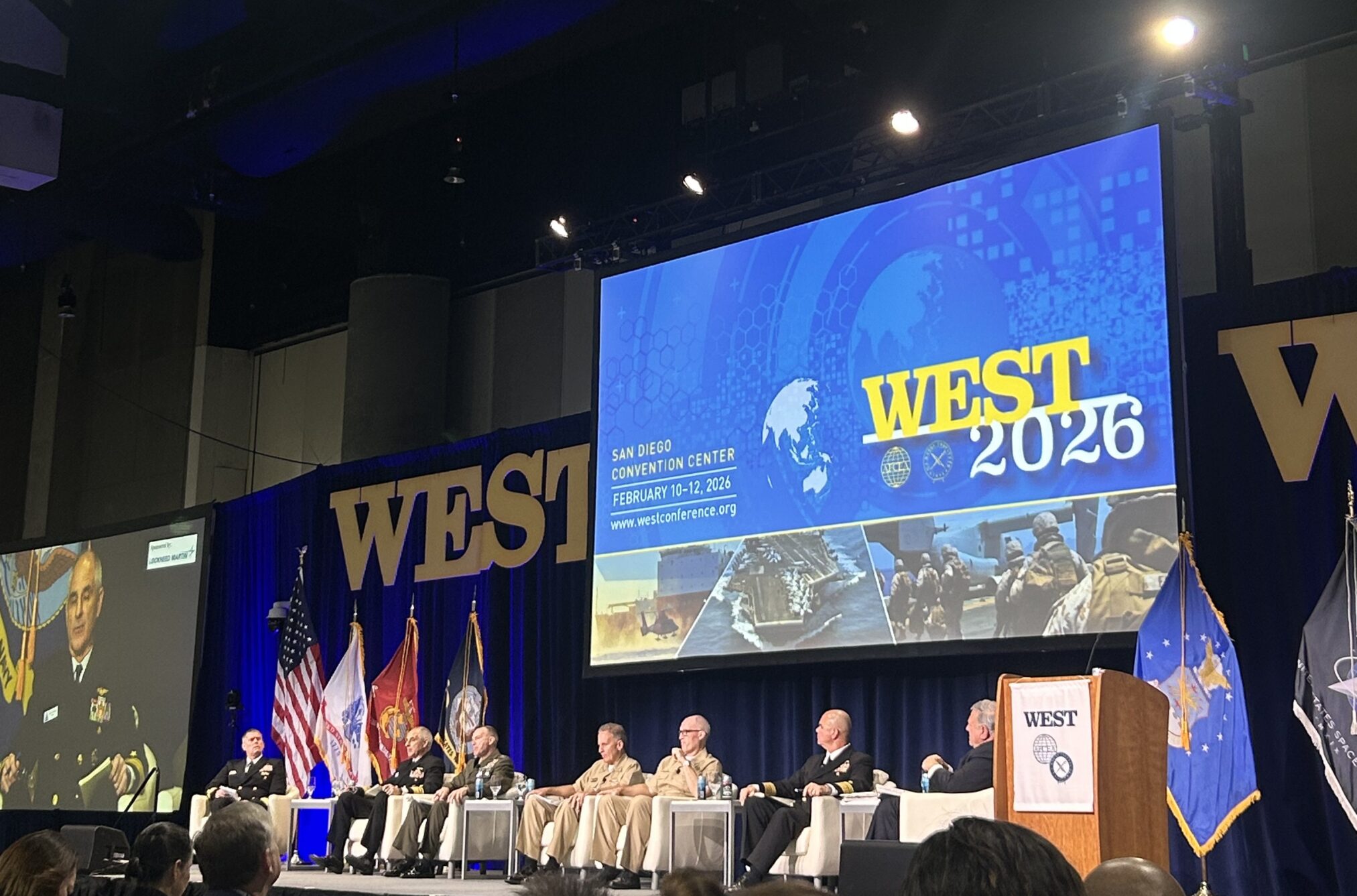
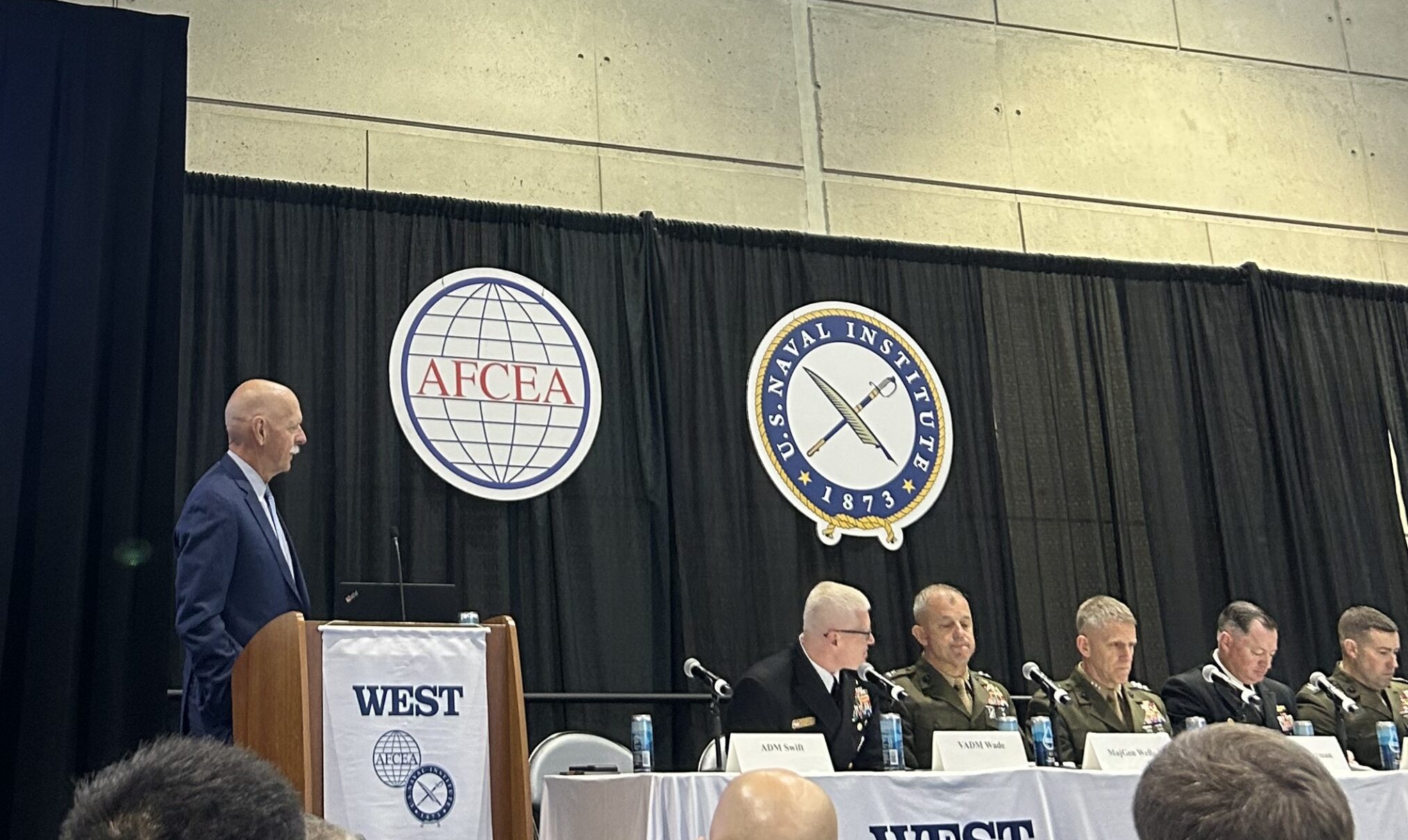
Naval leaders gathered at Armed Forces Communications and Electronics Association (AFCEA) West Conference delivered a clear message: the sea services are undergoing their most significant transformation in decades to meet an increasingly complex threat environment. Admiral Daryl Caudle, Chief of Naval Operations’ (CNO) emphasis on achieving 80% combat surge readiness to the Marine Corps’ accelerated force design modernization, the discussions revealed the Navy and Marine Corps are fundamentally rethinking how they train, equip and fight as an integrated force. 

The conversations that unfolded across multiple panel sessions painted a comprehensive picture of both the challenges facing the sea services and the innovative solutions being implemented to address them, from generating readiness across all domains to resourcing maritime dominance and integrating emerging technologies.  

Here are the five key insights that will guide the future of maritime superiority. 

1. Achieving 80% Combat Surge Readiness Requires Foundational Investment in People and Platforms 

The CNO established “80% combat surge ready” as the target resiliency metric. This threshold is designed to ensure the Navy can execute and provide desired outcomes during relative peace while maintaining capacity to surge when needed. In the panel titled “Generating Readiness Across All Domains,” Commander Naval Surface Forces Vice Admiral Brendan McLean spoke with several naval leaders and emphasized that if the fleet struggles now during peacetime operations, the challenges will become insurmountable when conflict begins. 

This combat surge readiness target represents more than a numerical goal; it reflects a fundamental shift in how the Navy approaches fleet generation. The foundry concept places Sailors first, recognizing that the most important weapon system remains the individual Sailor or Marine and their ingenuity, toughness and capabilities. Training must focus on developing mastery and self-sustainment rather than simply checking qualification boxes – we must train like we’re going to fight. 

Achieving this readiness level demands addressing critical infrastructure challenges, particularly in maintenance and sustainment. Supply chain effectiveness emerged as another critical factor. Submarine forces, for example, have driven gross effectiveness and net effectiveness metrics up 40% in two years by improving configuration change processes, conducting enhanced audits and working with Naval Supply Systems Command (NAVSUP) to overcome bureaucratic barriers. 

2. Force Design Modernization Accelerates Lethal Capabilities to the Tactical Edge 

Force design represents a fundamental rethinking of Marine formations and employment concepts. The Marine Littoral Regiments (MLR) and Marine Expeditionary Units (MEU) are designed as inherently dispersed, mobile units with lower signatures that complicate adversary targeting. These formations create hard-to-hit postures that enable forces to persist in contested environments, strengthening the entire naval force. 

Force design remains a journey rather than a destination, characterized by continuous learning and adaptation. Marine Corps leaders described how early force design decisions around infantry battalions have evolved through experimentation and wargaming, building resiliency back into formations while incorporating small unmanned aerial systems and other emerging technologies. The ability to operate from austere locations ashore through Expeditionary Advanced Base Operations (EABO) supports Distributed Maritime Operations (DMO) by creating multiple dilemmas for adversaries unsure of where the next threat will emerge. 

3. Information Dominance Powers Decision Advantage in Contested Environments 

Information warfare capabilities and the ability to make decisions faster than adversaries define success in contested maritime operations. As information warfare leaders emphasized, the side that wins is the side able to decide and act fastest, and the commander who generates and maintains tempo puts the adversary on the defensive. The Maritime Operations Center (MOC) emerged as a critical node for generating this decision advantage. With responsibility for battlespace awareness, integrated fires and assured Command and Control (C2), MOCs are evolving beyond traditional command centers to become dynamic fusion centers that leverage multiple sensors, shooters and C2 nodes across all domains.  

Artificial intelligence (AI) is transforming how information flows into operational decisions. Leaders described AI not as a replacement for human judgment, but as a battle partner that curates vast amounts of data and presents options to decision makers. Technology experts such as AlteryxCrowdStrikeQuantum and RegScale understand that the most valuable contribution of AI to defense will be to help human beings make better, faster and more precise decisions, especially in combat, where decision makers often face overwhelming volumes of conflicting data. 

Building information dominance requires cultural transformation around information sharing. Leaders acknowledged the tension between traditional need-to-know restrictions and the imperative to create truly data-centric environments where information flows seamlessly to support distributed operations. The challenge extends beyond technology to include standards, governance and trust frameworks that enable sharing intelligence and operations synchronization in real time across services, combatant commands and coalition partners. 

4. Distributed Maritime Operations Demands Seamless Blue-Green Integration 

The integration of Navy and Marine Corps forces for DMOs represents the operational approach designed to counter adversary anti-access and area denial strategies in contested environments. As fleet commanders emphasized, this integration creates exponential expansion in capability rather than simple force multiplication. 

One Marine Expeditionary Force’s (MEF) integration with Third Fleet demonstrates how this concept translates to operational reality. The ability to operate small, dispersed and mobile formations from austere locations ashore forces adversaries into complex dilemmas. Additionally, Marine aviation provides critical enabling functions that tie distributed operations together, such as Intelligence, Surveillance and Reconnaissance (ISR), electronic warfare, aviation ground support and more. 

Training infrastructure must evolve to support this level of integration. The Surface and Mine Warfighting Development Center (SMWDC) now conducts Information Warfare Advanced Team Training integrated with Surface Warfare Advanced Tactical Training (SWAT) events, bringing Warfare Tactics Instructors (WTI) together with Strike Warfare teams to refine tactics, techniques and procedures based on operational lessons learned. 

5. Industry Partnership at Speed Accelerates Innovation to Operational Forces 

The Red Sea operations demonstrated how Government, industry and laboratory partnerships operating at unprecedented speed can deliver operational advantage. What previously required a month to analyze engagement data, develop software updates and deploy improvements to ships was compressed to two days.  

Naval leaders issued clear guidance to industry on critical capability gaps. Obsolescence management emerged as a priority challenge, and industry partners who must maintain expertise will be critical. Open architecture and intellectual property access would enable faster adaptation to provide products when and where needed without waiting for single suppliers. 

The newly established Naval Rapid Capabilities Office (NRCO) demonstrates institutional commitment to accelerating innovation. Within three months of establishment, the office has inducted six to seven systems. The process emphasizes demoing and testing rather than lengthy development cycles and getting capabilities into operator hands for evaluation before scaling production. 

Carahsoft, The Trusted Government IT Solutions Provider™ excels at achieving rapid delivery through our partner vendors. We connect naval commands with industry partners specializing in open architecture systems, AI-driven analytics, cybersecurity solutions and emerging technologies that address critical capability gaps. Our established contract vehicles streamline procurement timelines, enabling defense organizations to move from requirement identification to deployment at the speed operations demand to support mission-critical modernization efforts. 

Charting the Course for Maritime Dominance 

AFCEA West 2026 reinforced that sustained maritime dominance requires synchronized progress across people, platforms, concepts and partnerships. The Navy and Marine Corps are not simply acquiring new technologies; they are fundamentally transforming how they organize, train and fight as an integrated naval force prepared for high-end conflict. 

The 80% combat surge readiness target, accelerated force design fielding, information warfare integration, distributed maritime operations and industry collaboration at speed represent interconnected elements of a comprehensive modernization strategy. Success depends on maintaining focus on foundational capabilities, such as trained Sailors and Marines, maintained platforms, resilient networks and proven tactics, while rapidly integrating emerging technologies that provide decision advantage. 

As Carahsoft, The Trusted Government IT Solutions Provider™, continues supporting defense modernization, the insights from AFCEA West 2026 inform how industry can best partner with the sea services to deliver the capabilities required for maritime superiority in an era of great power competition. 

Explore Carahsoft’s Defense Technology portfolio of leading solutions that support naval modernization priorities including AI, cybersecurity, cloud infrastructure and advanced analytics. 

Contact us at (888) 662-2724 or NavyInc@carahsoft.com to discuss how Carahsoft’s technology partners can support your mission requirements. 

Top 10 AI Events for Government in 2026 

Artificial intelligence (AI) has evolved from experimental technology into a mission-critical capability for Government agencies at all levels. From enhancing cybersecurity operations and streamlining citizen services to enabling predictive analytics and advancing national security objectives, AI is fundamentally reshaping how the Public Sector delivers on its mission. As agencies accelerate AI adoption, understanding the latest developments, best practices and ethical frameworks is essential. Carahsoft Technology Corp., The Trusted Government IT Solutions Provider®, brings deep expertise in AI solutions for the Public Sector, connecting agencies with leading technology providers and proven implementation strategies. Throughout 2026, Carahsoft and our partners will participate in premier AI events designed to help Government professionals navigate the complexities of AI adoption, explore cutting-edge solutions and connect with experts shaping the future of AI. 

Meet the Chiefs: Chief Artificial Intelligence 

February 12, 2026 | Washington, D.C. | In-Person Event 

During this Meet the Chiefs discussion, NextGov/FCW will examine how Chief Artificial Intelligence Officers (CAIOs) are putting national AI priorities into action across Government agencies. Speakers will explore how recent policies are shaping governance models, workforce strategies and industry collaboration as AI becomes more deeply embedded in Government operations. The conversation will address the critical balance between innovation and risk management, examining the infrastructure needed to support AI at scale and the trust-building efforts essential for successful AI adoption. Attendees will gain insights into how agencies are translating high-level AI directives into operational reality, with particular focus on data and compute infrastructure requirements for AI at scale. 

Session to look out for: 

  • Laying the Groundwork: Data and Compute Infrastructure for AI at Scale 

Carahsoft partner Oracle is the exclusive underwriter for this event, demonstrating the critical role that enterprise AI infrastructure plays in enabling Government AI initiatives. Oracle provides the foundational data platforms, cloud infrastructure and AI services that empower Federal agencies to deploy AI at scale while maintaining security, compliance and data sovereignty. Carahsoft’s partnership with Oracle ensures Government agencies have streamlined access to the enterprise AI capabilities discussed at this event, from autonomous databases that power AI workloads to sovereign AI infrastructure designed specifically for Public Sector requirements. 

2026 Defense IT Summit 

February 26, 2026 | Arlington, VA | In-Person Event 

The Defense IT Summit brings together senior IT leaders to examine how emerging technologies and strategies are advancing mission readiness across the Department of War (DoW). Senior officials will highlight defense priorities in AI, acquisition, cybersecurity and risk management, with particular focus on accelerating technology delivery at the speed of mission. The summit addresses the critical challenge of translating AI innovation into operational capability, exploring how the DoW is transforming acquisition processes, integrating AI into warfighting systems and building the infrastructure needed to support AI-enabled decision-making.  

Session to look out for: 

  • AI Transforming Future Warfighting and The Future of Defense Acquisition 

Carahsoft is a proud partner of GovCIO and is excited to support their 2026 Defense IT Summit, bringing together our extensive portfolio of AI and defense IT solutions tailored to DoW requirements. Our partnership with GovCIO enables us to showcase how leading AI providers are addressing the unique challenges of defense IT modernization, from secure AI development environments to edge AI capabilities for tactical operations. Carahsoft’s presence at this summit ensures defense IT leaders have direct access to the solution providers who understand DoW’s specific security requirements, acquisition processes and the urgency of deploying AI capabilities that enhance warfighter advantage. 

Google Public Sector Applied Government Geo & AI Summit 

February 24, 2026 | Reston, VA | In-Person Event 

The Applied Government Geo & AI Summit brings together Government leaders, technologists and innovators to explore how AI, geospatial data and advanced engineering tools are reshaping Public Sector operations. Hosted by Woolpert Digital Innovations, Google Public Sector and Carahsoft, this summit examines the powerful convergence of AI and geospatial intelligence, from automated image analysis and change detection to predictive modeling for infrastructure planning and emergency response. Attendees will learn how agencies are utilizing AI-powered geospatial capabilities to enhance various aspects, including defense operations, border security, urban planning and environmental monitoring. 

Session to look out for: 

  • AI and Geospatial Data Transformations and AI in Defense, Infrastructure, and Data Management 

Carahsoft is proud to co-host this event alongside Google Public Sector and Woolpert Digital Innovations, demonstrating our commitment to advancing the intersection of AI and geospatial technologies for Government missions. As a leading distributor of Google Cloud solutions to the Public Sector, Carahsoft ensures agencies can access the powerful combination of Google’s AI and machine learning (ML) capabilities with advanced geospatial analytics platforms.  

NVIDIA GTC 2026 

March 16-19, 2026 | San Jose, CA | Hybrid Event 

NVIDIA GTC is the premier global AI conference, where developers, researchers and business leaders come together to explore the next wave of AI innovation. From physical AI and AI factories to agentic AI and inference, GTC 2026 will showcase the breakthroughs shaping every industry, including Government and defense. The conference takes place across venues throughout downtown San Jose, featuring hundreds of technical sessions exploring everything from AI infrastructure and accelerated computing to real-world AI deployments. Government attendees will discover how agencies worldwide are leveraging NVIDIA’s AI platforms to power everything from scientific research and weather prediction to autonomous systems and intelligence analysis. 

Sessions to look out for: 

  • AI Talks and Panels 
  • Jensen Huang’s Keynote Address 
  • Developer Days and Hackathons 

Carahsoft is the exclusive host of the Public Sector Reception at GTC on Tuesday, March 17 (tentative), providing Government attendees with a dedicated networking venue designed specifically for Public Sector professionals to connect with peers and solution providers focused on Government AI challenges. Carahsoft is also an exhibitor sponsor of NVIDIA GTC 2026. We encourage you to stop by our booth to learn about AI capabilities within Government and discover how our partnership ecosystem is supporting agencies with NVIDIA-powered solutions.  

2026 Artificial Intelligence Summit 

March 18, 2026 | Location To Be Announced | In-Person Event 

According to AI experts, we are currently experiencing the largest and fastest-moving surge of AI development in history, with more progress occurring in days and months than was achieved over decades in previous AI waves. This sixth annual AI Summit from Potomac Officers Club brings together top voices from Federal agencies, DoW components and the Government contracting industry to discuss strategies, plans and exciting use cases for how AI, ML and automation are transforming Government operations. The age of AI being merely theoretical is over. This summit features real practitioners sharing how they are deploying AI at scale. Don’t miss keynote speaker Jay Meil, the VP of Artificial Intelligence and Data Analytics and Chief Data Scientist at SAIC, along with other senior Government and industry AI leaders. 

Carahsoft was proud to be a gold sponsor of the 2025 Artificial Intelligence Summit, along with our partners EmpowerAI, PrimerOracleCoursera and Percipient.AI and we look forward to continuing our support of this premier Government AI gathering in 2026. Carahsoft is committed to ensuring that Government decision-makers have direct access to the comprehensive AI solutions portfolio that Carahsoft brings to market, from AI development platforms and MLOps tools to AI governance frameworks and specialized AI applications designed for Public Sector missions. 

Warfighter AI Innovation Summit 

March 26, 2026 | Reston, VA | In-Person Event 

The Warfighter AI Innovation Summit focuses on cutting-edge AI technologies that enhance forward-deployed warfighter capabilities. This specialized event brings together warfighters with senior leaders, innovators and industry experts, focusing on data fusion, sensors and creating subject matter expert applications across forward-deployed use cases. Designed to foster collaboration across Government, military and industry, this summit equips participants with actionable insights to accelerate AI adoption and translate innovation into operational impact. Sessions will explore AI success on the front lines and how to use AI to achieve operational advantage and battlefield dominance, addressing the unique challenges of deploying AI in contested, disconnected environments. 

Session to look out for: 

  • AI Success on the Front Line and Using AI to Achieve Operational Advantage and Battlefield Dominance 

Carahsoft is a proud partner of Federal AI Accelerator.  Our partnership enables us to connect warfighters and defense decision-makers with specialized AI technologies designed for tactical edge operations, from computer vision for threat detection to AI-powered Command and Control (C2) systems. Carahsoft understands that successful warfighter AI requires not just cutting-edge algorithms, but solutions engineered for the reliability, speed and security demands of combat operations, along with acquisition pathways that can deliver these capabilities at the pace of operational need. 

AITALKS 2026 

April 14, 2026 | Washington, D.C. | In-Person Event 

With the mainstream arrival of large-language, generative AI models, AI has emerged as a top priority for driving economic prosperity and boosting Government efficiency and mission effectiveness. AITalks is where top Government leaders, tech innovators and industry experts converge to explore the transformative potential of AI in the Public Sector, particularly as new priorities establish the nation’s AI vision and direction. With AI set to revolutionize Government operations, the nation is at a critical juncture where it is competing to set the tone for global AI leadership.  

Session to look out for: 

  • Going All In on AI-Powered Government and Advancing AI on the Frontlines 

Carahsoft partner Microsoft is a Diamond sponsor at the 2026 AITALKS, reflecting Microsoft’s leadership position in enterprise AI and their commitment to helping Government harness AI capabilities through Azure AI, Microsoft 365 Copilot and industry-specific AI solutions. Previous AITALKS sponsors have included SalesforceAWSElasticBroadcomCloudflare, IBMRed HatSeekr and Nutanix/Pryon, a roster that demonstrates the breadth of Carahsoft’s AI partner ecosystem. As a key partner to many of these leading AI providers, Carahsoft ensures Government attendees can explore the full range of AI solutions available through our contracts, from foundational AI infrastructure to specialized applications addressing specific Public Sector use cases. 

SANS AI Cybersecurity Summit 2026 

April 20-27, 2026 | Arlington, VA | Hybrid Event 

The AI Cybersecurity Summit brings together the most critical aspects of AI in cybersecurity, from leveraging AI to strengthen defenses to protecting against sophisticated AI-powered attacks that are already reshaping the threat landscape. This unique event addresses both offensive and defensive dimensions of AI in cybersecurity, exploring how agencies can use AI to enhance threat detection, automate incident response and improve security operations while simultaneously defending against adversaries who are weaponizing AI for attacks. Attendees will connect with cybersecurity professionals, AI/ML experts and thought leaders to exchange insights and advance AI-powered cybersecurity solutions.  

Session to look out for: 

  • AI Governance and Risk, Offensive AI Adversary Tradecraft, and Protecting AI Architectures 

Carahsoft partner Microsoft is a sponsor of this critical event in the AI and cybersecurity space, bringing its extensive experience in AI security through Microsoft Defender, Azure AI security capabilities and its responsible AI frameworks. The convergence of AI and cybersecurity represents one of the most pressing challenges facing Government agencies today. Organizations must simultaneously adopt AI to enhance their security posture while defending their own AI systems from attack and ensuring AI is deployed responsibly. Carahsoft’s partnership with Microsoft and other leading cybersecurity and AI providers positions us to guide agencies through this complex landscape, offering integrated solutions that address both AI-enhanced security operations and the security of AI systems themselves. 

GEOINT 2026 

May 3-6, 2026 | Aurora, CO | In-Person Event 

Explore the intersection of technology and security as the geospatial intelligence community (IC) addresses challenges and opportunities in today’s complex geopolitical landscape. From land to sea and cyberspace to outer space, GEOINT’s impact is felt across every dimension and domain. Attendees will engage with industry experts, Government leaders and innovators to discover how geospatial intelligence is shaping a safer world for tomorrow. With AI and ML now central to modern GEOINT capabilities, this year’s symposium places special emphasis on GeoAI, spotlighting current innovations and future opportunities in AI and ML applied to geospatial data, from automated change detection and object recognition to predictive analytics for strategic planning. 

Carahsoft is a proud annual sponsor of the GEOINT Symposium and will have a large presence on the tradeshow floor, ensuring maximum visibility throughout this premier geospatial intelligence event. This year, we have also partnered with NVIDIA to host the exhibit hall Scaling AI Stage, a dedicated venue for exploring how Graphics Processing Unit (GPU)-accelerated computing and AI platforms are transforming geospatial intelligence processing, enabling real-time analysis of massive imagery datasets and sophisticated AI models for intelligence applications.  

AI for Government Summit 

May 19, 2026 | Reston, VA | In-Person Event 

Carahsoft is excited to announce our 3rd Annual Artificial Intelligence for Government Summit. Join Federal, State and Local Government leaders, practitioners and industry experts to explore how AI is transforming missions, services and infrastructure across the Public Sector. From copilots that streamline daily workflows to advanced cybersecurity, responsible AI frameworks and next-generation data strategies, this summit shows practical solutions aligned with the latest administrative orders and policy guidance. Attendees will gain insights from Government decision-makers, engage with hands-on training from leading AI companies and leave with actionable strategies to accelerate innovation while building trust and security in AI adoption.  

Session to look out for: 

  • Advanced Reasoning in the Age of Agentic AI and Innovation and Workforce in the AI Era 

Carahsoft is the proud host of the AI for Government Summit, our flagship AI event designed specifically for the unique needs and challenges of Public Sector AI adoption. This year’s sponsors include AWSBroadcomDellIntelNVIDIAOpenAIPalo Alto NetworksSalesforce and many others. As both the host and convener of this summit, Carahsoft curates an agenda that directly addresses the most pressing questions facing Government AI practitioners: how to move from pilot to production, how to ensure responsible and ethical AI deployment, how to build the data infrastructure and workforce capabilities needed for AI success and how to navigate the complex landscape of AI regulations and policies while maintaining the agility to innovate at mission speed. 

Federal AI Forum 

August 13, 2026 | Reston, VA | In-Person Event 

The Federal AI Forum dives into the next frontier of AI: agentic AI. Experts from across Government, academia and industry will discuss how autonomous agents and copilots are reshaping workflows and policy in the Public Sector. This forum offers a forward-looking conversation about critical issues in responsible adoption, architecture and practical implementation of agentic AI systems in Federal missions. As AI systems evolve from tools that assist human decision-making to autonomous agents capable of multi-step reasoning and independent action, Government agencies face new questions about governance, accountability and security.  

Session to look out for:  

  • Agentic AI Use Cases and Data Security and Accountability 

Carahsoft is proud to be the Anchor Sponsor of the 2026 Federal AI Forum, to help Government agencies navigate the emerging landscape of agentic AI and autonomous systems. This year’s sponsors include BoxServiceNowGranicusSeekrLatent AIStryk.AI and others, partners who are pioneering the development of agentic AI capabilities specifically designed for Government use cases. 

As AI continues to mature from emerging technology into essential infrastructure, Government agencies face both unprecedented opportunities and complex challenges. The events highlighted above represent the best venues for Government professionals to gain practical knowledge, connect with proven solution providers and learn from peers who have successfully navigated AI implementation. Whether you are just beginning to explore AI capabilities or seeking to optimize existing initiatives, these gatherings provide invaluable insights, hands-on experience and strategic guidance from the leaders shaping AI’s future in Government. 

Connect with Carahsoft’s AI experts who understand Government requirements, compliance frameworks and proven implementation strategies. Whether you are attending one of these events or planning your AI roadmap, we are here to help.  

Contact us at AITeam@carahsoft.com to discuss your specific AI challenges, schedule a demo or coordinate meetings at upcoming events.  

Explore our AI solutions portfolio to see how we’re helping agencies like yours harness the power of AI to achieve mission success. 

Revolutionizing Road Safety: How Blyncsy Uses AI To Leverage Dashcam Footage

By accessing over a million commercial dashcams, Blyncsy, a part of Bentley Systems, uses movement intelligence to improve mobility and transportation, uses artificial intelligence (AI) vision to pinpoint roadway issues, extrapolate pain points and alert local officials with the most efficient solution to the problem.

Infrastructure Pain Points

State and Local Governments rely on manual inspections to maintain roadways. These are incredibly expensive, as Light Detection and Ranging (LiDAR) systems cost 200 dollars or more per mile to operate. These fact-finding missions are both labor-intensive and time-consuming.

Information collected to make informed decisions on roadway maintenance is often coming from multiple sources. Fragmented and sometimes outdated data makes informed analysis difficult to obtain. Government officials need to be able to take these data points and interpret their value to suit modern needs, such as the wear of heavier electric vehicles and extreme weather on roadways, the use of autonomous vehicles and population increase in urban areas.

How AI-Vision Works

Blyncsy’s AI-Vision collects images from commercial dashcams currently on roadways around the country. The journey from raw footage to data analysis takes place in three steps:

  1. Upload and Validate: Images are collected and validated by examining meta details such as direction information, date and time stamps and heading information.
  2. Segment: AI-Vision breaks down the image and groups like objects together.
  3. Mask: Blyncsy highlights the segments that are valuable to the relative Government agency and provides near real-time insights.

Bentley Systems purchases the footage from partnering dashcam providers and makes the data available to State and Local officials that allow them to make informed and cost-effective decisions to improve their infrastructure. Proactive maintenance applications allow agencies to combine disparate data points to demonstrate how they interact with each other. For example, Blyncsy’s AI-Vision can identify a crosswalk in an image, then analyze the condition of the crosswalk paint and surrounding streetlights. This comprehensive analysis can help agencies quickly determine which intersections are not safe for pedestrians, and subsequently where they should be focusing maintenance efforts.

Blyncsy’s Capabilities

With the dashcams passively capturing and uploading every detail of the roads their drivers travel, Blyncsy’s practical applications are as numerous as the elements they capture.

  1. Safety Critical Assets: From guardrail detection and damage to paint line degradation, the AI-Vision can capture and evaluate the extent of the damage, determine whether the damage is severe enough to require immediate repair. Hawaii is the first to utilize this technology state-wide to detect vegetation encroachment and guardrail damage. As a result, the Hawaii Department of Transportation (HIDOT) can prioritize resolving the most critical safety issues.
  2. Roadway Detection: Similarly, AI-Vision can detect roadway conditions, including recognizing potholes and pavement cracking and issuing a Pavement Surface Evaluation and Rating (PASER) score, where ratings can indicate good or poor pavement condition.
  3. Sign Inventory: Blyncsy can identify how each sign it captures is categorized according to their Manual on Uniform Traffic Control Devices (MUTCD) Classification. From there, it can assess damage and even recognize whether a sign is missing. They can also perform Optical Character Recognition (OCR) on signs to read the text.

These are only a few of the numerous ways Blyncsy’s AI-Vision technology can make roadway and infrastructure maintenance more efficient and cost-effective.

 Watch Blyncsy CEO Mark Pittman discuss the capabilities of AI-Vision and how it can help optimize your infrastructure maintenance systems.

To learn more about Blyncsy (a Bentley company) or Bentley, or to schedule a demo, contact Bentley@carahsoft.com or call (703) 673-3570.

Carahsoft Technology Corp. is The Trusted Government IT Solutions Provider, supporting Public Sector organizations across Federal, State and Local Government agencies and Education and Healthcare markets. As the Master Government Aggregator for our vendor partners, including Blyncsy, we deliver solutions for Geospatial, Cybersecurity, MultiCloud, DevSecOps, Artificial Intelligence, Customer Experience and Engagement, Open Source and more. Working with resellers, systems integrators and consultants, our sales and marketing teams provide industry leading IT products, services and training through hundreds of contract vehicles. Explore the Carahsoft Blog to learn more about the latest trends in Government technology markets and solutions, as well as Carahsoft’s ecosystem of partner thought-leaders.