Better Together: How Nutanix and Omnissa Are Transforming End-User Computing in the Public Sector

Budget cuts and the pressure to do more with less has pushed IT leaders in State, Local and Education (SLED) organizations to consolidate tools and resources to increase operational efficiency. Simultaneously, the dynamic of workflows are changing; modern-day students and Government workers need secure access to resources from anywhere, at any time.

Integrated solutions are helping SLED organizations eliminate the unnecessary complexity and costs associated with maintaining separate solutions for storage, compute and networking components. The recent partnership between Nutanix and Omnissa offers SLED organizations a platform for managing End-User Computing (EUC) across agencies, states, cities and school districts.

Vendor Choice and Pricing Flexibility

Faced with higher costs and more restrictions, many SLED organizations are seeking alternatives solutions that can provide similar functionality without the associated vendor lock-in risks. The Nutanix-Omnissa platform offers multiple licensing options, including per-user models that offer greater flexibility than traditional bundled approaches. Organizations can choose the licensing model that best fits their usage patterns and budget constraints.

The solution also works with a wide range of server vendors including Dell, HPE, Lenovo, Cisco and more, allowing organizations to leverage existing hardware investments or choose vendors based on their specific procurement requirements. This enables different agencies within the same Government entity to standardize on the same technology stack, eliminating disparate systems.

Hybrid Cloud Security, Compliance and Resilience

SLED organizations must be able to provide remote access to sensitive data while simultaneously meeting strict compliance mandates. The Nutanix-Omnissa Horizon platform supports certified Government cloud environments, including FedRAMP, GovRAMP and GovCloud, ensuring consistent enforcement of security policies across on-premises and hybrid deployments. Department of Defense (DoD) certifications validate the platform for regulated workloads, while unified access gateway appliances deliver secure, compliant remote access.

To strengthen resilience, Nutanix provides automated disaster recovery and replication across sites and clouds, maintaining workload availability even during outages. Agencies can extend their EUC environments across AWS, Azure and soon Google Cloud, balancing scalability with compliance while preserving consistent management and licensing. When paired with Omnissa Horizon Cloud-Pod technology, the platform can provide a true multi-cloud solution including on-premises hybridity.

How Nutanix and Omnissa Are Transforming EUC, blog, embedded image, 2025

Simplified Infrastructure Management

Outmoded infrastructure management often requires specialized expertise across hypervisors, storage, networking components and management tools, creating operational overhead and increasing the risk of configuration errors or security gaps. The Nutanix-Omnissa Horizon integration streamline operations through Prism Central, a unified management interface for multi-cluster and hybrid environments.

The platform includes built-in capabilities for replication, disaster recovery and automated maintenance that traditionally required separate tools and specialized expertise. Lifecycle management capabilities automatically update firmware, software and system components with zero downtime, allowing organizations to perform maintenance during business hours and reduce human error during update processes.

Technical Differentiators and Release Roadmap

Beyond EUC management, the Nutanix-Omnissa Horizon solution introduces technical advantages like Clone Prep technology that enables extremely fast, reboot-free provisioning, delivering near instant clone performance. Nutanix’s metadata-based cloning and data locality ensure low-latency performance for Virtual Desktop Infrastructure (VDI) workloads, while built-in deduplication and erasure coding optimize storage efficiency. Additional features further strengthen the platform’s ability to meet complex SLED requirements, including:

  • Nutanix Files – scalable file services that can be used for user profiles and Omnissa App Volumes
  • Nutanix Flow – microsegmentation and network security
  • Nutanix Data Lens – ransomware protection and data insights

The partnership is rolling out in phases to ensure stability and customer success. Limited Availability (LA) is currently offered, supporting Windows 10 and 11 automated pools, graphics processing unit (GPU) support and Unified Access Gateway (UAG) appliances. General Availability (GA) is expected between December and March, adding capabilities such as:

  • Automated remote desktop service (RDS) farms
  • Windows Server operating system (OS) support
  • Federal Information Processing Standards (FIPS) mode
  • Workspace ONE Access on-premises integration

Proven Partnership with Enhanced Capabilities

Thousands of organizations already run Omnissa Horizon on Nutanix infrastructure using vSphere, demonstrating the maturity and proven nature of the underlying technology platform. The addition of AHV hypervisor support represents an evolution of an existing partnership rather than an experimental new venture, validated real-world organizations that participated in the beta program.

The partnership brings together the complete technology stack and expertise from both organizations. Omnissa brings over 15 years of Horizon and Workspace expertise, while Nutanix contributes hyperconverged infrastructure capabilities. Together, they deliver mature, field-tested solutions that reduce operational complexity, consolidate infrastructure and enable future growth with confidence.

To learn more about how this partnership can transform your organization’s EUC strategy, watch the complete webinar, “Unlock the Future of EUC for Public Sector: Horizon 8 on Nutanix.”

Carahsoft Technology Corp. is The Trusted Government IT Solutions Provider, supporting Public Sector organizations across Federal, State and Local Government agencies and Education and Healthcare markets. As the Master Government Aggregator for our vendor partners, including Nutanix and Omnissa, we deliver solutions for Geospatial, Cybersecurity, MultiCloud, DevSecOps, Artificial Intelligence, Customer Experience and Engagement, Open Source and more. Working with resellers, systems integrators and consultants, our sales and marketing teams provide industry leading IT products, services and training through hundreds of contract vehicles. Explore the Carahsoft Blog to learn more about the latest trends in Government technology markets and solutions, as well as Carahsoft’s ecosystem of partner thought-leaders.

Executive Order on Advancing AI in Education: What Government and Education Leaders Need to Know 

The recent Executive Order-14277 promotes the inclusion of artificial intelligence (AI) in education and is a significant step toward preparing America’s youth for an AI-driven future. Signed on April 23, 2025, this directive establishes a comprehensive framework for integrating AI literacy and proficiency across the educational landscape.  

As schools explore the benefits of AI, Carahsoft and our partners are here to guide and support their journey. Here are the takeaways that we found most important from the recent Executive Order. 

Task Force on Artificial Intelligence Education 

At the center of this Executive Order is the establishment of a White House Task Force on Artificial Intelligence Education. This cross-agency Task Force is chaired by the Director of the Office of Science and Technology Policy, and features executives from various offices and departments, such as the Director of the National Science Foundation (NSF), the Special Advisor for AI and Crypto and the Secretaries of Agriculture, Labor and Education. The Task Force will coordinate Federal efforts to promote AI in education and implement the policy initiatives outlined in the order. 

These include: 

  • Promoting AI literacy in the workforce and education 
  • Training educators in AI usage 
  • Integrating AI into early education 
  • Creating an AI-ready workforce 

This coordinated approach underscores the Federal Government’s commitment to ensuring students develop the skills necessary to thrive in an increasingly AI-driven economy and society.  

Initiatives for Enhancing K-12 AI Education 

With this Executive Order, schools are encouraged to establish partnerships with leading AI industry organizations, academic institutions and nonprofit entities to develop online resources that will teach K-12 students foundational AI literacy and critical thinking skills. Partnerships will be awarded on a rolling basis, with resources expected to be ready for classroom use within 180 days of the first announced partnerships. 

Additionally, within 90 days of the new Executive Order, the Task Force will establish plans for the Presidential Artificial Intelligence Challenge. This challenge celebrates student and educator achievements in AI, fostering collaboration between Government, academia and industry organizations, such as Varsity Tutors, which empowers students through its AI-powered adaptive learning platform, as well as its ability to recommend personalized tutors.  

Prioritizing Teacher Training and Professional Development 

Recognizing that effective AI education depends on well-prepared educators, the Executive Order directs the Secretary of Education to prioritize AI in discretionary grant programs for teacher training, authorized by the Elementary and secondary Act of 1965. This includes professional development focused on: 

  • Reducing time-intensive administrative tasks 
  • Improving teacher training and evaluation 
  • Integrating AI fundamentals across all subject areas 
  • Providing specialized training in computer science 

AI can reduce the burden on teachers by aiding with management. Platforms such as Degree Analytics and Education Analytics both utilize AI and machine learning to analyze student communications and engagement and provide reports to improve student performance and retention. Gaggle can help by alerting educators and parents of potential safety concerns with social media posts and other student communications, aiding educators in managing students. 
 

Additionally, the NSF is directed to prioritize research on AI in education and create teacher training opportunities that help educators effectively integrate AI-based tools in classrooms. There are a wide variety of AI-based tools for educators to choose from. Nuventive, for example, offers performance improvement platforms with AI-powered analytics for strategic planning in education. YuJa integrates AI for video captioning, analytics and engagement tools, and Turnitin helps educators detect plagiarism and writing patterns. PowerNotes, Docebo and Instructure (a Canvas platform) all feature organizational and learning enhancements for students. Docebo and Instructure (a Canvas platform) all feature organizational and learning enhancements for students. 

The Executive Order extends beyond K-12 education to address workforce development through AI-related Registered Apprenticeships. The Secretary of Labor is directed to increase participation in these programs by establishing specific growth goals with existing discretionary funds in order to support the creation of nationwide program standards. 

Building an AI-Ready Workforce Through Apprenticeships 

States and grantees are also encouraged to use Workforce Innovation and Opportunity Act (WIOA) funding to support AI-based learning opportunities. This component of the Executive Order creates significant potential for collaboration between education institutions, Government agencies and industry partners to develop comprehensive AI workforce development pathways. Some industry partners who have already begun integrating AI for workforce development initiatives are Education Technology, Services and Research (EAB), which uses AI to support student success, and YouScience, which maximizes student success by using AI to analyze a student’s interest and aptitudes and match them with academic pathways.   

The Path Forward 

Educational institutions and Government agencies seeking to capitalize on the opportunities laid out in Executive Order “Advancing Artificial Intelligence Education for American Youth” should begin planning now. Industry tie-ins can enhance education and learning, such as Udemy, which offers content recommendations and delivers AI course content, Invoke Learning, Inc., which leverages AI and data science to improve student outcomes and institution decision-making and Impero Software, which offers AI monitoring features for safeguarding and classroom management. Industry aid can go beyond K-12 education, too. Element451, for example, promotes student engagement and enrollment management in higher education.  

Carahsoft and our ecosystem of technology partners are ready to support this national effort to prepare America’s youth for an AI-driven future. Through our extensive contract vehicles and specialized AI solutions designed for educational environments, we provide the tools and expertise needed to implement the vision outlined in this landmark Executive Order. 

To learn how Carahsoft can help your organization implement the vision laid out in the Executive Order on Advancing AI Education, visit our comprehensive portfolio of AI solutions and discover how our trusted vendors can accelerate your institution’s AI-education initiatives today.

Becker’s Healthcare Online 2025: Top 5 Insights on Sustainability, Efficiency and Security in Patient Care 

At the 15th annual meeting of Becker’s Healthcare, providers and industry leaders gathered to discuss the latest in Health IT. Sessions explored intellectual capital, cybersecurity, logistics and technology, such as artificial intelligence (AI).  

Carahsoft and its partners, such as Oracle, Bamboo Health, Innovaccer, Laserfiche, Smart Communications, Wolters Kluwer and more, attended Becker’s to connect healthcare systems with the latest technology.  

Becker’s Healthcare conference featured five key themes for attendees to learn about. 

Expanding Patient Care Through Automation 

Speakers from Baptist Health discussed patient care amidst high demand in the session “Empowering Healthcare Teams: Baptist Health’s Journey to Efficiency.” As the Baptist Health Healthsystem began examining inpatient flows, they tracked all components of the patient’s experience. The influx of patients exposed existing weaknesses, such as fragmented operations, low visibility and discharging delays, resulting in lost revenue and overall inability to meet patient demand. In response, Baptist Health opened a command center to centralize its logistics, proactively taking steps to increase reliability and predictability. Viewing all components of a patient’s stay, from the moment patients entered to being fully discharged, as well as the time spent cleaning the room, enabled them to find and remove bottlenecks that prevented the efficient transfer of patients. Baptist Health also began automating workflows to expedite processes. Automated texts would be pushed to providers when patients were not moved, allowing providers to know where they were needed. These changes resulted in a 6% increase in overall admissions and a 50% increase in on time or early discharges by 11am, which helped free up beds, increasing overall capacity and revenue.  

Patient-Centered Sustainability 

In the session “The Future of Patient-Centered Care: Strategies for Sustainable Healthcare,” Fariha Siddiquie, the Director of Healthcare Services at The Kaleidoscope Group, emphasized that patients are the center of healthcare. When crafting a positive customer experience, healthcare systems should take a holistic approach to the patient’s journey. 

Healthcare systems can foster a positive experience by:  

  • Utilizing front desk staff to create positive experiences as soon as patients enter the facility 
  • Providing a comfortable experience in the waiting room 
  • Removing technical jargon to help patients and their support system understand billing, procedures and treatments 
  • Preventing and slowing the spread of diseases through community outreach 

Meeting patients and their support systems at their level contributes to patients feeling safe and welcome. While providers are not fully responsible for the experience a patient has at a healthcare center, they shoulder the most responsibility. Healthcare systems can help alleviate this responsibility by fostering a culture of empathy between employer and provider, which will ultimately extend to provider and patient. Focusing on the patient’s experience will ensure satisfaction in all aspects of patient care. 

To meet all of a patients’ needs, providers should consider how different backgrounds, such as geographical location and age, factor into care needs. With technology, certain features, such as specific fonts or options to connect to a help desk, boost accessibility. When these features are not included, the technology that already has been invested in will be ineffective. By committing to a strategic plan that impacts day-to-day workflow, healthcare systems can ensure a more welcoming, fostering environment for patients. 

Choosing the Right Technology for Your Healthcare Systems  

As IT expenses continuously grow, healthcare systems must consider which technology to prioritize. In the session “From Friction to Flow: Advocating for Smarter, Safer Healthcare Systems,” panelists discussed how healthcare systems must consider whether replacing existing technology with new ones is cost effective. Before purchasing, healthcare systems should consider how the technology will be incorporated into the workplace, and whether staff will need to be trained to use the new technology. Talking to front line caregivers and other staff can illuminate what solutions and tools are needed for daily operations. The technology with the best return on investment is that which alleviates monotonous administrative tasks and uplifts providers, who face potential burnout from the administrative tasks placed on top of their job. Once the technology is in place, healthcare systems should measure the outcomes of technology and gather and listen to feedback from end users. While technology helps processes, it cannot automatically solve problems. Rather, technology is best utilized when aiding providers and expediting work processes, allowing clinicians to focus on patient care. 

Preventing Data Breaches in Healthcare  

In the session “Doing the Inevitable: How Health Systems Are Stopping Data Breaches,” speakers from various institutions discussed the daily phishing breach attempts that healthcare systems face. Phishing attacks are insidious as they are impossible to fully prevent. Threat actors are getting more sophisticated with social engineering, using AI to impersonate leadership over the phone, or even on video calls. While security solutions, such as multi-factor authentication, are important to preventing breaches, there are use cases where they are not applicable- such as emergency situations in the operation room. 

Phishing breaches should be treated as a “when,” not an “if;” systems must proactively prepare for data breaches. Attacks can force an area or unit to go offline, so a response strategy can help operations continue smoothly. Trainings that simulate breaches can demonstrate to leaders the full complexity of these attacks and what is at risk. Even breaches for agencies that are indirectly exposed to your network can be a hazard. To prevent phishing breaches, everyone from providers to clinical leadership must be knowledgeable about mitigating attacks. 

Optimize Daily Operations with Artificial Intelligence  

In the session “AI in Healthcare: Big Ideas and Risks for the Next 5 Years,” speakers Dr. Chris Longhurst from UC San Diego Health, Dr. Mike Phepher from Stanford, the Chief Data Officer from CommonSpirit Health and Mohan, the Founder and CEO of LeanTaaS, discussed the variety of AI projects have been tested in healthcare systems to aid with operational processes. With the onboarding of secure AI portals, healthcare systems enable staff to experiment and learn how to use the new technology.  

They have found that AI can aid daily procedures in numerous areas, such as: 

Operational Tasks 

AI can help eliminate monotonous tasks that are not directly related to helping patients, such as with calls and removing duplicate insurance requests, empowering providers with more time with patients. 

Safety 

AI has helped predict which patients need palliation. This early identification has enabled symptom relief, disease prevention and reduced mortality rate. It has also democratized medical information, empowering patients and providers, as well as aided in eliminating misdiagnosis. 

Patient Empowerment 

AI has enabled patients to learn more about the care they receive. Tools such as language learning models (LLMs) have helped providers craft response letters to patients, and electronic health record (EHR) integration aids in provider-patient communication by making medical information more accessible to patients. 

When choosing the right AI platform for a healthcare system, the speakers recommend onboarding an AI model that is secure and sufficient for necessary procedures. A platform approach can help avoid siloing. Technology experts, such as VMWare, are constantly working to be at the forefront of AI initiatives and enablement, and Salesforce offers a variety of AI tools. Overall, AI can be used in many scenarios. Between aiding call centers and predicting illnesses, AI increases efficiency, optimizes processes and decreases costs. 

By maintaining security and investing in mission-supporting technologies, healthcare systems can support providers and offer the best care to patients. 

To learn more about technologies featured at Becker’s Healthcare Online, visit Carahsoft’s healthcare technology portfolio. 

The Importance of Data, AI and More Within Law Enforcement at IACP Technology Conference 2025 

The International Association of Chiefs of Police (IACP) Technology Conference 2025 is an annual law enforcement conference that hosts public safety professionals and technology thought leaders to discuss new solutions, techniques and trainings to equip the industry for success. With a strong law enforcement portfolio and deep industry ties, Carahsoft offers unmatched insight into the challenges agencies face today. 

By bridging the gap between top software providers and law enforcement agencies, Carahsoft’s Law Enforcement Technology Team helps both sworn and civilian personnel streamline operations, enhance decision-making and drive greater efficiency across all aspects of public safety.  

Carahsoft and over 20 of our vendors, including Cellebrite, Zebra, Saferwatch, Blackberry and Magnet Forensics, attended and ran demos of their solutions across data management and analytics, artificial intelligence (AI), emerging technology, forensics, and device security. 

Here are the 5 most relevant themes featured at the IACP Technology Conference 2025. 


Integrating Artificial Intelligence into Law Enforcement 

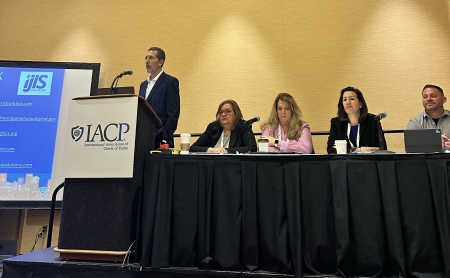
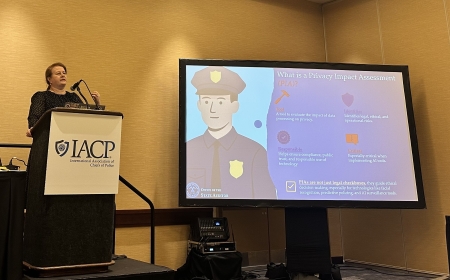
At IACP Tech, discussions centered around integrating AI into law enforcement to increase efficiency while balancing transparency and accountability to real-time threats. In the panel “Transforming Policing with AI: Efficiency, Accuracy and Ethical Considerations for Report Writing,” panelists underscored how AI can streamline administrative tasks, reduce the time officers spend on documentation and improve the overall accuracy and quality of police reports. Speakers also highlighted that the integration of AI must be accompanied by transparency and accountability. They stressed the importance of clearly disclosing when reports are generated or supported by AI to maintain public trust and uphold ethical standards. In the panel “Curb Your AI Through Privacy Impact Assessments,” speaker Nora Kurzova, the State Auditor of the State of Utah Office, explored the ethical implications that come with predictive AI in law enforcement. Kurzova drew attention to bias present in predictive tools, stressing the importance of human oversight to correct potential biases. With rigorous evaluations of the decisions that automated systems enact, law enforcement can ensure fairness and a positive impact on communities. 


Carahsoft, IACP 2025, blog, embedded image, 2025

Emerging Technologies in Law Enforcement 

For modern criminal investigations, law enforcement faces growing complexity in managing and analyzing mass volumes of digital data. As the volume of data generated by connected devices continues to surge, investigators must adapt software that enables timely and efficient data recovery. Critical evidence can come from a variety of sources, such as Nest cameras, smart rings, thermostats and even gaming consoles. Human augmentation technologies, including smart glasses, brain-computer interfaces and mixed reality devices, were all identified as new frontiers that officers could utilize during investigations. By utilizing unconventional data points as corroborative tools and avenues for new leads, law enforcement can increase its investigative awareness.  


Breakthroughs in Digital Forensics 

At the panel “Advancements in Criminal Investigations: Increasing Solve Rates with Technology,” speaker Ed O’Carroll, a retired Major of the Crimes Bureau from the Fairfax County Police Department, emphasized the transformative impact of advanced investigative technologies in resolving challenging criminal cases. Advancements in digital forensics, genetic genealogy and rapid DNA testing have all transcended the abilities of law enforcement, enabling the solving of difficult cases. As IT continues to evolve, law enforcement can utilize strategic partnerships with technology organizations to improve its digital forensics capabilities and reduce backlogs. With recent technological breakthroughs, skilled crime analysts and forensic professionals can maximize their potential through these revolutionary tools. 


The Importance of Interoperable Data in Public Safety 

Law enforcement depends on thorough and accurate analytics to improve and maintain capabilities. In the panel “Breaking the Data Chains: Advocating Open and Interoperable Solutions in Public Safety,” speakers explored the evolving role of data in public safety, with a strong emphasis on the importance of interoperability and open standards. Adopting open data standards enables seamless data exchange across systems and jurisdictions. Panelists called for greater vendor transparency and urged public safety agencies to include open data access provisions in their contracts to avoid vendor lock-in. Ultimately, by strengthening data sharing practices, public safety agencies can enhance operational effectiveness and fulfill mission objectives.  


Tailored, Interactive Training with Artificial Intelligence 

Law enforcement agencies are increasingly utilizing AI and virtual reality technologies to address resource constraints during training. In the panel “How Your Records Management Process Can Work for You—Leveraging RMS Functional Standards,” speaker Jeff Smythe discussed a statewide effort to revise curriculum by embedding AI tools into courses. By synthesizing practical data and automation, law enforcement can improve training and service quality.

Examples of this include: 

  • Utilizing real-world body camera footage to create simulated scenarios for training 
  • Collecting best practices to develop AI-powered virtual reality scenarios that feature immediate feedback and debriefing capabilities 
  • Implementing automated virtual reality scenarios to train soft skills, such as employee counseling and community engagement 

By simulating realistic, frequent tech-enhanced training, employers can significantly improve officer readiness and skill retention. AI and virtual tools offer scalable solutions to deliver consistent, high-quality training in an evolving public safety environment. 


As law enforcement professionals handle sensitive and vital information, the protection of that information and data is essential to carrying out fair and accurate investigations and procedures. Through tailored training, data analytics and AI, law enforcement can improve capabilities and focus resources on protecting civilians.  

To learn more about public safety related technology, visit Carahsoft’s law enforcement portfolio to explore solutions showcased at IACP Technology Conference. For additional research into the key takeaways that industry and Government leaders presented at IACP Technology Conference, view Carahsoft’s full synopsis of key sessions from the tradeshow.