Better Together: How Nutanix and Omnissa Are Transforming End-User Computing in the Public Sector

Budget cuts and the pressure to do more with less has pushed IT leaders in State, Local and Education (SLED) organizations to consolidate tools and resources to increase operational efficiency. Simultaneously, the dynamic of workflows are changing; modern-day students and Government workers need secure access to resources from anywhere, at any time.

Integrated solutions are helping SLED organizations eliminate the unnecessary complexity and costs associated with maintaining separate solutions for storage, compute and networking components. The recent partnership between Nutanix and Omnissa offers SLED organizations a platform for managing End-User Computing (EUC) across agencies, states, cities and school districts.

Vendor Choice and Pricing Flexibility

Faced with higher costs and more restrictions, many SLED organizations are seeking alternatives solutions that can provide similar functionality without the associated vendor lock-in risks. The Nutanix-Omnissa platform offers multiple licensing options, including per-user models that offer greater flexibility than traditional bundled approaches. Organizations can choose the licensing model that best fits their usage patterns and budget constraints.

The solution also works with a wide range of server vendors including Dell, HPE, Lenovo, Cisco and more, allowing organizations to leverage existing hardware investments or choose vendors based on their specific procurement requirements. This enables different agencies within the same Government entity to standardize on the same technology stack, eliminating disparate systems.

Hybrid Cloud Security, Compliance and Resilience

SLED organizations must be able to provide remote access to sensitive data while simultaneously meeting strict compliance mandates. The Nutanix-Omnissa Horizon platform supports certified Government cloud environments, including FedRAMP, GovRAMP and GovCloud, ensuring consistent enforcement of security policies across on-premises and hybrid deployments. Department of Defense (DoD) certifications validate the platform for regulated workloads, while unified access gateway appliances deliver secure, compliant remote access.

To strengthen resilience, Nutanix provides automated disaster recovery and replication across sites and clouds, maintaining workload availability even during outages. Agencies can extend their EUC environments across AWS, Azure and soon Google Cloud, balancing scalability with compliance while preserving consistent management and licensing. When paired with Omnissa Horizon Cloud-Pod technology, the platform can provide a true multi-cloud solution including on-premises hybridity.

How Nutanix and Omnissa Are Transforming EUC, blog, embedded image, 2025

Simplified Infrastructure Management

Outmoded infrastructure management often requires specialized expertise across hypervisors, storage, networking components and management tools, creating operational overhead and increasing the risk of configuration errors or security gaps. The Nutanix-Omnissa Horizon integration streamline operations through Prism Central, a unified management interface for multi-cluster and hybrid environments.

The platform includes built-in capabilities for replication, disaster recovery and automated maintenance that traditionally required separate tools and specialized expertise. Lifecycle management capabilities automatically update firmware, software and system components with zero downtime, allowing organizations to perform maintenance during business hours and reduce human error during update processes.

Technical Differentiators and Release Roadmap

Beyond EUC management, the Nutanix-Omnissa Horizon solution introduces technical advantages like Clone Prep technology that enables extremely fast, reboot-free provisioning, delivering near instant clone performance. Nutanix’s metadata-based cloning and data locality ensure low-latency performance for Virtual Desktop Infrastructure (VDI) workloads, while built-in deduplication and erasure coding optimize storage efficiency. Additional features further strengthen the platform’s ability to meet complex SLED requirements, including:

  • Nutanix Files – scalable file services that can be used for user profiles and Omnissa App Volumes
  • Nutanix Flow – microsegmentation and network security
  • Nutanix Data Lens – ransomware protection and data insights

The partnership is rolling out in phases to ensure stability and customer success. Limited Availability (LA) is currently offered, supporting Windows 10 and 11 automated pools, graphics processing unit (GPU) support and Unified Access Gateway (UAG) appliances. General Availability (GA) is expected between December and March, adding capabilities such as:

  • Automated remote desktop service (RDS) farms
  • Windows Server operating system (OS) support
  • Federal Information Processing Standards (FIPS) mode
  • Workspace ONE Access on-premises integration

Proven Partnership with Enhanced Capabilities

Thousands of organizations already run Omnissa Horizon on Nutanix infrastructure using vSphere, demonstrating the maturity and proven nature of the underlying technology platform. The addition of AHV hypervisor support represents an evolution of an existing partnership rather than an experimental new venture, validated real-world organizations that participated in the beta program.

The partnership brings together the complete technology stack and expertise from both organizations. Omnissa brings over 15 years of Horizon and Workspace expertise, while Nutanix contributes hyperconverged infrastructure capabilities. Together, they deliver mature, field-tested solutions that reduce operational complexity, consolidate infrastructure and enable future growth with confidence.

To learn more about how this partnership can transform your organization’s EUC strategy, watch the complete webinar, “Unlock the Future of EUC for Public Sector: Horizon 8 on Nutanix.”

Carahsoft Technology Corp. is The Trusted Government IT Solutions Provider, supporting Public Sector organizations across Federal, State and Local Government agencies and Education and Healthcare markets. As the Master Government Aggregator for our vendor partners, including Nutanix and Omnissa, we deliver solutions for Geospatial, Cybersecurity, MultiCloud, DevSecOps, Artificial Intelligence, Customer Experience and Engagement, Open Source and more. Working with resellers, systems integrators and consultants, our sales and marketing teams provide industry leading IT products, services and training through hundreds of contract vehicles. Explore the Carahsoft Blog to learn more about the latest trends in Government technology markets and solutions, as well as Carahsoft’s ecosystem of partner thought-leaders.

The Importance of Data, AI and More Within Law Enforcement at IACP Technology Conference 2025 

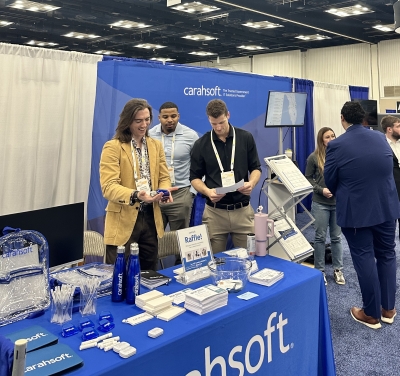
The International Association of Chiefs of Police (IACP) Technology Conference 2025 is an annual law enforcement conference that hosts public safety professionals and technology thought leaders to discuss new solutions, techniques and trainings to equip the industry for success. With a strong law enforcement portfolio and deep industry ties, Carahsoft offers unmatched insight into the challenges agencies face today. 

By bridging the gap between top software providers and law enforcement agencies, Carahsoft’s Law Enforcement Technology Team helps both sworn and civilian personnel streamline operations, enhance decision-making and drive greater efficiency across all aspects of public safety.  

Carahsoft and over 20 of our vendors, including Cellebrite, Zebra, Saferwatch, Blackberry and Magnet Forensics, attended and ran demos of their solutions across data management and analytics, artificial intelligence (AI), emerging technology, forensics, and device security. 

Here are the 5 most relevant themes featured at the IACP Technology Conference 2025. 


Integrating Artificial Intelligence into Law Enforcement 

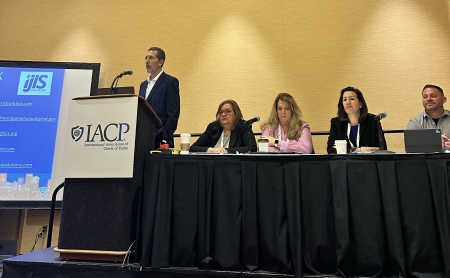
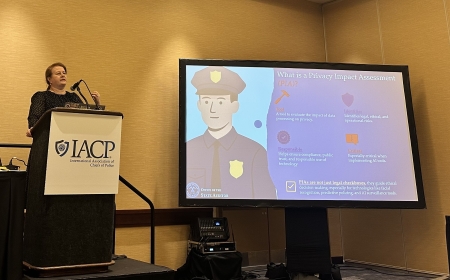
At IACP Tech, discussions centered around integrating AI into law enforcement to increase efficiency while balancing transparency and accountability to real-time threats. In the panel “Transforming Policing with AI: Efficiency, Accuracy and Ethical Considerations for Report Writing,” panelists underscored how AI can streamline administrative tasks, reduce the time officers spend on documentation and improve the overall accuracy and quality of police reports. Speakers also highlighted that the integration of AI must be accompanied by transparency and accountability. They stressed the importance of clearly disclosing when reports are generated or supported by AI to maintain public trust and uphold ethical standards. In the panel “Curb Your AI Through Privacy Impact Assessments,” speaker Nora Kurzova, the State Auditor of the State of Utah Office, explored the ethical implications that come with predictive AI in law enforcement. Kurzova drew attention to bias present in predictive tools, stressing the importance of human oversight to correct potential biases. With rigorous evaluations of the decisions that automated systems enact, law enforcement can ensure fairness and a positive impact on communities. 


Carahsoft, IACP 2025, blog, embedded image, 2025

Emerging Technologies in Law Enforcement 

For modern criminal investigations, law enforcement faces growing complexity in managing and analyzing mass volumes of digital data. As the volume of data generated by connected devices continues to surge, investigators must adapt software that enables timely and efficient data recovery. Critical evidence can come from a variety of sources, such as Nest cameras, smart rings, thermostats and even gaming consoles. Human augmentation technologies, including smart glasses, brain-computer interfaces and mixed reality devices, were all identified as new frontiers that officers could utilize during investigations. By utilizing unconventional data points as corroborative tools and avenues for new leads, law enforcement can increase its investigative awareness.  


Breakthroughs in Digital Forensics 

At the panel “Advancements in Criminal Investigations: Increasing Solve Rates with Technology,” speaker Ed O’Carroll, a retired Major of the Crimes Bureau from the Fairfax County Police Department, emphasized the transformative impact of advanced investigative technologies in resolving challenging criminal cases. Advancements in digital forensics, genetic genealogy and rapid DNA testing have all transcended the abilities of law enforcement, enabling the solving of difficult cases. As IT continues to evolve, law enforcement can utilize strategic partnerships with technology organizations to improve its digital forensics capabilities and reduce backlogs. With recent technological breakthroughs, skilled crime analysts and forensic professionals can maximize their potential through these revolutionary tools. 


The Importance of Interoperable Data in Public Safety 

Law enforcement depends on thorough and accurate analytics to improve and maintain capabilities. In the panel “Breaking the Data Chains: Advocating Open and Interoperable Solutions in Public Safety,” speakers explored the evolving role of data in public safety, with a strong emphasis on the importance of interoperability and open standards. Adopting open data standards enables seamless data exchange across systems and jurisdictions. Panelists called for greater vendor transparency and urged public safety agencies to include open data access provisions in their contracts to avoid vendor lock-in. Ultimately, by strengthening data sharing practices, public safety agencies can enhance operational effectiveness and fulfill mission objectives.  


Tailored, Interactive Training with Artificial Intelligence 

Law enforcement agencies are increasingly utilizing AI and virtual reality technologies to address resource constraints during training. In the panel “How Your Records Management Process Can Work for You—Leveraging RMS Functional Standards,” speaker Jeff Smythe discussed a statewide effort to revise curriculum by embedding AI tools into courses. By synthesizing practical data and automation, law enforcement can improve training and service quality.

Examples of this include: 

  • Utilizing real-world body camera footage to create simulated scenarios for training 
  • Collecting best practices to develop AI-powered virtual reality scenarios that feature immediate feedback and debriefing capabilities 
  • Implementing automated virtual reality scenarios to train soft skills, such as employee counseling and community engagement 

By simulating realistic, frequent tech-enhanced training, employers can significantly improve officer readiness and skill retention. AI and virtual tools offer scalable solutions to deliver consistent, high-quality training in an evolving public safety environment. 


As law enforcement professionals handle sensitive and vital information, the protection of that information and data is essential to carrying out fair and accurate investigations and procedures. Through tailored training, data analytics and AI, law enforcement can improve capabilities and focus resources on protecting civilians.  

To learn more about public safety related technology, visit Carahsoft’s law enforcement portfolio to explore solutions showcased at IACP Technology Conference. For additional research into the key takeaways that industry and Government leaders presented at IACP Technology Conference, view Carahsoft’s full synopsis of key sessions from the tradeshow.