Today marks a significant milestone for Snyk and, more importantly, for the security posture of the U.S. Government. I’m thrilled to introduce Snyk for Government, our FedRAMP Moderate authorized solution for the Public Sector.
This authorization underscores our unwavering commitment to providing secure development solutions that meet the rigorous standards of the Federal Risk and Authorization Management Program (FedRAMP). It means that U.S. Government agencies can now confidently leverage Snyk’s comprehensive platform to identify and remediate vulnerabilities throughout their software development lifecycle, knowing it meets the stringent security and compliance requirements mandated by the Federal Government.
This achievement is not just a certification; it’s a testament to our dedication to building trust and ensuring the integrity of the software that powers critical Government functions. It allows agencies to embrace modern development practices, including the use of open source software and cloud-native technologies, with the assurance that security is baked in from the start.
The Power of Proactive Security
At Snyk, we believe that security shouldn’t be an afterthought. It needs to be an integral part of the development process. Our platform empowers developers to find and fix vulnerabilities in their code, dependencies, containers and infrastructure as code – early and often. This proactive approach not only reduces risk but also accelerates development cycles by preventing security issues from becoming costly roadblocks later on.
Snyk for Government offers the same powerful capabilities that our enterprise customers rely on, tailored to the specific needs and compliance requirements of Government agencies based on NIST 800-53v5 security controls. This includes:
Comprehensive Vulnerability Detection: Identifying security flaws in open source libraries, proprietary code, containers and infrastructure configurations.
Actionable Remediation Advice: Providing clear guidance and automated fixes to address vulnerabilities quickly and efficiently.
Policy Enforcement: Enabling organizations to define and enforce security policies across their development teams.
Integration with Developer Tools: Seamlessly integrating with popular IDEs, build tools and CI/CD pipelines.
Detailed Reporting and Compliance Features: Providing the visibility and documentation needed to meet FedRAMP requirements.
Investing in the Future of Security: The Snyk AI Advantage
At Snyk we recognize the transformative potential of AI in cybersecurity. By leveraging machine learning and advanced algorithms, we are building intelligent capabilities into our platform that will provide even more accurate vulnerability detection, smarter remediation recommendations and enhanced threat intelligence.
AI is accelerating development faster than ever with Snyk you can ensure the code flooding your systems is secure and, beyond development, verify AI-powered apps aren’t creating unmanaged security risks. Ensure your organization stays secure our AI enabled agentic solution:
Keep Pace with Development: Learn how to scale security to match AI-generated code’s unprecedented speed and volume.
Staying Ahead of New Threat Vectors: Tackle emerging AI threats as apps increasingly leverage LLMs.
Adapting Developer Workflows: Explore the evolving role of developers and the skills needed for a new era of AI-assisted coding and building AI-powered apps.
Build Upon ApSec Governance: Leverage AppSec governance towards secure AI adoption and risk management.
For U.S. Government agencies, these AI-driven advancements will translate into a more resilient and secure digital infrastructure. For the enterprises that service the Government, integrating Snyk’s AI-powered platform into their development processes will not only help them meet stringent security requirements but also provide a competitive edge by building more secure and reliable solutions.
The FedRAMP Moderate authorization for Snyk for Government is a significant step forward in our mission to empower organizations to build securely. Combined with our ongoing investment in cutting-edge technologies like AI, we are confident that Snyk will continue to be a trusted partner for the U.S. Government and its partners in navigating the evolving landscape of software security.
We are excited about this milestone and look forward to helping Government agencies and their partners build a more secure digital future, together.
Carahsoft Technology Corp. is The Trusted Government IT Solutions Provider, supporting Public Sector organizations across Federal, State and Local Government agencies and Education and Healthcare markets. As the Master Government Aggregator for our vendor partners, including Torq we deliver solutions for Geospatial, Cybersecurity, MultiCloud, DevSecOps, Artificial Intelligence, Customer Experience and Engagement, Open Source and more. Working with resellers, systems integrators and consultants, our sales and marketing teams provide industry leading IT products, services and training through hundreds of contract vehicles. Explore the Carahsoft Blog to learn more about the latest trends in Government technology markets and solutions, as well as Carahsoft’s ecosystem of partner thought-leaders.
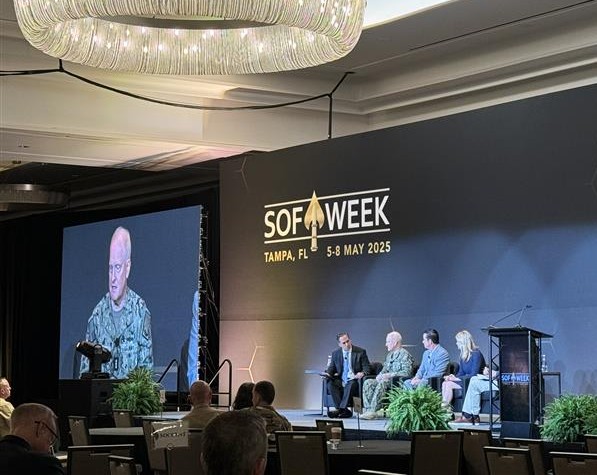
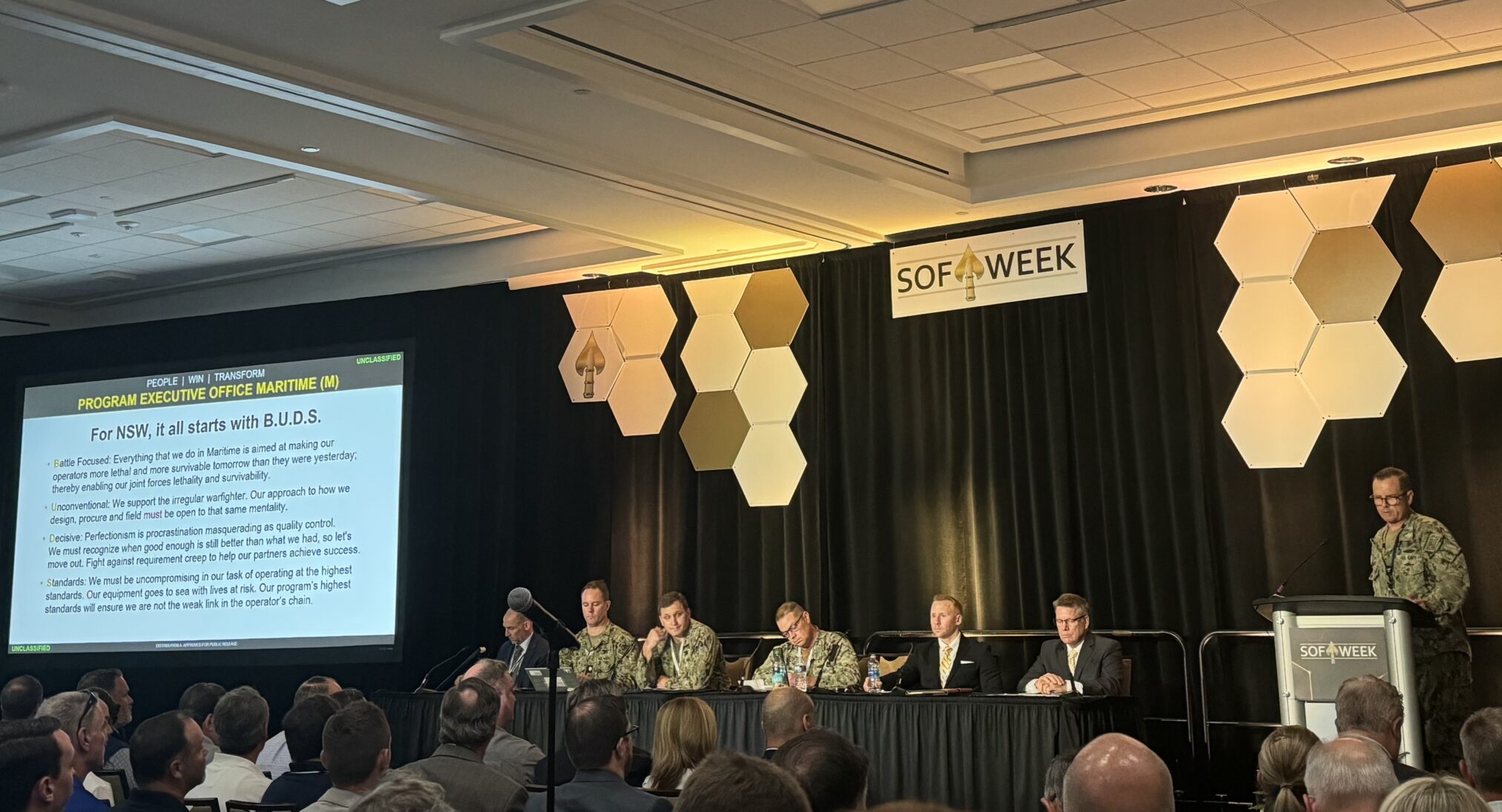
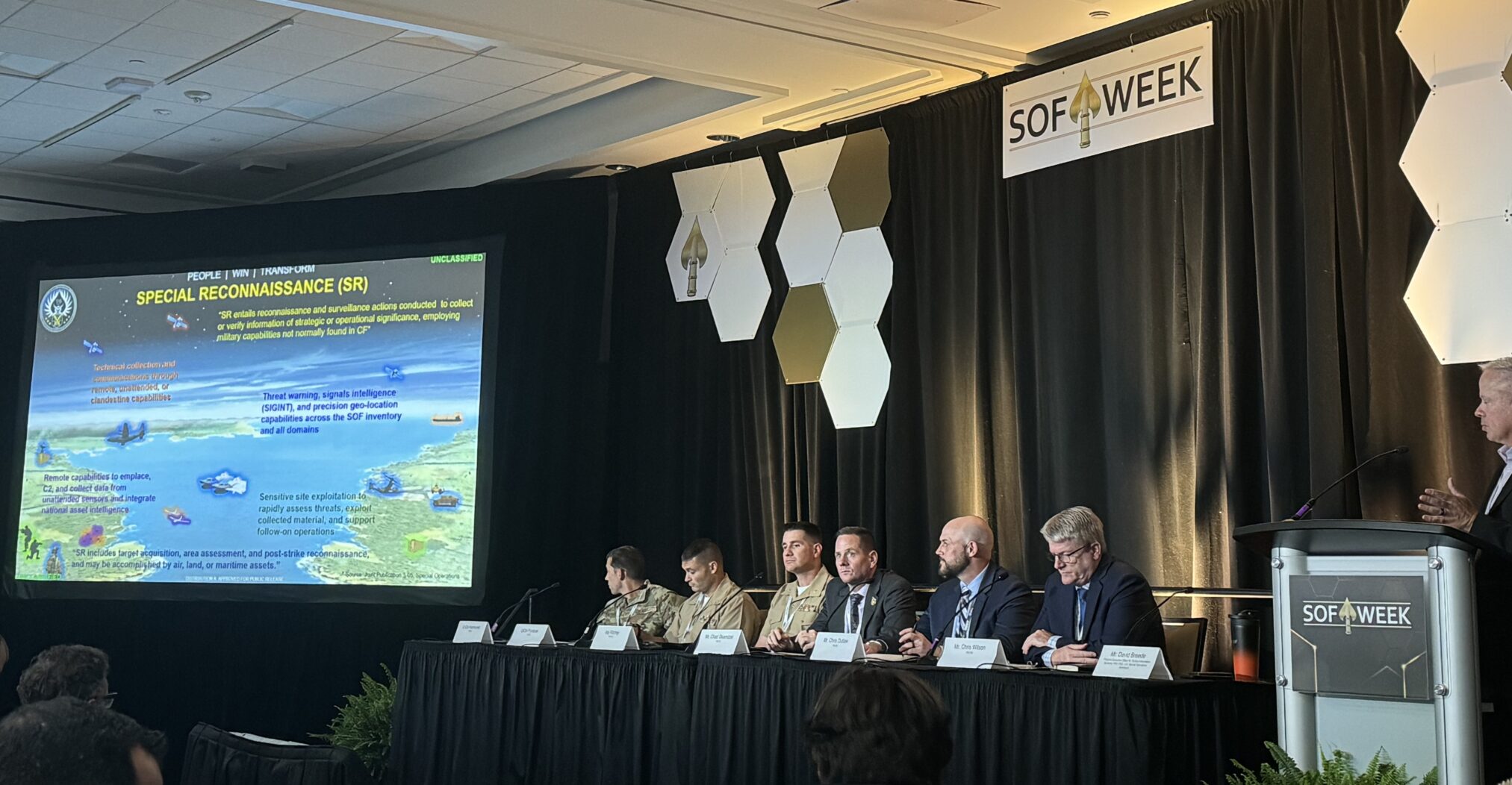
Effective defense often relies on operations that are agile, adaptable and focused. Special Operations Forces (SOF) Week 2025 is an international conference for thought leaders, Government representatives and key military decision-makers involved in the Department of Defense (DoD). Jointly hosted by the United States Special Operations Command (SOCOM) and Global SOF, the conference platformed discussions surrounding the improvement of cybersecurity and technology within SOF.
This year, Carahsoft and over fifty of our technology partners attended to showcase solutions in artificial intelligence (AI), cybersecurity and much more, supporting SOCOM and DoD mission objectives.
The SOF Week conference featured five key themes for attendees to learn about.
Leveraging Artificial Intelligence to Achieve SOF Objectives
One of SOCOM’s innovation priorities is to onboard products that have AI integrations, uncrewed and autonomous systems, power computing and quantum capabilities. In the session “Keynote Address: U.S. Special Operations Command Team,” speakers General Bryan P. Fenton, Commander of USSOCOM and the Command Sergeant Major Shane Shorter, Senior Enlisted Leader of the USSOCOM, discussed optimizing the computing power of adapted technology to maintain pace with adversaries. By providing the needed tools, SOCOM can help reduce the cognitive load placed on personnel.
In the session “PEO Overview: Tactical Information Systems,” speaker Chad Skiendsiel, the PM for Transport Systems, PEO TiS, requested multiple AI capabilities that would be useful to SOCOM operations. These are:
Automation of data and containerization
Software infrastructure that enables more containerization of data and configuration.
Commercial solutions that can enable classified data computing as well as compute power out to the edge
Embedded computing that can be attached to the warfighter to achieve better situational awareness
In the session “Fireside Chat: AI Innovation and Integration in National Security,” speaker Akash Jain, CTO of Palantir discussed SOF’s efforts to implement AI into SOCOM operations. One key area that requires special attention is AI integration into legacy systems, many of which have existed for years and cannot easily have AI added to enhance the work SOF does. This is why vendors with solutions, such as Hewlett Packard Enterprise, can be utilized to integrate AI into existing infrastructure.
Bolstering Cybersecurity in SOCOM Operations
One of the key themes present in SOCOM’s evolving cybersecurity efforts is the adoption of a Zero Trust architecture, particularly within the Enterprise Information Systems directorate. It is referenced across multiple capability areas as essential to aligning with broader DoD cybersecurity mandates. To advance this strategy, SOCOM is actively engaging with industry and conducting assessments to define mission-driven requirements. Technology experts such as Dell Technologies, Red Hat and VMware are constantly working to be at the forefront of Zero Trust efforts.
Following this focus, the Professional Employer Organizations (PEO) is implementing cybersecurity initiatives in its contracting services. All solicitations will include cyber discipline and hygiene requirements, supply chain risk management and cybersecurity risk management requirements. Across the portfolio within SOCOM, post-quantum encryption is being looked at as the future strategy for cyber and will continue to develop as time goes on. The PEO SOF Digital Applications (SDA) also notes that CISA’s Software Bill of Materials (SBOMs) will continue to be added to its cybersecurity pipeline to ensure software is open and honest. These initiatives work to fortify existing and future cyber structures to protect the effectiveness of missions and the safety of personnel.
As supply chains, SOF and the Defense Industrial Base (DIB) continue to be under threat from adversarial cyber-attacks, PEO Services continue working to fully implement CMMC guidelines in their procedures. For unclassified solicitations, SOCOM will implement CMMC Level One, while any classified solicitations will be level two or higher.
Industry Partnerships to Meet Demand
In the session “Keynote Address: U.S. Special Operations Command Team,” Major General Bryan P. Fenton heavily emphasized that partnerships are key to meeting industry needs. While SOF is maintaining pace with current requirements, to stay ahead in the future, SOCOM must look to industry partners for their specialty and assistance.
One such category of offerings is autonomous, unmanned systems promote efficiency by saving time on menial, repetitive tasks. SOCOM is looking to implement dual-usage, capable autonomous products, such as self-driving cars, drones and robots. Modeled after the Private Sector’s success with unmanned systems, SOCOM agencies aim to evolve at the same speed. To enact this, all onboarded unmanned systems must be interchangeable, adaptable and successful within any region of the world to meet mission requirements.
The Importance of a Modular Open Systems Approach (MOSA)
For the military, multi-domain connectivity is the way forward. Military agencies are focusing on modular open-mission systems that can be interoperable, as they are the key to staying ahead of future conflicts. Depending on industry trends and the latest in cybersecurity, equipment may need to be changed on the fly. Some technologies will need to be found preemptively; in these scenarios, industry experts can provide assistance.
In the session “PEO Overview: SOF Digital Applications session,” Modular Open Systems Approach (MOSA) was noted by every program manager as a solution. This approach is desired as it allows systems and products to remain agile when new software is added.
MOSA consists of three main components:
Infrastructure and Deployment: Hybrid deployment of cloud, multi-vendor capabilities, Open-source technologies and COTS integration
Data Centricity & Interoperability: Messaging & EDA, Black Box interfaces, Ontology Support, preferences on containerization and VMs
AI Implementation & Sustainment: Low-cost and remotely maintainable solutions, lifecycle management and updates, AI support for LLMs and at the edge and adaptability on mission needs
By enabling agencies within SOCOM to implement software updates, MOSA promotes interoperability and the speedy onboarding of key technologies.
Humans Over Hardware
While technology is vital to SOCOM Operations, humans are the backbone of the agency. In the session “Keynote Address: US Secretary of Defense,” Secretary of Defense Pete Hegseth spoke on the three pillars for success within the DoD and how SOCOM can reiterate and emphasize them. Among these three, the warrior ethos is targeted with the slogan, “humans are more important than hardware.” Secretary of Defense Pete Hegseth, USSOCOM Commander General Fenton, and the Chairman of the JCOS Dan Caine all echoed this point that warfighters are the most important aspect within SOF. Any person that meets warfighter standards can serve, and all purchases and developments should center the safety and wellbeing of the warfighter in mind.
Through the collaboration between people and technology, SOF is able to work securely, quickly and smoothly. With top cybersecurity, automation integrations and industry partnerships, SOCOM continues to fulfill DoD mission objectives and keep personnel safe.
In today’s fast-paced digital world, security teams are under immense pressure to defend against a surge in sophisticated cyber threats. Expanding attack surfaces, driven by new technologies, cloud adoption, remote work and interconnected devices, create countless entry points for attackers. Security Operations Centers (SOCs) must evolve by leveraging automation, AI and machine learning (ML) to stay ahead—cutting through the noise, accelerating threat detection and streamlining responses to provide scalable, real-time defense against ever-evolving risks.
Modern SOC Challenges
As cyber threats continue to rise in both frequency and sophistication, SOCs are coping with an overwhelming volume of security incidents. Check Point Software’s 2025 Security Report reveals a staggering 44% year-over-year increase in cyberattacks, highlighting the urgent need for stronger, more scalable defenses.
Organizations are no longer operating within clearly defined perimeters. Today’s digital environments are sprawling and dynamic, spanning on-premises infrastructure, multi-cloud deployments, software as a service (SaaS) platforms, Internet of Things (IoT) devices and a remote workforce. Each layer adds complexity—and with it, new vulnerabilities. The expanding attack surface increases not only the number of potential entry points but also the volume of activity that must be monitored.
This leads to another major challenge: organizations are now generating unprecedented volumes of security data. SOCs are tasked with analyzing vast, continuous streams of telemetry to detect threats in real time but extracting meaningful insights from this flood of data has become increasingly difficult.
While traditional Security Information and Event Management (SIEM) systems remain a core component of enterprise security, they are struggling to keep up. Many SIEM platforms are constrained by schema designs, database capacity and a limit on the number of detection rules that can be ingested.
As a result, SOCs are often forced to make difficult trade-offs, choosing which data to collect and analyze based on storage and processing limitations. This selective approach creates blind spots, potentially allowing critical threats to go undetected. In fact, 56% of organizations report coverage gaps directly linked to the limitations of legacy SIEM systems, underscoring the need for modernization.
Alert fatigue is compounding the issue. Even well-configured SOCs can generate thousands of alerts daily, overwhelming analysts and increasing the risk of real threats being missed. According to a 2023 RSA survey by Gurucul, 61.37% of security teams report receiving more than 1,000 alerts per day, while 4.29% deal with over 100,000. Alarmingly, 19.74% say the volume is so high they cannot even quantify it.
Beyond the operational strain, cost is another major barrier. A medium-sized organization can produce terabytes of log data every day, and storing and processing this information—especially at the scale required for comprehensive threat detection—can cost hundreds of thousands annually. SOC leaders are under constant pressure to strike a balance between broad visibility and tight budget constraints.
In this high-volume, high-velocity environment, traditional manual analysis simply cannot keep up. To close visibility gaps, reduce alert overload and operate efficiently at scale, organizations must adopt intelligent automation. Advanced analytics, ML and AI-driven detection can dramatically reduce noise, prioritize critical alerts and help SOC teams focus on what matters most—responding to real threats in real time.
The Role of Automation in SOC
Automation is a key force multiplier for SOC teams, enhancing threat response speed and accuracy. Over the past decade, security orchestration, automation and response (SOAR) solutions have had mixed success. While these solutions streamline workflows and incident response, they require significant maintenance, including scripting, playbook development and continuous security stack integration. The high total cost of ownership often outweighs initial investments, making long-term sustainability a challenge.
To address these limitations, SOCs are adopting telemetry pipelines, which intercept and filter traffic before SIEM processing, ensuring only relevant security data is analyzed. Advanced enrichment reduces redundant data, improving efficiency while lowering cloud storage costs.
Extended detection and response (XDR) solutions are also gaining traction. XDR integrates multiple security layers, correlates alerts locally and reduces reliance on centralized SIEMs. Vendor-specific XDR stacks work best within their own ecosystems but streamline threat detection and response.
Data lakes are becoming essential for long-term threat hunting, enabling analysts to detect subtle, prolonged attacks by retaining historical data for extended periods. This allows analysts to uncover patterns that might otherwise go unnoticed.
As SOC automation evolves toward autonomous SOC models and “SOCless” SIEM architectures, ML-driven algorithms will handle much of the processing and correlation, facilitating faster threat detection and response. By automating repetitive tasks like log analysis and low-level alert triage, SOC analysts can focus on complex investigations, enhancing security while addressing the skills gap.
Still, Gartner predicts that by 2030, 75% of SOC teams will see a decline in core security analysis skills as they grow too reliant on automation and AI. Therefore, deployments aimed at both augmenting human tasks and adding precision and speed to human investigations will be more effective than single-technique AI analytics. Striking the right balance between machine-driven speed and human insight seems like a feasible solution that keeps security teams agile, informed and in control of threats.
Evolving Technologies and Solutions
AI and ML capabilities enhance predictive analytics and threat-hunting capabilities, keeping SOC teams ahead of attackers. According to Gartner, by 2026, advancements like “action transformers” and the continued evolution of Generative AI (GenAI) will power semi-autonomous platforms that can greatly enhance and support the day-to-day operations of cybersecurity teams.
As cybersecurity AI assistants evolve, they will be used as more sophisticated tools for interactive support and investigation, covering tasks like incident response, risk assessment and code reviews. These tools are expected to boost efficiency and reduce response times, whether in organizations just building their security programs or in mature teams with established processes. These innovations improve threat detection and SOC readiness to withstand modern cyber risks.
Future SOC Operations
Progressive organizations understand the real value of AI/ML-powered SOC technologies that can be reasonably used and shift their focus from single-technique tools to building integrated systems that fuse software, AI and human expertise. Achieving scalable impact means having a clear strategy that targets the most meaningful opportunities.
Additionally, investment in workforce development and upskilling will be essential to bridging the cybersecurity talent gap. Organizations that invest in these areas will elevate their SOC effectiveness, better safeguard critical assets and build a resilient, future-ready cybersecurity posture.
Carahsoft Technology Corp. is The Trusted Government IT Solutions Provider, supporting Public Sector organizations across Federal, State and Local Government agencies and Education and Healthcare markets. As the Master Government Aggregator for our vendor partners, including SOC Prime we deliver solutions for Geospatial, Cybersecurity, MultiCloud, DevSecOps, Artificial Intelligence, Customer Experience and Engagement, Open Source and more. Working with resellers, systems integrators and consultants, our sales and marketing teams provide industry leading IT products, services and training through hundreds of contract vehicles. Explore the Carahsoft Blog to learn more about the latest trends in Government technology markets and solutions, as well as Carahsoft’s ecosystem of partner thought-leaders.
A recent investigation by CBS News’ “60 Minutes” has highlighted a significant issue: organized crime rings, often operating from overseas, are using stolen identities to steal billions of dollars from the U.S. Federal and State programs. These sophisticated fraud schemes specifically target public assistance initiatives, taking advantage of digital vulnerabilities and overwhelmed systems. The COVID-19 pandemic accelerated the delivery of relief funds, presenting new challenges for security systems still being implemented.
As these cyber-enabled crimes grow in complexity and scale, Public Sector organizations must evolve their defenses. HUMAN Security offers a modern solution that aligns with Public Sector standards and frameworks, like the NIST Cybersecurity Framework, to protect against automated fraud, account takeovers and bot-driven exploitation.
The Expanding Threat Landscape: Government Fraud at Scale
The fraud rings described in the CBS report do not fit the Hollywood stereotype of a lone hacker in a basement. These are industrial-scale operations run by criminal syndicates that:
Use stolen or synthetic identities to apply for public benefits such as unemployment insurance, COVID relief, food assistance and housing vouchers.
Leverage bots and automated scripts to rapidly test stolen credentials against Government login portals.
Host phishing websites and fake document generators to fool verification systems.
Exploit the lack of robust digital defenses in legacy Public Sector infrastructure.
At the height of the pandemic, the U.S. prioritized the rapid distribution of trillions in relief funds to support individuals and businesses in crisis. In the urgency to deliver aid quickly, some agencies adjusted standard fraud controls—creating unforeseen opportunities for bad actors. According to the CBS report, an estimated $280 billion was lost to fraud, with an additional $123 billion categorized as wasted or misused.
The tactics employed have now evolved into permanent tools of financial exploitation. Many cybercriminals continue to exploit social welfare and Government programs by leveraging automation and AI. Fraud isn’t slowing down—it’s scaling up.
Why Public Sector Agencies Are Attractive Targets
Government systems present a unique target profile for attackers due to a combination of high-value data, broad user bases and strained IT resources. Here’s why the Public Sector is particularly vulnerable:
1. High Payout Potential
Each successful fraudulent claim can yield thousands of dollars in benefits. Fraudsters often operate in bulk, submitting thousands of applications using stolen identities.
2. Legacy Infrastructure
Many State and Local agencies still operate on outdated software stacks that lack modern bot detection or behavior-based threat analysis.
3. Lack of Real-Time Monitoring
Fraudulent applications often go undetected until after funds are dispersed. Manual review processes are insufficient to handle the volume of claims.
4. Increased Script & API Vulnerabilities
Fraudsters exploit front-end vulnerabilities, such as JavaScript manipulation or misuse of APIs, to simulate real user activity, bypass verification checks and deploy fake documents.
HUMAN Security: A Modern Solution for a Modern Threat
HUMAN Security specializes in protecting organizations from automated attacks, fraud and abuse by distinguishing between real users and malicious bots. HUMAN’s solutions are uniquely positioned to help Public Sector agencies address the specific types of fraud exposed by 60 Minutes.
1. Bot and Automation Mitigation
Fraudsters frequently use bots to submit applications at scale, probe systems for weaknesses and conduct credential stuffing attacks. The HUMAN Defense Platform analyzes over 20 trillion digital interactions weekly to identify real-time anomalies.
Through behavioral analysis, device fingerprinting, and machine learning, we can help public sector clients:
Detect non-human interaction patterns
Prevent fake accounts from being created
Block bot-driven denial-of-service or overload attempts
2. Account Takeover & Credential Abuse Defense
Many fraud schemes begin with access to a real person’s Government credentials. We prevent account takeovers by identifying compromised credentials in real time and helping clients stop unauthorized login attempts.
Our Application Protection Package also integrates into public-facing login portals to block brute-force attempts and detect unusual login behavior.
3. Fake Identity and Synthetic Account Prevention
Fraudsters use fake IDs or generated synthetic identities to bypass identity checks. Our behavior-based analytics distinguish real users from fabricated personas—stopping fake account creation before it starts.
4. Real-Time Threat Intelligence:
By continuously monitoring emerging threats, we equip Public Sector clients with up-to-date information to counteract evolving fraud tactics.
5. Integration with Public Sector Frameworks:
Leading-edge solutions that align with standards like the NIST Cybersecurity Framework, HUMAN facilitates seamless integration into existing Government infrastructures and helps public sector clients with compliance and regulatory requirements.
Real-World Benefits to Government Agencies
By adopting fraud protection solutions, public agencies can:
Minimize Fraud Risk: Real-time prevention minimizes the risk of sending funds to bad actors.
Protect Citizens: Reduce identity theft and unauthorized access to sensitive citizen data.
Build Trust: Demonstrating robust cybersecurity fosters public trust in digital Government systems.
Streamline Compliance: Meet modern standards like PCI DSS 4.0 requirements 6.4.3. & 11.6.1 and NIST CSF with confidence.
Save Taxpayer Dollars: Every fraudulent dollar blocked is money that can be returned to real beneficiaries or saved for future programs.
A Call to Action for Government Leaders
The fraud revealed in the CBS 60 Minutes report isn’t an isolated event—it’s a warning sign. Digital transformation has accelerated across public agencies, but fraud defenses haven’t always kept pace.
Government leaders must take a proactive stance by:
Modernizing fraud detection capabilities
Closing visibility gaps across digital infrastructure
Adopting behavior-based, real-time defenses like HUMAN Security
Aligning security strategy with established frameworks (NIST, PCI DSS)
Fraud is no longer just a compliance risk—it’s a national security issue. As public trust and taxpayer funds hang in the balance, Government agencies must embrace modern, intelligent and automated defense systems to keep fraudsters out.
Carahsoft Technology Corp. is The Trusted Government IT Solutions Provider, supporting Public Sector organizations across Federal, State and Local Government agencies and Education and Healthcare markets. As the Master Government Aggregator for our vendor partners, includingHUMAN Security we deliver solutions for Geospatial, Cybersecurity, MultiCloud, DevSecOps, Artificial Intelligence, Customer Experience and Engagement, Open Source and more. Working with resellers, systems integrators and consultants, our sales and marketing teams provide industry leading IT products, services and training through hundreds of contract vehicles. Explore the Carahsoft Blog to learn more about the latest trends in Government technology markets and solutions, as well as Carahsoft’s ecosystem of partner thought-leaders.
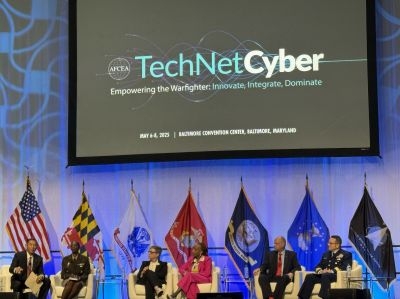
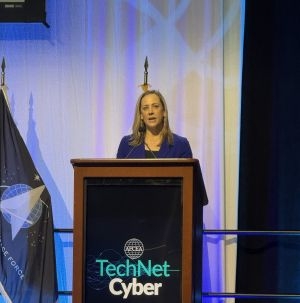
Technology is a vital part of the United States Department of Defense (DoD)’s capabilities, making security and enhancements essential to the nation’s stability and growth. AFCEA International’s flagship event, TechNet Cyber, emphasizes the role of cybersecurity and IT within the DoD. Alongside its partners, such as such as Amazon Web Services (AWS), Everfox and Ciena, Carahsoft attended TechNet Cyber to support DoD mission objectives. Carahsoft maintains a unique position in the defense industry with the ability to connect DoD and intelligence community (IC) personnel, Government IT decision-makers, thought leaders and industry and vendor partners. At this year’s conference, leaders and operators in the IT and Defense Department joined to network, facilitate problem solving and explore ways to expedite and secure the procurement process.
Expanding Zero Trust: “Flank Speed” is Ready to Scale
To safeguard against potential cybersecurity attacks, the DoD is working to secure its networks with Zero Trust, a security strategy focused on identity, credential and access management. In the session “DoD Zero Trust Success Stories,” David Voelker, Zero Trust Architecture Lead for the Department of the Navy, discussed recent initiatives to bolster Zero Trust within Flank Speed, the Navy’s single enterprise Microsoft 365 solution that provides productivity tools, collaboration tools and OneDrive storage. The Department of the Navy is planning to conduct autonomous penetration testing to determine the quality of Zero Trust capability implementation. Last year Flank Speed met 151 of 152 Zero Trust activities, meeting target far ahead of schedule. Flank Speed is the Navy’s single enterprise Microsoft 365 solution that provides productivity tools, collaboration tools and OneDrive storage.
Another speaker, Ian Leatherman, the Zero Trust Strategy Lead for Microsoft U.S. Federal, discussed key takeaways from Microsoft’s work with Flank Speed. Visibility into agency networks is critical to emboldening existing Zero Trust strategies. Mr. Leatherman stated, “When in doubt, collect the telemetry: you never know what new or novel adversary techniques you may find.” Knowing exactly how many endpoints, applications and users are on the network at any given time positions the DoD to swiftly deal with incoming threats.
Leatherman also discussed recent initiatives to involve all Navy personnel in a cybersecurity strategy; security is more than a technology solution, but a way to ensure safety within the agency. David Voelker, Zero Trust Architecture Lead at the Department of the Navy echoes this statement. While the Zero Trust Portfolio Office set their DoD-wide Zero Trust adoption target as the end of fiscal year 2027, Flank Speed is already operational. Voelker notes that the Flank Speed configuration could be lifted and shifted to other customers in the DoD, with a quick deployment time of under 24 hours. Mr. Voelker also recommends automating this shift.
Carahsoft and our vendor partners offer several cybersecurity solutions to help Government agencies implement Zero Trust architectures that protect critical information and reduce national security risk. Our offerings align with Public Sector Zero Trust maturity models developed by NIST, the DoD and CISA.
How Mission Objectives Drive Acquisition
Acquiring powerful, up-to-date technology enables the DoD to protect against persistent and increasingly sophisticated cyber-attacks. The DoD aims to streamline its procurement process to maintain pace and safeguard against attacks. In the session “DoD Software Modernization Senior Steering Group,” speaker Sean Brady, Senior Lead for Software Acquisition Enablers at the Office of the Undersecretary of Defense (Acquisition and Sustainment), explained that there are two key drivers to this transformation. The first is mission objectives; software should be tailored to allow the DoD to adapt its systems to rapidly changing threats. The second is access to commercial innovation, which allows the DoD to access products in weeks or months rather than years.
Digital Transformation for Operational Effectiveness
Digital transformation in the DoD is crucial for maintaining pace with an increasingly technology-driven security environment. Thomas W. Simms, Principal Deputy Executive Director for Systems Engineering and Architecture at the Office of the Under Secretary of Defense for Research and Engineering, discussed the major digital transformation efforts within the DoD.
The main four are:
Modular Open Systems Approach (MOSA), a congressional requirement that integrates technical and business strategies to promote acquisition and drives modular designs
Application Program Interfaces (APIs), a ruleset that allows communication between software applications and is driven by the DoD’s API guidebook, which enables the DoD to become more data-centric
The DoD’s System Engineering Guidebook, which is currently undergoing an update to incorporate guidance from the Secretary of Defense’s latest memos
By modernizing legacy systems and enabling the DoD to acquire the newest and greatest in IT, these initiatives enhance operational effectiveness and improve decision-making speed.
Fast-Tracking Authority to Operate (ATO)
In the defense industry, technology must be approved to mitigate security risks. The Software Fast Track (SWFT), a process that expedites software verification within the U.S. Government, is changing the way the DoD manages risks and conducts Authority to Operate (ATO). Contractors can get involved with the latest software acquisition and risk management changes by participating in the three recently released requests for information (RFIs).
Katie Arrington, the Acting DoD Chief Information Officer (CIO), also discussed the Software Fast Track (SWFT) set to launch on June 1st of this year. The initiative will replace the traditional Authority to Operate (ATO) structure and add a few requirements, such as third-party Software Bill of Materials (SBOM), third-party risk assessments and the population of Enterprise Mission Assurance Support Service (eMASS) with artifacts. Once these guidelines are in place, contractors will gain a Provisional ATO.
Ms. Arrington attests that these changes will revolutionize the Risk Management Framework (RMF) by allowing industry experts to provide feedback to the DoD. Paper compliance isn’t enough anymore, Ms. Arrington says. The DoD is looking for “continuous monitoring, red-teaming and people to continually evaluate their capability.”
She also added that the DoD will be sunsetting the Approved Products List (APL). Additional sponsor additions are no longer being accepted. Instead, the SWFT initiative will take over, establishing a “trust, but verify” procedure, promoting both security and swift ATO action.
Using Interoperability to Pitch to DoD
As operations increasingly move online, interoperability becomes increasingly important to efficiency and accessibility. Venice Goodwin, the outgoing CIO for the Department of the Air Force, offered advice to industry professionals on navigating changes within DoD. Goodwin recommends that the industry practice “extreme teaming;” rather than service each department individually: vendors should focus on servicing the DoD as a whole. As the DoD prioritizes capabilities that have cross-departmental benefits, industry experts should demonstrate the effectiveness of their capabilities and solutions in every domain across land, sea, air and space. With this collaboration, both the Private and Public Sector can get the results they need.
The digital transformation journey within the Department of Defense represents not just an evolution of systems, but a commitment to defending interests at home and abroad. Acquisition, ATO and Zero Trust are all valuable assets to maintaining pace with the current, constantly evolving technological climate, ensuring the United States carries out its mission of protecting the nation.
To learn more about mission-critical technology, visit Carahsoft’s defense portfolio to explore solutions showcased at TechNet Cyber. For additional research into the key takeaways that industry and Government leaders presented at TechNet Cyber, view Carahsoft’s full synopsis of key sessions from the tradeshow.
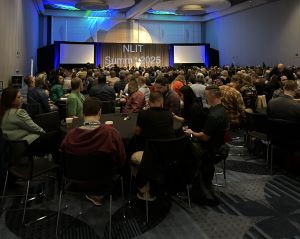
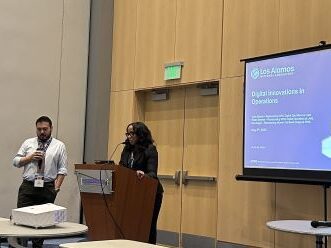
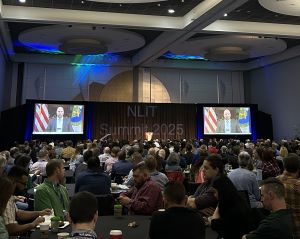
Technology enables Government agencies to strengthen security, increase efficiency and collaborate across departments. This year at the National Laboratories Information Technology (NLIT) Summit, representatives from the National Laboratories, Government IT decision-makers and industry and vendor partners gathered to discuss recent advancements in IT across the Department of Energy (DOE) labs, featuring panels, interactive sessions and demonstrations focused on emerging, mission-driven technologies. Carahsoft stood alongside its partners, such as Amazon Web Services (AWS), Snowflake and GitLab to support the DOE’s mission objectives. Together, we deliver secure, compliant solutions that drive innovation—from MultiCloud strategies and generative AI to streamlined IT procurement.
Here are the top themes discussed at this year’s summit.
Artificial Intelligence Exploration
The National Laboratories are at the forefront of advancing artificial intelligence (AI) and High Performance Computing (HPC) to meet critical mission objectives. Several DOE labs are showcasing this commitment through transformative initiatives. At Los Alamos National Laboratory, the establishment of the National Security AI Office and the deployment of the Venado AI supercomputer reflect a strategic focus on embedding AI into national security operations. Sandia National Laboratories is leading innovation with “vibe coding,” an AI-assisted development methodology that allows developers to generate code based on described functionality, streamlining the software development process.
To further accelerate AI and HPC capabilities, the National Laboratories are leveraging NVIDIA technologies, including GPU-powered infrastructure and AI toolkits, to support high-throughput data analysis, simulation and machine learning applications. This partnership enables scalable performance and energy-efficient computing tailored to complex scientific workloads.
In response to growing cybersecurity threats, labs are also deploying AI-driven automated response systems to detect and neutralize risks in real time. These combined efforts enhance the DOE’s cybersecurity posture while reinforcing the National Laboratories’ leadership in next-generation computing and AI innovation.
Argo: A New Generative AI Platform
As part of its development, Argo incorporates technologies from OpenAI to support advanced natural language processing and generative tasks. By integrating OpenAI models with internal controls and security protocols, Argonne can deliver high-performing language tools tailored to research and mission needs, without compromising data integrity.
Future enhancements to Argo will include:
Document upload for summarization and analysis
Adjustable response styles that range from creative and exploratory to focused and deterministic
Integration of Argonne-specific knowledge and internal documents for contextualized outputs
Onsite deployment of GPU resources to host fine-tuned and open-source LLMs, enabling operational applications such as translation, code generation and scientific research
Through Argo, Argonne is setting a benchmark for secure, mission-aligned AI deployment across the DOE ecosystem.
An Automated Approach to Cybersecurity
Sandia National Laboratories emphasized the critical need to embed security at every stage of the software development lifecycle through a DevSecOps approach. In the session “From DevOps to DevSecOps: ASC DSO at Sandia’s Journey toward Secure Software” Stuart Baxley, a Senior Research & Development Computer Scientist shared how Sandia integrates automated tools and continuous monitoring to enable early threat detection and fast remediation—reducing both risk and cost compared to reactive approaches. Agencies with automation tools, such as GitLab, enable the National Laboratories to manage their unique software development environments.
To enhance cybersecurity posture, Sandia recommends the adoption of key security practices and tools, including. Static Application Security Testing (SAST), Software Bill of Materials (SBOM) and container scanning. Leveraging these capabilities is essential to maintaining resilience in an increasingly complex and dynamic threat environment.
Efficiency Through the Cloud
Lawrence Berkeley National Laboratory has advanced its cloud adoption efforts through the Materials Project initiative, leveraging Amazon Web Services (AWS) to significantly improve the availability, accessibility and scalability of its data products. This successful deployment offers a strong blueprint for other national laboratories exploring cloud migration.
By transitioning to cloud infrastructure, the lab has unlocked a range of strategic benefits including enhanced collaboration, improved high-performance computing capabilities, robust encryption and data security and accelerated AI-driven research. These advantages position cloud adoption not just as a technical upgrade, but as a critical enabler of research efficiency, data innovation and scientific discovery in today’s increasingly data-intensive environment.
Managing Diverse Data
As datasets across the National Laboratories continue to grow in size and complexity, effective data management becomes increasingly challenging. Oak Ridge National Laboratory advocates for a holistic approach, recognizing that no single tool can address every need. Instead, the focus should be on strengthening data transfer capabilities and adopting integrated strategies to improve overall data mobility and accessibility.
In alignment with federal mandates, laboratories and agencies managing research data must prioritize the following:
Transparency – ensuring data is accessible to the public to support open research
Up-to-date data management practices – implementing current tools and processes
Comprehensive audit trails and metadata documentation – maintaining accountability and traceability
By improving data transfer methods and aligning with these core principles, National Laboratories can enhance collaboration, uphold security standards and maximize the impact of their research.
Through a combination of strong data governance, cloud adoption, AI integration and cybersecurity automation, the National Laboratories remain committed to advancing innovation and IT excellence across the DOE ecosystem.
Through data management, cloud application, AI and cybersecurity automation, the National Laboratories maintain a comprehensive strategy to continually fulfill their mission of advancing IT knowledge and collaboration across the DOE.
With the release of the Cybersecurity Maturity Model Certification (CMMC) 2.0 framework, 2025 marks a pivotal year for education, collaboration and implementation across the Defense Industrial Base (DIB). As compliance standards evolve, this year’s lineup of CMMC-centric events offers defense contractors, cybersecurity professionals and Government stakeholders unparalleled opportunities to deepen their understanding, explore new solutions and engage directly with policy leaders and technology providers. Below is a preview of the key events shaping the CMMC landscape in 2025—and how Carahsoft and our partners are helping to drive the conversation forward.
CEIC West 2025, the official conference of The Cyber AB, is the premier event for defense contractors and cybersecurity professionals focused on implementing the CMMC 2.0 framework. Hosted by Forum Makers, this conference offers practical strategies to help organizations achieve compliance and secure their place in the DIB. Attendees will benefit from expert-led sessions, hands-on workshops and networking opportunities with key figures from the DoD and The Cyber AB. Additional highlights include pre-conference training, the Women of CMMC Dinner and the Tech for Troops Golf Tournament. Learn how to close security gaps, manage costs and tackle the real-world challenges of CMMC compliance at CEIC West 2025.
Sessions to look out for:
Keynote: “Protecting CUI, Federal Contractors and the Future of CMMC” feat. Katie Arrington, CIO, DoD
“CMMC Beyond the DoD: Preparing for a Broader Compliance Landscape”
Carahsoft will present a Solutions Showcase spotlighting a group of partners that provide CMMC compliance tools tailored for the DIB. Numerous resources and solutions providers —including those in Carahsoft’s “Solutions Showcase” such as Cyturus, Lifeline Data Centers, Axonius Federal Systems, ISI Defense and Paramify— will be available for attendees seeking to learn more about CMMC and Carahsoft’s role in the program. Join us at the pre-conference golf tournament as Carahsoft is proud to be the Beverage Sponsor of this charitable event!
Carahsoft CMMC Webinar Series
August 12-14 | Virtual Event
Carahsoft upcoming webinar series offers a comprehensive look at the latest updates to the CMMC program, providing DIB stakeholders with the insights needed to achieve and maintain compliance. Through a series of expert-led sessions, participants gain a clear understanding of the CMMC framework and learn how to implement effective cybersecurity practices aligned with Federal requirements. Whether you are just beginning your compliance journey or looking to strengthen your existing posture, this series delivers actionable guidance for all levels of the CMMC compliance journey.
The Carahsoft CMMC Webinar Series will feature a number of partners to share insights and offer practical solutions for achieving compliance. Check out our website for more information and to register as we get closer to the event date.
September 23-25 | Huntsville, AL | In-Person Event
The National Cyber Summit 2025 is the nation’s most innovative cybersecurity technology event, offering unique opportunities for education, collaboration and workforce development. Hosted by the North Alabama Chapter of the Information Systems Security Association (NAC-ISSA), Cyber Huntsville Corporation (CHC), Auburn University Research and the University of Alabama in Huntsville, the summit brings together participants from Government, industry and academia. Attendees can expect a comprehensive agenda featuring expert-led sessions, hands-on training and valuable networking designed to foster collaboration and innovation across the cybersecurity landscape. With its strong emphasis on advancing best practices and protecting national interests, the National Cyber Summit remains a must-attend event for the cybersecurity community.
Carahsoft will host a Partner Pavilion highlighting trusted technology providers focused on CMMC compliance solutions for the DIB. This space will serve as a hub for attendees to explore Carahsoft’s extensive lineup of solutions providers and educational resources, offering access to experts and compliance tools.
October 16-17 | Washington, D.C. | In-Person Event
The essential gathering for Defense Contractors and their Subcontractors to get CMMC compliance right. CS5 is the one conference that brings the entire compliance ecosystem together. From the experts who prepare you (RPOs) to the auditors who assess you (C3PAOs) and the training and tool providers who support you every step of the way. Start here to deliver CMMC compliance to your organization. Return here to optimize your path. If you’re in the defense industrial base, you can’t afford to miss it.
Carahsoft will have a Solutions Showcase for partners that provide CMMC compliance solutions to the DIB. This showcase will provide attendees with a hands-on opportunity to explore Carahsoft’s expansive network of compliance-focused technologies and gain insights into the tools, services and support available to guide them through every phase of their CMMC journey.
December 7-10 | Fort Lauderdale, FL | In-Person Event
The 2025 Department of Defense Intelligence Information System (DoDIIS) Worldwide Conference is a premier event that brings together senior decision-makers, technical experts and innovators from the DoD, Intelligence Community (IC), industry, academia and Five Eyes (FVEY) partners. This immersive conference offers a unique platform for collaboration and knowledge sharing, focusing on the integration across the IC and the rapid development and deployment of mission-focused solutions. Attendees will have the opportunity to engage with a comprehensive selection of sessions, interact with a broad range of leaders and showcase solutions addressing issues impacting mission users. The event also features dynamic speakers, innovative technologies and networking socials, providing an invaluable experience for all participants.
Carahsoft will host an expansive Partner Pavilion highlighting cutting-edge technologies that support defense and intelligence missions. Within this space, our Cyber booth—located in the Vertical Alley”—will feature a demo station from our CMMC team.
Join industry leaders at the 6th annual CMMC Day 2026, where the Defense Industrial Base (DIB) will come together to navigate the shift from compliance to competitiveness under CMMC 2.0. With over 300,000 U.S. Government subcontractors soon to be impacted, this one-day conference offers essential insights into the CMMC framework’s wide-reaching implications for Federal supply chain security. CMMC Day delivers expert-led sessions from the National Institute of Standards and Technology (NIST), the National Information Assurance Partnership (NIAP), the National Security Agency (NSA) and other key players, guiding attendees through NIST 800-171, foundational cybersecurity standards and the maturity model’s evolving requirements.
Whether you are a product vendor, integrator, testing lab or Government official, you will gain actionable knowledge, connect with the full industry value chain and leave better equipped to assess, prepare and certify under the new framework.
Carahsoft is looking forward to showcasing our partners who deliver innovative CMMC compliance solutions for the Defense Industrial Base at CMMC Day 2026. The event will spotlight Carahsoft’s broad portfolio of resources and solution providers, making it a must-attend opportunity for those preparing for or advancing their role in the CMMC ecosystem.
The Cloud Security and Compliance Series (CS2) Reston, hosted by Summit 7, brings together defense contractors and IT leaders to learn about Federal cybersecurity requirements. With the CMMC rule now published, the CS2 Reston delivers critical guidance on achieving compliance with CMMC 2.0, NIST 800-171, Defense Federal Acquisition Regulation Supplement (DFARS) 70 Series—7012, 7019, 7020—and International Traffic in Arms Regulations (ITAR), as well as securing Controlled Unclassified Information (CUI) and Federal Contract Information (FCI). Featuring expert-led sessions, real-world case studies and technical breakouts, the agenda includes speakers from The Cybersecurity Assessor and Certification Body (Cyber AB), Microsoft, Summit 7 and others. CS2 Reston is a must-attend event for Chief Information Security Officers (CISOs), IT administrators and compliance professionals seeking practical insights and peer connections in the evolving defense cybersecurity landscape.
Carahsoft will exhibit at CS2 Reston, engaging with attendees interested in learning more about our cybersecurity solutions portfolio and educational resources. Look out for our 2026 involvement on our website.
SOF Week is the premier global gathering for the Special Operations Forces (SOF) community. Jointly hosted by U.S. Special Operations Command (USSOCOM) and the Global SOF Foundation, this annual event brings together over 19,000 attendees—including SOF operators, defense industry leaders, policymakers and international partners—to collaborate on advancing the future of special operations. Attendees can expect a dynamic agenda featuring senior keynotes, breakout sessions, live demonstrations and a multi-venue exhibition showcasing cutting-edge technologies. SOF Week offers unparalleled opportunities to network, learn and contribute to the global SOF mission.
Carahsoft will host a large Partner Pavilion at SOF Week 2026, where attendees can explore a wide range of mission-focused technologies from our partners. Look out for more information about our involvement in 2026 on our website.
TechNet Cyber 2026, hosted by the Armed Forces Communications and Electronics Association (AFCEA) International, is a premier event uniting military, Government, industry and academic leaders to tackle the ever-evolving challenges in cyberspace. The conference emphasizes collaborative strategies to strengthen cyber resilience and outpace adversaries. Attendees will gain valuable insights from top officials at United States Cyber Command (USCYBERCOM), the Defense Information Systems Agency (DISA), the Department of Defense Chief Information Officer (DoD CIO) office and other key agencies. Sessions will cover zero trust architecture, artificial intelligence (AI) integration and cyber workforce development. Featuring a robust exhibit hall and targeted networking opportunities, TechNet Cyber offers a comprehensive platform for driving cybersecurity innovation across the Public and Private Sectors.
Carahsoft will host a Partner Pavilion showcasing cybersecurity solutions from our leading technology partners such as Cyturus. Check out our website as we look forward to our 2026 involvement.
Looking Ahead:
Whether you are just beginning your CMMC journey or looking to enhance your existing compliance strategy, these 2025 events provide a critical forum for insight, innovation and connection. With each event tailored to address the most pressing challenges facing the DIB, participants can expect actionable takeaways, hands-on demos and valuable discussions with experts across Government and industry. Carahsoft is proud to support these initiatives through our presence at each event, along with our robust ecosystem of CMMC-focused partners and resources.
Protecting critical infrastructure from cyber threats and ensuring business continuity in the face of disasters is a top priority for organizations today. Luckily, Nutanix AHV, a modern, secure virtualization platform that powers and enhances virtual machines (VMs), can help. Rubrik’s integrated solutions fortify AHV environments against ransomware attacks and enable efficient disaster recovery. By leveraging features like immutable backups, anomaly detection and on-demand cloud-based disaster recovery, organizations can enhance their cyber resilience and minimize the impact of disruptive incidents.
A Simple and Secure Path to VM Management
Nutanix AHV is simple to use and secure by design. The platform works through a centralized control plane, where AHV is integrated into a single application programming interface (API). This eradicates a complicated setup on the customer side. By maintaining constant management and a virtualization layer, Nutanix AHV allows organizations to fulfill mission objectives.
Nutanix AHV features several built-in security features, such as micro-segmentation, data insights, audit trails, ransomware protection and data age analytics.
Nutanix features:
Built-in, self-healing abilities protect against disk failure, node failure and more
A vulnerability patch summary automatically alerts users about susceptibility risks and anomalies that need to be addressed
A life cycle manager provides readmittance testing and deployment testing
More than one copy of backup data, ensuring that users do not lose valuable information
Multi-site replication including to and from the public cloud.
Securing data in Nutanix AHV requires more than just the basic perimeter defenses, but a multi-layered strategy. With Rubrik’s data protection abilities, which include immutable backups, automatic encryption and logical air-gapping, agencies and organizations can recover information within minutes and resume mission objectives in the event of a breach.
Securing Data with Rubrik’s Rapid Recovery Abilities
Rubrik, a security cloud solution provider that keeps your data resilient, enables the near-instant recovery of virtual machines and data within the Nutanix AHV environment. Rubrik provides multiple recovery options within AHV, such as file-level recovery, live mount, export, mount virtual disks and downloadable virtual disk files. Through Rubrik, businesses can recover files from older hypervisors into newer AHV environments without having older hypervisors online. Once granted access to the AHV environment, Rubrik automatically discovers and integrates protocols and base level policies for VMs. Rubrik’s recovery process restores data in minutes, regardless of VM size. As VMs get larger and larger, frequently hitting 50 terabytes, this speedy and precise response empowers organization’s incident response plans to be swift and efficient. After scanning the meta data, users are granted file level recovery after anomaly detection, allowing users oversight on affected data.
As the data that organizations manage grows exponentially, data security becomes critical to business functions. Rubrik offers comprehensive data security, continuously monitoring and remediating data risks within the network.
Through Rubrik, businesses can recover files from older hypervisors into newer AHV environments without having older hypervisors online. Once granted access to the AHV environment, Rubrik automatically discovers and integrates protocols and base level policies for VMs.Rubrik’s recovery process restores data in minutes, regardless of VM size. As VMs get larger and larger, frequently hitting 50 terabytes, this speedy and precise response empowers organization’s incident response plans to be swift and efficient.After scanning the meta data, users are granted file level recovery after anomaly detection, allowing users oversight on affected data.
Rubrik also provides constant monitoring for backups. Typically, businesses do not regulate data backlogs, which increases the likelihood that they miss attackers that sit in the system environment for a few days before collecting data. With Rubrik’s threat monitoring and hunting, organizations can search through backups and detect when an anomaly entered the environment. Through Nutanix and Rubrik’s integration, IT teams can reduce complexity, gain oversight, cut down on operational costs and improve resiliency and efficiency.
Automation: The Key to a Proactive Incident Response
Modern cyber threats require a proactive approach to incident response. With automation and orchestration, facilitated by the combined capabilities of Nutanix and Rubrik, organizations can detect, respond to and recover from cyber incidents more efficiently.
Rubrik has a built-in anomaly detection, which searches protected data for strange behavior, such as mass deletion or encryption. As the volume of data on a network increases, organizations often have sensitive data they are not actively monitoring or even know sensitive data maybe exposed. Rubrik clusters are always scanning protected data for anomalies, sensitive data, and known IOC’s allowing customers to select resolution options, such as isolating compromised VMs, or the ability to restore product systems from last known good copies.
Readiness impacts recovery time, and recovery time impacts organization operations. Nutanix AHV’s recovery organization authorizes IT teams to organize VMs into a set of templates, which can be used to create blueprints and launch application recovery. Nutanix also provides organizations with the flexibility to apply policy to each workload, taking control of network security and BC/DR policy with VM level granularity. By allowing organizations to map out their application owners, Nutanix AHV enables businesses to move from a reactive to a proactive security posture, minimizing the impact of attacks and ensuring swift recovery.
Nutanix and Rubrik’s integration creates a powerful security and operational synergy, empowering organizations with the tools they need for network safety and, if necessary, a swift and comprehensive restoration of critical systems, empowering organizations to resume business missions. Nutanix AHV enables organizations to reduce complexity, improve security and achieve a higher level of resilience and operational efficiency.
Due to the threat of modern ransomware gangs and Advanced Persistent Threats (APTs), critical infrastructure organizations face unprecedented challenges from sophisticated adversaries. These gangs and APT groups, such as Volt and Salt Typhoons, seek to compromise and disrupt the operations of critical national infrastructure (CNI) for financial gain or to cause economic and societal harm. Luckily, organizations can combat these attacks by shifting from traditional defensive approaches to a comprehensive network resilience strategy that ensures operational continuity through proactive management.
The Critical Shift from Defense to Resilience
With mission-critical systems increasingly dependent on network availability, cybersecurity is a top priority. Traditional security approaches have primarily focused on hardening defenses against external threats. However, this strategy has proven insufficient as sophisticated attackers continue to infiltrate networks and are increasingly exploiting weakly configured or vulnerable network devices to carry out their attacks. The consequences of such breaches extend beyond security concerns to operational, financial and reputational damage that can undermine an organization’s core mission.
Network devices are particularly attractive targets because they serve as the connective tissue for all organizational IT operations. When compromised, these devices provide attackers with persistence, lateral movement capabilities and access to sensitive data flows. Additionally, misconfigurations and unplanned changes to these devices—whether malicious or accidental—can result in disruptive outages at precisely the wrong moment.
To address these challenges, organizations need a tailored network resilience strategy built on the four pillars of operational resilience:
Business Continuity: Maintaining critical business functions and mitigating interruptions to mission-critical services
Risk Management: Assessing proactively to identify and address potential failure points before they impact operations
Cybersecurity: Utilizing trusted hardening guides and security frameworks, such as those provided by the US National Institute of Standards and Technology (NIST) and the UK National Cyber Security Centre (NCSC), to monitor, detect and respond to cyber attacks and insider threats
Disaster Recovery: Regaining access to and use of critical systems and restoring services as soon as possible following an outage
This approach recognizes that network security must be redefined as the proactive protection and assurance of business services, applications and data. This strategy shifts the goal from merely defending the perimeter to ensuring systems remain available and recoverable, and therefore trustworthy.
Organizations must switch to viewing their network security as something that must be continuously and proactively protected. By focusing on network readiness, resilience and recoverability, organizations can quickly detect problems within their network and reduce risk to their business, all which aligns with the latest compliance and security mandates. While shifting to continuous network resilience may seem daunting, Titania, a world-leader in network configuration analysis for routers, switches and firewalls, can help.
Here are five ways that Titania enables organizations to shift from risk-based vulnerability management to continuous network resilience management:
Offers full network visibility, equipping organizations to swiftly identify anomalies. Titania’s platform establishes a configuration baseline that identifies all changes, differentiating between planned and unauthorized ones, enabling teams to automatically identify anomalies and potential indicators of compromise (IOCs). This includes identifying macro-segmentation violations, such as changes to or presence of unauthorized internet protocols (IPs), ports and users that could signal an active threat.
Assesses network segmentation to contain breaches. Network segmentation prevents or delays bad actors from moving laterally within a business, which would allow them to access more of the network than otherwise possible. By hardening and effectively segmenting all routers, switches and firewalls, Titania helps reduce risk to a business’ mission-critical objectives.
Analyzes and remediates network exposure. Titania helps organizations assess misconfigurations and software vulnerabilities based on the specific tactics, techniques and procedures (TTPs) that threat actors use. To minimize exposure to APTs and ransomware, Titania automatically prioritizes remediation workflows to address the most critical and likely TTP risks.
Maintains accurate configuration management database (CMDB) to aid business continuity and disaster recovery. By tracking all configuration changes, whether planned or unauthorized, Titania enables businesses to swiftly recover from any potential breaches. Titania also enables network operations center (NOC) teams to manage configurations-as-code, ensuring potential disruptions are identified and addressed during pre-deployment configuration testing.
Assures networks comply with both internal and external mandates. Titania cross-checks network configurations to determine adherence to mandated requirements, automatically reporting pass/fail compliance with US, EU and international hardening standards and risk management frameworks (RMFs).
As threats continue to evolve and mission objectives become intertwined with network infrastructure, the ability to ensure operational continuity through comprehensive network resilience management will become a defining characteristic of successful cybersecurity programs. By implementing solutions that address the full spectrum of network security challenges, Government agencies and commercial organizations can protect their mission-critical services and maintain the trust of those who depend on them.
Carahsoft Technology Corp. is The Trusted Government IT Solutions Provider, supporting Public Sector organizations across Federal, State and Local Government agencies and Education and Healthcare markets. As the Master Government Aggregator for our vendor partners, including Titania we deliver solutions for Geospatial, Cybersecurity, MultiCloud, DevSecOps, Artificial Intelligence, Customer Experience and Engagement, Open Source and more. Working with resellers, systems integrators and consultants, our sales and marketing teams provide industry leading IT products, services and training through hundreds of contract vehicles. Explore the Carahsoft Blog to learn more about the latest trends in Government technology markets and solutions, as well as Carahsoft’s ecosystem of partner thought-leaders.
The pace of technological advancement continues to accelerate, and creative tools are no exception. For Government teams tasked with producing clear communication, detailed documentation or visually compelling reports, these innovations are more than just upgrades — they represent opportunities for greater efficiency, accessibility and impact.
Recent updates announced during major creative technology conferences in late 2024 introduce a new generation of features specifically suited to the evolving needs of Public Sector organizations. Here’s a look at how these enhancements can deliver real value.
Streamlining Collaboration Across Agencies
In the Government space, collaboration is often complex. Projects frequently involve multiple departments, external partners and strict compliance requirements. New cloud-based workflows offer:
Real-time co-editing: Teams can work simultaneously on documents, presentations or multimedia projects, reducing bottlenecks.
Version history and tracking: Enhanced tools help manage approvals and ensure compliance with audit-ready records.
Role-based permissions: Simplified access controls allow teams to securely share content without risking data integrity.
These features are crucial for agencies seeking to enhance teamwork while maintaining accountability and transparency.
Boosting Accessibility and Inclusivity
Accessibility is a fundamental priority for government organizations. New creative platform updates now integrate accessibility tools directly into content creation processes, offering:
Automated alt-text suggestions for images to meet WCAG standards.
Built-in accessibility checks to catch issues early in the design stage.
Simplified document tagging to ensure content is screen-reader friendly.
These innovations support Government mandates for inclusive communication, making it easier to serve all constituents.
Enhancing Visual Storytelling
Government messaging often demands clarity and impact. Recent creative updates deliver more powerful storytelling tools without requiring specialized design expertise:
AI-assisted layout and design recommendations: Automatically suggest polished layouts for reports, social media posts and outreach campaigns.
One-click video editing: Tools that allow users to quickly trim, subtitle and brand videos for public service announcements or training sessions.
Customizable templates: Pre-built templates tailored to common Public Sector needs like policy briefs, public notices and infographics.
These capabilities empower Government communicators to produce professional-grade materials quickly and cost-effectively.
Strengthening Data Security and Compliance
Security remains paramount in Government operations. New creative technology offerings emphasize robust protections:
Enterprise-grade encryption for all files stored or transmitted via the cloud.
Secure identity management to control user access based on agency credentials.
Data residency options to comply with Local or Federal storage regulations.
By embedding these features natively into creative workflows, teams can innovate confidently without sacrificing security.
Embracing Sustainable Practices
Sustainability goals are becoming a priority across Government sectors. Updated creative tools now include eco-conscious features such as:
Optimized file formats that reduce storage needs and energy consumption.
Remote collaboration capabilities that minimize travel requirements.
Digital-first design options to support paperless initiatives.
These enhancements align with broader efforts to lower carbon footprints and demonstrate environmental stewardship.
Carahsoft Technology Corp. is The Trusted Government IT Solutions Provider, supporting Public Sector organizations across Federal, State and Local Government agencies and Education and Healthcare markets. As the Master Government Aggregator for our vendor partners, including Adobe we deliver solutions for Geospatial, Cybersecurity, MultiCloud, DevSecOps, Artificial Intelligence, Customer Experience and Engagement, Open Source and more. Working with resellers, systems integrators and consultants, our sales and marketing teams provide industry leading IT products, services and training through hundreds of contract vehicles. Explore the Carahsoft Blog to learn more about the latest trends in Government technology markets and solutions, as well as Carahsoft’s ecosystem of partner thought-leaders.