7 Key Takeaways from HIMSS23

In April, over 40,000 global health professionals converged in Chicago for the highly anticipated HIMSS23 Global Health Conference & Exhibition. Over the course of five days, healthcare, government and technology leaders discussed everything from wearable medical devices and artificial intelligence (AI) to cybersecurity and compliance. Here are some highlights and key themes from the conference.

  1. Change is happening quickly: The buzz around ChatGPT offers a perfect illustration of just how quickly AI has become part of our everyday lives. There are many applications for AI in the healthcare space as well. In procedure rooms, cameras with AI can ensure processes are being followed, and thereby helping avoid malpractice. One key question circulating at the conference was: how can regulations be put in place to protect patients and practitioners’ privacy as this new technology starts to be implemented?


  1. Carahsoft HIMSS 23 Blog Embedded Image 2023The cloud is here to stay: Underpinning many new technologies is the cloud. As more healthcare organizations use hybrid and multi-cloud environments, compliance becomes increasingly complicated and important. This is particularly true considering regulations and data protection laws are constantly changing. One benefit is there is a lot of overlap between compliance requirements. Looking for these common requirements (i.e. encrypting sensitive data) can help organizations navigate the seemingly complex world of compliance.


  1. Data presents a paradox: Data holds tremendous potential to transform healthcare operations, but the promise of data-informed decision-making must be balanced with both the data overload felt by those on the front lines, and the preservation of patient privacy. Electronic health records (EHRs) have made the lives of doctors and nurses easier in many ways, but they have also required workers to document much more granular information to meet regulation and reimbursement requirements. As such, many workers are skeptical of health IT’s ability to alleviate burnout. Integrating data into the culture of the organization is the best way to ensure everyone is capturing the proper data and maximizing new technology investments.


  1. Pursue interoperability: Not just having the data, but sharing that information is also crucial. By improving access to clinical data across institutions, we can discover new therapies, lower medical costs and improve patient care; however, interoperability also requires compliance and due diligence. At HIMSS23, panelists from the National Institute of Standards and Technology (NIST) described how next-generation database access control can facilitate data-sharing without moving large volumes of data. This promotes interoperability while preserving local protection policies. Additionally, panelists from the Centers for Medicare and Medicaid Services (CMS) emphasized the importance of Fast Healthcare Interoperability Resources (FHIR) standards.


  1. Care is expanding beyond hospital walls: Increasingly, wearable technology is becoming a staple of healthcare, as it can help with monitoring everything from glucose levels to physical activity, in addition to supporting weight control and disease prevention. More than anything, wearables offer the opportunity to continue patient care outside the walls of the hospital, which reduces the cost of care. The data collected by wearable technology holds tremendous potential for analysis at both a patient level and the population level.


  1. Cybersecurity must be top-of-mind: While wearables have many benefits, they must be used with cybersecurity in mind. A continuous glucose monitor that connects to the internet and patient portal, for example, could put all patient data at risk if the device is compromised. That’s why an Institute of Electrical Engineers (IEEE) working group has developed a framework with Trust, Identity, Privacy, Protection, Safety, Security principles (TIPPSS) for keeping devices with sensors safe. The goal is to make TIPPSS the standard for clinical Internet of Things (IoT) devices first, then for other solutions.


  1. Privacy: Patient privacy was also a leading theme at HIMSS23. When working with AI, algorithms must be trained on large volumes of data. At the conference, panelists discussed how healthcare providers and tech companies can balance using this protected health information (PHI) to improve AI while still adhering to privacy laws like HIPAA. Data de-identification is one approach to get the most out of large volumes of data while maintaining patient privacy.

Overall a common thread throughout HIMSS23 was balance. Healthcare providers and tech companies must balance the promises of technology with due diligence, while working in partnership to develop innovative solutions. From data standards to data privacy, it is crucial to collaborate with the government to lay the right foundation for using these cutting-edge technologies.


Visit our Healthcare Solutions Portfolio to learn more about HIMSS 2023 and how Carahsoft can support your organization’s healthcare technology goals and initiatives.

*The information contained in this blog has been written based off the thought-leadership discussions presented by speakers at HIMSS 2023.*

Higher Education All-In on Cloud-First

Is digital transformation in higher education possible without the cloud? Not likely. When that transformation is viewed as a journey, not a destination, the essential role of cloud-based resources as enabling and empowering infrastructure comes sharply into focus. Institutional performance, operational efficiencies, student success — the primary goals of digital transformation in higher education today — are only possible with the agility and scalability of cloud-based computing and resources.

Without a clear strategy in place, digital transformation and cloud migration can start to look like a game of whack-a-mole. As teams weigh where cloud solutions will take them next, understanding and articulating the need to include data-intensive computing, security, reporting, and analysis is imperative. That’s all the more true as students increasingly demand a level of personalization and engagement that can only be delivered through a robust analytics and data infrastructure. Download the guide to learn how to grow beyond today’s analytics programs and to mature them for endemic management and strategy.


IIE Campus Tech Higher Ed Cloud Embedded Image 2023Cloud Budgets Keep Growing

“‘As higher education institutions continue to pivot toward continuous modernization practices, the SaaS segment of the cloud is likely to see the most investment,’ noted Damien Eversmann, Chief Architect for Education at Red Hat. ‘Cloud resources provide the agility and flexibility needed to support the culture of change that continuous modernization demands. As long as security practices are properly maintained, cloud adoption is one of the best tools for academic institutions to stay ahead of the curve.’ All cloud categories are expected to see growth in 2023, according to Gartner, with the most significant anticipated growth in Cloud Management and Security Services and Cloud Application Infrastructure Services (PaaS).”

Read more insights from Damien Eversmann, Chief Architect for Education at Red Hat.


Accelerate Agility and Integrate Data

“Today, higher education IT professionals refer to “the new normal” when discussing the many modes of learning, research, and other day-to-day hybrid work now possible thanks to cloud computing. The monumental movement and general acceptance of the cloud within higher education happened nearly overnight, after years of hesitance and reluctance on the part of higher ed leaders who sought greater on-site control over data and operations. That reluctance transformed to trust as cloud-based operations proved their mettle, and institutions by and large today embrace a new way of working through the ongoing and continuous change of digital transformation. “That’s probably the biggest change — that change is the constant,” said Bill Greeves, an industry advisor for SAP who supports the organization’s education customers. As a former CIO and deputy county manager for Wake County, N.C., Greeves saw firsthand the overnight transformation to cloud-based workloads to keep government and citizen services up and running at the onset and throughout the pandemic.”

Read more insights from Bill Greeves, Industry Advisor for SAP.


Essentials for Navigating Cloud Implementations

“While the mission of higher education has never changed, the means of fulfilling that mission continue to swiftly evolve, particularly as a result of cloud computing technology and the migration of workloads, applications, storage — pretty much everything — to the cloud. Higher education research, in particular, enjoys many benefits from the cloud, including rapid provisioning of data and applications, or abstraction, which ensures non-technical users can readily deploy cloud resources and quickly get back to the real task at hand: research. Cloud is at the heart of institutions’ ongoing march to digital transformation, but that’s not all: Prompted by the pandemic, many colleges and universities have also embraced the rapid adoption of cloud capabilities in support of remote work and collaboration.”

Read more insights from Hunter Ely, Security Strategist at Palo Alto Networks, and Mathew Lamb, Manager, Pre-Sales Cloud Native Solutions at Palo Alto Networks.


Download the full report for more insights from these from these higher ed Cloud leaders as well as additional perspectives and industry research.

Better Cloud with Nutanix and HPE

Today, almost everything online is conducted and saved through the cloud. Government agencies face the obstacle of modernizing their software infrastructure and navigating cloud-based solutions to achieve mandates. That’s why Nutanix, an American cloud computing company that unites public cloud simplicity and agility with private cloud performance and security, has taken up the mission to radically simplify and secure how organizations across all industries and sectors run apps and manage data. With its recent partnership with Hewlett Packard Enterprise (HPE), Nutanix aims to create and provide its own private cloud platform that unifies storage, provides database and desktop services, provides hybrid cloud infrastructure and offers cloud management with the goal of supporting any application and workload. All these objectives have been optimized into one secure, easy-to-use product—Nutanix Cloud Platform.

One Unified Cloud

Nutanix pioneers the cloud market with an adaptable, endlessly scalable user-interface. With its built-in intelligence system, Nutanix Cloud Platform can manage apps and data to maximize efficiency and performance. Its features are robust and resilient, as it will replicate data in small slices so that the software can efficiently recover from outages and withstand cybersecurity attacks.

Nutanix HPE Cloud Blog Embedded Image 2023

HPE and Nutanix’s global partnership brings customers more options. Unlike other cloud spaces, which have predetermined settings, Nutanix Cloud Platform grants users additional flexibility to adapt the cloud to their needs. Users can customize their clouds, apps and technology stacks with rapid time-to-value benefit. The cloud platform has the largest breath of platforms among any cloud, the ability to run ESX AHV and the freedom to scale up or down. Nutanix Cloud Platform includes a hybrid cloud infrastructure, a unified control plane, unified APIs, a secured base, a built-in hypervisor and a built-in lifecycle management.

Nutanix enables every industry to meet its goals. Fourteen different platforms are certified on HPE, giving users the option to choose which solution they use. Over the last 24 months, Nutanix has maintained a 91% Net Promoter Score reflecting its satisfied customer base, considering that the average NPS score is 45%.

Secure with Nutanix

As the world’s largest retailer of software, Nutanix must not only be prepared to deliver a beneficial product, but a secure product. Since multiple Federal, military and intelligence agencies use Nutanix, and since the basics of Government standardize around Nutanix, its cybersecurity is an issue of national security. Nutanix provides several vital security features, including:

  • Factory security hardening and baseline
  • Automated configuration validation and self-healing
  • Data-at-rest encryption
  • Localized encryption key management built into the system
  • Network segmentation and micro segmentation
  • Multi-factor authentication, role-based access and security assertion markup language
  • Data protection, including snapshotting and multi-site capabilities, synchronized replication and constant availability
  • Security on back end that monitors the network and investigates violations to ensure continuous compliance on company scanning tools
  • Encryption capabilities built into the software that cluster lockdown to ensure data cannot be accessed by outside actors

In addition, on request of the Government, Nutanix added a Kernel-based Virtual Machine, which makes the software substantially easier to use. The cloud platform’s certified solutions and joint engineering encourages users to acquire and expand vaster capabilities. By automating the process, Nutanix Cloud Platform promotes sustainable life cycle management.

Nutanix’s cloud is always improving. Manufacturers share testing notes to evaluate the most accurate assessment of the product. There is a dedicated support group for Nutanix and HPE customers that can help users with any issues that arise. Through consistent updates and a shift from capacity-based licensing to processor based, these cloud providers ensure the product is user friendly and easy to bundle with other products.

Better Together

With Nutanix and HPE’s partnership, the cloud has been revitalized as a user-friendly, unified platform to keep industries secure, as well as to provide a streamlined platform for all workloads and data. With Nutanix Cloud Platform, customers can minimize cost, performance and risk all with one product.

View our webinar and dive deeper into the benefits of Nutanix Cloud Platform from Nutanix and HPE’s partnership.

3 New Ways to Integrate Microsoft Teams with Your Purpose-built Technical Collaboration Platform

Technical and operational team members rely on a broad range of specialized tools: GitLab, Jira, Jenkins, ServiceNow, Zendesk, and many others. Meanwhile, their colleagues across the organization may also use general-purpose solutions such as Microsoft Teams. In fact, many of your people involved in application development, IT operations, and other technical workflows need to stay connected to Teams. And that presents some opportunities.

Microsoft Teams provides a useful all-employee meeting and chat experience. But it can’t deliver the features your technical and IT teams need, such as:

  • Built-in integrations with specialized developer and technical tools
  • Project- or topic-specific channels for in-context conversations
  • Customizable playbooks or digitized checklists to optimize technical workflows
  • Ironclad security for mission-critical workflows connecting to sensitive systems
Mattermost for Microsoft Teams Collaboration Blog Embedded Image 2023

For these capabilities, smart organizations rely on a purpose-built technical collaboration platform. An effective collaboration platform provides a single plane of glass that gives all team members a unified environment for information sharing, project tracking, and both real-time and asynchronous collaboration.

Fortunately, organizations now have an effective means of integrating Microsoft Teams and Microsoft 365 into their technical and operational processes. Mattermost for Microsoft Teams enables technical users to stay connected to Teams while collaborating in a highly customized and secure collaboration environment.

In particular, three innovative capabilities can equip your organization to turbocharge Teams integration and accelerate your technical workflows:

  1. Secure, customizable Teams messaging extension: The Teams messaging extension allows technical users to collaborate in secure shared channels across the Mattermost and Teams experiences. Users can take advantage of integrated voice, video, screen share, and calendar across the two platforms. They also get unified user management and authentication through Azure Active Directory and Active Federation Services single sign-on. The extension allows Teams users to connect to hundreds of technical and developer systems, along with custom in-house tools, by using their technologies of choice.
  2. Private communications mode for sensitive content: A private communications mode ensures strong security for your sensitive data and technical intellectual property (IP). With this capability, you retain complete control of all messages and files sent. You can optionally store data outside the Teams environment in your own encrypted databases in private or public clouds, including Microsoft Azure, AWS, and Google Cloud Platform (GCP).
  3. Business continuity mode during Teams outages: Mattermost for Microsoft Teams can be deployed in private or public clouds independent of Azure. That means you can now maintain vital communications, security, and resiliency functions during an outage of Microsoft 365.

With these features, you have new capabilities to optimize collaboration for technical and operational teams. Centralized IT functions can give your technical teams an extended customization experience while enabling them to remain firmly integrated into the all-employee Teams and Microsoft 365 platforms.

Through the integration of Mattermost and Teams, your technical operators can stay connected to nontechnical stakeholders. Yet within the same environment, they also have direct access to the webhooks, slash commands, custom plugins and apps, automations, workflow orchestration, and project management they need.

Technical and operational users can now leverage Teams while collaborating in a customizable environment – with the security, specialized tools, and purpose-built automations that optimize your mission-critical workflows.

View our demo on integrating Mattermost with Microsoft Teams.

Innovation in Cybersecurity: Technology Modernization and Improving Public Safety in Florida

From emergency response to IT teams, technology modernization plays a key role in improving cyber resiliency and efficiency in Florida’s state and local government agencies. At the Carahsoft Digital Transformation Roadshow in Tallahassee, Florida, Government IT and industry leaders engaged in dynamic discussions around transforming Florida through technology in three different sessions.

Leveraging Technology for Data-Driven Government

The use of emerging and innovative technologies is transforming legacy systems to better respond to citizens and facilitate digital services. Using cloud-ready architectures, agile methods and data interoperability, Florida is tapping top technology talent to redesign aging technology systems and deliver better outcomes for Floridians. The governor of Florida established the Florida Digital Service with the goal to deliver better government services and transparency to Floridians through design and technology. This goal expands the role of technology for delivering secure digital government services across the state.

When examining information technology at the Office of Inspector General, the key focuses are management, risk and internal audit. The inspector general community plays a critical role in offering assurance services for cybersecurity management, which was acknowledged by Florida governing bodies in 2021 with legislation requiring every inspector general to have a dedicated cybersecurity audit plan as part of their normal workflow. This expanded the focus from IT-specific audits to planning ahead with cybersecurity through an enterprise-wide audit.

Carahsoft Florida State and Local Roadshow Blog Embedded Image 2023Modernizing the procurement process has drastically changed the technology environment within the City of Tallahassee. By examining more than just business processes, identifying where to improve and how to implement those changes, agencies can set better standards, meet security compliance and improve overall efficiency. Investing in the correct tools allows agencies to leverage the interoperability of these solutions to improve communication and optimize performance. Whether that be a singular platform or different point solutions which are tied together, agencies need to find a solution that minimizes cost and maximizes output.

The ultimate goal for Florida agencies is to prioritize the modernization of their technology to leverage their hybrid environments while maintaining efficiency and combating cybersecurity attacks. Taking a hybrid approach builds up a level of comfort with the technology for agency teams as they tackle legacy modernization. With this approach, both internal teams and the public will gain understanding of these new systems all while scaling for future growth.

The Roadmap to Emergency Response through Technology

As natural disasters seem to be increasing in intensity and frequency, emergency response capabilities are critical to the safety of communities. Americans’ health, security and economic wellbeing are tied to climate and weather. In a state that often faces natural disasters such as hurricanes and flooding, recovery depends on fast, secure IT resources to match manpower and machinery with the locations most in need, while delivering fast and secure assistance to victims. The ability to collect, analyze and communicate data is critical for effective and efficient emergency management.

Throughout the pandemic, State and Local Government Agencies have leveraged new technologies and fast tracked their digital transformation. This journey of maturing technology quacking moving into smaller agencies in order to maximize their potential. The quality of video and efficiency for sharing photos and data within emergency management and first response has become a high priority for technology partners. The simplicity and frictionless aspect of video platforms have become critical for emergency management to provide transparency and safety to those individuals in the field.

AI, machine learning and voice recognition are just some of the technologies that can help improve the quality of communication and response time within emergency management. When dealing with phone calls, an agency can mature their voice recognition and AI to cut down the workload of call operators and encourage more people in the field to help with disaster response.

Combating Cyber Threats in Government

Federal, State and Local Agencies stand together in the fight to prevent and recover from cyberattacks, as their communities increasingly become targets of hackers and other cyber criminals. Cybersecurity risks range from data exploitation, insider threats and third-party practices as outsourcing increases ransomware, identity theft and fraudulent access to state government services.

Innovative policy and cyber resiliency have become some of the top priorities for public sector agencies. Over the past few years, agencies have seen how these bad actors are becoming more sophisticated, attacks are growing in scale and new techniques are being used to infiltrate Government systems. Wanting to prevent injuries and intrusions, cybersecurity teams have had to evaluate how to detect and respond quickly in this new hybrid workplace environment.

There is no more network perimeter as employees work from anywhere, so traditional on-prem technology has now had to expand to other point solutions, VPNs and mobile device management. Agencies now want to reach unified endpoint management in order to manage devices in the air, in office, on the field or at home. By leveraging automation and multiple cloud providers, agencies can improve security posture while eliminating manual effort which in turn cuts down cost and human error.

The massive migration to cloud and multicloud environments as well as computing from the edge to include the telecommuting and remote connected devices has fundamentally changed the way state and local agencies look at protecting their data. Taking on Zero Trust when it comes to identities, endpoints, applications, network data and infrastructure has become imperative for every government agency to move past perimeter-based security and into the future.


Learn more about Carahsoft’s experiences at the State and Local Roadshow Series: Digital Transformation at carah.io/slg-roadshow-series

*The information contained in this blog has been written based off the thought-leadership discussions presented by speakers at the Carahsoft Digital Transformation Roadshow.*

States Can Build Economic Efficiencies Into Complex, Sophisticated IT Environments

Modernizing IT is a priority for all levels of government. Despite its importance, a recent National Association of State Technology Directors study found only 50% of the 38 states surveyed have “budget mechanisms for specifically addressing IT modernization.” At the same time, 84% reported they had increased cloud services—and 76% increased their network infrastructure and bandwidth—because of the pandemic. To put it mildly, growing and scaling services without a budget isn’t ideal. However, building economic efficiencies into an increasingly complex, sophisticated IT environment is possible.

One way to approach cost containment is to build it into the approach taken when developing cloud-native applications and instilling the management of these applications with this mindset. This will likely pose challenges—developers are rarely responsible for the decisions about how their apps are implemented, used, or scaled. Likewise, those responsible for making decisions about infrastructure resources, maintenance, and operations may not understand or account for how much it costs to keep these cloud-native apps going. Here’s a look at how developers and operations management teams can better understand and manage the cost of application modernization programs:

SolarWinds Economic Efficiency Blog Embedded Image 2023The Relationship Between Cost Containment and the Modern Developer
The application development phase offers an opportunity to lay the foundation for cost containment and is a vital part of developer maturity.

An easy way to move toward cost-effective, sustainable applications is to adopt the underpinning of reliable operations—monitoring and observability. When developers ensure new and modernized applications include monitoring from the outset, DevOps and site reliability engineering (SRE) teams can better understand the state of their systems and proactively debug systems in production. This benefits the organizations who own these applications in the long run.

Here’s an example: suppose an application relies on platform-managed serverless or orchestrated containerization. There’s no shortage of opportunities to provide rich performance data for both developers and operations using commercial cloud-native or open-source monitoring options.

Through monitoring, developers can quickly get a sense of application durability and develop more sustainable applications to support cost containment. Considering sustainable cost containment during the dev phase isn’t best left to IT leaders; agency leaders will greatly appreciate the developer who builds the foundation into their apps.

Keys to Containing Cost

It’s also crucial to address agency leaders’ responsibility for ensuring the high performance of cloud-native applications once deployed. As much as we’d like them to, cloud-enabled technologies don’t maintain a minimum latency or uptime on their own. IT and network operations teams continuously monitor the health of cloud applications, infrastructure, and the networks they rely on to ensure a quality user experience and an uninterrupted mission.

They need full-stack observability without added costs for procuring and managing multiple monitoring tools and accommodating new reporting, alerting, and automation needs as time progresses. IT leaders can control costs in a cloud-native future by ensuring their developers and IT operations teams utilize the same centralized and automated monitoring tools—from launch to sunset.

By consolidating tools and achieving observability across services and agencies from a single integrated pane of glass, these teams can occupy the same monitoring domain and ensure peak performance of the entire application, infrastructure, and network environment while saving time and containing costs.

The cost-containment advantages of automation also can’t be overstated. Instead of IT pros spending hours trying to identify, diagnose, and fix hard-to-find performance issues, modern monitoring tools run in the background, automatically identifying performance issues and recommending optimization fixes.

As new systems and cloud-native applications come online, these systems allow agencies to quickly and easily scale their monitoring capabilities without additional expense, no matter how complex their cloud, multicloud, or hybrid environment becomes.

The results? A pathway for states without the budget for cloud and IT modernization to create economic efficiencies.

To learn more about SolarWinds’ observability platform, click here.

Learn How BEINCOURT, Carahsoft and Zoom Work Together to Make Hybrid Legal Proceedings a Permanent Reality

In 2020, a global shift occurred that prompted many industries to embrace new technology. Legal proceedings that previously followed strict in-person protocols suddenly shifted to a virtual environment and turned to platforms like Zoom for solutions.

While in-person hearings have now resumed in most jurisdictions, hybrid court proceedings are here to stay. This new reality is the driving force behind a new partnership between Zoom, BEINCOURT and Carahsoft, who share the mutual goal of supporting a seamless transition from the virtual courtroom to a hybrid one in jurisdictions across the country.

The Benefits of Hybrid Proceedings

Carahsoft BIENCOURT Zoom Court Room Announcement Blog Embedded Image 2023

While the main benefit of virtual legal proceedings initially was continuity, other benefits quickly became apparent. Courtrooms using Zoom were able to expand access to a broader audience and make proceedings easier, more accessible and less financially burdensome for the parties involved.

Additionally, regarding court proceedings involving domestic violence or emotional abuse, the use of video technology provided victims peace-of-mind by allowing them to pursue justice through the legal system without having to share a room with their alleged abusers.

In essence, a hybrid model allows governments to reap the benefits of in-person proceedings and virtual ones. Even so, many courts need help choosing and procuring the right technology to enable this transition.

“Jurisdictions are at different stages of their technology journeys,” said Matt Mandrgoc, Head of U.S. Public Sector at Zoom. “With physical proceedings back underway, many courts are struggling to integrate video conferencing technology with traditional proceedings. That’s why this partnership and Carahsoft’s support is so important.”

Technology in the Hybrid Courtroom

As leaders in their respective spaces, BEINCOURT and Zoom are particularly well positioned to offer federal, state, and local governments a scalable, seamless way to support hybrid hearings. It is crucial for those physically in the courtroom to be able to interact with those joining virtually — just as it is crucial for the judge to remain in control of the proceedings.

By using BEINCOURT and Zoom together, the following features enable a seamless hybrid courtroom experience:

  • High-quality speakers and microphones
  • Multiple camera shots of the courtroom
  • Mechanisms for digital evidence presentation
  • Support for simultaneous language interpretation
  • Complete audiovisual control, including the option to stop screen or video sharing, and mute audio
  • Annotation and ASL capabilities for improved accessibility
  • The ability to play white noise to prevent attendees and jury members from hearing sidebar discussions

See a Mock Hybrid Courtroom Today

While Zoom and BEINCOURT offer the technology to power a hybrid courtroom, Carahsoft simplifies the procurement process for potential customers. Carahsoft will distribute the offering through relevant channels, tapping into their diverse public sector partner ecosystem.

Additionally, Carahsoft has built a mock hybrid courtroom simulation at its Reston, Virginia office that is also accessible virtually to remote customers and includes a bench, witness stand, counsel tables, two TVs (for screen-sharing and hybrid meetings), cameras, and miscellaneous hardware.

Sign up for a demo today to learn more about why hybrid courtrooms are here to stay.

Making the Most of MultiCloud

Experts make a clear distinction between hybrid and multicloud environments. The General Services Administration’s MultiCloud and Hybrid Cloud Guide notes that a multicloud architecture reflects the deliberate integration of services from multiple cloud service providers. By contrast, a hybrid architecture integrates public cloud, private cloud and on-premises infrastructure.

In a recent pulse survey of FCW readers, 49% of respondents said their agencies rely on hybrid cloud environments that combine public and private clouds with on-premises systems, and 39% said their cloud environments were based on private clouds. Only 8% identified themselves as multicloud. Multicloud environments are the natural evolution of the government’s move to the cloud. As technologies become more targeted and sophisticated, it is clear that a single product cannot meet all agency needs. Multicloud represents a highly individualized, fluid approach to capitalizing on everything cloud has to offer. Regardless of where they are on their journeys, agencies continue to benefit from advances in cloud technology. That’s because the same spirit of innovation that gave rise to the cloud is giving rise to new solutions for securing and managing cloud environments. Learn how your agency can determine an optimal cloud strategy in Carahsoft’s Innovation in Government® report.


How the Mission Drives MultiCloud Success

IIG FCW MultiCloud JanFeb Blog Embedded Image 2023“For government agencies, security is a key consideration when adopting cloud technologies. The latest solutions can actually help agencies improve their security posture because of the specialized and deep focus that cloud providers bring to their mission of providing scalable and secure compute, network and storage infrastructure. At Google, we take a defense-in-depth approach to security and have over 1,000 professionals whose sole job is to ensure the security of our customers’ data and systems. They have made it their mission to prevent bad actors — whether people, companies or nation-states — from accessing customers’ data.”
Read more insights from Scott Frohman, Head of Defense Programs at Google Cloud.


Choosing the Right Cloud Tool for the Job  

“Adding multicloud environments into an agency’s IT portfolio does come with challenges. In particular, it can create complexity for security teams that must protect the agency’s identities, devices, data, applications and infrastructure. Traditional cybersecurity tools weren’t designed for multicloud environments, and it can be difficult to transition from existing tools to platform-specific and cloud-native ones, but doing so is essential for taking full advantage of cloud’s market-leading security capabilities.”

Read more insights from Jason Payne, CTO at Microsoft Federal.


Seamlessly Embracing a MultiCloud Environment

“Choosing the right cloud solutions can be a daunting task, but knowing what steps to take can significantly streamline the process. Agencies should begin by clearly identifying their business and functional requirements and considering their security needs. Doing so will make it possible to evaluate which cloud service provider (CSP) is positioned to offer the best capabilities for the best cost. Throughout the process, agencies should keep in mind that enterprise data is their single most important asset.”

Read more insights from James Donlon, Director of Solution Engineering for Government and Education at Oracle.


The Move to MultiCloud by Default  

“Automation is essential for multicloud management. Agencies can begin by automating activities and sharpening their skills in their own data centers. Once government IT professionals work with a platform to automate activities in the data center, they can then automate deployments to various clouds and make the process as efficient as possible. When automation is done correctly, agencies also give themselves the ability to move workloads smoothly between environments, whether they want to bring a workload back into the data center or move it to another cloud. The fact that the workload was built on an automation platform means agencies are already a step ahead when it comes to getting that deployment done and reaping the benefits of a multicloud environment.”

Read more insights from Adam Clater, Chief Architect of the North America Public Sector at Red Hat.


A Smarter Approach to Cloud Adoption

“The cloud-smart strategy is to migrate then modernize most workloads because the speed of cloud adoption and the consolidation of operating constructs is crucial. Such an approach also reduces costs, migration manpower and training burdens. In fact, most workloads can move to the optimized cloud of choice as-is if the right abstraction and workload management capabilities are employed. Once applications are in the cloud, they are easier to modernize.”

Read more insights from Jeremiah Sanders, Senior Transformation Strategist at VMware.


Download the full Innovation in Government® report for more insights from these cloud thought leaders and additional industry research from FCW.

DoDIIS Takeaways: Future DoD and IC Initiatives for AI, ML and the Cloud

This blog series focuses on the Department of Defense (DoD) and Intelligence Community (IC) initiatives for 2023 and beyond. Part one covered future plans regarding IT workforce development and retention, partnerships, interoperability and data management. Part Two continues the discussion of the intertwining initiatives and technologies in AI, ML and cloud computing to provide a more complete picture of the current DoD and IC landscape in connection with their vision for the future.

While data is the lifeblood for the digital transformation, artificial intelligence (AI) and machine learning (ML) are what make digesting the information possible. Cloud allows for this data to be hyperscaled, more agile and more efficient for operations. All of these elements and technologies work together to propel the DoD and IC to the next level and achieve mission goals.

Carahsoft DoDIIS AI ML and Cloud Part 2 Blog Embedded Image 2023AI and ML

To properly understand AI and ML’s role in the future of the DoD and IC, some standard definitions must be established. While the private sector mostly utilizes AI for emergency response, healthcare, finance, agriculture and human resources, the military’s most common uses include cyber defense, swarming, vulnerability scanning and data filtration. This creates a stark difference in understanding and terms. For the purposes of this blog, the terms AI and ML will reflect the terms used during the live DoDIIS speeches and discussions.

With AI and ML, one of the biggest hurdles for the IC is explainability. Before new data can be incorporated from other sources, existing data must be processed. CTOs and Directors of the CIA, DIA, National Media Exploitation Center (NMEC) and Virtualitics explained that if current data holdings are not sorted and understood during the data cataloging processes, it will be difficult to utilize AI and understand the results later. Data governance and data strategy are foundational to this effort. All parties involved also need to understand the ethical implications of AI and have a strong grasp of data analysis and machine learning to harness all of these technologies’ true powers. Other safeguards must be put in place to properly introduce the use of AI and ML within their intended contexts. AI testing and evaluation (T&E) is different than for other tech, since AI capabilities should not be set and left without monitoring and a way to update a model in the field. Instead, the models should continue to be supervised over time by system creators and end users across academia, industry and government to preserve accuracy and high precision. The baseline within the hierarchy of needs is ensuring quality data results, which requires clear understanding of the algorithmic approaches being employed for the models. Vendor technology that provides clear AI explainability is particularly sought after in the DoD and IC since it can be used to back tactical life or death decisions. One solution the DoD is pursuing to address this challenge is the machine-as-a-teammate (MaaT) capability which automates data transformation to significantly increase velocity and precision while remaining explainable.

The DoD has begun focusing heavily on ethical AI frameworks including starting toolkits to assess pipeline or model bias and building a Responsible AI (RAI) foundation to ensure responsible, equitable, traceable, reliable and governed use of data. The DoD hopes industry will continue to adopt RAI principles ahead of future requirements and expand on practical ways to attain these best practices. In addition, the DoD established an AI Council to discuss aligning their RAI framework with AI regulations in other European countries as they seek to integrate systems and open the door for efficient data sharing.

Through initializing use of AI and ML, the DoD and IC have already discovered several benefits. AI has offered enhanced workflows and reduced burden on analysts, advanced filtering techniques on large data sets, open-source scanning for improved product reports and optimized data rates for information transfer. DoD ML pilots achieved 100x increase in quality review and 10x increase in pre-decision error/anomaly detection, among other successes. DoD and IC leaders look to AI as gateway to better identify vulnerabilities in military systems, improve the identification of targets or locations and increase accuracy and speed of retrieving battle damage assessments. While the technology exists to perform these tasks, the policies and permissions are not yet complete to fully implement AI and ML.

Handling the massive quantities of data is a huge undertaking; however, processing the information through AI and ML has proven the worth of the endeavor tenfold and delivered clear mission impact. By focusing on the infrastructure first, the DoD and IC can leverage AI and ML for maximum impact to let machines and humans each do what they do best and then team up to solve the problems in between.

While there are some risks to implementing AI completely such as data set accuracy, vulnerabilities to adversarial influence, legal ramifications and expectations of data use tech, DoD and IC officials confidently endorse the transition to incorporating more AI. They recommend several key steps such as creating a common international policy that addresses ethical concerns, technological advancement and dual use; defining AI for policy given the dynamic and changing nature of technology; and identifying definitions and strategies around non-lethal options, hardening systems and mission enhancement. The DIA’s AI strategy aims to achieve AI readiness in the near term, AI competitiveness in the mid-term and AI dominance in the long-term.

The Cloud

According to Dr. Raj G. Iyer, former CIO for Information Technology Reform, Office of the Secretary of the Army, cloud is an absolute necessity to move large amounts of data across the globe. The concept of data-centricity shifting within the Army from theory to doctrine, has precipitated other essential changes including the migration to cloud. Dr. Iyer stated that the new data goals are no longer owned by just “tech folks”, but by every warfighter, which places a new level of priority on technology like cloud. The new Army initiative includes achieving a distributed command and control (C2) structure for the Army to provide more mobility and less centralization both with C2 and the data. This will be attained through the adoption of its Hybrid Cloud of the Future to hide data “in plain sight” and avoid systems that are uniquely military in nature. When the military leverages a commercial platform, it can process data in a way where adversaries cannot differentiate sensitive information from other commercial processes.

Across the rest of the DoD and IC, agencies vary in their level of cloud migration. For the NGA, business applications and analytics are already in the cloud, the next step is to move to a hybrid multicloud with resources that need to be on hardware available at Joint Regional Edge Nodes. The NSA hopes to avoid a lift-and-shift approach, and instead be precise with their cloud investments through initiatives such as Hybrid Cloud Compute, Eagle Crossing, and a Human Capital Management System. DISA has brought cloud programs together for the DoD under their Host and Compute Center (HACC) through the Joint Warfighting Cloud Capability (JWCC) contract.

For agencies which have not migrated, the DoD and IC recommend preparing for cloud deployment and utilizing this time before switching to cloud to eliminate bad practices that exist on-prem and focus on relevance, resourcing and complete system readiness. As other technologies and strategies take effect, DoD and IC officials reminded of the importance of prioritizing cloud first, cloud native and Zero Trust baked in throughout every aspect regardless of cloud migration stage.

Some challenges DoD and IC officials presented to industry were how to maintain service if an outage occurs in regional data centers from a classified perspective and how to maintain and optimize the network from a unified comm perspective considering its sensitivity to latency. Overall, leaders inquired how to preserve reliability and redundancy to overcome potential distrust of the cloud. As the DoD and IC collaborate with industry to innovate and resolve these issues, it continues to unlock new doors of potential. Dr. Iyer stated that the network is no longer an enabling function, and these digital technologies are now changing how the DoD and IC fundamentally view warfighting.

As the DoD and IC seek to accomplish these IT goals and prepare the way for future modernization, industry, academia and other government agencies must come together to solve current challenges, innovate new solutions and support mission initiatives. Government leaders noted the importance of these modernization efforts and that the technologies and strategies developed in the next 5-10 years will be the foundation of operations for the next generation.


Check out our Fast Facts and Future Initiatives of the DoD and IC Resource for more information and key insights for the IT industry.

*The information contained in this blog has been written based off the thought-leadership discussions presented by speakers at DoDIIS 2022.*

Modernizing Licensing and Regulatory Processes with Thentia Cloud

To ensure they are continuously meeting high standards and engaging in ongoing learning in their fields, licensed professionals must renew their license at regular intervals with the applicable regulatory body. Due to the diversity of licenses across industries, licensing agencies manage their processes in a variety of ways. However, across the board, it is important to meet people where they are comfortable: online. Thentia Cloud, an industry-leading, full-service platform for licensing and permitting, provides the perfect solution for regulatory agencies.

Efficient licensing requires shift from manual to digital processes

As the IT landscape continuously changes, industries work to change with it. One recent impactful industry shift has been the switch from paper-based to digitized licensing processes. Previously these manual processes caused long wait times for licensees, which, in extreme cases, prevented them from practicing. On the regulatory side, this often created a large backlog and increased workload for staff, which prevented them from focusing on other important tasks. The inefficiency was heightened especially during the COVID-19 pandemic. With such a large backlog of license applications and renewals, it could take days, or even weeks, for licensees to resolve issues with their applications or receive approval.

Thentia Cloud’s secure online portal makes licensing easier for both regulatory staff and licensees

Thentia Cloud Blog Embedded Image 2023

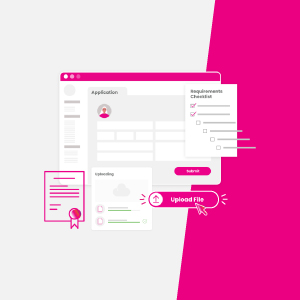
Licensing services are more efficient when processed digitally. Agencies should move to transform manual licensing into secure, cloud-based services that can be easily utilized by both regulatory staff and licensed professionals. Through Thentia Cloud’s secure and convenient online portal, both parties can manage licensing processes more smoothly. On the licensee-facing side, practitioners can easily make payments and view their invoices, track continuing education requirements, and submit documents related to their license application or renewal. They can also use the web-based portal to securely see all their personal information—such as their name, address, contact information and license status — and make changes if necessary. This eradicates the need for physically mailing forms, payments and documents back and forth, which can add unnecessary time and costs to the process. Another added benefit is that licensees receive an estimated response time. On the agency side, all licensee information is easily accessible and complete. Rather than relying on an annual paper form, all vital information is securely saved in a portal system. This eliminates the need to resubmit the same information, which bogs down staff time.

Thentia Cloud’s powerful data virtualization capabilities enable better reporting and performance measurement

As key performance indicators vary from agency to agency, performance expectations will vary. For some regulatory agencies, the highest priority may be license application turnaround time. For others, it may be how complaints are handled between processing and resolution. Currently, many agencies are limited by their technological maturity. When regulators rely entirely on paper-based processes, their reports tend to be time-consuming, coarsely written, not machine-ready, or completely incompatible with reports from external organizations. Agencies with discrete databases will all face a variety of difficulties generating reports. The process of pulling and analyzing data from multiple different data sets can be tedious and time consuming.

This can be alleviated with data virtualization, which can greatly reduce the time and cost needed to gain information. With licensing solutions, regulators’ comprehensive reporting capabilities can instantly be used to pull new types of queries and export the data from these queries.

Thentia Cloud can also help agencies measure their success. The platform’s powerful analytics and reporting tools can virtualize information from whatever existing database the agency uses, compile information on different queries, and then convert it from discrete data sets into a singular language. With cloud licensing, all agencies need to do is scan and digitize their information. Solutions with reporting capabilities add an additional benefit of robust analytical reports. Thentia Cloud offers 35 custom reports, as well as customer service providers who can help agencies utilize the software to create their own structured query language. This allows regulators to create reports that are specialized to their unique requirements.

Thentia Cloud enables easy communication and information-sharing

Thentia’s cloud-based solution facilitates easy communication and information sharing between government agencies, education providers, licensees and the public. Cloud virtualization allows several groups to meet and collaborate to keep up with changing regulatory requirements. These licensing solutions can perform a variety of functions to aid this, such as schedule meetings, provide reminders, allow areas for documentation, etc. A proper cloud solution removes the difficulties in organizing these elements and provides an easy place for stakeholders to access the information. This can encourage a data-driven decision-making approach for all parties involved. Features such as predictive analytics can help stakeholders avoid potential harm by ensuring licensees are properly tracked, trained and licensed.

Thentia Cloud provides an all-in-one solution to streamline key regulatory processes

With Thentia Cloud, stakeholders have a one-stop location to complete all their licensing needs. Thentia’s cloud-based solution helps regulatory agencies digitize and streamline key regulatory processes, from license registration and renewals, to payments and finance, to analytics and reporting, and more. With the changing expectations of agencies and regulators, Thentia Cloud can maintain pace by providing limitless configurations, automated workflows, centralized data and extensive insights.

Fill out the form to access Thentia’s informative brochure, “Thentia Cloud: Cloud-based licensing and permitting software designed exclusively for regulators, by regulators,” to learn how Thentia can support your organization’s cloud journey.