The Evolving Landscape of Cybersecurity in the Healthcare Sector

As the nation becomes increasingly interconnected through technology, industries are also utilizing new technology to meet patient expectations for quick diagnoses and access to results. However, when this technology usage includes personal or healthcare data that may be sensitive for patients or health systems, cybersecurity becomes paramount and necessitates the implementation of new cyber standards. The Healthcare Information and Management Systems Society (HIMSS), a global society focused on information and technology in the health ecosystem, held its annual HIMSS 2023 Healthcare Cybersecurity Forum in September. Here, industry professionals converged to innovate and discuss strategies for safeguarding the healthcare sector against cyber-attacks. To protect against breaches, the healthcare system must integrate and scale to achieve a more connected technological landscape across the industry to better serve patients.

Ransomware and Cybersecurity in Healthcare

By connecting and improving interoperability between healthcare systems/EHR platforms, overall patient service is improved; however, with features such as digital integration, migration to the cloud and the incorporation of remote workers, cyber vulnerability has simultaneously increased. Bad actors oftentimes target healthcare agencies with ransomware for hire. With the increased capabilities of artificial intelligence (AI), even inexperienced bad actors can create sophisticated and dangerous attacks. Due to the immense financial loss of these attacks, it is vital that agencies prioritize cybersecurity. Hospitals, other healthcare centers, and especially their third-party stakeholders, now face a new barrage of ransomware attacks and data breaches.

There are a couple of steps administrators can take to protect hospital systems, patients and stakeholders.

  • Implement ‘Security-by-Design,’ a strategy where providers ensure that all products are secure by design and default, with all IT solutions and enterprise environments.
  • Maintain pace with the evolution of artificial intelligence (AI) and utilize it to defend against bad actors.
  • Standardize a detailed incident response plan that includes a thorough business continuity plan.
  • Exchange defense strategies between stakeholders — a united front is stronger than trying to face threats alone.
  • Implement multi-factor authentication and zero trust on all end users so information is accessed by the parties that need to know.
  • Apply data encryption to systems to protect sensitive information against hackers.

AI in the Healthcare Industry
Carahsoft HIMSS Cybersecurity Fall Forum Recap Blog Embedded Image 2023While bad actors have utilized the capabilities of AI, the healthcare industry can also use it to improve cybersecurity. AI does not need breaks, and therefore can run all day reducing the time needed to identify a security breach by analyzing large amounts of data in real time. On a similar note, AI can identify multiple devices and manage network endpoint detection for large networks. AI has been used to predict Domain Name System (DNS) attacks before occurrence, preventing and mitigating these attacks. It can implement Secure Access Service Edge (SASE), analyze identities and manage risk. With its strength of detecting patterns, AI can distinguish subtle patterns of attack that would otherwise go unnoticed by people.

Due to the nature of this new technology, the healthcare industry must carefully decide whether it wants to implement AI, and to what extent it will be used. In terms of cybersecurity, AI may be the answer to providing a secure standard for an interconnected healthcare industry.

Partnerships to Strengthen Cybersecurity in the Healthcare Industry

To provide the best security for patients and stakeholders in the healthcare sector, the federal government and technology industry have joined the battle against bad actors in healthcare. Several federal agencies including the Administration for Strategic Preparedness and Response (ASPR), will lend a hand in bolstering the cyber posture of the American health system. The ASPR is working alongside Cybersecurity and Infrastructure Security Agency (CISA) and private sector partners to analyze the cyber threat landscape of the healthcare sector. Over the next year, the agency hopes to create a cyber division, introduce a cyber risk identification tool, track cyber incident reports and gain resources and buy-in from senior leadership. Another agency, the Department of Health and Human Services (HHS) will strengthen cybersecurity by partnering with hospitals, health organizations and federal agencies, including CISA, that have additional information on cyber threats. Under the HHS, the Health Industry Cybersecurity Practices (HICP), a publication in response to the Cybersecurity Act of 2015, provides practical cybersecurity guidelines for the healthcare industry.

HICP covers several major threats that the industry faces, including:

  • Social engineering
  • Ransomware
  • Payment fraud
  • Loss or theft of equipment
  • Insider, accidental, or malicious data loss
  • Attacks against network connected medical devices

To counter said threats, the HICP has listed its top ten best cybersecurity practices. It advises to:

  • Protect email systems from phishing breaches
  • Implement endpoint protection systems to all hardware devices
  • Utilize identity and access management, regardless of the size of the health care organization
  • Check cyber posture to prevent data loss
  • Manage IT assets
  • Execute network management for wireless or wired connections before interoperating systems
  • Enact vulnerability management
  • Take advantage of incident response plans to discover network cyberattacks
  • Extend relevant cybersecurity practices to network connected medical devices
  • Establish and implement cybersecurity and governance policies[1]

By enabling organizations to evaluate capability against cybersecurity attacks, HICP aims to protect patients and stakeholders from private data loss.

While cyber attacks are always growing in complexity, the healthcare industry can evolve and provide superior service for its patients through the use of tested security strategies, AI and federal aid.


Visit Carahsoft’s Healthcare Solutions Portfolio to learn more about improving cybersecurity practices in the healthcare sector.

 
Resources:

[1] “HICP’s 10 Mitigating Practices,” Department of Health and Human Services, https://405d.hhs.gov/best-practices

*The information contained in this blog has been written based off the thought-leadership discussions presented by speakers at the HIMSS Fall Forum in September 2023.*

Building a Foundation for an AI Future

It might seem like agencies are hesitant to adopt artificial intelligence. But really, it is quite the opposite. As Lori Wade, the Intelligence Community’s chief data officer, put it: “It is no longer just about the volume of data, it is about who can collect, access, exploit and gain actionable insight the fastest.” The realization is clear: Humans alone cannot keep pace. They need AI so they can make decisions based on the most relevant and most current information — and make those decisions in a timely manner. It is really as simple as that. Download the guide, “Building the Foundation for Your AI Future,” to pick up pointers on data management and AI, plus take a glimpse at the latest technology developments, tips for best practices and an explanation of the early value that AI is delivering to agencies across government. 


How to Revolutionize Government Translation with Generative AI

“In situations where accurate and timely translations are crucial, the shortage of qualified and vetted linguists poses significant challenges. Equally, non-linguist analysts are not equipped with secure, at-desk tools to translate foreign language material at the speed of relevance. For example, during the ongoing war in Ukraine, there has been a scarcity of linguists available to provide real-time updates on the ground. This shortage not only has affected the ability to gather vital intelligence but also hindered the timely dissemination of information to national security and defense agencies in the U.S. and abroad.”

Read more insights from Jesse Rosenbaum, Vice President of Business Development and National Security at Lilt. 


How Graph Databases Drive a Paradigm Shift in Data Platform Technology  

Carahsoft IIG FNN Future AI Blog Embedded Image 2023“Federal agencies are awash in data. With recent modernization efforts, including the wide-scale adoption of cloud platforms and applications, it is easier than ever for agencies to receive streaming data on everything from logistics to finances to cybersecurity. But that volume of data requires new solutions to process and analyze it. Older methods like SQL and NoSQL simply are not up to the task of analyzing all of the connections between the government’s many massive databases. That is where the new graph paradigm of data platform technology comes in.”

Read more insights from Michael Moore, Principal for Partner Solutions and Technology at Neo4j. 


How Agencies Can Upskill in AI to Achieve a Data Mesh Model  

“Data mesh behavior actually goes a step further. AI has become so easy to use, business owners can actually join in the development alongside the data scientists. Therein lies the challenge: Upskilling subject matter experts across an entire organization is a big lift. The way it works best is to start with a center of excellence, a small group of people who begin working with business owners across the enterprise, office by office. They can then prove the value and evangelize it, and then the agency can move to a hub-and-spoke model, where the data scientists are co-developing alongside business owners. As successes pile up, the data scientists can take a step back and allow frontline workers to do the development, governing the new data products on their own.”

Read more insights from Doug Bryan, Field Chief Data Officer at Dataiku. 


How Agencies Can Build a Data Foundation for Generative AI  

“Generative artificial intelligence tools are making waves in the technology world, most famously ChatGPT. Although the code of these tools is significant, their real power stems from the data they are trained on. Gathering and correctly formatting the data, then transforming it to yield accurate predictions, often represents the most challenging aspect of developing these tools. Federal agencies that want to start leveraging generative AI already have massive amounts of data on which to train the technology. But to successfully implement these tools, they need to ensure the quality of their data before trusting any decisions they might make.”

Read more insights from Nasheb Ismaily, Principal Solutions Engineer at Cloudera. 


How to Democratize Data as a Catalyst for Effective Decision-Making  

“One of the key best practices in the Office of Management and Budget’s Federal Data Strategy calls for using data to guide decision-making. But that is easier said than done when the ability to analyze the data, much less access it, is limited to an agency’s often overworked and understaffed data science specialists. But now that every line of federal business has their own data silo and a mandate to use that data to guide decisions, agencies need a way to democratize access to that data and empower every federal employee to become an analyst.”

Read more insights from Kevin Woo, Director of Federal Sales at Alteryx. 


Download the full Expert Edition for more insights from these artificial intelligence leaders, additional government interviews, historical perspectives and industry research. 

Becker’s 2023: Optimizing the Medical Field and User Experience Through AI

Medical practices are quickly entering an age where Artificial Intelligence (AI) is growing and expanding to help improve user and patient experience, as well as increase automation in the work environment. During the Becker’s Health IT + Digital Health + RCM conference, healthcare and IT leaders came together to discuss how to adapt to the latest trends in the field, including telehealth, cybersecurity, diversity and the simplification of healthcare through AI.

The implementation of AI in the medical world is increasing as doctors and researchers explore ways to make healthcare as seamless as possible for both doctors and patients. Telehealth, the ability to meet with a healthcare provider virtually rather than in-person, is an important process that doctors are utilizing as the patient population and their needs continue to grow. Doctors and medical staff will soon be able to: 

  • Use AI for administrative tasks to increase healthcare staff efficiency 
  • Continue to consolidate electronic medical records (EMR) onto a singular platform, making it easier for providers across a health system to access up-to-date patient information  
  • Close the access gap in more rural and underserved areas to collect data and maximize face time with patients 
  • Utilize technology to focus on holistic health and increase discussion about behavioral nudges, for example a smart watch mentioning that it is ‘time to stand’  
  • Improve the digital experience for patients of all demographics through easy access medical records and utilization of telehealth for older populations

Diversity in Telehealth Technology 

Carahsoft Becker's Healthcare Tradeshow Recap Blog Embedded Image 2023With the progression of AI and telehealth, hearing diverse voices on the implementation of these tools cannot be overlooked as medical professionals change the way they utilize technology. It is imperative that new technology is working to make medical support and processes simple for communities that may not have as many resources when it comes to telehealth and digital medical records. For example, a chat box that pops up on a medical practice’s website may have been created to help patients, but non-English speaking patients do not benefit if the box is not programmed to display and understand other languages.
Skillset diversity must also be considered when doing research. Instead of finding medical staff and researchers based only on a certain educational background, it is beneficial to consider candidates with a range of experience as well. Inviting different voices into the medical field can only benefit the way healthcare progresses and provides better outcomes to patients.

A Platform-First Approach: Creating Maximum Value for Enterprises  

It is important for medical companies to create maximum value within the applications and systems that they are paying for. Technology is evolving at such a rapid pace that often, by the time a new technology has been implemented by an enterprise, it is already basically obsolete and needs to be replaced. This is where the platform-first approach comes into play. With this approach, companies prioritize getting the most value from existing applications that are already purchased and installed in the enterprise. For example, ensuring that there is no overlap between the use cases of multiple apps a company is paying for. 

The platform-first approach includes:  

  • Leveraging platforms that are already currently in use 
  • Adding features that are easy to use with easily accessible interfaces  
  • Focusing less on training and more on hands-on experience 
  • Being selective in what tools and platforms are implemented 
  • Being agile and looking at a platform strategy instead of individualistic needs  
  • Ensuring that what an organization already has makes sense in regard to the bigger picture and is not being underutilized

Moving Forward: Maximizing Every Tool and Every Person 

Even with today’s fast-paced changes, there are processes and elements of healthcare that AI cannot replace. AI is rapidly growing and evolving, but it cannot take away the qualities of being a human, especially in the medical field. If a bot can do a simple task, such as filing paperwork, it is best to let the bot do it, and allow doctors to spend more personalized time with patients. It is ideal to offer digital opportunities in the workplace, but not to the extent that it hinders user experience. Technology can alleviate pressures and remove friction from a workforce, but at the end of the day, AI cannot replace the personal human element of care that a doctor provides to a patient.  

AI is not something to fear, but rather something to embrace in the areas where it meets providers and patients’ needs. It is also important that every voice is heard while technology advances, and minority groups are not left behind in the fast-moving AI path. Companies and researchers are focusing on where the demand is and either changing or providing additional technology as frictionless and simple as possible. 


Visit Carahsoft’s Healthcare Solutions Portfolio to learn more information and key insights for the IT and Healthcare industries. 

*The information contained in this blog has been written based off the thought-leadership discussions presented by speakers at the Becker’s Healthcare Summit 2023.*

Innovation in Government: How to Change Things Up (and Make it Stick)

In government, we could say that innovation is invention that solves a problem or meets a need — in the community or within an organization undertaking the work. Big changes make government agencies more effective, prepared and useful, and they touch all aspects of agency operations — from IT to employee morale to digital services and more. In recent years, federal agencies such as the Census Bureau, General Services Administration, Department of Homeland Security, Department of Housing and Urban Development, and Office of Personnel Management have launched innovations labs, innovation libraries, and other innovation-focused resources and programs. Cities and states have as well, such as through Philadelphia’s Technology and Innovation group within the city’s Office of Innovation and Technology (OIT). Being innovative is not easy, of course: It requires a little bravery and lots of planning. But local and federal agencies are creating the space and resources to launch innovations that will, in the future, become standard operations. In this guide, we share case studies and best practices regarding some of government’s most pressing issues — workforce, customer experience and data use, to name a few — and we hear from government experts who know a thing or two about helping innovative initiatives succeed. 


Carahsoft IIG GovLoop Innovation Adaptive Security Blog Embedded Image 2023Analytics Innovations Draw a Complete Data Picture  

“Spreadsheets are structured things: They have clearly defined lines, cleanly labelled columns, and rules that govern what goes where. Government analytic programs have become skilled at working within those parameters, even if it means spending hours manually manipulating data to fit. Spreadsheets are 30-year-old desktop technology. But other data exists, doesn’t it? The world is full of PDF documents, audio and video files, social media posts and other ‘messy’ data sources — the unstructured data that most agencies overlook. And most agency analytics programs are fragmented and overly manual. Recent innovations seek to change this.”

Read more insights from Alteryx’s Solutions Marketing Director for the Public Sector, Andy MacIsaac. 


Driving Innovation to the Edge

“Across government, innovation is happening at the edge. By leveraging cloud, artificial intelligence (AI), machine learning (ML) and related technologies, agencies can deliver services more quickly and effectively at the far reaches of operations, whether that’s in the battlefield or on the International Space Station (ISS). At the Red Hat Government Symposium held in late 2022, government and industry leaders discussed how agencies were leveraging these technologies to accelerate mission delivery. Their discussions and examples help illuminate how agencies are adapting to make the most of modern technological opportunities.”

Read more insights from Red Hat’s Government Symposium. 


Build an Innovative Ecosystem Through Cloud Architecture  

“In data transformation and innovation, it helps to view things through a different lens. Within the data ecosystem are three core pillars for transformation: people, processes and technology. Simple, singular data platforms should work with an architecture that breaks down information silos rather than creates them. That facility comes through in qualities such as data mesh or a decentralized data architecture that’s organized by business domain and operates through self-service. The architectural design also must help strengthen system security. That’s enormously important for federal data.”

Read more insights from Snowflake’s Chief Technology Officer for the Global Public Sector, Winston Chang. 


Overcoming Challenges With Observability  

“As agencies take steps to innovate — such as expanding reliance on the cloud and adding new apps, integrations, and automations — their IT ecosystems become more complex. There are more places where things can go wrong and more pressure to fix them quickly. The task of monitoring these complex systems gets more complicated, too. ‘The question is, how do I know there’s an issue?’ said Brian Mikkelsen of Datadog. ‘Is it when the tickets start flowing, when complaints increase, when your leadership team asks why something isn’t working?’ None of those options are ideal. Datadog’s application performance management platform provides a real-time window into the digital environment, identifying performance and security issues quickly. Its ‘full stack’ hybrid infrastructure capability means everything from the back end to the front end is monitored and reported via infrastructure metrics, application performance traces, and correlated logs.”

Read more insights from Datadog’s Vice President and General Manager, Brian Mikkelsen. 


Download the full GovLoop Guide for more insights from these digital transformation leaders and additional government interviews, historical perspectives and industry research. 

Revolutionizing Communication with 5G

As technology progresses, communication is revolutionized worldwide. To maintain pace with cybersecurity and technology standards, the United States Government can utilize the transformative features of 5G, the fifth-generation global wireless technology standard for cellular networks.

Transforming Network Standards with O-RAN

With the development of Open Radio Access Networks (O-RAN,) a feature that allows interoperability between cellular network equipment providers, the development and integration of 5G has greatly expanded. The role of O-RAN has important applications in the Department of Defense (DoD), whose goal is to promote national and economic security. By integrating 5G networks into the defense sector, different departments can quickly communicate with each other. With the usage of O-RAN and 5G combined, agencies have a much larger, diverse ecosystem of vendors to choose from.

As with any new feature, there are costs to the implementation process. In the 2021 National Defense Authorization Act, Congress put aside $1.5 billion dollars which is being utilized to develop a unified vision and strategy towards O-RAN and 5G. The congressional statutory language calls out seven big-picture objectives, most of which are centered around promoting the deployment of 5G. These are to:

  1. Add network virtualization
  2. Authorize new security features
  3. Accelerate the development of technology
  4. Promoting the deployment of 5G within the DoD
  5. Develop standards to enable a multi-vendor ecosystem
  6. Create open, interoperable telecommunication networks
  7. Allow interoperability to manage multi-vendor situations

While the act provides ten years to carry out its strategy, these standards should be added as soon as possible due to the fast-paced development of technology.

Aiding the DoD

Carahsoft 5G Summit Recap Blog Embedded Image 2023The DoD and 5G form a mutually beneficial relationship. 5G is created with security built in, so an investment in 5G is an investment in cybersecurity. By utilizing 5G at bases, the DoD can test its capabilities, as well as streamline and amplify the effectiveness of non-combat operations. This can include supply chain efficiency, large scale IoT networks, asset tracking and logistics management all while reducing costs. In return, the DoD tests and further funds 5G. The addition of 5G can provide lower mission costs, enhanced speed and provide higher quality operations. It also factors in risk reduction to each operation, by taking the cumbersome human process out of the equation and making certain operations less complex.
For the DoD, the key motivations in testing and using 5G are threefold. One, it aims to achieve streamlined and functioning interoperability, where individuals can handle operations from a single tablet. Two, it aims to reduce the amount of manual handling in operations. Since 5G has the latency to compute such artificial intelligence (AI) and machine learning (ML) capabilities, it can perform time consuming tasks such as perimeter security. And three, the usage of 5G allows the DoD to gather data about 5G to utilize predictive analytics in the future.

The Future of 5G

There is more that 5G can do for military applications. With the advantage of 5G, there may be a paradigm shift in the usage of private wireless and on-demand communication. One of the biggest advancements of using 5G in a military context is the flexibility that comes with 5G being cloud native. 5G provides more capacity than traditional Wi-Fi or hotspots as it focuses on transport networks. With 5G, international communication could be streamlined, as frequency coordination between departments and consumers would no longer be required. 5G comes with the benefits of mobile edge computing and being O-RAN compliant, meaning it is up to Federal standards. This could even be helpful in residential rural and remote environments, where internet and satellite access is limited. There have been tests across various United States bases, aiming to utilize ML to tailor 5G to each user’s needs. To get these features, consistent testing is vital, even if it is not immediately profitable.

With all the changes to the way combatants use technology, it is important to enable the military to integrate 5G operations. By codifying new strategies and usage methods, agencies can reference, read and follow through with new procurements. With the addition of 5G, communication within the DoD and nation can be revolutionized in nearly unimaginable ways.


Visit Carahsoft’s 5G technology solutions portfolio to learn more about Carahsoft’s 5G Summit event and how we, along with our partners, can leverage the best and most reliable services to support your organization’s 5G mission.

*The information contained in this blog has been written based off the thought-leadership discussions presented by speakers at Carahsoft’s annual 5G Conference.*

AI Paving the Way for New Healthcare Innovations

With the boom of consumer facing artificial intelligence (AI) through Chat GPT and other tools, the discussion of AI applications within healthcare has also become a priority with exciting new developments. Pre-COVID, there was some hesitancy with telehealth, whereas now it has become a highly valued, main offering within the healthcare ecosystem. Similarly, AI is becoming a key mobilizer for improved patient outcomes and more efficient provider processes. Through the power of the cloud and supercomputing, AI is opening doors for transformational results throughout all aspects of healthcare including personalized medicine, medical research and trials, treatment efficacy and more. Once healthcare organizations better understand the benefits that AI unlocks for all stakeholders, they can take the next steps to apply it to their individual health networks.

Benefits of AI in Healthcare

Patients

The potential uses for AI in the medical field are endless and apply to all levels of healthcare with improvements for patients, healthcare providers and healthcare administrators. When organizations invest in AI, it decreases wait times for patients, optimizes appointment availabilities and increases overall access. AI can also interpret imaging and detect illnesses faster which minimizes treatment delays. Through wearable technology and personalized medicine, AI is enabling patients to gather health data and manage treatment from home. This customizable capability is especially valuable for rural or low-income patients to level out the social determinants of health and offer treatment through telehealth while saving on costs for all involved.

Medical Providers

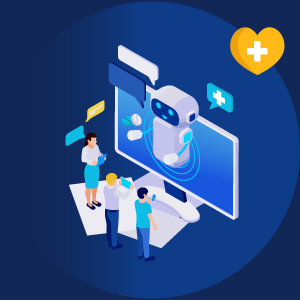
Carahsoft AI in Healthcare Blog Embedded Image 2023AI can significantly reduce the administrative burden for medical providers by automating routine tasks and increasing bandwidth for front line staff to complete other medical duties. A hallmark capability for AI is analyzing data which it can aggregate from wide pools of information to suggest electronic health record (EHR)-based interventions, predict possible future patient ailments and offer a more unified, comprehensive picture. In a post-COVID-19 world, AI healthcare data applications offer the extremely relevant and desired ability of anticipating future public health crises through research and analytics. These AI forecasts can accelerate understanding for policy creation, reinforce healthcare resources and provide precision public health.

Healthcare Administrators

Applying for grants can be a time-consuming process, but with AI evaluating grant proposals, healthcare administrators can quickly identify which grants to apply for and which to pass. AI can also detect potential fraud cases. It is currently being implemented at the Centers for Medicare and Medicaid Services to make sure that applicable citizens receive the proper care and services they deserve, and by the Department of Health and Human Services to analyze counterfeit drugs to prevent fraud and preserve the efficacy of vital medications.[1]

Making AI a Reality for Individual Healthcare Networks

With these groundbreaking benefits, instituting AI is a clear case. Currently about 98% of healthcare organizations have or are planning to implement an AI strategy.[2] To make this a reality, healthcare organizations must focus on three main areas:

  • Understanding the technology capabilities, requirements and use applications
  • Educating providers and building trust with patients
  • Instituting privacy and security policies

Understanding what AI can do, which applications to pursue for individual hospitals’ use cases and what it takes to operate the technology, needs to be a collaborative effort between all levels of a hospital system. Many clinicians are burned out and looking for tools that will ease their burden while also improving care. Through proactive conversations with medical providers and C-suite stakeholders, CIOs and management can present the investment benefits and ultimately increase full system buy-in and ability to scale effectively and efficiently.

Educating medical ecosystems and patients with the digital skills and knowledge to utilize the technology resources is also important for proper usage and increased adoption. Once providers understand the potential of AI and the practical ways it can improve their workflows, they can be confident in using the tools and clearly articulating the information to patients. Trust is a huge component of thriving, effective care. Clearly presented information establishes that rapport with patients and clinicians. Overall, training re-establishes for providers and administrators the priorities of patient safety, professional accountability and protection from reputational, legal and financial risk to ensure that the AI technology is used responsibly. Through proper education, patients also feel empowered with how AI is being implemented in their care and the commitment of their medical team to pursue the safest and best outcomes.

The last key element to establishing the use of AI in healthcare and maximizing its benefits is keeping privacy and security top of mind. Hospital management need to consider what policies and procedures they will institute to protect patients’ data and prevent bad actors from exposing personal information or disrupting care. Data integrity is also vital to keep AI algorithms’ predictions and assessments accurate. Healthcare network administrators will need to evaluate the best method to securely store that data whether through a cloud provider or building encrypted data storage on premises using private AI with an internal high computing platform specific to the individual hospital. These management policies and governance frameworks will not only offer standardization, they will also help build trust with patients while providing enough flexibility for AI innovation and growth.


Ultimately the partnership of AI with medical experts enables the perfect balance to deliver rapid, actionable insights and improvements while humans manage the usage of the technology to ensure quality care for each medical case. The future of healthcare is patients being able to take greater ownership of their health through aggregating additional data and applying AI to achieve better treatments. Providers and staff will be able to maximize their time through AI optimizations and provide more proactive care based on AI predictions. These advancements will revolutionize the healthcare industry as we know it and pave the way for a healthier society. Some are calling AI the next quantum leap in technology, and healthcare should be at the forefront of leveraging the resources to drive improvement, accelerate innovation and save lives.


To learn more about how Carahsoft is enabling healthcare organizations to achieve technology innovations such as AI, visit our Healthcare Technology and AI and Machine Learning solutions portfolios and speak to a representative who can help meet your solution needs today.


Resources:

[1] “HHS CIO Karl Mathias Details 3 Promising Applications of AI in Health Care Sector,” GovConWire, https://www.govconwire.com/2023/05/hhs-cio-karl-mathias-details-3-promising-applications-of-ai-in-healthcare/

[2] “AI Survey: Health Care Organizations Continue to Adopt Artificial Intelligence to Help Achieve Better, More Equitable and Affordable Patient Outcomes,” Optum, https://www.optum.com/about-us/news/page.hub.ai-survey-health-care-organizations-adopt-artificial-intelligence.html

Adobe Express: The Content Creation Powerhouse

Adobe Max 2023 has finally arrived, and with it came a slew of intuitive new features and software options. As expected, Adobe’s primary focus this year was on its powerful AI innovations and tools. Unexpectedly however, Adobe Express, an application which previously was focused on social media content creation has received an enormous upgrade. So, let’s talk about these exciting new features and why it’s exciting for the government space.

Adobe Express is a powerful software suite that has gained significant traction in various industries for its user-friendly interface and versatile tools. While it’s widely known for its applications in creative fields such as graphic design, marketing, and content creation, its potential in the government space remains largely untapped and yet to be fully realized. Its adaptability and diverse functionalities make it an asset for government agencies seeking efficient solutions for their content related projects.

One of the primary advantages of Adobe Express in the government sector is its ability to streamline communication. The software allows for the creation of visually engaging documents, presentations, and reports, enabling agencies to convey complex information in a more digestible and visually appealing manner. Whether it’s producing internal reports or communicating with the public, the software’s intuitive design tools aid in crafting impactful visual content, enhancing the effectiveness of government messages.

Adobe Express Content Creation Blog Embedded Image 2023

Furthermore, Adobe Express’s compatibility with various file formats ensures seamless integration with existing government systems. This feature is pivotal in maintaining consistency and compatibility across different departments and agencies, facilitating the exchange of information and collaboration between various governmental bodies. It promotes a standardized approach to document creation, reducing compatibility issues and simplifying the sharing of information.

Data security and compliance are of utmost importance in the government sector, and Adobe Express offers robust security features to ensure the protection of sensitive information. With encryption, user authentication, and secure cloud storage options, the software provides a level of security essential for government use.

Another aspect worth highlighting is the software’s ability to handle a wide variety of tasks within government operations. From creating visually rich training materials for employees to designing public awareness campaigns, Adobe Express caters to a wide range of needs. Its features enable the development of interactive forms, streamlined workflows, and the creation of accessible content, ensuring inclusivity within government initiatives.

In addition, the software’s capacity for analytics and data visualization aids in the communication and presentation of complex information. This capability is invaluable in governmental decision-making processes, enabling officials to comprehend data more effectively and communicate insights to stakeholders and the public.

The use of Adobe Express can also lead to cost and time efficiencies within government departments. The software’s user-friendly interface reduces the need for extensive training, allowing employees to quickly grasp its functionalities. Its cloud-based solutions minimize the need for extensive physical infrastructure, reducing costs related to storage and maintenance.

As the digital landscape continues to evolve, the implementation of Adobe Express in government operations becomes increasingly relevant. However, its adoption may require tailored training programs and guidelines to ensure its optimal use and adherence to government protocols and standards.

In conclusion, Adobe Express offers a variety of tools and features that can significantly benefit government agencies. From enhancing communication and data security to fostering efficiency and innovation, its application in the government space holds immense potential, paving the way for more effective and visually compelling government initiatives.

Contact our team today to learn more about the latest trends discussed at Adobe MAX 2023 and how Carahsoft’s Adobe experts can support your organization.

DevSecOps: Achieving Efficiency and Scale with Automation and Software Factories

In today’s rapidly evolving digital landscape, Government agencies face many challenges in delivering modern, secure software applications to the end-user. DevSecOps is a methodology that combines development, security and operations to create a more streamlined and secure software development process. This concept has emerged as a transformative approach that integrates security practices, automation and software factories into the software development lifecycles from its inception. At the Carahsoft DevSecOps Conference, industry experts and innovators shared their knowledge of emerging tools, effective strategies and methodologies in software engineering through several educational sessions.

Unlocking Efficiency: The Power of Automation and AI/ML

Automation helps developers improve the efficiency and quality of code, reduce risk and combat security vulnerabilities. As a key component of DevSecOps, automation allows developers to simplify many of the tasks involved in software development, such as testing, deployment and monitoring. Once automated, developers can focus on writing high-quality code and addressing security vulnerabilities, rather than spending time on redundant manual tasks.

The use of AI has transformed the way developers work, compared to 20 years ago when code was primarily written from scratch. Today, external libraries — software code written by a third-party source — are used frequently which introduces a new set of risks and benefits. The benefits include making software development faster and more efficient as developers use pre-existing code to build their applications. However, if a third-party library has a security vulnerability, it can be exploited by malicious actors to gain access to sensitive data. If not maintained properly, the third-party library can become outdated and incompatible with other software components.

Carahsoft DevSecOps Conference Blog Embedded Image 2023Software Factories

Software development has become an essential part of today’s business operations, and Government agencies are constantly seeking ways to improve their processes. Recently, the concept of the software factory—a structured approach to software development that emphasizes standardization, automation and collaboration—has gained popularity. It establishes a set of tools, processes and best practices that enable teams to develop software more efficiently and effectively. The goal of a software factory is to create a repeatable and scalable process for software development that can be applied across different projects and teams. By implementing this strategy, agencies can improve the quality, speed and consistency of their software development efforts.

One of those best practices, Continuous Integration and Continuous Deployment, are combined in a single process known as CI/CD. CI is the practice of frequently merging code changes from multiple developers into a shared repository, where automated tests are run to address integration issues early in the development cycle. This ensures the code is always in a releasable state and reduces the risk of conflicts and errors when changes are merged. CD, on the other hand, is the practice of automatically deploying code changes to production as soon as they pass the necessary tests and checks. Thus, enabling teams to release software changes quickly and frequently. By utilizing CI/CD, teams can achieve a continuous flow of code changes from development to production, which is imperative for modern software development.

Elevating DevSecOps: A Blueprint for Integrating Early Software Security Measures

Securing software in a containerized environment presents unique challenges due to the dynamic nature of containers and the distributed nature of container orchestration platforms like Kubernetes. Government agencies must ensure that containers are properly configured and secured, as misconfigurations can lead to vulnerabilities that can be exploited by attackers. Another difficulty is detecting and responding to security incidents in a timely manner, as containers can be spun up and down quickly and may be spread across multiple nodes in a cluster. Securing software early can help agencies reduce risk, lower costs, deliver software faster and improve collaboration between development and security teams.

Another crucial component of DevSecOps—continuous delivery—enables teams to deliver software changes quickly, safely and sustainably. This means that teams can release software changes frequently and with confidence, knowing that the changes have been thoroughly tested and are ready for production. Through a combination of automation, collaboration and feedback loops, continuous delivery helps reduce the time and effort required to release software changes.

Agencies can adopt a DevSecOps approach that integrates security into the software development lifecycle from the beginning. This involves using tools and processes to automate security testing and validation, as well as incorporating security requirements into the development process. For instance, agencies can use tools like vulnerability scanners and security-focused container images to detect and remediate vulnerabilities in containers. They can also use automation to validate security requirements and ensure that containers are properly configured and secured.

Securing software early in the development process can lead to several benefits including:

  • Reduced risk of security incidents: By identifying and addressing security vulnerabilities early in the development process, agencies can minimize the risk of security incidents and data breaches.
  • Lower costs: Fixing security issues later in the development process is much more expensive than addressing them early on. By integrating security into the development process from the beginning, agencies can reduce the cost of fixing security issues and avoid costly rework.
  • Faster time to market: Adopting DevSecOps approach can help agencies to deliver software faster by automating security testing and validation. This decreases the time for manual testing and enables faster release cycles.
  • Improved collaboration: Agencies can strengthen collaboration between development and security teams to ensure requirements are properly understood and incorporated into the development process. This proactive initiative can help foster a culture of security throughout the agency.

The adoption of DevSecOps, along with its fundamental principles, empowers Government agencies to establish a more efficient and secure software development process. This is achieved through the implementation of automation, the adoption of a software factory approach and the early integration of security measures.


To learn more about DevSecOps best practices and trending innovations, visit Carahsoft’s DevSecOps vertical solutions portfolio. 

*The information contained in this blog has been written based off the thought-leadership discussions presented by speakers at Carahsoft’s annual DevSecOps Conference.*

Transitioning Towards a Sustainable Healthcare Mindset at DHITS 2023

Since the Defense Health Agency (DHA) oversees the entire military health system, it knows how important it is for members of the military and their doctors to be able to access medical records quickly and universally. In August 2023, the DHA hosted the Defense Health Information Technology Symposium (DHITS) where military health system (MHS) stakeholders discussed its newest asset– the Military Health System (MHS) Genesis. With the creation of this universal health record database, military members’ health records can easily be accessed, whether they are active-duty or not. Currently being rolled out in waves, the MHS Genesis plans to expand health records accessibility between different military branches.

Benefits from MHS Genesis

While still new, the MHS Genesis already shows improvements in several areas which include:

  • Enterprise and Cultural Interoperability: Some doctors may have different views or standards than others. This universal system makes patient files easily accessible to any doctor, regardless of military branch or practice. Now, the IT systems and Electronic Health Records (EHR) work together seamlessly. Different military branches will be able to use the same uniform system when it comes to accessing patient files and records, making the job easier for both patients and doctors.
  • Patient-Centric Care: With the MHS Genesis technology enhancements, it is now easier than ever to meet patients at their home on a Tuesday through telehealth. Telehealth is especially important within the military to give patients flexibility in choosing appointments as well as requesting information or gaining access to their medical records.
  • System and Process Automation: Medical professionals struggle with the global constraint of time. The MHS enables providers to automate tasks, saving time on things like paperwork and allowing for more one-on-one patient care.

Carahsoft Healthcare at DHITS Tradeshow Blog Embedded Image 2023Next Steps for the MHS

Currently, the entire DoD is at an 86% implementation rate for the MHS Genesis. It is actively being used in all DHA locations in the U.S. with plans to incorporate the universal health record system into the remaining treatment facilities outside of the United States by the end of 2023.

As leaders within the MHS continue their journey into modernization and sustainability, it is important that they equip people with the right knowledge and skills to be able to deliver their future vision of what military medicine should look like. The number one purpose of this emerging technology is to ensure the medical readiness of the military. The MHS Genesis will help guarantee that this stays a top priority, as it creates better access to information and helps deliver that information to the decision makers. Using Artificial Intelligence (AI) in medical settings is an exciting development that will help with diagnosing, personal assistants, risk analysis, forecasting and more. Through AI support, doctors will be able to spend more time on their patients and less time on large amounts of paperwork.

While the implementation of the MHS Genesis has been a success, all branches of the DoD must continue to communicate and collaborate openly and effectively. They must also involve other stakeholders by breaking down data silos and sharing freely what does and does not work in an enterprise setting. This will ultimately help with addressing public health challenges, ethically using AI in a medical setting, cybersecurity and more.

The MHS journey coincides with changing the deployment approach to a “sustainment” mentality. A sustainment mindset involves focusing on:

  • Optimization of user experience: Seeking feedback and continuing to adjust the technology to enhance user experience
  • Scalability: Scaling the success and implementing the changes across the enterprise if success is found with one configuration setup
  • Standardization: Creating a standard vocabulary and process for enterprise usage, so people communicate with the same terminology across the MHS

At the end of the day, the most important thing is that patients receive the care they need. Through the MHS Genesis and the IT solutions discussed at DHITS, the MHS hopes to greatly boost patient experiences, increase trust in the military health system, reduce healthcare provider burnout and give patients and clinicians access to data in real-time.


Visit Carahsoft’s Department of Defense and Healthcare solutions portfolios to learn more about DHITS 2023 and how Carahsoft can support your organization in these critical marketplaces.

*The information contained in this blog has been written based off the thought-leadership discussions presented by speakers at DHITS 2023.*

Generative AI, DevSecOps and Cybersecurity Highlighted for the Air Force and Space Force at DAFITC 2023

Thousands of Space Force and Air Force personnel and industry experts convened to discuss the most current and significant threats confronting global networks and national defense at the 2023 Department of the Air Force Information Technology and Cyberpower Education & Training (DAFITC) Event. Throughout the many educational sessions, thought leaders presented a myriad of topics such as artificial intelligence (AI), DevSecOps solutions and cybersecurity strategies to collaborate on the advancement of public safety.

Leveraging Generative AI in the DoD

At the event, experts outlined three distinct use cases for simplified generative artificial intelligence in military training.

  • Text to Text: This type of generative AI takes inputted text and outputs written content in a different format. Text to Text is associated with tasks such as content creation, summarization, evaluation, prediction and coding.
  • Text to Audio: Text to Audio AI can enhance accessibility and inclusion by creating audio content from written materials to support elearning and education and facilitate language translation.
  • Text to Video: Text to Video AI is primarily geared towards generating video content from a script to aid the military with language learning and training initiatives.

Dr. Lynne Graves, representative of the Department of the Air Force Chief Data and Artificial Intelligence Office (CDAO), provided attendees with a brief timeline of how the USAF will fully adopt artificial intelligence. The overarching aim for AI integration is to make it an integral part of everyday training, exercises and operations within the Department of Defense (DoD).

  • In FY23, the DoD is focusing on pipeline assessment. Using red teaming where ethical hackers run simulations to identify weaknesses in the system, internal military personnel target improvement of their infrastructure and mitigation of the vulnerabilities in the different stages of the pipeline.
  • In FY24, the emphasis will be on the Red Force Migration policy, which involves developing, funding and scaling the necessary strategies.
  • In FY25, the goal is for the department to become AI-ready. This entails preparing for AI adoption at all agency levels, establishing a standard model card that explains context for the model’s intended use and other important information, creating a comprehensive repository of data and implementing tools for extensive testing, evaluation and verification.

Carahsoft AI, Cybersecurity, DevSecOps at DAFITC Tradeshow Blog Embedded Image 2023USSF Supra Coders Utilize DevSecOps for Innovation

The current operations of United States Space Force (USSF) Supra Coders involve a range of activities that combine modeling, simulation and expertise in replicating threats. These operations are conducted globally, and currently include orbit-related activities, replication of DA ASAT (Direct Ascent Anti-Satellite) capabilities and the reproduction of adversarial Space Domain Awareness (SDA).

The USSF Supra Coders have encountered limitations with software solutions, including restrictions tied to standalone systems, licensing structures with associated costs and limited adaptability to meet the specific needs of aggressors and USSF requirements. DevSecOps presents a multifaceted strategy for mitigating the identified capability gaps noted by the USSF Supra Coders. It can help create more effective and efficient software solutions through seamless integration of security protocols, streamlining system integration processes, optimizing costs and enhancing customizability.

Cybersecurity Within the Space Force

Cybersecurity is a shared responsibility across the DoD but is especially relevant for the U.S. Space Force. As a relatively newly emerging branch of the military, the Space Force is still developing its cyber strategies. Due to its completely virtual link to its capabilities, the USSF must prioritize secure practices from the outset and make informed decisions to protect its networks and data.

Currently, the Space Force is engaged in the initial phases of pre-mission analysis for its cyber component which serves as a critical element for establishing and maintaining infrastructure through the integration of command and control (C2). These cyber capabilities encounter a series of complex challenges, which necessitate a multifaceted approach including the following solutions:

  • Enforcing Consistent Cybersecurity Compliance
  • Developing Secure Methods to Safely Retire Old Technology
  • Enhancing Cryptography Visibility
  • Understanding Security Certificate Complexity
  • Identifying Vulnerabilities and Mitigating Unknown Cyber Risks

While the Space Force faces a uniquely heightened imperative to bolster its cybersecurity capabilities with its inherent reliance on information technology and networks in the space domain, the entire community must collaborate effectively to achieve military leaders’ targeted cybersecurity capabilities by the goal in 2027.

The integration of generative AI in military training, innovations through DevSecOps by the USSF Supra Coders and cybersecurity initiatives of the Space Force collectively highlight the evolving landscape of advanced technologies within the Department of Defense. Technology providers can come alongside the military to support these efforts with new solutions that enhance the DoD’s capabilities and security.


Visit Carahsoft’s Department of Defense market and DevSecOps vertical solutions portfolios to learn more about DAFITC 2023 and how Carahsoft can support your organization in these critical areas. 

*The information contained in this blog has been written based off the thought-leadership discussions presented by speakers at DAFITC 2023.*