Software, AI, Cloud and Zero Trust as Top Priorities for the Army and DoD at Large at TechNet Augusta 2023

Many of the major cybersecurity, data, DevSecOps and other trends from the past couple of years continue to grow and be top priorities for every segment of the Department of Defense (DoD). At TechNet Augusta 2023, Government and industry experts shared the specific needs of their organizations across those areas and solutions to help achieve their goals. The main theme of the event was “Enabling a Data-Centric Army” and expanding those principles and their mobilizing technologies to the entire DoD. For the Army in particular, the shift from hardware to software, the use of artificial intelligence (AI), cloud capabilities and Zero Trust were headlining topics at the conference.

Shifting from Hardware to Software

In an effort to increase agility and expand access to resources, the Army is transitioning its equipment from hardware to software. Amending its materiel release process to decouple software from hardware allows the Army to deploy software outside of the long hardware acquisition cycle. To mobilize this endeavor, the Army Futures Command (AFC), is modifying its software requirements to focus on high-level overviews that are then refined by operators. Alongside this shift, the Army and other departments requested that technology providers ensure that their software solutions integrate with each other. Going forward, the Army also asked industry to provide software that is not tied to specific hardware. This separation will be key to establishing data-centricity. Nearly every speaker echoed the importance of this shift for their departments.

Utilizing AI

With this major transition to a software-heavy environment, Army Chief Data and Analytics Officer David Markowitz believes it will be an ideal use case for generative AI in software development. Having a controlled environment in software development would make it easier to properly govern compared to the complexity of some of the other uses. As AI usage increases across the DoD, military leaders requested industry create AI platforms with layered complexity of features enabling users of any skill level to utilize the technology effectively. In regard to AI applications for data, Army CIO Leonel Garciga stated that additional guidance on “Data Use on Public/Commercial Platforms” would be released soon to clarify its policy. Overall, officials concurred that the DoD is not looking to become 100% reliant on AI aid but instead maximize AI’s strengths to augment human critical thinking and empower commanders to make data-driven decisions.

Enabling Cloud Capabilities

Over the past year, the Army has exponentially increased its cloud migration and virtualized capabilities. Housing information in the cloud optimizes data storage and simplifies ease of access particularly with the increase in data output, and the push for AI data analytics and data-driven decisions. Hybrid cloud solutions offer the readiness, adaptability and duplication of vital information necessary for military operations to continue smoothly in any situation. Currently, DoD leaders seek industry solutions for modernizing and moving applications to the cloud simultaneously. Acquiring technology with this ability would reduce both the security risk and the work required from the military to implement it.

Expanding Zero Trust

Overarching every aspect of the DoD is the critical need for cybersecurity. Garciga plans to emphasize Zero Trust implementation heavily in conjunction with improving user experience and cyber posture. While multi-factor authentication offers a great starting point, military leaders explained that it is not enough and that they look to partner with industry to close virtualization vulnerabilities through continuous monitoring and regular red teaming. At the conference, the Army Cyber Command (ARCYBER) outlined seven principles for IT providers to follow for all capabilities they deliver:

  • Rapidly Patch Software
  • Assess All Production Code for Security Flaws
  • Improve Security of Development Networks
  • Isolate Development Environments from the Internet and from the Vendor Business Network
  • Implement Development Network Security Monitoring
  • Implement Two-Factor Authentication (2FA) on Development Network and Testing Services
  • Implement Role-based Permissions on Development Network

Empowering DoD Success

A consistent thread woven throughout the event was the vital nature of open communication and partnership between the DoD and technology companies to achieve the established goals. Within each of these areas including the shift from hardware to software, use of AI, cloud capabilities and Zero Trust, the DoD looks to innovate and explore new methods and solutions to stay ahead on the world platform. Together through collaboration, industry can have a vital role in keeping American citizens safe one technology update at a time.


Explore our Federal Defense Technology Solutions Portfolio to learn how Carahsoft can support your organization through innovative, agile defense resources and IT capabilities.

*The information contained in this blog has been written based off the thought-leadership discussions presented by speakers at TechNet Augusta 2023.*

Innovation in Government: The Future of Technology with Dell

Advances in communications, data analytics and cloud ecosystems are supercharging efforts to modernize government. Leaders recognize that partnerships with industry are essential to their success with emerging technologies, including groundbreaking tools and techniques that help agencies tackle a wide array of challenges. The government is facing monumental challenges, such as the economy, climate change, public health and military preparedness. These large-scale, broad impact problems require new and innovative ideas to solve. Organizations such as the Computing Technology Industry Association (CompTIA) and the National Institute of Standards and Technology (NIST) have released guidance and strategies for agencies hoping to move past existing restrictions by updated legacy systems. Carahsoft’s most recent Innovation in Government Report includes insights from industry experts at Dell Technologies on how emergent technologies can help government push past those boundaries, with deep dives on 5G, artificial intelligence, digital twins, edge computing and cloud ecosystems.


 A Secure Way to Use AI-Assisted Data Analytics

“Federated learning is becoming increasingly relevant given the emergence of ChatGPT and other AI-based technologies. Industry and government leaders recognize that it is essential to develop AI in an ethical, unbiased way that ensures information privacy and security. The only way to do that is to take a critical look at the technologies that are evolving and shape them in an intentional way. Right now, AI is not as secure as it could be. It is susceptible to the same vulnerabilities that affect other technologies. Therefore, agencies and their industry partners should focus on protecting data where it resides, instituting a zero trust architecture and securing AI algorithms.”

Read more insights from Ed Hicks, business development manager for federal and AI at Dell Technologies.


What the Evolution of 5G Means for Government  

Carahsoft IIG FCW August Future of Tech Dell Blog Embedded Image 2023 “5G is the first generation of cellular technology that’s cloud native, which means it has the flexibility to be fully virtualized and deployed in several different architectural designs, hosted on commercial servers. Agencies now have the ability to dynamically scale up or down depending on the network load at the moment. In addition, many large hyper-scaler cloud vendors are exploring ways to provide 5G as a service and combine the virtualized network function with cloud-hosted workloads, integrating the telco workload into the traditional IT stack.”

Read more insights from Greg Burrill, 5G/Networking Alliance Manager at Dell Technologies.


Taking Modernization to the Next Level with Digital Twins

“Digital engineering is digital transformation applied to the realm of systems engineering. It is another path to IT modernization. Digital twins require the foundations of a digitally transformed environment and its elements of data management, agile development, DevSecOps and container-based orchestration. Digital twins focus on bringing data from the physical world into the digital arena, gleaning insights through artificial intelligence and then displaying those insights visually for users. Digital twins can deploy those conclusions in the physical world, measure the results of the changes and start the loop over again by feeding that data back into the digital arena.”

Read more insights from Ken Rollins, Technology Architect for Digital Engineering/Edge at Dell Technologies.


How Repatriation Fits into a Broader Cloud Strategy

“When agencies simply lifted and shifted workloads into the cloud, they often experienced inefficiencies and cost overruns. Now that agencies are gaining a better understanding of cloud models and how to adapt their workloads to run efficiently in the cloud, they have begun to more carefully consider when it makes the most sense to put a workload into a public cloud and when it is better to pull it back to run on premises, known as cloud repatriation. Those decisions should be part of a larger strategy for appropriate workload placement.”

Read more insights from Manny Yusuf, Chief Cloud/Edge Architect at Dell Technologies.


Future-Ready Data Centers for Government Agencies

“A software-defined data center (SDDC) virtualizes all the infrastructure elements that government agencies are using and delivers them in an as-a-service model. Specifically, compute, networking, storage, security and services are abstracted and delivered as automated, policy-driven software. That virtualized, programmatic approach enables SDDCs to break down IT silos and simplify complexities. The benefits include gains in performance and availability and reductions in costs and security risks. An SDDC enables applications to be deployed more quickly and IT resources used more effectively through the use of cloud-based services.”

Read more insights from Manny Yusuf, Chief Cloud/Edge Architect at Dell Technologies.


A Flexible Cost Model for Cloud and Infrastructure

“Maintaining visibility into IT operations is crucial for understanding and mitigating security risks as well as for better managing costs. Agencies might need to achieve a specific return on investment, meet certain efficiencies or comply with unique mission requirements. Regardless of the goal, a simplified cost model provides a comprehensive understanding of what it costs the agency to run workloads on premises, at the edge or in any cloud location. Dell APEX also allows agencies to maintain oversight of their IT environment and expenses when they are running a software factory and pushing out new capabilities on a continuous basis. Anytime something new is put in the cloud, it’s important to have visibility into its long-term costs so that agencies can avoid inefficiencies.”

Read more insights from Manny Yusuf, Chief Cloud/Edge Architect at Dell Technologies.


Download the full Innovation in Government® report for more insights from emerging technology thought leaders and additional industry research from FCW.

Security Protections to Maximize the Utility of Generative AI

Since the introduction of ChatGPT, artificial intelligence (AI) has exponentially expanded. While machine learning has introduced many merits, it also leads to security concerns that can be alleviated through several key strategies.

The Benefits and Risks of Generative AI

Broadcom Generative AI Blog Embedded Image 2023The primary focus of AI is to use data and computations to aid in decision-making. Generative AI can create text responses, videos, images, code, 3D products and more. AI as a Service, cloud-based offerings of AI, helps experts get work done more efficiently by advancing infrastructure at a quicker pace. In contrast, AI is also commonly used by the general public as a toy, since its responses can sometimes be entertaining. The comfort users have with AI and wide range of inputs introduces risk, and these risks can proliferate exponentially.

There are several key concerns for Government agencies when utilizing generative AI:

  • Copyright Complications – AI content comes from many different sources, and that content may be copyrighted. It is difficult to know who owns the words, images or source code that is generated, as the AI’s algorithm is based on derivative information. The data could be open sourced or proprietary information. To combat this, users should modify rather than copy any information gained from AI.
  • Abuse by Attackers – Bad actors can utilize AI to execute more effective and efficient attacks. While AI is not yet self-sufficient, inexperienced attackers can use AI to make phishing attacks more convincing, personal and effective.
  • Sensitive Data Loss – Users have, either intentionally or unintentionally, input sensitive data or confidential information into Generative AI systems. It is easier to disclose sensitive information into AI prompts, as users may dissociate the risk from the non-human machine.

The many capabilities of AI entice employees to utilize it to support their daily tasks. However, when this includes introducing sensitive information, such as meeting audios for transcripts or unique program codes, security concerns ensue. Once data is in the AI’s system, it is nearly impossible to have it removed.

To protect themselves from security and copyright issues with AI, several large communications companies and school districts have blocked ChatGPT. However, this still carries risk. Employees or students will find ways around security walls to use AI. Instead of blocking apps, organizations should create a specific policy around generative AI that is communicated to everyone in the company.

Combatting AI Risks

One such policy method includes utilizing a Data Loss Prevention (DLP) solution. The DLP’s purpose is to detect and prevent unauthorized data transmission, and its capabilities can be applied to AI tools to mitigate these concerns. Its security parameters work through three main steps:

  1. Discover – DLPs can detect where data is stored and report on its location to ensure proper storage and accessibility based on its classification.
  2. Monitor – Agencies can oversee data usage to verify that it is being used appropriately.
  3. Protect – By educating employees and enforcing data-loss policies, DLPs can deter hackers from leaking or stealing data.

DLP endpoints can reside on laptops or desktops and provide full security coverage by monitoring data uploads, blocking data copied to removable media, blocking print and fax options and covering cloud-sync applications. For maximum security, agencies should utilize DLPs that cover all types of data storage—data at rest, data in use and data in motion. A unified policy based on detection and response to data leaks will prevent users from misapplying AI and provide balance for secure operation.

While agencies want to stay competitive and benefit from AI, they must also recognize and take steps to reduce the risks involved. Through educating users about the pros and cons of AI and implementing a DLP to prevent accidental data leakages, agencies can achieve their intended results.


Broadcom is a global infrastructure technology leader that aims to enhance excellence in data innovation and collaboration. To learn more about data protection considerations for generative AI, view Broadcom’s webinar on security and AI.

Building a DevSecOps Culture

As software becomes more sophisticated, it plays an increasingly important role in all aspects of government operations. However, given the complexity and intertwined nature of modern software, any vulnerability could have wide-ranging consequences, which makes security of vital importance. The federal government has taken notice. A number of recent policy directives address issues related to the software supply chain, and key agencies are leading a governmentwide effort to promote secure software development, including the Executive Order on Transforming Federal Customer Experience and Service Delivery to Rebuild Trust and the Executive Order on Improving the Nation’s Cybersecurity. Learn how you can implement DevSecOps to support your journey to secure, innovative software in Carahsoft’s Innovation in Government® report.


The Mindset Shift that Enables DevSecOps

“In an ideal world, technology and processes support team members’ ability to deliver on their particular talents. Before agencies implement DevSecOps methodologies, they should identify where their processes are getting bottlenecked and forcing people to either work around them or fundamentally change their behavior. Instead, we want to make it easy for employees to do the right thing. The goal is to enable people to focus on what they do best — regardless of where they operate in the stack or the tools they are using — so that agencies can build and deploy secure, modern apps.”

Read more insights from Alex Barbato, Public Sector Solutions Engineer at VMware.


How Generative AI Improves Software Security  

Carahsoft FCW July DevSecOps Blog Embedded Image 2023“Generative AI tools are becoming increasingly prevalent, providing interactive experiences that captivate the public’s imagination. These tools are accessible to anyone, offering a unique opportunity to engage and explore the creative possibilities enabled by AI technology. The technology doesn’t just train a model to recognize patterns. It can create things that are easy to understand: images, text, even videos. Sometimes the results are hilariously wrong, but other times the results are quite impressive, such as clear, concise answers to complex questions. Generative pre-trained transformer (GPT) technology, such as ChatGPT, has opened the doors for everyone to be an evaluator because the output is accessible and easy to critique.”

Read more insights from Robert Larkin, Senior Solutions Architect at Veracode.


Open Source is at the Heart of Software Innovation

“Embedding security into applications from the start is essential for streamlining and strengthening the entire development life cycle. Securing the software supply chain is a related effort that is of vast importance to government operations. Beyond securing individual applications, the ultimate goal is to build security into the pipeline itself. At each step and every handoff, we must be able to verify who has touched the software and who did what to ensure that the end result is what we intended to build and that nothing malicious has been injected along the way.”

Read more insights from Chris Mays, Staff Specialist Solutions Architect at Red Hat.


DevSecOps Needs Tool Diversity and Collaboration

“As DevSecOps methodologies and software factories grow in prevalence, agencies are recognizing that software development is a team sport — inside the agency, across departments and with external stakeholders. It touches many different teams, but getting everyone on the same page with tooling can be difficult. Different teams prefer different tools, and that makes collaboration hard. Modern software development brings security practices forward in the timeline while reducing duplication of efforts and improving real-time accountability. Success hinges on removing blockers, creating visibility and making sure collaboration is happening at every stage. In addition, encouraging input from different areas of the organization from the beginning and throughout development is vital for innovation.”

Read more insights from Ben Straub, Head of Public Sector at Atlassian.


Observability Speeds Zero Trust and Application Security

“In response to increasing cyberthreats, the government is speeding up the move to zero trust. This security model assumes that every user, request, application and non-human entity is not to be trusted until its identity can be verified. Zero trust principles require a layered defense that is more effective when rooted in observability. To develop an architecture that validates and revalidates every entity on the network, it is necessary to know what those entities are, how they’re communicating and how they typically behave so we can recognize deviations. Zero trust and observability technologies work together to create a more secure and resilient network environment by assuming that all requests for access are untrusted and continuously monitoring the network to detect and respond to potential threats.”

Read more insights from Willie Hicks, Public Sector Chief Technologist at Dynatrace.


The Role of a Service Mesh in Zero Trust Success

“For large companies and government agencies, it’s safe to assume that a committed attacker is already inside their networks. Executive Order 14028 mandates that every federal agency develop a Zero Trust architecture because it is the most effective approach to mitigating what attackers can do once they’ve made their way inside. What does Zero Trust look like at runtime? One of the key considerations is identity-based segmentation, which involves conducting five policy checks for every request in the system: encrypted connection between service endpoints, service authentication, service-to-service authorization, end user authentication, and end user-to-resource authorization.”

Read more insights from Zack Butcher, Founding Engineer at Tetrate and co-author of the NIST SP 800-200 series and SP 800-207A.


AI and the Journey to Secure Software Development

“By automating and optimizing DevSecOps workflows, we can still shift security left while relieving developers from the burden of some complex remediation. It begins with a workflow that leverages fully automated security scanning to rapidly identify vulnerabilities as well as providing suggested remediation for vulnerabilities and on-demand remediation training to educate developers on what they are getting into. The rapid evolution of artificial intelligence is making new advances possible. The opportunities go well beyond AI-assisted code creation. AI features are being expanded across the entire software development life cycle. When it comes to security, having AI assist by making code functionality clear or explaining a vulnerability in detail reduces the time required to remediate risk.”

Read more insights from Joel Krooswyk, Federal CTO at GitLab.


Scaling App Development While Meeting Security Standards

“The dream for any software development team is constant, stable releases. The faster teams get the work they’ve created into production, the faster the agency can derive value from that work. When app development is stymied by cumbersome security reviews and stability testing and by the need to wait for a deployment window, innovation is stifled and the return on investment is delayed. If agencies want to have efficient, value-driving software development teams, those teams must be able to move with agility. A trustworthy, scalable DevOps pipeline that brings together testing and security in a seamless way allows teams to push out new apps and improvements quickly so government employees and citizens can have a seamless digital experience and the most up-to-date tools and information.”

Read more insights from Kyle Tobener, Head of Security and IT at Copado.


Join us in-person for our must-attend DevSecOps Conference—an exciting day of exhibits, speaking sessions, and networking events. We look forward to showcasing new DevSecOps updates from our supporting panels featuring government, systems integrators, and industry thought leaders.

Download the full Innovation in Government® report for more insights from DevSecOps thought leaders and additional industry research from FCW.

Empowering Public Sector Technical Teams With Generative AI in a Secure Collaboration Platform

Recent advances in generative artificial intelligence (AI) – with its seemingly limitless potential use cases – have captured the public imagination. And they’re just as compelling to government agencies and the military. Organizations across the public and private sectors are racing to identify the most effective applications of the technology and to implement robust and secure solutions enabled by generative AI.

For instance, generative AI can be a powerful assistant to technical and operational teams such as those involved in application development and incident response. The technology can help teams gain real-time insights, bring to light solutions to unexpected problems, and help make fast, data-driven decisions.

It’s with those advantages in mind that Mattermost partnered with Ask Sage to integrate the Ask Sage GPT solution with the Mattermost secure collaboration platform. The result is secure, AI-enhanced collaboration for technical teams in the U.S. public sector.

Real-time Insights, Natural-language Format

Mattermost is a secure, workflow-centric collaboration platform for technical and operational teams that need to meet nation-state-level security and trust requirements. Available self-hosted or in the cloud, Mattermost integrates team messaging, audio and screen share, technical tools, workflow automation, and project management in an open-source solution.

Mattermost Generative AI Blog Embedded Image 2023

Ask Sage is a GPT-powered platform provider that specializes in enabling secure access to Generative AI capabilities for both government and commercial teams. With a wide range of use cases, including summarization, coding, code review, code improvement, RFP writing, responding and evaluation, and report writing, Ask Sage is built on cutting-edge AI technologies such as Azure OpenAI GPT, Cohere, Google Bard, and various open-source LLMs. The solution can ingest custom datasets, tap into APIs, and connect to data lakes for real-time data and insights in a natural-language format.

Ask Sage can quickly and automatically process large amounts of structured and unstructured data – including government-related data such as laws, Federal Acquisition Regulation (FAR), Defense Federal Acquisition Regulation Supplement (DFARS), DoD Controlled Unclassified Information (CUI), and DoD policy and governance content. Outputs include summaries, translations, sentiment analysis, deep insights, and coding.

Integration of Ask Sage with Mattermost provides technical teams with secure, real-time access to generative AI to enhance collaboration, operational productivity, and decision quality. Government and contractor teams can now securely leverage the power of OpenAI and collaborate within a single, seamless interface.

Real-time Insights, Natural-language Format

With this strategic integration, Mattermost equips technical teams to leverage generative AI to accelerate processes, increase output, and improve outcomes. It’s ideal for government teams that write code, manage RFPs, analyze large data sets, or develop and translate intelligence reports.

Ask Sage offers rapid data analysis and summarization to help teams gain new insights as circumstances evolve. Team members spend less time and effort on manual research and analysis, giving them more time to focus on higher-priority decision-making and strategic tasks.

Users can improve the accuracy and depth of Ask Sage results by uploading relevant data –which is labeled by classification level, encrypted, and separated from the OpenAI models. Once uploaded, the data can be accessed only by authorized users through granular access controls within Mattermost.

Collaboration Purpose-built for Public Sector

Mattermost is well-suited to technical public sector teams, because it’s available as an on-prem, self-hosted deployment. That means teams can collaborate securely with lower risk of compromise. It’s also an open-source solution, so organizations can tailor security settings to protect information at impact levels up to IL6 for DoD Secret data. That’s protection that general-purpose, cloud-based productivity and instant-message tools can’t match.

The platform allows teams to create as many topic- or project-specific communication channels as they need. These channels allow users to centralize conversations, data, and tools – including Ask Sage – in the right context. That keeps team members focused and productive, without the need to continually context-switch.

Another useful Mattermost feature is built-in, customizable playbooks – essentially digital checklists – that help team members consistently take the right actions at the right times. Mattermost playbooks can now include generative AI to further automate and accelerate project workflows and incident response.

Leveraging Mattermost’s secure collaboration platform combined with Ask Sage’s generative AI capabilities can revolutionize the way government teams work together, manage technical projects, and respond to mission-critical situations. As interest in OpenAI GPT and similar platforms grows, this strategic integration is a gamechanger in enabling U.S. government and military organizations to securely benefit from generative AI.

Speak with a member of our team today and learn more about Mattermost at www.mattermost.com.

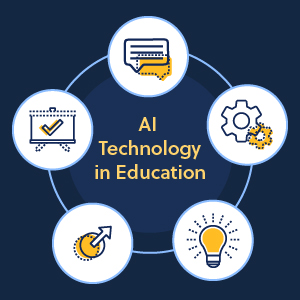
5 Essential Applications of AI Technology in Education

When growing up and sitting through math class, students often heard teachers say that students should not rely on a calculator to do their math for them. After all, they would never have a calculator in their pockets. Today, that statement could not be farther from the truth. Now, many students have an entire computer in their pockets with a calculator just a click of a button away. The growth of artificial intelligence (AI) has increased exponentially within the last few decades, and students and educators alike must embrace the latest in AI and education technology to keep up with the pace.

Carahsoft AI in EdTech Blog Embedded Image 2023In all learning environments, students and teachers rely on modern technologies to enhance their experiences to be as informational, productive and efficient as possible. In recent years, hybrid learning and collaborative digital spaces became essential components of education for both K-12 and higher education organizations. With this development, education technology has evolved and expanded to include new and more advanced AI systems inside and outside the classroom.

The needs of students are always changing, and educators must constantly adapt to progressive ways of teaching and learn different technologies or platforms that can assist with their daily lessons. With the implementation of AI and numerous benefits of digital learning, all students and instructors can achieve a more wholistic and innovative education. These five topics demonstrate how AI is an essential tool in the learning process for various types of learners across K-12 and higher education.

  • Communication

Carahsoft AI in EdTech Blog Icon 5 Image 2023Innovative trends in education technology have made it possible for students and staff to stay connected, whether through remote online learning or collaborative learning in the classroom. AI tools like SMS bots, predictive technology and ChatGPT can assist students in tasks such as navigating their school’s learning platforms, researching and preparing information for assignments and getting real-time answers to their questions. AI can also help teachers and professors orchestrate discussion points between students and guide next steps within small group collaborative projects.[1]
  • Automation

Carahsoft AI in EdTech Blog Icon 4 Image 2023For teachers, implementing AI can help automate repetitive daily tasks like grading tests and quizzes, and catching minor mistakes within written essays. This way they have more freedom and time to focus on in-depth feedback, creating comprehensive lesson plans and spending one-on-one time with their students. Additionally, AI tools can give students instant feedback on their work, allowing them to be more independent in identifying inaccuracies and recognizing successful projects.[2]

  • Immersive Learning

Carahsoft AI in EdTech Blog Icon 3 Image 2023Augmented reality (AR) and virtual reality (VR) are becoming increasingly more popular in students’ everyday lives, so using these technologies as a learning tool is familiar and compelling for them to gain valuable experiences in the classroom. Immersive technologies can simulate real-world scenarios for students to gain hands-on experience with low risk, like medical simulations and technical experiments. It also can allow students to break the barrier between their physical space and complex concepts like observing the planets up close or enlarging and examining something microscopic.[3] Not only do AR and VR create expansive opportunities for students to view and understand concepts in new and captivating ways, but they also create an additional, interactive and collaborative avenue of learning for students who may not be as responsive to traditional tools like textbooks and study guides.[4]

  • Data-Driven Results

Carahsoft AI in EdTech Blog Icon 1 Image 2023Throughout a student’s education, data is continually collected to better understand and predict their developing needs and most effective learning strategies. AI technologies can quickly and automatically analyze and report on this data, allowing teachers and professors to evaluate trends in an individual student’s or an entire class’s performance. Empowered with this knowledge, educators can tailor their lesson plans and take a more proactive approach to supporting students’ needs, ultimately increasing academic improvement for all.[5]

  • Personalized Learning

Carahsoft AI in EdTech Blog Icon 2 Image 2023Student’s learning styles can vary depending on many factors. For example, some students learn best through more visual and interactive experiences, while others may learn best through memorization and flashcards. Analyzing data collected by AI can help teachers be more informed and prepared educators for different kinds of learners. By applying the insights gathered from AI algorithms, educators can create personalized tracks for individual students, including aspects like adjusting the types of content, working with their comfortability, tailoring to their pace of learning and understanding their comprehension of learning objectives.[6] Additionally, AI technologies can help teachers plan, schedule and produce suggested lesson ideas more efficiently so they can target instruction and reduce the time it takes to create activities that best support each student.[5]

As AI becomes more common in education, maintaining academic integrity and validity within assignments of any kind will remain top of mind for educators. While earlier AI systems are designed to help students achieve academic success, newer AI systems are intended to empower teachers to optimize the use of artificial intelligence for students and encourage positive, ethical engagement with AI technologies.[7] Fostering trust among educators to cultivate the most prosperous learning environment through the implementation of AI can further personal, social and educational growth for all students.

Explore Carahsoft’s education technology solutions to learn how your organization can work together with our top innovative EdTech vendors to bridge the digital divide and meet the demands of modern education.


Resources:

[1] Office of Ed Tech. “AI and the Future of Teaching and Learning: New Interactions, New Choices.” Medium, https://medium.com/ai-and-the-future-of-teaching-and-learning/ai-and-the-future-of-teaching-and-learning-new-interactions-new-choices-c726bcf03012

[2] Shonubi, Olufemi. “Council Post: AI in the Classroom: Pros, Cons and the Role of Edtech Companies.” https://www.forbes.com/sites/theyec/2023/02/21/ai-in-the-classroom-pros-cons-and-the-role-of-edtech-companies/?sh=2cb4a227feb4

[3] Dick, Ellysse. “The Promise of Immersive Learning: Augmented and Virtual Reality’s Potential in Education.” Information Technology and Innovation Foundation. https://itif.org/publications/2021/08/30/promise-immersive-learning-augmented-and-virtual-reality-potential/

[4] Dani, Vishal. “How Augmented Reality Creates Interactive and Engaging Classrooms.” Kitaboo, https://kitaboo.com/augmented-reality-creates-interactive-and-engaging-classrooms/

[5] Gururaj, Tejasri. “10 Examples of Artificial Intelligence Improving Education.” Interesting Engineering, https://interestingengineering.com/innovation/examples-how-artificial-intelligence-improving-education

[6] Dani, Vishal. “9 Trends in Education Technology That Will Have a Major Impact.” Kitaboo, https://kitaboo.com/trends-in-education-technology/

[7] Office of Ed Tech. “AI and the Future of Teaching and Learning: Engaging Educators.” Medium, https://medium.com/ai-and-the-future-of-teaching-and-learning/ai-and-the-future-of-teaching-and-learning-engaging-educators-141e90c5e29f

Unlocking New Potential at GEOINT 2023

Over the past couple decades, geospatial intelligence has evolved dramatically to encompass new realms that were previously only a dream and now – thanks to technology — have become a reality. At the United States Geospatial Intelligence Foundation’s (USGIF) GEOINT 2023 Symposium held in St. Louis, Missouri, Government, military, industry and academic leaders gathered to celebrate the 20th anniversary of the event as the largest annual gathering of geospatial intelligence professionals in the nation and discuss ways to further the mission. This year’s theme, “From Maps to Metaverse,” gave tribute to the advancements within the GEOINT discipline and highlighted the innovative ways technology can help solve current national security challenges.

Carahsoft GEOINT Tradeshow Blog Embedded Image 2023The Current Metaverse

One of the overarching questions from the symposium was – what is the metaverse? From interactive whiteboards to keynote sessions, numerous experts chimed in to offer their insight on the topic including Christopher Johnson, Deputy Chief Technology Officer at the National Geospatial-Intelligence Agency (NGA), who defined the metaverse as a virtual representation of the world that has evolved in complexity over time. He elaborated, “The metaverse really isn’t a thing. It is more of a concept. It is how we interact with information in a new and novel way that we’ve never done before.” Johnson believes that the metaverse will fundamentally transform the way the world operates. The key to building an effective strategy for this shift will be technologists and end-user partnerships. According to Johnson this collaboration will look different than traditional Government partnerships and will require in-depth face-to-face conversations on the personal applications of the metaverse instead of just the engineering and design specifications.

While the current capabilities are barely scratching the surface of what could be possible for the metaverse, Johnson sees tremendous potential for utilizing the technology within the GEOINT community particularly for immersive training and military operations. By leaning in, exploring additional use cases and creating standards that can grow with the technology, Johnson believes it will unlock a whole new level of possible.

Enabling the Metaverse of the Future

The customization and adaptability potential make the metaverse both harder to define and to institute governing policies. Emerging agile software development with daily feature updates will require open standards to be implemented for effective and secure delivery. Johnson says it is imperative to start the process of creating these standards now and recommends the Government lean on international nonprofits to adapt some of the current standards and enable further technology development and implementation.

Dan Opstal, Acting Director of the National Civil Applications Center at the US Geological Survey, highlighted the role of data within the metaverse and the need to evaluate both the new ways data can be viewed and how much data the metaverse ingests to be able to operate. Opstal shared that a common theme for agencies and technologists is navigating oversight and privacy especially as the metaverse continues to expand and develop. Artificial Intelligence (AI) and machine learning (ML) will play a large role in sorting and standardizing the data for usage and close collaboration will be vital for instituting the legal frameworks to maximize these technologies.

Over his 40-year career at the organization Mark Chatelain, Chief Information Officer at the NGA, has witnessed the evolution from maps to the metaverse and noted the difference in requirements between the two. For maps, only a printing press and simple computer were necessary to display the information; however, with the metaverse and immersive AI, it necessitates immense computational capabilities and mobile communications to be invented and perfected for widespread implementation. Chatelain predicts that cloud data solutions and partnerships will be vital for storing the massive amounts of information that is expected to increase by over 1,500% in the next seven years. In addition to the data analysis, cloud and storage solutions, the NGA is also prioritizing the mobilization of its analysts to be able to work virtually and not be tied down to one location due to data access and computational power for high quality graphics at high speeds.

Maintaining and Improving the Workforce

To be able to modernize and adapt with the innovations in the field, the GEOINT community is looking into practical ways to invest in the current workforce and attract new talent. NGA leadership anticipates that the new generation’s fluency with technology will be an asset but also require a huge cultural change.

Ian Zearfaus, Director of the Human Capital Advanced Capabilities Office at the NGA, explained how offering visibility into all organization roles through an assignments marketplace is one new initiative that has opened up flexibility for employees. By encouraging lateral career movement, employees can advance further through exposure to new opportunities and skill growth. The NGA has seen great success with this initiative for the current workforce and it has become increasingly popular with the next generation as well. The NGA focuses on establishing cross-cutting and leadership competencies that provide employees with easily transferable skills within the organization. Zearfaus foresees data literacy, critical thinking and the ability to forge partnerships to continue to be highly sought after proficiencies. NGA coaching programs have also been a catalyst for employees to seek out micro-learning environments, find ways to maximize their strengths and ultimately climb an un-traditional career ladder to accomplish their goals. Additional innovative training methods have included role playing with virtual avatars to simulate co-worker and partner engagement and a pilot public-private talent exchange program with the Director of National Intelligence (DNI) to facilitate officer collaboration with the tech industry. In total, these efforts align with the NGA Strategic Workforce Plan to prepare for the workforce of 2026-2030 by leveraging internal talent and modernizing positions to align with future mission needs.

Overall, the GEOINT 2023 Symposium provided attendees with one of the most consistently presented solution drivers – the chance for collaboration and partnerships. Equipped with both the educational knowledge of the current themes in the GEOINT discipline and the perspective offered by agencies and industry, members of the broader GEOINT community left empowered to effectively utilize technology and achieve new heights.


To learn more about the topics discussed at GEOINT, listen to Francis Rose’s Fed Gov Today podcasts Part 1 and Part 2 co-sponsored by Carahsoft.

*The information contained in this blog has been written based off the thought-leadership discussions presented by speakers at GEOINT 2023.*

Insights from SOF Week 2023

By maintaining effective collaboration and innovation, the U.S. furthers its quality defense. This year’s SOF Week conference was held May 8-11 in Tampa, Florida. Organized by the Global Special Operations Forces Foundation (GSOF) and the United States Special Operations Command (USSOCOM), the event offered attendees an exhibition hall and extensive networking and educational programming to discuss advanced physical and digital security measures within defense operations.

The Importance of People

The Marine Forces Special Operations Command is initiating a new program called Cognitive Raider. This initiative’s goal is to operate parallel to the Marine Corps by making a difference on the battlefield through a robust workforce. There are several traits the Cognitive Raider initiative is looking for in applicants. Individuals must be prepared to secure assets against adversaries and be able to operate, not only as an individual, but also as a part of a team. Other vital traits are professionalism, dependability and modesty in relation to their achievements. The Marine Forces deliberately select candidates who display character and are prepared to learn special skills that build the organization up for success.

As the military aims to advance along with the dynamic evolution of technology, they must prepare for significant and unpredictable changes. Agencies may need to repurpose existing technology and investments to gain results in new areas that were previously considered low priority projects.

Carahsoft SOF Week Recap Blog Embedded Image 2023Artificial Intelligence Driving Innovation


In the digital age, and in the U.S. specifically, the economic ecosystem is digitally connected. This makes cybersecurity vital to every part of daily life. Bad actors can utilize AI’s abilities to hack software before defensive tools have been put in place; however, there are ways to mitigate these challenges.

AI technology drives efficient capability by improving agency understanding of technology and by accelerating decision-making. While humans can only make a few decisions a minute, AI can make hundreds of thousands of precise calculations and execute accordingly. This makes AI helpful in performing penetration tests to identify security weakness for offensive cyber operations. In finding these weaknesses, agencies can get ahead in the cybersecurity battle against threats.

Innovation in U.S. Central Command

Innovation is a vital part of the national defense sphere, and emerging technology can be leveraged to drive agency growth. This means employees must be properly prepared to use new software. To achieve this, agencies need to implement mechanisms and processes that encourage employees to enact change.

Team collaboration can help agencies reach grounded conclusions. Having tech partners is vital, as agencies can swap information on their respective expertise to help each other accomplish their goals and optimize processes. Schuyler Moore, the Chief Technology Officer for U.S. Central Command said she collaborates with other team members “…consistently to scan and ask folks about what processes are working, and what good ideas [they] have that might improve on how we do things.”

To best support timely tech updates and modernization, agencies should begin by shifting the organizational structure to create new pipelines and entities to sustain long-term innovation. In addition, agencies should prioritize projects in correlation with the shifting agency needs. By utilizing recurring exercises and group conversations, organizations can coordinate employee efforts and set expectations on priorities and goals.

Collaboration around new technology drives important innovation for national security. By facilitating the sharing of these ideas, SOF Week has spurred on new defense developments and shared knowledge.


To learn more about the topics discussed at SOF Week, view Francis Rose’s full Fed Gov Today episode co-sponsored by Carahsoft.

*The information contained in this blog has been written based off the thought-leadership discussions presented by speakers at SOF Week 2023.*

Palantir Announces Availability of Foundry on Microsoft Azure

Amid global economic uncertainty, access to integrated, protected, and trusted data and analytics is more vital than ever when it comes to creating business value. To further enable transformative outcomes, Palantir is pleased to partner with Microsoft in making Palantir Foundry available on Microsoft Azure, empowering existing and new customers to more effectively apply data and analytics in their operational decision-making.

Through this new collaboration, organizations will be able to quickly deploy Palantir Foundry — our ontology-powered operating system for the modern enterprise — as well as being able to unlock further value in Azure Data Services with Microsoft’s cloud-scale analytics and AI solutions.

As part of this relationship, our Foundry platform is available on Azure, enabling customers to deploy our software at speed, while benefiting from Azure’s trusted and secure infrastructure, as well as its global commercial footprint.

Availability on the Azure Marketplace will enable seamless purchasing and invoicing, with customers able to use their existing Microsoft Azure Consumption Commitment (MACC) to purchase a Foundry license and infrastructure costs.

Foundry’s single view ontology can layer on top of Azure Data Services, where they can then use investments for faster time to value, by better unlocking insights, and predicting and simulating outcomes for more data-driven decision making.

Palantir Foundry on Microsoft Azure Blog Embedded Image 2023

The platform will also integrate with native Azure Data Services for enterprise data management on Microsoft Azure, such as Azure Data Lake, Azure Synapse Analytics, Microsoft Power BI, Microsoft Dynamics 365, Microsoft Teams, and Microsoft Industry Clouds. This means customers will be able to further build on their existing IT investments in Azure Data Services through Palantir’s software-defined data integration (SDDI) to products like Azure Synapse Analytics, Azure Data Lake Storage, Azure AI and Azure Machine Learning, alongside others.

“We’re pleased to partner with Palantir to bring Foundry to Microsoft Azure. Organizations around the world will be able to make their data more actionable by using Palantir’s platform for data-driven operations and decision making, powered by Azure’s cloud-scale analytics and comprehensive AI services.” — Deb Cupp, President, Microsoft North America

Better Together with Palantir Foundry and Azure Data Services

Our new relationship with Microsoft will also see us go to market together in joint opportunities across industries like energy and renewables, retail and CPG, as well as other cross-industry sustainability and ESG efforts, where Microsoft customers can enhance their existing digital transformation efforts in Azure Data Services:

  • Energy and Renewables: Foundry enables customers to integrate data at speed and scale from remote sensors and Azure IoT Hub, apply this data to drive up the efficiency of assets, from offshore oil to onshore wind.
  • Retail and CPG: The platform enables organizations to bring near-instant visibility into demand and the ability to adapt their promotions, inventory, and operations in real time.
  • Sustainability and ESG: We’re helping organizations in their net zero transition by creating a common carbon ontology to empower front line decision makers to adjust their work to meet emissions targets.
  • Healthcare and Life Sciences: Foundry is used across the healthcare and life sciences value chain, from drug discovery and development, through to manufacturing, marketing, and sales. Integrate with Azure Health Data Services to manage protected health information.

We are also working together to accelerate time to value for customers in these industries any many more, by consolidating SAP and other ERPs using Palantir HyperAuto, helping them to create a more integrated data landscape. Palantir HyperAuto can help customers accelerate their journey to SAP on Azure and quickly surface insights in just hours.

Partnership in Action

Additional Palantir Foundry capabilities that can be deployed at speed via Azure include those from customers like the connected vehicle company Wejo. Wejo is a proud Palantir partner, optimizing Foundry’s capabilities, and a global leader in Smart Mobility for Good™ cloud and software solutions for connected, electric, and autonomous vehicle data.

Their data comes from over 92 billion vehicle journeys and consist of more than 19.5 trillion data points to data that provide businesses and organizations across a variety of industries the power to innovate, drive growth, transform communities, and save lives.

“We want to help reduce the 1.3 million deaths that happen each year on the road and the additional 8 million due to emissions with smart mobility for good products and services. As part of the Foundry platform, we are excited that Palantir customers with Azure will be able to more rapidly drive integrated, protected, and trusted data and analytics from Wejo for smart mobility initiatives and business value.” — Sarah Larner, Executive Vice President of Strategy and Innovation at Wejo

We look forward to working with Microsoft to broaden Foundry’s availability, enabling clients across industries to better leverage their existing investments for improved operational outcomes.

Those interested in learning more about Palantir and Microsoft’s relationship can visit the Palantir website or get started today via the Azure Marketplace.

This post contains forward-looking statements within the meaning of Section 27A of the Securities Act of 1933, as amended, and Section 21E of the Securities Exchange Act of 1934, as amended. These statements may relate to, but are not limited to, expectations regarding the terms of the partnership and the expected benefits of the software platform and solutions. Forward-looking statements are inherently subject to risks and uncertainties, some of which cannot be predicted or quantified. Forward-looking statements are based on information available at the time those statements are made and were based on current expectations as well as the beliefs and assumptions of management as of that time with respect to future events. These statements are subject to risks and uncertainties, many of which involve factors or circumstances that are beyond Palantir’s control. These risks and uncertainties include Palantir’s ability to meet the unique needs of its customers; the failure of its platforms and solutions to satisfy its customers or perform as desired; the frequency or severity of any software and implementation errors; its platforms’ reliability; and the ability to modify or terminate the partnership. Additional information regarding these and other risks and uncertainties is included in the filings Palantir makes with the Securities and Exchange Commission from time to time. Except as required by law, Palantir does not undertake any obligation to publicly update or revise any forward-looking statement, whether as a result of new information, future developments, or otherwise.

This post originally appeared on Palantir.com and is re-published with permission.

Download our Resource, “Impact Study: Accelerating Interoperability with Palantir Foundry” to learn more about how Palantir Technologies can support your organization.

Updates from Palantir Edge AI in Space

In April 2022, Palantir launched its Edge AI solution into space onboard Satellogic’s NewSat-27 as part of the SpaceX Transporter-4 mission. We’re excited to provide an update of our on-orbit imagery processing efforts. Between April and July, we performed various hardware and software tests in-orbit, and over the past few months we have been receiving some exciting results from our direct tasking and on-orbit processing pipelines onboard NewSat-27.

Where We Stand

As of November 2022, we have successfully demonstrated the capability for customers to task the satellite with multiple captures, resulting in over 100 images from NewSat 27’s multispectral camera.

We had our most recent live image capture and onboard processing test on October 30th over Tartus, Syria. Let’s run through how we handled these images starting from the raw capture in-orbit all the way to results on the ground, utilizing Edge AI in space:

Raw images captured by the satellite consist of a single channel comprising four different ‘bands’ of information — these represent a specific wavelength of light. Palantir Edge AI then orchestrated our onboard imagery preprocessing services to convert batches of raw images into standard, three-channel RGB images. By processing images into a standardized format that our models expect, we can improve accuracy and create more confident results for our users. As part of this specific capture, we received 44 images that we processed into six RGB images.

Palantir Edge AI in Space Blog Embedded Image 2023

After pre-processing was completed, we then ran AI models onboard the satellite. For this particular capture, Edge AI ran our in-house Palantir Omni model to identify buildings in the images. We received 210 building detections, or ‘inferences’, from the model. For each inference, our post-processing services created PNG thumbnails and computed geodetic coordinates by using the satellite telemetry and the onboard global elevation datasets. The outputs were then bundled and secured using various onboard cryptographic mechanisms, so we could validate the data once it was received on the ground.

In our initial on-orbit tests, we discovered an edge-case bug in our pre-processing algorithm. To remedy the issue, we uplinked a small software patch to the satellite that modified how we converted these individual images into RGB images. Once our patch was uplinked, we were able to update our software onboard to account for this new case within seven minutes. With the upgrade infrastructure in-place, we can continuously refine and augment our in-orbit software and algorithms.

Notably, in this live capture instance, we were to demonstrate that software capacity for customers to process all 44 frames within 7 minutes. In our previous post, we discussed how we had strict time constraints for each individual processing run of Edge AI. Even when we accounted for the update, our end-to-end processing time was comfortably within the thresholds that we had initially targeted. For even larger captures, our software features a built-in checkpointing system for resuming processing in the event that we have to halt processing.

What’s Next?

While this previous version of our Omni model was geared towards identifying buildings of interest and focused on the onboard integration with the satellite, our next generation of in-house models can identify more specialized object classes, such as ships. These models are already running on the ground as we test their performance. We ran this same capture through one of our newer models and were able to identify various ships near the port of Tartus in Syria with high confidence. We will be sending this new model up to the satellite in our next upgrade cycle. This will allow us to demonstrate Edge AI’s ability to continuously update and manage models while in flight, in order to optimize inference results based on areas of interest.

Figure 1: Ships off the coast of Tartus, Syria. Detections come from Palantir’s new in-house ML models on imagery collected as part of our Tartus capture.

We have also integrated our Edge AI outputs with Palantir MetaConstellation. MetaConstellation provides end-to-end software around satellite imaging, including an operational UI for image analysis. It allows users to annotate imagery with features and easily compare multiple images from different vendors and sensors over a given area of interest.

Our outputs from the AIP Satellite — either the combined image with detections, or just the PNG thumbnails — can be viewed directly within MetaConstellation. This means that in future deployments we could be able to directly downlink from an Edge AI-equipped satellite to a tactical instance of MetaConstellation in the field, allowing for detections and imagery to be sent to operational users within minutes.

Palantir MetaConstellation makes imagery analysis readily accessible to users. Here, we compare imagery from our Tartus capture on October 30, 2022 with images that we had previously collected on September 17, 2022.

Figure 2: Palantir MetaConstellation makes imagery analysis readily accessible to users. Here, we compare imagery from our Tartus capture on October 30, 2022 with images that we had previously collected on September 17, 2022.

Our Ongoing Commitment

We are continuing to invest in our on-orbit capabilities and are currently focused on hardware-backed security mechanisms, upgraded model capabilities, and our in-house georegistration algorithm, which should dramatically increase the accuracy of our model inferences. We are also planning to introduce new communication options to facilitate direct downlink for data, which will allow Palantir to get inferences into the hands of our customers faster than ever before.

This post contains forward-looking statements within the meaning of Section 27A of the Securities Act of 1933, as amended, and Section 21E of the Securities Exchange Act of 1934, as amended. These statements may relate to, but are not limited to, expectations regarding the expected benefits and uses of our software platforms. Forward-looking statements are inherently subject to risks and uncertainties, some of which cannot be predicted or quantified. Forward-looking statements are based on information available at the time those statements are made and were based on current expectations as well as the beliefs and assumptions of management as of that time with respect to future events. These statements are subject to risks and uncertainties, many of which involve factors or circumstances that are beyond Palantir’s control. These risks and uncertainties include Palantir’s ability to meet the unique needs of its customers; the failure of its platforms and solutions to satisfy its customers or perform as desired; the frequency or severity of any software and implementation errors; its platforms’ reliability; and the ability to modify or terminate the partnership. Additional information regarding these and other risks and uncertainties is included in the filings Palantir makes with the Securities and Exchange Commission from time to time. Except as required by law, Palantir does not undertake any obligation to publicly update or revise any forward-looking statement, whether as a result of new information, future developments, or otherwise.

This post originally appeared on Palantir.com and is re-published with permission.

Download our Resource, “Resilient and Effective Space Capabilities” to learn more about how Palantir Technologies can support your organization.