Generative AI, DevSecOps and Cybersecurity Highlighted for the Air Force and Space Force at DAFITC 2023

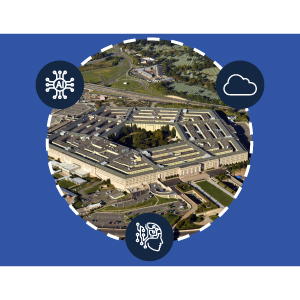
Thousands of Space Force and Air Force personnel and industry experts convened to discuss the most current and significant threats confronting global networks and national defense at the 2023 Department of the Air Force Information Technology and Cyberpower Education & Training (DAFITC) Event. Throughout the many educational sessions, thought leaders presented a myriad of topics such as artificial intelligence (AI), DevSecOps solutions and cybersecurity strategies to collaborate on the advancement of public safety.

Leveraging Generative AI in the DoD

At the event, experts outlined three distinct use cases for simplified generative artificial intelligence in military training.

  • Text to Text: This type of generative AI takes inputted text and outputs written content in a different format. Text to Text is associated with tasks such as content creation, summarization, evaluation, prediction and coding.
  • Text to Audio: Text to Audio AI can enhance accessibility and inclusion by creating audio content from written materials to support elearning and education and facilitate language translation.
  • Text to Video: Text to Video AI is primarily geared towards generating video content from a script to aid the military with language learning and training initiatives.

Dr. Lynne Graves, representative of the Department of the Air Force Chief Data and Artificial Intelligence Office (CDAO), provided attendees with a brief timeline of how the USAF will fully adopt artificial intelligence. The overarching aim for AI integration is to make it an integral part of everyday training, exercises and operations within the Department of Defense (DoD).

  • In FY23, the DoD is focusing on pipeline assessment. Using red teaming where ethical hackers run simulations to identify weaknesses in the system, internal military personnel target improvement of their infrastructure and mitigation of the vulnerabilities in the different stages of the pipeline.
  • In FY24, the emphasis will be on the Red Force Migration policy, which involves developing, funding and scaling the necessary strategies.
  • In FY25, the goal is for the department to become AI-ready. This entails preparing for AI adoption at all agency levels, establishing a standard model card that explains context for the model’s intended use and other important information, creating a comprehensive repository of data and implementing tools for extensive testing, evaluation and verification.

Carahsoft AI, Cybersecurity, DevSecOps at DAFITC Tradeshow Blog Embedded Image 2023USSF Supra Coders Utilize DevSecOps for Innovation

The current operations of United States Space Force (USSF) Supra Coders involve a range of activities that combine modeling, simulation and expertise in replicating threats. These operations are conducted globally, and currently include orbit-related activities, replication of DA ASAT (Direct Ascent Anti-Satellite) capabilities and the reproduction of adversarial Space Domain Awareness (SDA).

The USSF Supra Coders have encountered limitations with software solutions, including restrictions tied to standalone systems, licensing structures with associated costs and limited adaptability to meet the specific needs of aggressors and USSF requirements. DevSecOps presents a multifaceted strategy for mitigating the identified capability gaps noted by the USSF Supra Coders. It can help create more effective and efficient software solutions through seamless integration of security protocols, streamlining system integration processes, optimizing costs and enhancing customizability.

Cybersecurity Within the Space Force

Cybersecurity is a shared responsibility across the DoD but is especially relevant for the U.S. Space Force. As a relatively newly emerging branch of the military, the Space Force is still developing its cyber strategies. Due to its completely virtual link to its capabilities, the USSF must prioritize secure practices from the outset and make informed decisions to protect its networks and data.

Currently, the Space Force is engaged in the initial phases of pre-mission analysis for its cyber component which serves as a critical element for establishing and maintaining infrastructure through the integration of command and control (C2). These cyber capabilities encounter a series of complex challenges, which necessitate a multifaceted approach including the following solutions:

  • Enforcing Consistent Cybersecurity Compliance
  • Developing Secure Methods to Safely Retire Old Technology
  • Enhancing Cryptography Visibility
  • Understanding Security Certificate Complexity
  • Identifying Vulnerabilities and Mitigating Unknown Cyber Risks

While the Space Force faces a uniquely heightened imperative to bolster its cybersecurity capabilities with its inherent reliance on information technology and networks in the space domain, the entire community must collaborate effectively to achieve military leaders’ targeted cybersecurity capabilities by the goal in 2027.

The integration of generative AI in military training, innovations through DevSecOps by the USSF Supra Coders and cybersecurity initiatives of the Space Force collectively highlight the evolving landscape of advanced technologies within the Department of Defense. Technology providers can come alongside the military to support these efforts with new solutions that enhance the DoD’s capabilities and security.


Visit Carahsoft’s Department of Defense market and DevSecOps vertical solutions portfolios to learn more about DAFITC 2023 and how Carahsoft can support your organization in these critical areas. 

*The information contained in this blog has been written based off the thought-leadership discussions presented by speakers at DAFITC 2023.*

Okta and ServiceNow: Modernizing Public Sector Operations

Federal, state, and local agencies and educational institutions are facing a surge in targeted cyberattacks. With increasing return-to-office mandates, they face further challenges balancing security with the need to deliver frictionless experiences for users and systems, both within and beyond the premises of agencies and campuses. Public sector organizations can lean further on industry partners to help them modernize operations to improve cybersecurity, support distributed workforces and users, remain compliant with audit and policy mandates, and, ultimately, better serve the public.

Roadblocks to Modernization

To modernize operations, agencies and institutions need to transition from legacy systems to cloud-based tools. Creating collaborative, seamless, and secure work environments that not only attract and retain top talent but also comply with key audit and policy mandates is necessary.

But building this kind of robust environment that can securely support mission-critical work isn’t easy.

Okta ServiceNow Modernizing Public Sector Operations Blog Embedded Image 2023

For one, as the public sector implements cloud-based tools that deliver modern, continuous digital services, they must also ensure the new technology works seamlessly alongside existing processes. And securing work environments both in-office and remotely has never been more challenging, with a 40% increase in cyberattacks against government and public service organizations from Q2 2023 to Q3 2023. Unfortunately, busy IT teams’ resources are too often spent completing manual work instead of implementing changes needed to focus on the high-value work that propels their missions.

How Okta and ServiceNow Solutions Help With Modernization and Automation

Okta and ServiceNow solutions enable agencies and institutions to overcome these obstacles by providing tools that enhance security, modernize operations, comply with strategic policies, and improve service delivery to meet critical mission goals.

Together, Okta and ServiceNow help with:

  • Identity and access management: A centralized Identity solution offers a complete view of users and phishing-resistant authentication to protect accounts from cyberattacks and least-privilege access. This gives users just the right access at the right time for the right purposes.
  • User lifecycle and workflow automation: Advanced algorithms and customizable templates streamline onboarding and offboarding for IT teams, reducing time-consuming work, eliminating manual, repetitive tasks, and increasing productivity.
  • Compliance and policy oversight: Detailed logs and refined reporting capabilities perform automated compliance checks, and policy enforcement mechanisms help reduce the risk of non-compliance.
  • No-code automation: No-code/low-code automation enables IT teams to quickly launch modern services while still adhering to Zero Trust integrations.
  • Risk management and monitoring: Advanced analytics and real-time reporting enable continuous visibility of all systems, improving service availability and accelerating incident response that can better protect the sensitive information of public sector organizations.
  • System integration: API management and middleware tools enable seamless integration with automated data exchange to improve communication and reduce errors.

Why Okta and ServiceNow are Better Together

These solutions combine ServiceNow’s expertise in policy and compliance management and internal and vendor risk management with Okta’s expertise in Identity and access management, such as single sign-on (SSO) and multi-factor authentication (MFA).

More specifically, with a rich, bidirectional integration, Okta and ServiceNow work seamlessly together, empowering public sector organizations to modernize and automate their services to support their evolving missions with:

  • Okta Integration Network (OIN)
  • ServiceNow Security Incident Module
  • StateRAMP Ready authorization
  • FedRAMP High authorization
  • Department of Defense Impact Level (IL) 4 and IL5 workloads

Contact our team today to learn more about about how, together, Okta and ServiceNow provide the public sector with an open, future-ready platform to automate, secure, orchestrate, and simplify their workflows.

Software, AI, Cloud and Zero Trust as Top Priorities for the Army and DoD at Large at TechNet Augusta 2023

Many of the major cybersecurity, data, DevSecOps and other trends from the past couple of years continue to grow and be top priorities for every segment of the Department of Defense (DoD). At TechNet Augusta 2023, Government and industry experts shared the specific needs of their organizations across those areas and solutions to help achieve their goals. The main theme of the event was “Enabling a Data-Centric Army” and expanding those principles and their mobilizing technologies to the entire DoD. For the Army in particular, the shift from hardware to software, the use of artificial intelligence (AI), cloud capabilities and Zero Trust were headlining topics at the conference.

Shifting from Hardware to Software

In an effort to increase agility and expand access to resources, the Army is transitioning its equipment from hardware to software. Amending its materiel release process to decouple software from hardware allows the Army to deploy software outside of the long hardware acquisition cycle. To mobilize this endeavor, the Army Futures Command (AFC), is modifying its software requirements to focus on high-level overviews that are then refined by operators. Alongside this shift, the Army and other departments requested that technology providers ensure that their software solutions integrate with each other. Going forward, the Army also asked industry to provide software that is not tied to specific hardware. This separation will be key to establishing data-centricity. Nearly every speaker echoed the importance of this shift for their departments.

Utilizing AI

With this major transition to a software-heavy environment, Army Chief Data and Analytics Officer David Markowitz believes it will be an ideal use case for generative AI in software development. Having a controlled environment in software development would make it easier to properly govern compared to the complexity of some of the other uses. As AI usage increases across the DoD, military leaders requested industry create AI platforms with layered complexity of features enabling users of any skill level to utilize the technology effectively. In regard to AI applications for data, Army CIO Leonel Garciga stated that additional guidance on “Data Use on Public/Commercial Platforms” would be released soon to clarify its policy. Overall, officials concurred that the DoD is not looking to become 100% reliant on AI aid but instead maximize AI’s strengths to augment human critical thinking and empower commanders to make data-driven decisions.

Enabling Cloud Capabilities

Over the past year, the Army has exponentially increased its cloud migration and virtualized capabilities. Housing information in the cloud optimizes data storage and simplifies ease of access particularly with the increase in data output, and the push for AI data analytics and data-driven decisions. Hybrid cloud solutions offer the readiness, adaptability and duplication of vital information necessary for military operations to continue smoothly in any situation. Currently, DoD leaders seek industry solutions for modernizing and moving applications to the cloud simultaneously. Acquiring technology with this ability would reduce both the security risk and the work required from the military to implement it.

Expanding Zero Trust

Overarching every aspect of the DoD is the critical need for cybersecurity. Garciga plans to emphasize Zero Trust implementation heavily in conjunction with improving user experience and cyber posture. While multi-factor authentication offers a great starting point, military leaders explained that it is not enough and that they look to partner with industry to close virtualization vulnerabilities through continuous monitoring and regular red teaming. At the conference, the Army Cyber Command (ARCYBER) outlined seven principles for IT providers to follow for all capabilities they deliver:

  • Rapidly Patch Software
  • Assess All Production Code for Security Flaws
  • Improve Security of Development Networks
  • Isolate Development Environments from the Internet and from the Vendor Business Network
  • Implement Development Network Security Monitoring
  • Implement Two-Factor Authentication (2FA) on Development Network and Testing Services
  • Implement Role-based Permissions on Development Network

Empowering DoD Success

A consistent thread woven throughout the event was the vital nature of open communication and partnership between the DoD and technology companies to achieve the established goals. Within each of these areas including the shift from hardware to software, use of AI, cloud capabilities and Zero Trust, the DoD looks to innovate and explore new methods and solutions to stay ahead on the world platform. Together through collaboration, industry can have a vital role in keeping American citizens safe one technology update at a time.


Explore our Federal Defense Technology Solutions Portfolio to learn how Carahsoft can support your organization through innovative, agile defense resources and IT capabilities.

*The information contained in this blog has been written based off the thought-leadership discussions presented by speakers at TechNet Augusta 2023.*

Accelerating Mission Success with Technology

The pandemic triggered disruptions to supply chains, workforce management and other daily government operations. Rather than abating, those challenges have continued to evolve. The war in Ukraine has brought new security concerns, and financial uncertainties have made it even more imperative for government agencies to be able to pivot quickly. Digital transformation is essential to meet such ever-changing, unpredictable demands. Flexible, cost-effective technology solutions enable government agencies to analyze data for better decision-making in areas as diverse as cybersecurity, public health and military operations. Investments in modern technologies have the added benefit of making government work more attractive to talented professionals with innovative ideas and a willingness to try new approaches. Such people are a crucial element of any digital transformation. Learn how you can rethink every aspect of operations in ways that spur innovation and advance the ability to respond to new challenges and opportunities as quickly as they arise in Carahsoft’s Innovation in Government® report.


How Connected Data Heals the Post-COVID Supply Chain

“Public-sector leaders need to think big, start small and scale fast. The best approach is to pick a chunk of the business that is consequential and show everyone incremental results. Executive buy-in is also important but sometimes comes later, after several bottom-up iterations that are so successful they are impossible to overlook. The National Telecommunications and Information Administration’s new grants portal is an excellent example. The end-to- end, FedRAMP-authorized system gives NTIA and its customers the digital tools they need to apply for broadband grant programs and support the government’s management of the projects funded with the grants.”

Read more insights from Maj. Gen. (Ret.) Allan Day, Ph.D., Vice President of Logistics/Sustainment of Global Public Sector at Salesforce.


Technology Expands Access and Reduces Public Health Service Challenges

FCW May Mission Success Technology Blog Embedded Image 2023“Digitization helps health workforce challenges as well as addressing the service backlog and supporting expanded access. Digital service delivery is far more efficient, freeing up clinician time to deliver health care in-person for patients who are unable or unwilling to access services digitally or when virtual encounters are not the most appropriate channel. And digitization done well provides rich, real-time data to better understand gaps and inequities and thus improve digital services and inform timely program and policy development.”

Read more insights from Karen Hay, Digital Transformation Leader of Global Public Health at Salesforce.


What the Talent Shortage in Aerospace and Defense Companies is Really Telling Us

“Quick wins are essential. Quick wins are the battles in the bigger war of transforming your organization. These are the smaller localized wins within business units outside of large enterprise changes. They become easy-to-understand success stories that give teams a taste of how a transformed organization can thrive. They are powerful social proof that leaders can use to educate and inspire.”

Read more insights from Mike Mulcahy, Digital Transformation and Strategy Development Leader for Global Public-Sector Aerospace and Government System Integrators at Salesforce.


How Digitizing Infrastructure Protects Against a New Generation of Cyberattacks

“Chicago’s 311 call center is an excellent example of transformation in action. It is the point of entry for residents, business owners and visitors to access information about city programs, services and events. Chicago 311 allows citizens to access that information without long hold times and with minimal impact on staff. Since its launch, Chicago 311 has become an essential resource for activities as varied as simple informational inquiries and requests for tree trimming and pothole repairs. More broadly, the service has shown how the right cloud platform can transform the traditional call center into a modern contact center that unlocks everything from back-office information to self-service capabilities across a single, secure and connected experience.”

Read more insights from Paul Baltzell , Vice President of Strategy and Business Development for State and Local at Salesforce.


Empowering Citizens Through Platform Investments

“CIOs are facing the challenge of how to modernize by using platform technology. Most have moved into the cloud, but modernizing with a platform is a new way of thinking. It means deciding which platforms to adopt and which use cases to build onto these platforms. Modernization means reducing the technology stack. When agencies choose the right platform, they benefit from the use cases that are already on it so they don’t have to start from scratch.”

Read more insights from Scott Brock, Vice President of Strategy and Business Development for State and Local at Salesforce.


How Technology Investments Can Help Close the Talent Gap

“A November 2022 memo from the Office of the Secretary of Defense confirmed the seriousness of the situation with respect to retention after return-to-work policies went into effect. Focusing on our nation’s cybersecurity priorities, the statement called for expanding the workforce through apprenticeship programs and other nontraditional means of closing the talent gap. There is a solution: with the right investment in technology and talent, leaders can manage through the current challenges and achieve a posture where positive change is a constant, iterative and accepted part of the landscape.”

Read more insights from Dr. Michael Parker, Vice President of Business Development at Salesforce.


Download the full Innovation in Government® report for more insights from IT modernization thought leaders and additional industry research from FCW.

Insights from SOF Week 2023

By maintaining effective collaboration and innovation, the U.S. furthers its quality defense. This year’s SOF Week conference was held May 8-11 in Tampa, Florida. Organized by the Global Special Operations Forces Foundation (GSOF) and the United States Special Operations Command (USSOCOM), the event offered attendees an exhibition hall and extensive networking and educational programming to discuss advanced physical and digital security measures within defense operations.

The Importance of People

The Marine Forces Special Operations Command is initiating a new program called Cognitive Raider. This initiative’s goal is to operate parallel to the Marine Corps by making a difference on the battlefield through a robust workforce. There are several traits the Cognitive Raider initiative is looking for in applicants. Individuals must be prepared to secure assets against adversaries and be able to operate, not only as an individual, but also as a part of a team. Other vital traits are professionalism, dependability and modesty in relation to their achievements. The Marine Forces deliberately select candidates who display character and are prepared to learn special skills that build the organization up for success.

As the military aims to advance along with the dynamic evolution of technology, they must prepare for significant and unpredictable changes. Agencies may need to repurpose existing technology and investments to gain results in new areas that were previously considered low priority projects.

Carahsoft SOF Week Recap Blog Embedded Image 2023Artificial Intelligence Driving Innovation

In the digital age, and in the U.S. specifically, the economic ecosystem is digitally connected. This makes cybersecurity vital to every part of daily life. Bad actors can utilize AI’s abilities to hack software before defensive tools have been put in place; however, there are ways to mitigate these challenges.

AI technology drives efficient capability by improving agency understanding of technology and by accelerating decision-making. While humans can only make a few decisions a minute, AI can make hundreds of thousands of precise calculations and execute accordingly. This makes AI helpful in performing penetration tests to identify security weakness for offensive cyber operations. In finding these weaknesses, agencies can get ahead in the cybersecurity battle against threats.

Innovation in U.S. Central Command

Innovation is a vital part of the national defense sphere, and emerging technology can be leveraged to drive agency growth. This means employees must be properly prepared to use new software. To achieve this, agencies need to implement mechanisms and processes that encourage employees to enact change.

Team collaboration can help agencies reach grounded conclusions. Having tech partners is vital, as agencies can swap information on their respective expertise to help each other accomplish their goals and optimize processes. Schuyler Moore, the Chief Technology Officer for U.S. Central Command said she collaborates with other team members “…consistently to scan and ask folks about what processes are working, and what good ideas [they] have that might improve on how we do things.”

To best support timely tech updates and modernization, agencies should begin by shifting the organizational structure to create new pipelines and entities to sustain long-term innovation. In addition, agencies should prioritize projects in correlation with the shifting agency needs. By utilizing recurring exercises and group conversations, organizations can coordinate employee efforts and set expectations on priorities and goals.

Collaboration around new technology drives important innovation for national security. By facilitating the sharing of these ideas, SOF Week has spurred on new defense developments and shared knowledge.


To learn more about the topics discussed at SOF Week, view Francis Rose’s full Fed Gov Today episode co-sponsored by Carahsoft.

*The information contained in this blog has been written based off the thought-leadership discussions presented by speakers at SOF Week 2023.*

How Palantir Meets IL6 Security Requirements with Apollo

Building secure software requires robust delivery and management processes, with the ability to quickly detect and fix issues, discover new vulnerabilities, and deploy patches. This is especially difficult when services are run in restricted, air-gapped environments or remote locations, and was the main reason we built Palantir Apollo.

With Apollo, we are able to patch, update, or make changes to a service in 3.5 minutes on average and have significantly reduced the time required to remediate production issues, from hours to under 5 minutes.

For 20 years, Palantir has worked alongside partners in the defense and intelligence spaces. We have encoded our learnings for managing software in national security contexts. In October 2022, Palantir received an Impact Level 6 (IL6) provisional authorization (PA) from the Defense Information Systems Agency (DISA) for our federal cloud service offering.

IL6 accreditation is a powerful endorsement, recognizing that Palantir has met DISA’s rigorous security and compliance standards and making it easier for U.S. Government entities to use Palantir products for some of their most sensitive work.

The road to IL6 accreditation can be challenging and costly. In this blog post, we share how we designed a consistent, cross-network deployment model using Palantir Apollo’s built-in features and controls in order to satisfy the requirements for operating in IL6 environments.

What are FedRAMP, IL5, and IL6?

With the rise of cloud computing in the government, DISA defined the operating standards for software providers seeking to offer their services in government cloud environments. These standards are meant to ensure that providers demonstrate best practices when securing the sensitive work happening in their products.

DISA’s standards are based on a framework that measures risk in a provider’s holistic cloud offering. Providers must demonstrate both their products and their operating strategy are deployed with safety controls aligned to various levels of data sensitivity. In general, more controls mean less risk in a provider’s offering, making it eligible to handle data at higher sensitivity levels.

Palantir IL6 Security Requirements with Apollo Blog Embedded Image 2023

Impact Levels (ILs) are defined in DISA’s Cloud Computing SRG as Department of Defense (DoD)-developed categories for leveraging cloud computing based on the “potential impact should the confidentiality or the integrity of the information be compromised.” There are currently four defined ILs (2, 4, 5, and 6), with IL6 being the highest and the only IL covering potentially classified data that “could be expected to have a serious adverse effect on organizational operations” (the SRG is available for download as a .zip from here).

Defining these standards allows DISA to enable a “Do Once, Use Many” approach to software accreditation that was pioneered with the FedRAMP program. For commercial providers, IL6 authorization means government agencies can fast track use of their services in place of having to run lengthy and bespoke audit and accreditation processes. The DoD maintains a Cloud Service Catalog that lists offerings that have already been granted PAs, making it easy for potential user groups to pick vetted products.

NIST and the Risk Management Framework

The DoD bases its security evaluations on the National Institute of Standards and Technology’s (NIST) Risk Management Framework (RMF), which outlines a generic process used widely across the U.S. Government to evaluate IT systems.

The RMF provides guidance for identifying which security controls exist in a system so that the RMF user can assess the system and determine if it meets the users’ needs, like the set of requirements DISA established for IL6.

Controls are descriptive and focus on whole system characteristics, including those of the organization that created and operates the system. For example, the Remote Access (AC-17) control is defined as:

The organization:

  • Establishes and documents usage restrictions, configuration/connection requirements, and implementation guidance for each type of remote access allowed;
  • Authorizes remote access to the information system prior to allowing such connections.

Because of how controls are defined, a primary aspect of the IL6 authorization process is demonstrating how a system behaves to match control descriptions.

Demonstrating NIST Controls with Apollo

Apollo was designed with many of the NIST controls in mind, which made it easier for us to assemble and demonstrate an IL6-eligible offering using Apollo’s out-of-the box features.

Below we share how Apollo allows us to address six of the twenty NIST Control Families (categories of risk management controls) that are major themes in the hundreds of controls adopted as IL6 requirements.

System and Services Acquisition (SA) and Supply Chain Risk Management (SR)

The System and Services Acquisition (SA) family and related Supply Chain Risk Management (SR) family (created in Revision 5 of the RMF guidelines) cover the controls and processes that verify the integrity of the components of a system. These measures ensure that component parts have been vetted and evaluated, and that the system has safeguards in place as it inevitably evolves, including if a new component is added or a version is upgraded.

In a software context, modern applications are now composed of hundreds of individual software libraries, many of which come from the open source community. Securing a system’s software supply chain requires knowing when new vulnerabilities are found in code that’s running in the system, which happens nearly every day.

Apollo helped us address SA and SR controls because it has container vulnerability scanning built directly into it.

Figure 1: The security scan status appears for each Release on the Product page for an open-source distribution of Redis

When a new Product Release becomes available, Apollo automatically scans the Release to see if it’s subject to any of the vulnerabilities in public security catalogs, like MITRE’s Common Vulnerabilities and Exposure’s (CVE) List.

If Apollo finds that a Release has known vulnerabilities, it alerts the team at Palantir responsible for developing the Product in order to make sure a team member updates the code to patch the issue. Additionally, our information security teams use vulnerability severity to define criteria for what can be deployed while still keeping our system within IL6 requirements.

Figure 2: An Apollo scan of an open-source distribution of Redi shows active CVEs

Scanning for these weak spots in our system is now an automatic part of Apollo and a crucial element in making sure our IL6 services remain secure. Without it, mapping newly discovered security findings to where they’re used in a software platform is an arduous, manual process that’s intractable as the complexity of a platform grows, and would make it difficult or impossible to accurately estimate the security of a system’s components.

Configuration Management (CM)

The Configuration Management (CM) group covers the safety controls that exist in the system for validating and applying changes to production environments.

CM controls include the existence of review and approval steps when changing configuration, as well as the ability within the system for administrators to assign approval authority to different users based on what kind of change is proposed.

Apollo maintains a YML-based configuration file for each individual microservice within its configuration management service. Any proposed configuration change creates a Change Request (CR), which then has to be reviewed by the owner of the product or environment.

Changes within our IL6 environments are sent to Palantir’s centralized team of operations personnel, Baseline, which verifies that the Change won’t cause disruptions and approves the new configuration to be applied by Apollo. In development and testing environments, Product teams are responsible for approving changes. Because each service has its own configuration, it’s possible to fine-tune an approval flow for whatever’s most appropriate for an individual product or environment.

Figure 3: An example Change Request to remove a Product from an Environment

A history of changes is saved and made available for each service, where you can see who approved a CR and when, which also addresses Audit and Accountability (AU) controls.

When a change is made, Apollo first validates it and then applies it during configured maintenance windows, which helps to avoid the human error that’s common in managing service configuration, like introducing an untested typo that interrupts production services. This added stability has made our systems easier to manage and, consequentially, easier to keep secure.

Incident Response (IR)

The Incident Response (IR) control family pertains to how effectively an organization can respond to incidents in their software, including when its system comes under attack from bad actors.

A crucial aspect to meeting IR goals is being able to quickly patch a system, quarantine only the affected parts of the system, and restore services as quickly as is safely possible.

A major feature that Apollo brings to our response process is the ability to quickly ship code updates across network lines. If a product owner needs to patch a service, they simply need to make a code change. From there, a release is generated, and Apollo prepares an export for IL6 that is applied automatically once it’s transferred by our Network Operations Center (NOC) team according to IL6 security protocols. Apollo performs the upgrade without intervention, which removes expensive coordination steps between the product owner and the NOC.

Figure 4: How Apollo works across network lines to an air-gapped deployment

Additionally, Apollo allows us to save Templates of our Environments that contain configuration that is separate from the infrastructure itself. This has made it easy for us to take a “cattle, not pets” approach to underlying infrastructure. With secrets and other configuration decoupled from the Kubernetes cluster or VMs that run the services, we can easily reapply them onto new infrastructure should an incident ever pop up, making it simple to isolate and replace nodes of a service.

Figure 5: Templates make it easy to manage Environments that all use the same baseline

Contingency Planning (CP)

Contingency Planning (CP) controls demonstrate preparedness should service instability arise that would otherwise interrupt services. This includes the human component of training personnel to respond appropriately, as well as automatic controls that kick in when problems are detected.

We address the CP family by using Apollo’s in-platform monitoring and alerting, which allows product or environment owners to define alerting thresholds based on an open standard metric types, including Prometheus’s metrics format.

Figure 6: Monitors configured for all of the Products in an Environment make it easy to track the health of software components

Apollo monitors our IL6 services and routes alerts to members of our NOC team through an embedded alert inbox. Alerts are automatically linked to relevant service logging and any associated Apollo activity, which has drastically sped up the remediation process when services or infrastructure experience unexpected issues. The NOC is able to address alerts by following runbooks prepared for and linked to within alerts. When needed, alerts are triaged to teams that own the product for more input.

Because we’ve standardized our monitors in Apollo, we’ve been able to create straightforward protocols and processes for responding to incidents, which means we are able to action contingency plans quicker and ensure our systems remain secure.

Access Control (AC)

The Access Control (AC) control family describes the measures in a system for managing accounts and ensuring accounts are only given the appropriate levels of permissions to perform actions in the system.

Robustly addressing AC controls includes having a flexible system where individual actions can be granted based on what a user needs to be able to do within a specific context.

In Apollo, every action and API has an associated role, which can be assigned to individual users or Apollo Teams, which are managed within Apollo and can be mirrored from an SSO provider.

Roles necessary to operating environments (e.g. approving the installation of a new component) are granted to our Baseline team, and are restricted as needed to a smaller group of environment owners based on an environment’s compliance requirements. Team management is reserved for administrators, and roles that include product lifecycle actions (e.g. recalling a product release) are given to development teams.

Figure 7: Products and Environments have configurable ownership that ensures the right team is monitoring their resources

Having a single system to divide responsibilities by functional areas means that our access control system is consistent and easy to understand. Further, being able to be granularly assign roles to perform different actions makes it possible to meet the principle of least privilege system access that underpins AC controls.

Conclusion

The bar to operate with IL6 information is rightfully a high one. We know obtaining IL6 authorization can feel like a long process — however, we believe this should not prevent the best technology from being available to the U.S. Government. It’s with that belief that we built Apollo, which became the foundation for how we deploy to all of our highly secure and regulated environments, including FedRAMP, IL5, and IL6.

Additionally, we recently started a new program, FedStart, where we partner with organizations just starting their accreditation journey to bring their technology to these environments. If you’re interested in working together, reach out to us at fedstart@palantir.com for more information.

Get in touch if you want to learn more about how Apollo can help you deploy to any kind of air-gapped environment, and check out the Apollo Content Hub for white papers and other case studies.

This post originally appeared on Palantir.com and is re-published with permission.

Download our Resource, “Solution Overview: Palantir—Apollo” to learn more about how Palantir Technologies can support your organization.


Cybersecurity Initiatives from TechNet Cyber 2023

The global prominence of technology, cyber power and cybersecurity is vital to U.S. political and economic success. At TechNet Cyber 2023, a conference held in Baltimore, Maryland, Government, industry and academic partners discussed solving global security needs. This year’s conference, which took place May 2-4, focused on numerous topics including Zero Trust, multicloud and defense strategies against bad actors.

Thunderdome: The New Zero Trust Framework

Thunderdome is the new Zero Trust framework to improve cyber security and posture, created by the Defense Information Systems Agency (DISA), a combat support agency that provides information technology and communications support. Lieutenant General Robert Skinner, the director of DISA, attests that Thunderdome meets 131 of 153 key standards that were laid out by the Department of Defense (DoD) as a part of its strategy for Zero Trust. With that and further growth, Thunderdome is well on its way to being a vital part of Zero Trust cybersecurity.

Carahsoft TechNet Tradeshow Blog Embedded Image 2023However, Thunderdome is not a one size fits all solution, as its scalability and modularity will require ongoing assessment. At the event, Lieutenant General Skinner highlighted three key components to understanding where Thunderdome fits into agencies. They are known as the “three Ps:” posture, position and partnerships. The first part, posture, evaluates where an agency stands with its technology and processes in relation to its cyber posture. The second element, position, is the utilization of these resources to achieve the best results. And lastly, partnerships form the cornerstone of maximizing business capabilities. In relationships with allies and partners, all participants can help each other and ensure that they are all on the same page.
Much of this manifests in Thunderdome’s process of improving agency posture with regards to the workforce. Through education, the right training, retention and hiring those with the right skillsets, agencies can improve their industry posture. Lieutenant General Skinner stressed that to support the current workforce, it is vital for agency leaders to “know and understand what their capabilities are to move them in the right place.”

The Pentagon’s MultiCloud Environment

The Pentagon’s multicloud environment is designed to give practitioners access to the best of technology. However, the complexity of the multicloud environment can lead to issues if not managed correctly. To combat this, Armon Dadgar, HashiCorp’s CTO and Co-founder, recommends forming a consistent way for practitioners to set up cybersecurity infrastructure on other platforms. As agencies seek to decomplexify systems, one way to achieve this in both the public and commercial sector is by establishing a consistent approach to the multicloud. Agencies should be intentional about instituting abstraction layers and begin by defining a central platform team to create a common blueprint across environments. This way, there is an organized standard for future processes.

Threats to Cybersecurity

Wanda Jones, a principal cyber advisor of the U.S. Air Force, discussed how to protect against hackers with evolving threats. Bad actors are aggressive, always moving and attacking industry’s weak spots. The best way to defend capabilities is to detect threats early on and respond in a timely manner. Agencies must always be monitoring and improving to stay on the offensive. A solid start to improving the Zero Trust is improving security architecture and providing access to those with known identities within the agency.

With the continued focus on cybersecurity, the Federal Government maintains the public’s safety and security.


To learn more about the topics discussed at TechNet Cyber, View the full Fed Gov Today episode co-sponsored by Carahsoft.

*The information contained in this blog has been written based off the thought-leadership discussions presented by speakers at TechNet Cyber 2023.*

Safeguarding Mission-Critical Data: Veeam’s Unwavering Commitment to Data Protection and Secure Products for Government Customers

Protecting customer data

In today’s digital landscape, data security is of utmost importance. At Veeam Software (Veeam), we recognize the significance of safeguarding our customers’ sensitive information. As part of our ongoing commitment to security, we are actively pursuing Common Criteria and Department of Defense Information Network Approved Product List (DoDIN APL) certifications. In addition, we are fully compliant with Cybersecurity Maturity Model Certification v2 level 1 (awaiting validation) and engage in Independent Verification & Validation (IV&V). We have also successfully completed FIPS 140-2, SOC type 2 level 1, ISO 27001 certifications and are implementing the Secure Software Development Framework (SSDF) to fortify our security measures further. This update provides an in-depth understanding of these certifications and our dedication to maintaining the highest data protection standards.

Common Criteria certification and DoDIN APL

Common Criteria is an internationally recognized standard for evaluating the security of information technology products. It involves a comprehensive evaluation process, testing our software against rigorous security requirements. By pursuing Common Criteria certification, our goal is to provide our customers assurance that our products adhere to the highest security standards acknowledged by over 30 countries worldwide.

In parallel, we are also pursuing the DoDIN APL certification, which is specifically relevant for our customers operating within the Department of Defense (DoD) ecosystem. This certification ensures that our products meet the stringent security requirements set by the Defense Information Systems Agency (DISA), thereby enhancing the protection of data within the DoDIN framework.

CMMC v2 Compliance

Veeam Safeguarding Mission-Critical Data Blog Embedded Image 2023

The Cybersecurity Maturity Model Certification (CMMC) is an integral part of our commitment to ensuring the security of our customers’ data. CMMC v2 is the latest version of this unified standard designed to assess the cybersecurity posture of the defense industrial base (DIB). Compliance with CMMC v2 signifies that our security practices align with the stringent requirements defined by the Department of Defense (DoD). By adhering to these standards, we assure our customers within the defense sector that their data is safeguarded with the utmost care and resilience.

Independent Verification & Validation (IV&V)

To reinforce our security measures, we have engaged in Independent Verification & Validation (IV&V). This process involves a third-party organization conducting thorough testing and evaluation of our software. The independent nature of IV&V ensures an unbiased assessment of our security controls, offering an additional layer of confidence in our commitment to protecting valuable customer data.

FIPS 140-2, SOC type 2 level 1 and soon 2 and ISO 27001 certifications

Veeam has successfully completed several vital certifications that further fortify our security posture. FIPS 140-2 is a U.S. government standard that verifies the security requirements of cryptographic modules. This certification ensures that our encryption methods meet the highest standards and provide robust data protection.

SOC type 2 level 1 certification demonstrates our dedication to maintaining the security, availability, processing integrity, confidentiality and privacy of data. We are actively working towards achieving SOC type 2 level 2 certification, enabling us to demonstrate even greater control efficacy and maturity across our systems and processes.

Additionally, Veeam’s compliance with the ISO 27001 standard underscores our commitment to establishing and maintaining a comprehensive information security management system (ISMS). This certification validates that our security practices align with globally recognized best practices, ensuring customer data remains safe and secure.

Implementation of the Secure Software Development Framework (SSDF)

As part of our continuous improvement efforts, Veeam is in the process of implementing the Secure Software Development Framework (SSDF). This framework provides guidance on designing, developing and testing software to ensure adherence to specific security standards. The SSDF allows us to integrate robust security practices into our software development lifecycle, ensuring we proactively address security concerns at every stage of the development process and build products with security in mind from the ground up. By incorporating the SSDF into our development processes, we enhance the security of our software and reinforce our commitment to delivering robust and secure solutions.

At Veeam, our customer’s data security is our top priority. We are committed to maintaining the highest levels of protection for mission-critical data. Pursuing Common Criteria and DoDIN APL certifications, complying with CMMC v2, engaging in Independent Verification & Validation, completing FIPS 140-2, SOC type 2 level 1 and soon 2, ISO 27001 certifications and implementing the Secure Software Development Framework (SSDF) all demonstrate our unwavering dedication to data security.

By undergoing these certifications and implementing industry-leading security measures, we ensure that customer data remains secure, regardless of the sector. We will continue to evolve and improve our security practices to stay ahead of emerging threats and provide customers the peace of mind they deserve.

When customers choose Veeam and the Veeam Data Platform, they can rest assured they have selected a trusted partner committed to securing their data and the data of their customers, end-users and partners. We value the trust we have built with our government customers and will continue to deliver the highest level of data protection possible to ensure mission continuity.

Contact a member of our team today and learn more about how Veeam can support your mission-critical data initiatives.

Sea-Air-Space 2023 Showcases Strategic Insights for the Navy

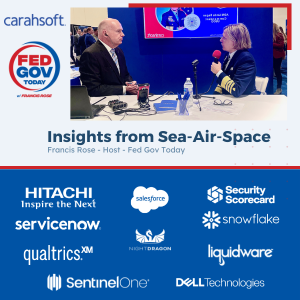
As the landscape of defense technology across the United States Armed Forces continues to advance and transform, the military must also evolve and adapt with it. At Sea-Air-Space 2023, the Navy League’s Global Maritime Exposition, key leadership from the U.S. defense industry and government technology experts came together for educational and collaborative sessions across a variety of topics. A record number of attendees gathered for the three-day conference where many vendors including Carahsoft and 45 of its partners demonstrated their technology solutions to meet military needs. Fed Gov Today joined Carahsoft on the show floor to speak with military thought leaders on staffing, cybersecurity and more.

Carahsoft Sea-Air-Space Recap Tradeshow Blog Embedded Image 2023Sea Service chiefs attending the conference noted that currently, maintaining and developing the workforce is a high priority for the military as it emphasizes the role of people as resources. Defense agencies are looking to engage young, talented individuals interested in serving the armed forces.
“Whenever you see the defense budget start to go down…a lot of times you’ll see training and education reduced,” Carahsoft’s Program Executive of Navy and Defense Strategy, Mike McCalip, said. “What you end up with is a workforce that can be five or 10 years behind in technology.” To mitigate this, McCalip sees this as an opportunity for industry vendors to “help [the Navy] to educate and keep their workforce on the tip of the spear when it comes to technology.”

Another important concept discussed at Sea-Air-Space was the Department of Defense’s shift to ever evolving Zero Trust. Throughout the conference, Sea Service chiefs and tech vendors fielded many questions and conversations surrounding cybersecurity’s role within defense strategy. Military leaders and vendors shared an eagerness to collaborate and explore opportunities for growth together in the future.


Check out the rest of my industry insights and highlights from the event floor at Sea-Air-Space 2023 in my full blog at FedGovToday.com.

DoDIIS Takeaways: Future DoD and IC Initiatives for AI, ML and the Cloud

This blog series focuses on the Department of Defense (DoD) and Intelligence Community (IC) initiatives for 2023 and beyond. Part one covered future plans regarding IT workforce development and retention, partnerships, interoperability and data management. Part Two continues the discussion of the intertwining initiatives and technologies in AI, ML and cloud computing to provide a more complete picture of the current DoD and IC landscape in connection with their vision for the future.

While data is the lifeblood for the digital transformation, artificial intelligence (AI) and machine learning (ML) are what make digesting the information possible. Cloud allows for this data to be hyperscaled, more agile and more efficient for operations. All of these elements and technologies work together to propel the DoD and IC to the next level and achieve mission goals.

Carahsoft DoDIIS AI ML and Cloud Part 2 Blog Embedded Image 2023AI and ML

To properly understand AI and ML’s role in the future of the DoD and IC, some standard definitions must be established. While the private sector mostly utilizes AI for emergency response, healthcare, finance, agriculture and human resources, the military’s most common uses include cyber defense, swarming, vulnerability scanning and data filtration. This creates a stark difference in understanding and terms. For the purposes of this blog, the terms AI and ML will reflect the terms used during the live DoDIIS speeches and discussions.

With AI and ML, one of the biggest hurdles for the IC is explainability. Before new data can be incorporated from other sources, existing data must be processed. CTOs and Directors of the CIA, DIA, National Media Exploitation Center (NMEC) and Virtualitics explained that if current data holdings are not sorted and understood during the data cataloging processes, it will be difficult to utilize AI and understand the results later. Data governance and data strategy are foundational to this effort. All parties involved also need to understand the ethical implications of AI and have a strong grasp of data analysis and machine learning to harness all of these technologies’ true powers. Other safeguards must be put in place to properly introduce the use of AI and ML within their intended contexts. AI testing and evaluation (T&E) is different than for other tech, since AI capabilities should not be set and left without monitoring and a way to update a model in the field. Instead, the models should continue to be supervised over time by system creators and end users across academia, industry and government to preserve accuracy and high precision. The baseline within the hierarchy of needs is ensuring quality data results, which requires clear understanding of the algorithmic approaches being employed for the models. Vendor technology that provides clear AI explainability is particularly sought after in the DoD and IC since it can be used to back tactical life or death decisions. One solution the DoD is pursuing to address this challenge is the machine-as-a-teammate (MaaT) capability which automates data transformation to significantly increase velocity and precision while remaining explainable.

The DoD has begun focusing heavily on ethical AI frameworks including starting toolkits to assess pipeline or model bias and building a Responsible AI (RAI) foundation to ensure responsible, equitable, traceable, reliable and governed use of data. The DoD hopes industry will continue to adopt RAI principles ahead of future requirements and expand on practical ways to attain these best practices. In addition, the DoD established an AI Council to discuss aligning their RAI framework with AI regulations in other European countries as they seek to integrate systems and open the door for efficient data sharing.

Through initializing use of AI and ML, the DoD and IC have already discovered several benefits. AI has offered enhanced workflows and reduced burden on analysts, advanced filtering techniques on large data sets, open-source scanning for improved product reports and optimized data rates for information transfer. DoD ML pilots achieved 100x increase in quality review and 10x increase in pre-decision error/anomaly detection, among other successes. DoD and IC leaders look to AI as gateway to better identify vulnerabilities in military systems, improve the identification of targets or locations and increase accuracy and speed of retrieving battle damage assessments. While the technology exists to perform these tasks, the policies and permissions are not yet complete to fully implement AI and ML.

Handling the massive quantities of data is a huge undertaking; however, processing the information through AI and ML has proven the worth of the endeavor tenfold and delivered clear mission impact. By focusing on the infrastructure first, the DoD and IC can leverage AI and ML for maximum impact to let machines and humans each do what they do best and then team up to solve the problems in between.

While there are some risks to implementing AI completely such as data set accuracy, vulnerabilities to adversarial influence, legal ramifications and expectations of data use tech, DoD and IC officials confidently endorse the transition to incorporating more AI. They recommend several key steps such as creating a common international policy that addresses ethical concerns, technological advancement and dual use; defining AI for policy given the dynamic and changing nature of technology; and identifying definitions and strategies around non-lethal options, hardening systems and mission enhancement. The DIA’s AI strategy aims to achieve AI readiness in the near term, AI competitiveness in the mid-term and AI dominance in the long-term.

The Cloud

According to Dr. Raj G. Iyer, former CIO for Information Technology Reform, Office of the Secretary of the Army, cloud is an absolute necessity to move large amounts of data across the globe. The concept of data-centricity shifting within the Army from theory to doctrine, has precipitated other essential changes including the migration to cloud. Dr. Iyer stated that the new data goals are no longer owned by just “tech folks”, but by every warfighter, which places a new level of priority on technology like cloud. The new Army initiative includes achieving a distributed command and control (C2) structure for the Army to provide more mobility and less centralization both with C2 and the data. This will be attained through the adoption of its Hybrid Cloud of the Future to hide data “in plain sight” and avoid systems that are uniquely military in nature. When the military leverages a commercial platform, it can process data in a way where adversaries cannot differentiate sensitive information from other commercial processes.

Across the rest of the DoD and IC, agencies vary in their level of cloud migration. For the NGA, business applications and analytics are already in the cloud, the next step is to move to a hybrid multicloud with resources that need to be on hardware available at Joint Regional Edge Nodes. The NSA hopes to avoid a lift-and-shift approach, and instead be precise with their cloud investments through initiatives such as Hybrid Cloud Compute, Eagle Crossing, and a Human Capital Management System. DISA has brought cloud programs together for the DoD under their Host and Compute Center (HACC) through the Joint Warfighting Cloud Capability (JWCC) contract.

For agencies which have not migrated, the DoD and IC recommend preparing for cloud deployment and utilizing this time before switching to cloud to eliminate bad practices that exist on-prem and focus on relevance, resourcing and complete system readiness. As other technologies and strategies take effect, DoD and IC officials reminded of the importance of prioritizing cloud first, cloud native and Zero Trust baked in throughout every aspect regardless of cloud migration stage.

Some challenges DoD and IC officials presented to industry were how to maintain service if an outage occurs in regional data centers from a classified perspective and how to maintain and optimize the network from a unified comm perspective considering its sensitivity to latency. Overall, leaders inquired how to preserve reliability and redundancy to overcome potential distrust of the cloud. As the DoD and IC collaborate with industry to innovate and resolve these issues, it continues to unlock new doors of potential. Dr. Iyer stated that the network is no longer an enabling function, and these digital technologies are now changing how the DoD and IC fundamentally view warfighting.

As the DoD and IC seek to accomplish these IT goals and prepare the way for future modernization, industry, academia and other government agencies must come together to solve current challenges, innovate new solutions and support mission initiatives. Government leaders noted the importance of these modernization efforts and that the technologies and strategies developed in the next 5-10 years will be the foundation of operations for the next generation.


Check out our Fast Facts and Future Initiatives of the DoD and IC Resource for more information and key insights for the IT industry.

*The information contained in this blog has been written based off the thought-leadership discussions presented by speakers at DoDIIS 2022.*