
As the defense and intelligence communities reflect on 2022 and plan for the future, several key takeaways will guide upcoming initiatives. At the Department of Defense Intelligence Information System (DoDIIS) Worldwide, a conference sponsored by the Defense Intelligence Agency (DIA), attendees from the military, industry, government and academia gathered to collaborate and share insights on accomplishing the Department of Defense’s mission.
Agency leaders highlighted that every aspect of the Department of Defense (DoD) and Intelligence Community (IC) is critically enabled by IT. Not only is IT the first-in and last-out function for every crisis, oftentimes IT is the mission, not just a supporting role. The DIA recognizes that to innovate with current technology and invest in emerging tech, the journey to maximum productivity often includes the critical evaluation of processes and programs. With IT, misuses must be corrected, software needs to be transparent to users and technology simplified to promote a seamless integration. In essence, IT should be viewed as an evolution instead of a revolution.
To accomplish these goals, the DIA laid out its five main areas of prioritization for the coming years:
- IT workforce retention
- JWICS modernization, resilience and autonomy
- DoDIIS modernization
- International connectivity and partnerships
- Capability delivery pipeline with Zero Trust and data management
The first part of this two-part blog series covers the discussions of DoD and IC challenges in relation to IT workforce development and retention, partnerships and interoperability and data management. The second blog will cover the enabling technology being deployed including artificial intelligence (AI), machine learning (ML) and the cloud.
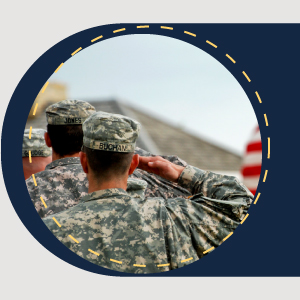 IT Workforce Development and Retention
The DoD and IC have encountered challenges upskilling the workforce and uncovering new talent. To fill the gap in applicants, the DIA and IC have turned to contract hires and those from industry who want to spend only a few years in government. The DIA also offers an Education With Industry (EWI) Program where DIA employees can get joint duty credit while working with an industry partner. In addition, the DIA and National Geospatial Intelligence Agency (NGA) have developed recruiting programs for high schoolers and partnerships with local universities to offer high school internships in hopes of encouraging students to develop interest in a government career.
High competition for talent has increased the need for retention incentives and additional education so agencies can maintain the current workforce. To address these concerns, the DoD and IC have begun modernizing their HR systems and seek to automate HR processes and provide self-service capabilities in hopes of expediting the talent acquisition timeline. Another endeavor includes modernizing training platforms for current employees to keep their skillsets up to date. Investing in continuing-education for these agency subject matter experts is important since they play an essential role in advising commanders and building tech options to address threats. Leadership is looking to academia and industry to source individuals with understanding of the current DoD and IC challenges and the global crises. By pulling from these outlets, the DoD and IC can expedite the process rather than having to train from the ground up with high school recruits. To successfully integrate industry workers into the government sphere, the DoD and IC must adapt to make commercial approaches work as well.
Partnerships and Interoperability
In the realm of defense and intelligence, partnerships and interoperability of technology are key to achieving results that maximize each agencies’ unique capabilities and pool combined strengths. By engaging with other agencies and countries, commanders have access to additional information and options. Investing in these resources offer some resolutions to the DoD’s current challenge of how to rapidly develop new warfighting capabilities while also simultaneously addressing current threats.
These partnerships can make a difference through data sharing, which offers new knowledge to commanders for more informed decision making. To make this information and technology sharing a reality, systems and processes must ensure cross-domain security and allow for interoperability throughout data sourcing countries and agencies. Partnering more significantly with Five Eyes countries (FVEY), will be a major source of increased intelligence as the DIA shifts towards integrating systems. In the near future, any DIA cybersecurity programs that do not align and add value to the FVEY countries will be either adapted or removed.
DoD and IC leaders also hope to collaborate with allies such as the Five Eyes to establish baseline international policies that will open doors for easier parity of information and comparability of systems and technology. Without a universal frame of reference, definitions, and laws, practical progress and innovation is impeded.
Connecting with industry has proven to be another valuable resource as DoD and IC leaders are seeking to better understand the full capabilities of current and emerging technology and gain insight into how industry can solve mission challenges. The DoD and IC desire to foster a culture that values systematic, strategic and equitable private sector engagement as well as addresses barriers to those relationships.
Involving the community through continued conversations and strong alliances provides an integrated deterrent and an advantage over the adversary. While these partnerships have taken a back seat in the past, DoD and IC leaders believe that this needs to be a crucial change and take priority.
Data Management
One of the main cruxes for the DoD and IC is harnessing the power of data. Since everything begins with data, the DoD and IC recognize the responsibility to think and act strategically from data collection to exploitation, dissemination and disposal, and seek to improve current data handling methods. Dr. Stacey A. Dixon, Principal Deputy Director of National Intelligence, believes that developing strategies in the IC to accelerate delivery of that data to those that need it, is the greatest challenge of our time for defense and the IC. Currently the DoD has crossed the limit of data input, overwhelming existing data strategies and making data too siloed, too slow and too hard to find to successfully stay ahead of threats. As the volume of data increases, several measures must be put in place to leverage the wealth of information.
According to DoD and IC officials, the one thing industry and government agencies alike can collectively improve, is interoperability; however, unless data source countries’ systems are secure and the data can be worked together, this cannot be accomplished. Because a large, diverse set of data is needed for good ethics and proper execution, the DoD and IC look to gain increased ability to integrate data across classification levels. Maintaining Zero Trust and consistent monitoring is also critical to freeing the data from other sources.
Over the coming years, the DoD and IC seek to implement widespread data tagging as a foundation for effective data management and quality results. This will allow the combining of commercial and government data to merge with the context and experience that the DoD and IC possess to achieve well rounded, sound decisions.
The Office of the Director of National Intelligence (ODNI) released its IC Data Strategy 2023-2025, which outlines its plans for improving the management and use of data. The strategy aims to leverage data to operate, collaborate and communicate at any time, in any place and in any security domain at speed, scale and securely. To achieve this transformation, the strategy focuses on four areas: performing end-to-end data management, delivering data interoperability and analytics at speed and scale, seeking advanced partnerships for continued digital and data innovation, and transforming the IC into a data-driven enterprise. Finally, it outlines a modular and agile framework that integrates business, functional, technical, security and data standards to provide a blueprint for the use of data in the IC.
Dr. Raj G. Iyer, former CIO for Information Technology Reform, Office of the Secretary of the Army, stated that data will be the new ammunition. At the end of the day, it comes down to enabling optionality for commanders, enabling mission command and enabling a common operating picture. Dr. Iyer emphasized that this is not a technology strategy, but a digital transformation to change operating models and leverage data in ways that U.S. competitors have not.
Utilizing artificial intelligence, machine learning and the cloud will empower these goals. Read part two of this series to find out more.
Check out our Fast Facts and Future Initiatives of the DoD and IC Resource for more information and key insights for the IT industry.
*The information contained in this blog has been written based off the thought-leadership discussions presented by speakers at DoDIIS 2022.*
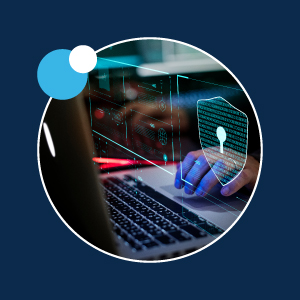 For cybersecurity and zero trust professionals within the industry, this idea of obtaining and launching bad content is particularly challenging as they strive to protect their organization’s operations. These groups must also be prepared to identify insider threat and guarantee security when utilizing a truly limitless customization of content like low-code. Organizations must ensure new code is protected yet unrestricted. Otherwise, they run the risk of negating the purpose of a low-code platform. Ultimately, the sources and employees creating and executing new low-code must be trusted entities to avoid problems like data leaks, exploitation and cyber-attacks.
 Strong, resilient next-generation networks that protect sensitive data and DoD missions and functions have never been more critical. But, with a complex interconnected information environment, how can federal IT teams strengthen cybersecurity and become proactive instead of reactive? Army leaders have spent much time discussing resilient next-generation networking, but action needs to be taken soon.