Transforming Digital Services and Modernizing Risk Posture in Colorado

Throughout Colorado State and Local departments, utilizing emerging technology is imperative to combating cyber threats and improving efficiency. At the Carahsoft Digital Transformation Roadshow in Denver, Colorado, Government IT and industry leaders engaged in dynamic discussions around transforming Colorado through technology.

Transforming Technology in Government

Reducing technical debt is a pivotal step in transforming the way Colorado responds to citizens and facilitates digital services. Modernization contributes to building a streamlined constituent experience, enabling data integration for better decision-making and lowering the cost of ownership. That further requires top technology talent to redesign aging technology systems and deliver better outcomes for the state.

The Digital Government strategic plan gathered over 2,000 Coloradans to understand their experience with Digital Government. The group heard from citizens requesting easier forms and more accessible Government services. From that survey, administration learned that State and Local departments can make an impact through three initiatives: expanding broadband access, making Government accessible by reducing burden of access for constituents and reducing poverty.

Carahsoft Florida Colorado State and Local Roadshow Blog Embedded Image 2023Change and increased needs seem to be the only constants in today’s world. Workloads are ever increasing and requirements from new and unexpected sources are creating backlogs that are becoming critical. This can put an incredible burden on plans, resources and personnel. The next step is looking at how technology and innovation can improve these new processes and address new demands through live chats, Artificial Intelligence (AI) modeling, etc. There is immense opportunity for Local agencies in Colorado to use this technology to make workflows more efficient, learn about their citizens and offer that instant gratification that customers have come to expect.

One of the biggest challenges Local Government faces is the interoperability across departments to share resources and capabilities. By focusing on utilizing new technologies to encourage that interoperability and optimize through data, user experience improves. There also must be a balance when handling sensitive data within these departments, as well as an effort to avoid technology sprawl and cost complexity. Automation and AI is foundational when it comes to daily operations and best practices as innovative technical solutions continue to make access from the edge easier, more transparent and secure.

The Role of Emerging Technologies in Digital Government

By eliminating legacy systems and investing in emerging enterprise technologies, agencies are generating cost savings, increasing security and accessibility and providing a more holistic, human-centered Government experience for Colorado.

Understanding how Colorado is securing the remote workforce in light of the telework and deployment explosion is important to connect where those emerging technologies can improve communication and networking issues. It is important that the state gets broadband access to its most rural and underserved communities to expand high-speed internet and 5G to increase citizen engagement with Government services. By utilizing endpoint detection, multi-factor authentication and mobile device management, Colorado protects citizens’ data and gains an understanding of user behavior to protect the data from any cyber threats.

The emerging technology approach is also about an innovative mindset to use tools in a better way that improves citizens’ digital experience. Colorado has been modernizing its approach to citizen-facing services by consolidating into simple, quick and more digital interactions to ease how citizens access essential services and programs with the state.

Technology acceleration takes center stage as part of Colorado’s Digital Government Strategic Plan. For the City and County of Denver, collaboration is imperative for coordinating technology deployment across the State and Local Government and within communities, at speeds capable of meeting the plan’s timelines. With these modernization efforts and changes across the state, agencies must invest in change management by preparing citizens for more digitized services. This includes walking residents through new processes and applications as incremental changes occur.

Combating Cyber Threats in Government

As their communities increasingly become targets of hackers and other cyber criminals, State and Local agencies must stand united to prevent and recover from cyberattacks. Cybersecurity risks range from data exploitation, insider threats, third-party practices as outsourcing increases, ransomware, identity theft and fraudulent access to State Government services.

Risk tolerance and risk posture must factor in human risk, application risk, physical security risk, datacenter risk and cloud risk to comprehensively assess cyber threats. As a result of the COVID-19 pandemic, the workforce access changed overnight, creating an even greater need for multi-factor authentication, password management, cloud security and Zero Trust compliance.

Data integrity attacks include unauthorized insertion, deletion or modification of data to Government information such as emails, employee records, financial records and citizen data. Public facing identity is a big aspect going forward for Colorado agencies.

The safeguards in use today ensure data is secure, protected and effectively backed up, yet readily available when needed. Lifecycle management is critical to making sure users have the right level of access to the right applications. Today, most agencies are in a position where if someone logs in, they make an identity claim with a username and password and a one-time code. The agency should then know what application that user accessed, and the process stops there; however, with the diversity in endpoints, more information needs to be acquired. Agencies can then make better risk-based decisions on who is allowed to log in, thereby protecting their environment, detecting and remediating threats while continuing to modernize their risk posture.

Emerging technologies and new digital services provide State and Local agencies more opportunities to easily connect with their citizens and make sure the user experience is as smooth as possible. As increased access to applications and Government data continues, agencies must continuously improve their risk posture to protect citizens’ sensitive information by upholding Zero Trust best practices.


Visit our roadshow resource hub to learn more about the State and Local Roadshow Series: Digital Transformation.

Diversity, Equity and Inclusion as a Pillar of CX Service Delivery

Integrating DEIA Into the Larger CX Picture

The Whitehouse Executive Order on Diversity, Equity, Inclusion and Accessibility (DEIA) in the Federal Workforce promotes standards that can be applied to improving Government customer experience (CX). These include strengthening the ability to recruit, hire, develop, promote and retain the nation’s talent, removing barriers to equal opportunity and creating a space where all employees and customers are treated with dignity and respect. The standards offer Federal and State and Local Government agencies the opportunity to move toward equitable service delivery.

Carahsoft Customer Experience Engagement Summit Part 5 CX Blog Embedded Image 2023Developing a DEIA strategy involves a multitude of moving pieces like analyzing data, enforcing requirements, measuring effectiveness and ensuring progress. All of these areas culminate in sustainable cultural intelligence for organizations. Starting the conversation around DEIA in the context of CX begins with the on-going theme of communication rooted in trust—especially employee and customer trust in the Government. During Carahsoft’s 2023 Customer Experience and Engagement Summit, panelists examined how their organizations are creating more trusting, inclusive and resilient workplace environments which translates to improved services for customers.

A Focus on Human-Centered Design

In the realm of CX, trust is one of the most important aspects of customer, employee and leadership interactions. One panelist found that previously coming from a background in the user experience (UX) transformation space, all human-centered design exclusively existed within UX. In furthering their understanding of the broader CX spectrum, they discovered that UX is only a small part of the CX journey. While UX refers to the way users interact with an organization’s specific products, CX is how users view an organization’s brand and experiences with the business. The critical missing component to elevate CX is communication and transparency to build trust. Much of the progress made through DEIA initiatives aims to rebuild trust with undervalued communities so they feel secure receiving assistance both personally and virtually.

To truly develop more equitable service delivery models, organizations must be able to manage workplace tension by building both internal and external progress. For example, the National Science Foundation (NSF) has worked to provide tools for success in both areas through various touchpoints. Externally, NSF teams launched a redesign of the agency’s website that allowed them to collect information from several demographic communities. In doing so, the NSF was able to redesign language inputs and outputs to better serve their website visitors. Internally, the NSF has implemented a call-listening program that analyzes empathy, psychological safety and compassion to protect not only customers, but employees as well. The NSF has also designed a DEIA maturity model, which helps to measure the efficacy of DEIA capabilities, identify critical barriers and benefits to employee advancement and operationalize a sense of inclusion and belonging across the foundation.

Moderating Workforce Development for the Future

Recruiting, hiring and retaining employees is successful when an organization considers a wide range of talent representation. Also, being data-informed is critical for an agency’s mission. Collecting data via methods like staff surveys to identify members’ interests and strengths as well as understand where that talent can best serve the agency is imperative for progress. Baking this into daily processes by working with human resources counterparts ensures the DNA of the organization is varied. Ultimately, diversity within CX talent can positively set one organization and the way its employees interact with customers apart from another.


Read the previous blog and check back soon to read the rest of Carahsoft’s insights from CX industry thought leaders at the summit.


To learn more about the latest in the CX landscape and how Carahsoft’s industry-leading partners can support your Customer Experience initiatives, please visit our resource hub to access all on demand recordings and information from the 2023 Government Customer Experience and Engagement Summit.

Following the Funding of Innovation in Customer Experience

In the world of business, methodology is always changing along with users. While this innovation can be expensive, it is vital that agencies move alongside the private sector with technology implementation and customer service standards. At Carahsoft’s 2023 Government Customer Experience and Engagement Summit, panelists discussed ways to cut costs and foster innovation.

Innovating to Maintain Pace with Customer Needs

When a business works with clients, most of its focus will naturally be on the customer experience (CX). What was a revolutionary addition in the past, may be an expected feature in the present. As a result, agencies need to continually adapt and grow. Technology can be used to spearhead that innovation. Many people who interface with Government systems are also Government employees, so quality software is vital both internally and externally.

Carahsoft Customer Experience Engagement Summit Part 4 Blog Embedded Image 2023Agencies should design interfaces with CX at the forefront. Professionals, such as designers, whose job is to understand how users adapt to natural patterns in software, should have a seat at the table to help integrate new features. This way, new technology is as easy to understand as possible, by as many people as possible. Allowing users to get involved in iterative cycles as updates are added will allow agencies to evolve their solutions as they go. By following previous successes, the overall user experience will improve.

The speed and agility of technology and service systems is one vital component. Both customers and employees will grow frustrated with slow, out of date technology and appreciate Government initiative for agile development. By rolling out iterative cycles during changes, users have the opportunity to evolve with solutions.

Cost Effective Service

Public agencies have been advocating for more funding to keep pace with the financial challenge of customer service. The current presidential administration has issued several executive orders that promote enhancing customer service and experience in the public sphere including additional funding for agencies to implement those upgrades. However, acquiring these funds requires having modern and secure technology and technical strategy already executed in an agency. Although implementing modern technology and the securest cybersecurity strategies can be expensive, it will help agencies save costs down the road.

If agencies do not qualify for Government funding, there are additional initiatives they can implement in the meantime. Agencies can partner with technology vendors to develop solutions that will improve CX. By leveraging existing data, such as data from performance.gov or analytics.usa.gov, agencies can figure out ways to improve customer service. Paying attention to internal service metrics such as the number of closed cases, time to close cases, success rate and satisfaction level can illustrate how well a company is performing with CX before reviews come in. Agencies can decrease helpdesk wait times and lower costs by focusing on self-remediation. Through championing these efforts alongside quality partners and vendors, agencies can view CX problems through different lenses, leading to the best possible process. Agencies can also utilize pilot programs to test situations out before implementing them and affecting both employees and users. Technology should be used to positively influence user behavior. By guiding a wide variety of customers through services with simple, easy to understand instructions, agencies can help both customers and employees which will keep wait times down and save money.


Read the previous blog and check back soon to read the rest of Carahsoft’s insights from CX industry thought leaders at the summit.

To learn more about the latest in the CX landscape and how Carahsoft’s industry-leading partners can support your Customer Experience initiatives, please visit our resource hub to access all on demand recordings and information from the 2023 Government Customer Experience and Engagement Summit.

IRS Uses Digital Signatures for Improved Public Experiences

At the start of March 2022, the IRS launched the Taxpayer Experience Office (TEO) to improve taxpayers’ experience with digital tools, such as fully transparent accounts, expanded e-File and payment options, digital signatures, and secure two-way messaging. TEO is working with their IT, digitalization, and policy shops to identify projects that will produce the most modernization, according to agency officials. The four offices are meant to coordinate the expedition of either internal or external processes, depending on the ROI, with TEO handling the former and the Enterprise Digitalization and Case Management Office (EDCMO) the latter. “For its part, EDCMO focuses on taking paper processes digital where the cost savings are highest and the processing hours and employees in seats lowest”.[1] The main goal is to optimize business processes and technology, which normally begins with small digital transformations, but EDCMO already achieved a 178% ROI in its first year, which indicates a promising future for their endeavors.[1]

Opportunities in the Field of Digital Modernization

The IRS issued the first wave of job postings for more than 200 technologists back in March of 2022, as it plans to hire to continue modernizing IT. Positions range from entry-level to supervisory across system development, architecture, engineering, cybersecurity, IT operations, network services and customer support.

Desired skillsets are cloud, zero-trust security, low- and no-code enterprise platforms, machine learning and artificial intelligence, and NoSQL databases. The IRS faces a daunting, largely paper-based backlog of tax returns every year, so shifting to digital will help streamline to make these yearly processes run smoother and faster. As was the case with COVID-19 recovery, the IRS is also called upon to administer relief, like Economic Impact Payments and advance payments of the Child Tax Credit. They are also instances of processes that could be made more efficient by implementing digital solutions because of the quicker turnaround that those platforms provide in comparison to manual, paper-based ones.[1]

Digital Signature Service Authorization and Adoption within Government Agencies

The IRS is a notable example, but agencies within the Department of Defense are leaning into the trend of digital signature use as well. This initiative requires an effort in tandem from the industry side and the government side to achieve the necessary compliances for ensuring proper security across platforms. One of the main authorizations that these government entities and digital services must adhere to is the Federal Risk and Authorization Management Program (FedRAMP), which provides a standardized approach to security authorizations for Cloud Service Offerings. According to the FedRAMP Program Management Office, there are two ways to authorize a Cloud Service Offering (CSO) through FedRAMP—via an individual agency or the Joint Authorization Board (JAB). The authorization process involves selecting an authorization process, preparation, authorization, and then continuous monitoring as part of the main steps. There are currently 20 Cloud Service Providers (CSPs) under the status of “ready,” 96 “in process,” and 309 classified as “authorized” through the program. Digital signature solutions, being cloud-based services, must adhere to this type of authorization to be considered for use within many government agencies. As more agencies vouch for these services and work together with CSPs to secure certifications, more agencies, in turn, are also able to adopt them to achieve maximum efficiency.[2]

What Can Digital Signatures Help Accomplish?

Digital signatures greatly reduce the time spent during transactions. As noted across articles and input from the most successful signature providers featured on LinkedIn, they can greatly improve the day-to-day for businesses operating in a post-pandemic hybrid world, and the same benefits apply to government agencies.

Most notably, trusted digital signatures can help in the following:

Security: A digital signature confirms that all signers are who they claim to be, and it prevents retroactive alterations to the signed document or tampering in general.

Time: Signing a document with ink does not take any longer than signing with a digital signature, but the time it takes to move a wet signature document along to each recipient can take days or even weeks. In comparison, a digitally signed document can be delivered in minutes via email.

Collaboration: Working remote or employing physical distancing interfere with the ability to come together for document transactions. Even with the re-appearance of in-person operations, digital signatures allow quicker turnaround and provide the additional convenience of eliminating the need to convene in person.

The Environment: From the number of trees that go into printed sheets of paper to the amount of carbon emissions that can be saved, digital signatures are the green alternative to paper-based wet signatures.

Legality: Digital signatures uphold in legality across the US and globally, specifically by adhering to the E-Sign Act of 2000 and the Uniform Electronic Transactions Act (UETA).


Check out this on-demand webinar for more information on this series and how Adobe can support your organization’s digital transformation initiatives.


Resources:

[1] Nyczepir, Dave. “IRS Teams Old and New Working in Tandem on IT Modernization.” FedScoop, March 21, 2022. https://fedscoop.com/irs-teams-it-modernization-2022/.

[2] How to Become FedRAMP Authorized. Accessed July 5, 2023. https://www.fedramp.gov/.

Accelerating Mission Success with Technology

The pandemic triggered disruptions to supply chains, workforce management and other daily government operations. Rather than abating, those challenges have continued to evolve. The war in Ukraine has brought new security concerns, and financial uncertainties have made it even more imperative for government agencies to be able to pivot quickly. Digital transformation is essential to meet such ever-changing, unpredictable demands. Flexible, cost-effective technology solutions enable government agencies to analyze data for better decision-making in areas as diverse as cybersecurity, public health and military operations. Investments in modern technologies have the added benefit of making government work more attractive to talented professionals with innovative ideas and a willingness to try new approaches. Such people are a crucial element of any digital transformation. Learn how you can rethink every aspect of operations in ways that spur innovation and advance the ability to respond to new challenges and opportunities as quickly as they arise in Carahsoft’s Innovation in Government® report.


How Connected Data Heals the Post-COVID Supply Chain

“Public-sector leaders need to think big, start small and scale fast. The best approach is to pick a chunk of the business that is consequential and show everyone incremental results. Executive buy-in is also important but sometimes comes later, after several bottom-up iterations that are so successful they are impossible to overlook. The National Telecommunications and Information Administration’s new grants portal is an excellent example. The end-to- end, FedRAMP-authorized system gives NTIA and its customers the digital tools they need to apply for broadband grant programs and support the government’s management of the projects funded with the grants.”

Read more insights from Maj. Gen. (Ret.) Allan Day, Ph.D., Vice President of Logistics/Sustainment of Global Public Sector at Salesforce.


Technology Expands Access and Reduces Public Health Service Challenges

FCW May Mission Success Technology Blog Embedded Image 2023“Digitization helps health workforce challenges as well as addressing the service backlog and supporting expanded access. Digital service delivery is far more efficient, freeing up clinician time to deliver health care in-person for patients who are unable or unwilling to access services digitally or when virtual encounters are not the most appropriate channel. And digitization done well provides rich, real-time data to better understand gaps and inequities and thus improve digital services and inform timely program and policy development.”

Read more insights from Karen Hay, Digital Transformation Leader of Global Public Health at Salesforce.


What the Talent Shortage in Aerospace and Defense Companies is Really Telling Us

“Quick wins are essential. Quick wins are the battles in the bigger war of transforming your organization. These are the smaller localized wins within business units outside of large enterprise changes. They become easy-to-understand success stories that give teams a taste of how a transformed organization can thrive. They are powerful social proof that leaders can use to educate and inspire.”

Read more insights from Mike Mulcahy, Digital Transformation and Strategy Development Leader for Global Public-Sector Aerospace and Government System Integrators at Salesforce.


How Digitizing Infrastructure Protects Against a New Generation of Cyberattacks

“Chicago’s 311 call center is an excellent example of transformation in action. It is the point of entry for residents, business owners and visitors to access information about city programs, services and events. Chicago 311 allows citizens to access that information without long hold times and with minimal impact on staff. Since its launch, Chicago 311 has become an essential resource for activities as varied as simple informational inquiries and requests for tree trimming and pothole repairs. More broadly, the service has shown how the right cloud platform can transform the traditional call center into a modern contact center that unlocks everything from back-office information to self-service capabilities across a single, secure and connected experience.”

Read more insights from Paul Baltzell , Vice President of Strategy and Business Development for State and Local at Salesforce.


Empowering Citizens Through Platform Investments

“CIOs are facing the challenge of how to modernize by using platform technology. Most have moved into the cloud, but modernizing with a platform is a new way of thinking. It means deciding which platforms to adopt and which use cases to build onto these platforms. Modernization means reducing the technology stack. When agencies choose the right platform, they benefit from the use cases that are already on it so they don’t have to start from scratch.”

Read more insights from Scott Brock, Vice President of Strategy and Business Development for State and Local at Salesforce.


How Technology Investments Can Help Close the Talent Gap

“A November 2022 memo from the Office of the Secretary of Defense confirmed the seriousness of the situation with respect to retention after return-to-work policies went into effect. Focusing on our nation’s cybersecurity priorities, the statement called for expanding the workforce through apprenticeship programs and other nontraditional means of closing the talent gap. There is a solution: with the right investment in technology and talent, leaders can manage through the current challenges and achieve a posture where positive change is a constant, iterative and accepted part of the landscape.”

Read more insights from Dr. Michael Parker, Vice President of Business Development at Salesforce.


Download the full Innovation in Government® report for more insights from IT modernization thought leaders and additional industry research from FCW.

Maximizing Service by Engaging Employees as Customers

At the end of 2021, the Executive Order on Transforming Federal Customer Experience and Service Delivery to Rebuild Trust in Government stated, “Our Government must recommit to being ‘of the people, by the people, [and] for the people’ in order to solve the complex 21st century challenges our Nation faces. Government must be held accountable for designing and delivering services with a focus on the actual experience of the people whom it is meant to serve.” Panelists at Carahsoft’s 2023 Government Customer Experience and Engagement Summit agreed that this mission begins with an organization’s employee experience.

A New Approach in Customer Experience Over Time

With the recent introduction of mandates and the new executive order, Government agencies have increased momentum to move customer experience (CX) from being a standalone initiative to weaving it into every facet of daily operations. Jill Leighton, Vice President of Public Sector Strategy and Solutions at Qualtrics, said that today, agencies are not just singularly improving a particular service or touch point. Now, they are taking that insight and implementing it into policymaking, strategic planning, reporting success and designing programs, while also learning where to invest and prioritize.

Carahsoft Customer Experience Engagement Summit Part 3 Service Blog Embedded Image 2023Untapped Resources

Using the best resources and constantly staying on top of innovation is an undertaking for any agency. Employees can be the most underutilized asset for organizations, so it is important for agencies to understand what employees need for peak performance. An immense amount of change has happened throughout the pandemic in working environments, and organizations need to take full advantage of the newer talent capacity and building opportunities within teams and employee talent pools. Additionally, agencies can unlock insights from employee and CX satisfaction through data gathering tools like conversational analytics, natural language processing and machine learning.

Artificial Intelligence in CX

Ironically, the possibilities presented by AI technology are critical to a human-centered CX strategy, Leighton said. With the implementation of AI, agencies are able to automate data analysis in various formats, perform automatic cataloging categorization and background filtering. For example, employees on the front lines of call centers can benefit from weekly, even daily summary reports showing the customer’s most pressing problems, their satisfaction levels and other aspects of their experiences. Using AI for the purpose of collecting qualitative and experience data, call operators can gain valuable insight into how to improve their human-centered CX approach and learn how to personalize each interaction they have. Additionally, using that data to optimize efficiency will improve service delivery. These solutions help move employees away from manual processes so they may focus more on interactions with customers.

What Is Impacting the Work Force?

Many aspects of Government operations can be difficult to navigate. Panelists referenced a general talent shortage, lack of funding and outdated solutions as barriers for the CX workforce. One panelist said they encounter homegrown identity and access management solutions and piecemeal fixes throughout their organization’s CX efforts, which makes it challenging to provide a seamless experience for customers and employees. Another problem CX professionals face is increased expectations from those consuming Government services.

Ron Vickery, Area Vice President of Customer and Industry Workflows, Government Health and Higher Education at ServiceNow, expressed, “We are putting employees in a really tough situation if we are not empowering them to deliver against that expectation. So, I think that, across the board, is a big trend; rising expectations of the way service should be received and making sure that we have empowered these employees to deliver that level of service.”

Translating the Employee Experience to Customer Experience

Government agencies must prepare employees to provide excellence service with a mission-driven mindset as well as proper resources and technology to deliver it. Benefits such as flexibility in the workplace, operational efficiency, training and easy access to tools and resources can attract new talent as well as retain existing employees. If they feel supported by and invested in their agency, workers will be more inclined to provide the quality of service expected by their leadership.

Nicky French, Customer Service Branch Manager for the Transportation Security Administration (TSA), said that the TSA’s security mission presents a unique challenge as this agency must balance national cybersecurity with customer experience. She stated, “Our officers in the front lines have to enforce rules, and sometimes that can come across as a little more militant than we would like. So, we try to make sure that the officers are professional and polite. We spend a lot of time just level setting what customer service means.”

Employees need to know that their organization pays attention to their needs. When positive change is made, employees know their voice is valued and has an impact. Addressing challenges within operations enables employees to make a difference and move their agency’s CX mission forward.


Read the previous blog and check back soon to read the rest of Carahsoft’s insights from CX industry thought leaders at the summit.

To learn more about the latest in the CX landscape and how Carahsoft’s industry-leading partners can support your Customer Experience initiatives, please visit our resource hub to access all on demand recordings and information from the 2023 Government Customer Experience and Engagement Summit.

Empowering Public Sector Technical Teams With Generative AI in a Secure Collaboration Platform

Recent advances in generative artificial intelligence (AI) – with its seemingly limitless potential use cases – have captured the public imagination. And they’re just as compelling to government agencies and the military. Organizations across the public and private sectors are racing to identify the most effective applications of the technology and to implement robust and secure solutions enabled by generative AI.

For instance, generative AI can be a powerful assistant to technical and operational teams such as those involved in application development and incident response. The technology can help teams gain real-time insights, bring to light solutions to unexpected problems, and help make fast, data-driven decisions.

It’s with those advantages in mind that Mattermost partnered with Ask Sage to integrate the Ask Sage GPT solution with the Mattermost secure collaboration platform. The result is secure, AI-enhanced collaboration for technical teams in the U.S. public sector.

Real-time Insights, Natural-language Format

Mattermost is a secure, workflow-centric collaboration platform for technical and operational teams that need to meet nation-state-level security and trust requirements. Available self-hosted or in the cloud, Mattermost integrates team messaging, audio and screen share, technical tools, workflow automation, and project management in an open-source solution.

Mattermost Generative AI Blog Embedded Image 2023

Ask Sage is a GPT-powered platform provider that specializes in enabling secure access to Generative AI capabilities for both government and commercial teams. With a wide range of use cases, including summarization, coding, code review, code improvement, RFP writing, responding and evaluation, and report writing, Ask Sage is built on cutting-edge AI technologies such as Azure OpenAI GPT, Cohere, Google Bard, and various open-source LLMs. The solution can ingest custom datasets, tap into APIs, and connect to data lakes for real-time data and insights in a natural-language format.

Ask Sage can quickly and automatically process large amounts of structured and unstructured data – including government-related data such as laws, Federal Acquisition Regulation (FAR), Defense Federal Acquisition Regulation Supplement (DFARS), DoD Controlled Unclassified Information (CUI), and DoD policy and governance content. Outputs include summaries, translations, sentiment analysis, deep insights, and coding.

Integration of Ask Sage with Mattermost provides technical teams with secure, real-time access to generative AI to enhance collaboration, operational productivity, and decision quality. Government and contractor teams can now securely leverage the power of OpenAI and collaborate within a single, seamless interface.

Real-time Insights, Natural-language Format

With this strategic integration, Mattermost equips technical teams to leverage generative AI to accelerate processes, increase output, and improve outcomes. It’s ideal for government teams that write code, manage RFPs, analyze large data sets, or develop and translate intelligence reports.

Ask Sage offers rapid data analysis and summarization to help teams gain new insights as circumstances evolve. Team members spend less time and effort on manual research and analysis, giving them more time to focus on higher-priority decision-making and strategic tasks.

Users can improve the accuracy and depth of Ask Sage results by uploading relevant data –which is labeled by classification level, encrypted, and separated from the OpenAI models. Once uploaded, the data can be accessed only by authorized users through granular access controls within Mattermost.

Collaboration Purpose-built for Public Sector

Mattermost is well-suited to technical public sector teams, because it’s available as an on-prem, self-hosted deployment. That means teams can collaborate securely with lower risk of compromise. It’s also an open-source solution, so organizations can tailor security settings to protect information at impact levels up to IL6 for DoD Secret data. That’s protection that general-purpose, cloud-based productivity and instant-message tools can’t match.

The platform allows teams to create as many topic- or project-specific communication channels as they need. These channels allow users to centralize conversations, data, and tools – including Ask Sage – in the right context. That keeps team members focused and productive, without the need to continually context-switch.

Another useful Mattermost feature is built-in, customizable playbooks – essentially digital checklists – that help team members consistently take the right actions at the right times. Mattermost playbooks can now include generative AI to further automate and accelerate project workflows and incident response.

Leveraging Mattermost’s secure collaboration platform combined with Ask Sage’s generative AI capabilities can revolutionize the way government teams work together, manage technical projects, and respond to mission-critical situations. As interest in OpenAI GPT and similar platforms grows, this strategic integration is a gamechanger in enabling U.S. government and military organizations to securely benefit from generative AI.

Speak with a member of our team today and learn more about Mattermost at www.mattermost.com.

Speed Your Agency’s Software Deployments in 6 Easy Steps

Slow, bottlenecked, and often archaic release methods challenge most government agency software delivery teams. But enterprise feature management can help your agency achieve faster releases with less risk.

Enterprise feature management provides teams with total control over application features, fine-grain release targeting, and detailed audit logs. It starts with feature flags, a powerful tool that allows your development teams to turn features on or off without requiring a code change or deployment. They are a modern solution to traditional hard-coded boolean flags custom-built for each app. With an enterprise feature management platform, you can use a pre-set feature flag enterprise framework to define and operate a simple and seamless experience. This delivers a host of benefits that, among others, dramatically streamlines and accelerates software delivery. It also empowers teams to roll out new functionality gradually and selectively rather than all at once. And, your agency can “dark launch” a feature in production, reducing dependencies on expensive and custom staging environments.

Here are six steps that government agencies can take to get started with LaunchDarkly Federal, the only FedRAMP-authorized feature management platform. These steps will help you understand how to use feature management for high-speed, low-risk software releases of legacy and new applications:

1. Put in place the LaunchDarkly SDK to enable feature flagging

LaunchDarkly’s Software Development Kits (SDKs) allow your developers to implement and share feature flags quickly and easily across software applications. They provide an easy way to connect new and existing applications to the LaunchDarkly SaaS platform. Simply include your programming language-specific LaunchDarkly SDK into your application to get started. The SDK initializes to a specific environment, manages default values and targeting contexts, handles any connectivity issues, and listens for feature status and rule changes. SDKs provide the support for real-time application updates without the need to deploy new code.

2. Identify your environment(s)

In traditional release motions, government agencies identify and set up numerous development, testing, and production environments. Not only is each environment often expensive, but running a release through so many gates can be a significant challenge for resource-strapped teams. It is almost impossible to simulate a production level environment in staging and so when you release to production, you are testing in production anyways. Why not do it safely with granular targeting to reduce risk? With an enterprise feature management solution, you can reduce the number of environments and focus more on safely and securely testing in production.

3. Target, or even micro-target, your release

The next step is determining exactly where you will release individual features, and when. With feature flags, your development teams can release features in a highly customized way. By creating targeting rules, teams can easily target individual releases to a subset of users, resources, or even infrastructure, before making them widely available to all end-users. It’s possible to even micro-target a single user.

Targeting makes it simple to progressively release a new feature to a QA team or to project sponsors for feedback. The granular control over features and release targeting that LaunchDarkly Federal provides will enable more control than traditional blue/green deployments alone.

4. Flip a switch, and release whenever you want

With enterprise feature management, your development teams can separate deployment and release processes. Engineering teams can deploy code, and non-engineering teams can trigger the release with a simple flip of the switch. Decoupling these processes reduces the risk of failure and allows teams to release new features quickly and efficiently. Your development teams can keep progressing on their software development projects and release new features at the best time for their program or department. And, enterprise feature management also allows your project and program teams to develop, test, and deploy features using custom workflows with enterprise-level management capabilities.

By using low-risk continuous integration/continuous development (CI/CD) development processes with incident resolution times of less than 200ms, teams can improve developer productivity and reduce the time it takes to release new features to production.

5. Quickly disable features if issues or errors occur

In the event of an issue or error, teams need to be able to quickly disable features to avoid any issues affecting the application in production. Issues could range from something major such as security vulnerabilities to minor usability and cosmetic problems. With traditional processes, a team would have to roll back to a previous release losing everything they just deployed or take down an entire application to address issues or errors. However, with enterprise feature management solutions, teams can quickly disable the individual problematic feature leaving the rest of the application unchanged. Instead of the lengthy and cumbersome rollback and redeployment processes, this limits the impact to the application with zero downtime. DevSecOps teams would then typically perform a “patch forward” for the fix.

6. Track the release with detailed analytics

Using analytics, monitoring tools, and processes helps guarantee that your software meets government guidelines and agency policies. Using enterprise feature management, your agency can gather detailed audit logs and analytics to inform your decision-making and improve software delivery processes across your mission-critical programs.

Following these six simple steps can help you shrink your agency’s release time from years and months, to days and hours, just like it did for the Centers for Medicare (CMS). Using LaunchDarkly and the six steps above, CMS went from one launch once per quarter, to completing six launches within a single day to support a global rollout.

Feature management is a powerful DevSecOps tool that can truly accelerate the delivery of transformative software. With detailed control over features, release targeting, and detailed audit logs, your agency can reduce risk and deliver software at the speed of the commercial world.

Download our eBook to learn more about LaunchDarkly, and view our our public sector webinar to learn more about DevSecOps best practices.

Letting Data and Leadership Inspire Change

Every agency strives to provide quality customer service, but learning and executing new ways to do so can be daunting. Attendees at Carahsoft’s annual Government Customer Experience and Engagement Summit learned that while the process may differ for each agency, there are a few main principles each group should follow in providing an excellent customer experience (CX).

Expounding On Census Data

Over the past few years, agencies have changed the way they collect data to find the best way to reach customers. For some audiences, this may include both electronic and paper forms. If both methods are deployed every so often, agencies can better understand which customers still need that physical conversation or mail-in form, and which prefer online methods. Agencies must embrace observability in both controlled and uncontrolled environments to collect the most effective data on customer experience. One such uncontrolled feedback forum is social media. Previously thought to be uncorrelated to constructive feedback, agencies are finding that customers use social media as a feedback mechanism. By monitoring responses on social media, government organizations can find action items for the way they serve the public.

Carahsoft Customer Experience Engagement Summit Part 2 Blog Embedded Image 2023After collecting data, agencies need to know how to sift through it to find relative action items. To provide better customer service, agencies need to find measurable results from these initiatives. Actionable plans should be formed around the data results. Ultimately, the customer’s experience must guide agency programs.
Leadership in Action

Data can be utilized in practice through strong and guided leadership. A government agency may be the sole provider for a particular service, such as taxes with the Federal government, or issuing drivers’ licenses through the local government. Therefore, it is increasingly important that the government provides excellent service. Government agencies must center their service around empathy. By connecting and understanding customer needs, employees can balance data insights and other priority goals such as cybersecurity and regulatory framework in light of its main goal of centering services around the customer. Agencies can utilize journey mapping and analytics to find predictive routing for continued customer service improvement.

Addressing CX can benefit other service priorities, too. By focusing on each individual customer interaction, handling time and average transaction time will decrease, while overall satisfaction between employer and customer will be higher. During Carahsoft’s 2023 Customer Experience and Engagement Summit, Abraham Marinas, the Product Design Director at Federal Student Aid, attested, “…as you focus on the customer experience, all those metrics eventually will fall in line.”

Technology can be utilized to fulfill innovation in customer service. Technology has improved vastly in the past several years. While agencies may have previously structured themselves around technology, now, technology should be formatted to fit the agency’s specific needs. By investing in strong partnerships with the IT industry, agencies can create better solutions and technology for their organization.

As the government strives to better serve its people, agencies must continue to update their processes and services for positive change by considering the following:

  1. Have a clear, focused image of the change it wants to make.
  2. Decide how to will demonstrate the benefits of that change.
  3. Share that image with each individual team; even when an organization has a shared vision, it might need to change the implementation process depending on the structure of each team.
  4. Upscale existing talent or hire new experts to specialize and understand new changes.

By engaging in genuine and emphatic conversations and utilizing data to influence leadership and progress, employees can form bonds with their customers to help foster trust and respect for the Government.


Read the previous blog and check back soon to read the rest of Carahsoft’s insights from CX industry thought leaders at the summit.


To learn more about the latest in the CX landscape and how Carahsoft’s industry-leading partners can support your Customer Experience initiatives, please visit our resource hub to access all on demand recordings and information from the 2023 Government Customer Experience and Engagement Summit.

5 Essential Applications of AI Technology in Education

When growing up and sitting through math class, students often heard teachers say that students should not rely on a calculator to do their math for them. After all, they would never have a calculator in their pockets. Today, that statement could not be farther from the truth. Now, many students have an entire computer in their pockets with a calculator just a click of a button away. The growth of artificial intelligence (AI) has increased exponentially within the last few decades, and students and educators alike must embrace the latest in AI and education technology to keep up with the pace.

Carahsoft AI in EdTech Blog Embedded Image 2023In all learning environments, students and teachers rely on modern technologies to enhance their experiences to be as informational, productive and efficient as possible. In recent years, hybrid learning and collaborative digital spaces became essential components of education for both K-12 and higher education organizations. With this development, education technology has evolved and expanded to include new and more advanced AI systems inside and outside the classroom.

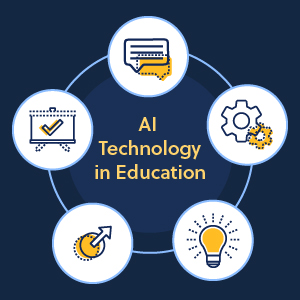
The needs of students are always changing, and educators must constantly adapt to progressive ways of teaching and learn different technologies or platforms that can assist with their daily lessons. With the implementation of AI and numerous benefits of digital learning, all students and instructors can achieve a more wholistic and innovative education. These five topics demonstrate how AI is an essential tool in the learning process for various types of learners across K-12 and higher education.

  • Communication

Carahsoft AI in EdTech Blog Icon 5 Image 2023Innovative trends in education technology have made it possible for students and staff to stay connected, whether through remote online learning or collaborative learning in the classroom. AI tools like SMS bots, predictive technology and ChatGPT can assist students in tasks such as navigating their school’s learning platforms, researching and preparing information for assignments and getting real-time answers to their questions. AI can also help teachers and professors orchestrate discussion points between students and guide next steps within small group collaborative projects.[1]

  • Automation

Carahsoft AI in EdTech Blog Icon 4 Image 2023For teachers, implementing AI can help automate repetitive daily tasks like grading tests and quizzes, and catching minor mistakes within written essays. This way they have more freedom and time to focus on in-depth feedback, creating comprehensive lesson plans and spending one-on-one time with their students. Additionally, AI tools can give students instant feedback on their work, allowing them to be more independent in identifying inaccuracies and recognizing successful projects.[2]

  • Immersive Learning

Carahsoft AI in EdTech Blog Icon 3 Image 2023Augmented reality (AR) and virtual reality (VR) are becoming increasingly more popular in students’ everyday lives, so using these technologies as a learning tool is familiar and compelling for them to gain valuable experiences in the classroom. Immersive technologies can simulate real-world scenarios for students to gain hands-on experience with low risk, like medical simulations and technical experiments. It also can allow students to break the barrier between their physical space and complex concepts like observing the planets up close or enlarging and examining something microscopic.[3] Not only do AR and VR create expansive opportunities for students to view and understand concepts in new and captivating ways, but they also create an additional, interactive and collaborative avenue of learning for students who may not be as responsive to traditional tools like textbooks and study guides.[4]

  • Data-Driven Results

Carahsoft AI in EdTech Blog Icon 1 Image 2023Throughout a student’s education, data is continually collected to better understand and predict their developing needs and most effective learning strategies. AI technologies can quickly and automatically analyze and report on this data, allowing teachers and professors to evaluate trends in an individual student’s or an entire class’s performance. Empowered with this knowledge, educators can tailor their lesson plans and take a more proactive approach to supporting students’ needs, ultimately increasing academic improvement for all.[5]

  • Personalized Learning

Carahsoft AI in EdTech Blog Icon 2 Image 2023Student’s learning styles can vary depending on many factors. For example, some students learn best through more visual and interactive experiences, while others may learn best through memorization and flashcards. Analyzing data collected by AI can help teachers be more informed and prepared educators for different kinds of learners. By applying the insights gathered from AI algorithms, educators can create personalized tracks for individual students, including aspects like adjusting the types of content, working with their comfortability, tailoring to their pace of learning and understanding their comprehension of learning objectives.[6] Additionally, AI technologies can help teachers plan, schedule and produce suggested lesson ideas more efficiently so they can target instruction and reduce the time it takes to create activities that best support each student.[5]

As AI becomes more common in education, maintaining academic integrity and validity within assignments of any kind will remain top of mind for educators. While earlier AI systems are designed to help students achieve academic success, newer AI systems are intended to empower teachers to optimize the use of artificial intelligence for students and encourage positive, ethical engagement with AI technologies.[7] Fostering trust among educators to cultivate the most prosperous learning environment through the implementation of AI can further personal, social and educational growth for all students.

Explore Carahsoft’s education technology solutions to learn how your organization can work together with our top innovative EdTech vendors to bridge the digital divide and meet the demands of modern education.


Resources:

[1] Office of Ed Tech. “AI and the Future of Teaching and Learning: New Interactions, New Choices.” Medium, https://medium.com/ai-and-the-future-of-teaching-and-learning/ai-and-the-future-of-teaching-and-learning-new-interactions-new-choices-c726bcf03012

[2] Shonubi, Olufemi. “Council Post: AI in the Classroom: Pros, Cons and the Role of Edtech Companies.” https://www.forbes.com/sites/theyec/2023/02/21/ai-in-the-classroom-pros-cons-and-the-role-of-edtech-companies/?sh=2cb4a227feb4

[3] Dick, Ellysse. “The Promise of Immersive Learning: Augmented and Virtual Reality’s Potential in Education.” Information Technology and Innovation Foundation. https://itif.org/publications/2021/08/30/promise-immersive-learning-augmented-and-virtual-reality-potential/

[4] Dani, Vishal. “How Augmented Reality Creates Interactive and Engaging Classrooms.” Kitaboo, https://kitaboo.com/augmented-reality-creates-interactive-and-engaging-classrooms/

[5] Gururaj, Tejasri. “10 Examples of Artificial Intelligence Improving Education.” Interesting Engineering, https://interestingengineering.com/innovation/examples-how-artificial-intelligence-improving-education

[6] Dani, Vishal. “9 Trends in Education Technology That Will Have a Major Impact.” Kitaboo, https://kitaboo.com/trends-in-education-technology/

[7] Office of Ed Tech. “AI and the Future of Teaching and Learning: Engaging Educators.” Medium, https://medium.com/ai-and-the-future-of-teaching-and-learning/ai-and-the-future-of-teaching-and-learning-engaging-educators-141e90c5e29f