Highlights from the SANS Government Security Forum on Zero Trust, CMMC Compliance and AI

Carahsoft Technology Corporation, a leader in Government IT solutions, partnered with the SANS Institute for the fourth year in a row to host the 2024 Government Security Solutions Forum. The event gathered cybersecurity professionals and Public Sector leaders to address evolving cyber threats facing Government agencies. Experts led discussions on key topics, including Zero Trust implementation, achieving Cybersecurity Maturity Model Certification (CMMC) compliance and harnessing artificial intelligence (AI). This blog highlights key takeaways from three of the six sessions surrounding these imperative industry topics, providing actionable insights to strengthen cybersecurity defenses in today’s digital landscape. During the event a visual artist Ashton Rodenhiser summarized the sessions which are featured in this blog.

Carahsoft SANS Government Security Solutions Forum Blog Zero Trust Image 2024

Zero Trust Implementation

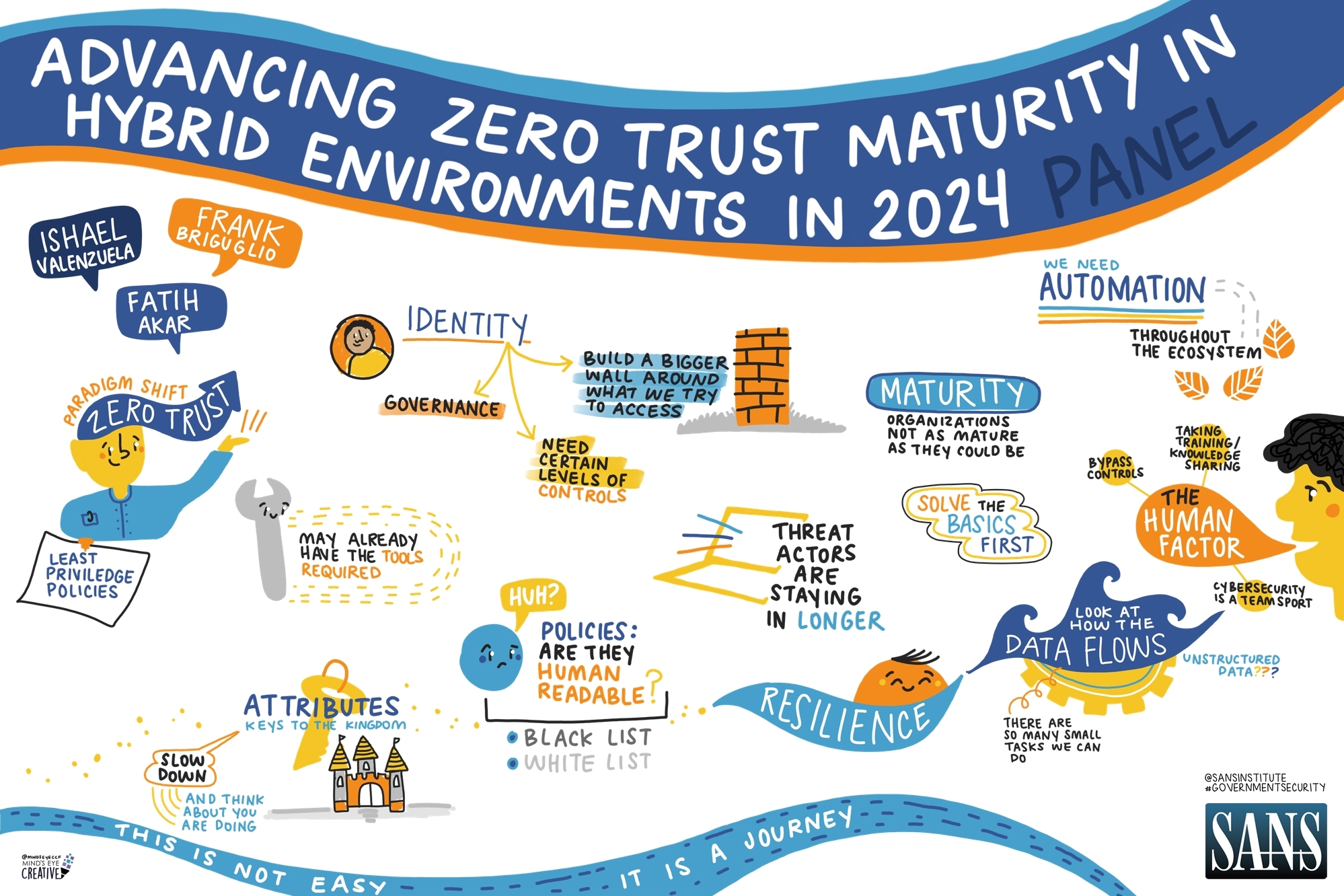
During the session “Zero Trust Implementation Strategies,” experts explored the growing challenges security professionals face with emerging technologies and provided key insights into building a robust Zero Trust framework.

As new technologies rapidly emerge, security professionals face increasing challenges in keeping pace, especially with the integration of on-prem environments and the cloud. A key principle of Zero Trust is the enforcement of least privilege policies, which requires a shift in how identity management is applied. This begins with strong governance to ensure the accuracy and reliability of policies and attributes.

Building a comprehensive security framework also involves implementing contextual authorization through micro-segmentation, considering factors like device, location and time to create a robust protective barrier. Furthermore, integrating identity management with Endpoint Detection and Response (EDR) tools is becoming increasingly important for tracking authorized processes and addressing the extended presence of threat actors who exploit admin identities to execute malware.

One of the biggest challenges in managing security policies is their complexity. Many security policies lack human readability due to their intricate structure, making automation essential for managing actions and enforcing compliance. The National Security Administration’s (NSA) recent Zero Trust guide emphasizes automation as a key pillar, highlighting its importance in responding to data flow deviations and maintaining security.

Despite the advanced systems in place, human error continues to be a major vulnerability. Employees can unknowingly compromise security through phishing attacks or by interacting with malicious links. To mitigate this, organizations must prioritize improving employee awareness and addressing the human factor as a critical component of cybersecurity.

Explore how Carahsoft’s Zero Trust portfolio can help Government implement a comprehensive Zero Trust strategy, strengthening organization’s security and protecting critical assets.

Carahsoft SANS Government Security Solutions Forum Blog CMMC Image 2024

Achieving CMMC Compliance

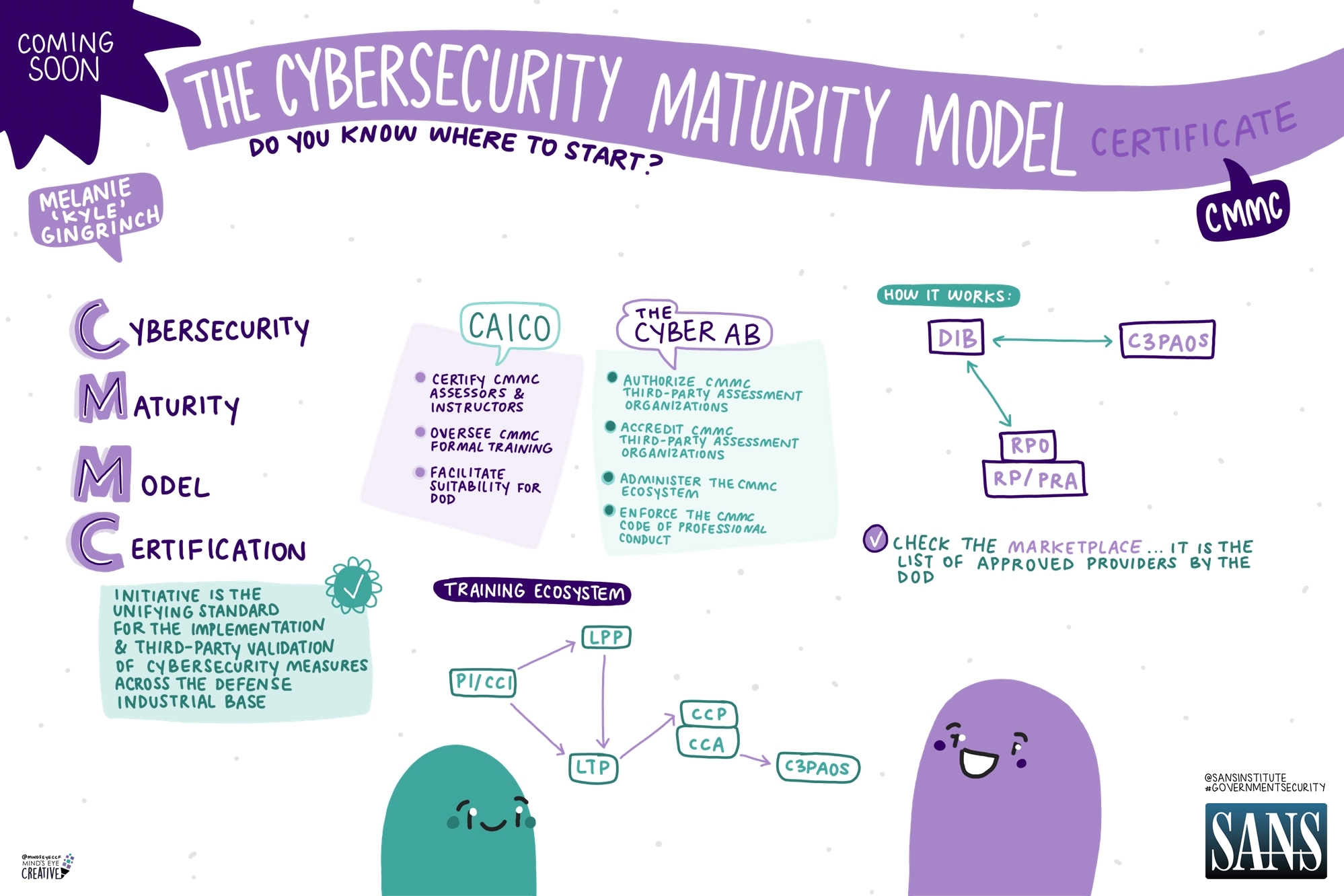
The session “Navigating Supply Chain Security and CMMC Compliance” provided valuable insights into the upcoming implementation of the CMMC framework and its implications for Defense Industrial Base (DIB) organizations. This certification will ensure that DIB organizations meet stringent cybersecurity standards through third-party assessments and will soon be mandatory for both prime contractors and subcontractors working with the Department of Defense (DoD).

CMMC consists of multiple certification levels, with Level 1 covering basic practices for Federal Contract Information (FCI) and Level 2 addressing 110 practices based on NIST 800-171, extending to around 320 actions. To prepare, organizations should work with Registered Practitioner Organizations (RPOs) to assess their readiness. These RPOs employ Certified CMMC Professionals (CCPs) and Certified CMMC Assessors (CCAs), who are trained and certified by the Cybersecurity Assessor and Instructor Certification Organization (CAICO), a subsidiary of Cyber AB, which oversees the curriculum and training programs.

After preparation, organizations will undergo an official assessment by a CMMC Third-Party Assessment Organization (C3PAO), which hires CCPs and CCAs to evaluate the cybersecurity measures in place. As the CMMC rule takes effect, organizations must ensure they work with certified professionals listed on the Cyber AB marketplace, as uncertified entities will not be recognized by the DoD.

Given the complexity of CMMC and the fact that preparation for certification can take at least six months, organizations are encouraged to start early to meet the new requirements.

Carahsoft is proud to be part of the CMMC ecosystem, with around 800 employees focused on cybersecurity and partnerships with over 150 vendors. By closely tracking policies and industry trends, Carahsoft aligns customer needs with relevant technologies, promoting “better together” integrations to maximize the value of existing investments. Carahsoft works with vendors that address every CMMC maturity level and capability domain, guiding customers through the complex decision-making process to ensure that they select the most suitable technologies to fill security gaps effectively and efficiently. Explore Carahsoft’s CMMC portfolio.

Carahsoft SANS Government Security Solutions Forum Blog AI Image 2024

Harnessing AI

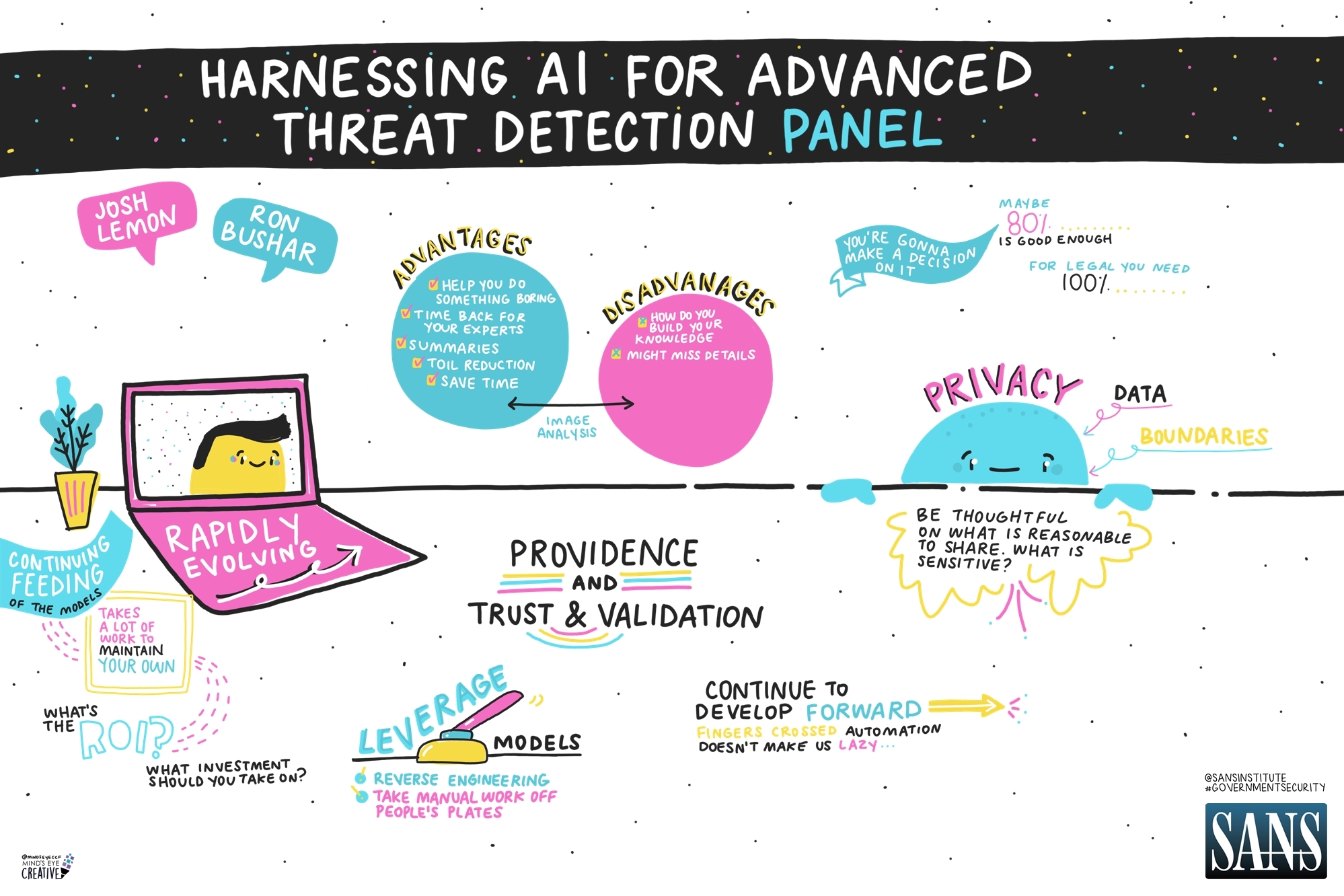
Amid the complexities of cybersecurity, effective threat detection and response are increasingly reliant on advanced technologies like AI. The session “Harnessing AI for Advanced Threat Detection” explored the benefits and risks of integrating AI into security operations, highlighting key strategies for balancing automation with rigorous security practices.

“Advanced threat detection” spans various aspects of security operations, including the development and collection of threat intelligence. AI offers significant benefits in early threat detection, helping organizations quickly identify and respond to malicious activity. However, its use must be approached cautiously across the entire security chain.

With the rise of generative AI, industries are applying AI to automate time-consuming tasks. A key benefit is AI’s ability to condense information quickly. Tasks like threat searching or intelligence analysis, which once took hours, can now be completed in minutes, freeing experts to focus on higher-level tasks. This “toil reduction” is vital, as AI automates routine work and creates immediate efficiencies with minimal effort.

While AI brings advantages, there are inherent risks in implementing AI models and infrastructure. It is crucial to approach AI from two perspectives: using it to enhance security while ensuring the security of AI itself.

Organizations must also consider how they can trust AI-generated information. Trust and validation are essential. Provenance—knowing the source of data and models—is key to building confidence. While AI can handle most of the work, experienced engineers and analysts are still needed to verify and analyze the results so security teams can focus on more complex matters.

The siloed nature of work within security operations may limit intelligence sharing. Maintaining control of input data is critical, especially with public models hosted by technology vendors. If training data enters public models, organizations may compromise sensitive information. In regulated environments, private models offer safer options, allowing companies train AI while retaining control.

When integrating AI into security operations, organizations should build trust by validating each use case, allowing AI to be operationalized while ensuring accuracy. Experimentation is key to identifying where AI can provide a return on investment. However, implementing AI requires careful consideration of security models, AI safety and governance, particularly as organizations scale AI into operations.

Unlock the potential of AI to drive innovation and efficiency in Government organizations with Carahsoft’s AI and machine learning portfolio.

Frank Briguglio, Federal CTO at SailPoint, and Fatih Akar, Security Product Manager at VMRay, led the discussion on Zero Trust. Melanie ‘Kyle’ Gingrich, Interim Executive Director at The Cyber AB, provided guidance on navigating CMMC compliance. Josh Lemon, Director of Managed Detection and Response at Uptycs, and Ron Bushar, Managing Director of Mandiant Solutions at Google Public Sector, explored the role of AI in advanced threat detection.

Explore more insightful sessions on how Public Sector cybersecurity teams are strengthening their security posture by watching the SANS 2024 Government Security Forum in partnership with Carahsoft.

The Role of Identity Governance in the Implementation of DoD Instruction 8520.04

On September 3, 2024, The Department of Defense (DoD) released Instruction 8520.04, titled “Access Management for DoD Information Systems,” that serves as a foundational policy guiding the secure and efficient management of access to DoD information systems. The instruction mandates protocols for managing access across various environments, including military networks and systems used by both person entities (PEs) and non-person entities (NPEs) such as devices, applications, and automated processes. At the core of this policy is the principle of identity governance, which is essential for ensuring that access to sensitive systems and data is granted, monitored, and revoked based on verified identity attributes and defined security policies.

In the dynamic cybersecurity landscape, the concept of identity governance refers to the frameworks and processes that manage the lifecycle of digital identities. This includes the creation, management, and deletion of user accounts as well as the provisioning and de-provisioning of access rights based on a combination of user attributes, roles, and organizational policies. Identity governance is critical for compliance with the DoD’s Zero Trust Architecture, as outlined in the DoD Zero Trust Strategy. It emphasizes least privilege, continuous verification, and dynamic access control, all of which are key components of DoD Instruction 8520.04​.

The policy serves as maturation of the departments ICAM initiatives over the past few years and highlights some key concepts that need to be adopted across the departments ecosystem. Here are some key examples of how identity governance aligns with and strengthens this policy:

1. Access Control and Provisioning

One of the primary elements of identity governance is the effective provisioning and de-provisioning of access. This aligns with Section 4 of DoD Instruction 8520.04, which mandates that access to systems be carefully controlled through explicit or dynamic mechanisms. Explicit access involves manually provisioning access rights to specific users, which must be meticulously documented and approved by system or resource owners. On the other hand, dynamic access relies on real-time attribute verification to grant or deny access based on the most current information available, such as the user’s role, location, or security clearance​.

SailPoint Identity Governance for the DoD Blog Embedded Image 2024

Identity governance solutions play a crucial role in these processes by automating provisioning and de-provisioning based on predefined policies. When a user’s role changes or they leave the organization, governance systems automatically adjust access rights, ensuring compliance with de-provisioning requirements. This automatic adjustment helps prevent orphaned accounts—user accounts that are no longer needed or authorized—which can pose serious security risks if left unmanaged.

2. Authoritative Attribute Services

DoD Instruction 8520.04 emphasizes the importance of authoritative attribute services (AAS) in maintaining the accuracy, integrity, and security of identity attributes used in dynamic access decisions. Identity governance frameworks are designed to integrate with these authoritative services, ensuring that identity attributes such as security clearance levels, employment status, and role-based entitlements are accurate and up-to-date. This enables the DoD to enforce dynamic access control based on real-time identity data​.

For example, a DoD system that relies on dynamic access might check a user’s current security clearance, job function, or location in real time before granting access to a sensitive file or system, or assign a critical role. These checks are enabled by robust identity governance systems that pull data from authoritative attribute services and apply organizational policies to ensure that access is only granted to those who are fully authorized and meet the predefined criteria.

3. Least Privilege and Separation of Duties (SoD)

The concept of least privilege—granting users the minimum level of access necessary to perform their duties—is another foundational principle of both identity governance and DoD Instruction 8520.04. In Section 4.2 of the instruction, system and IT resource owners are required to document and implement explicit access policies that adhere to least privilege standards. Furthermore, systems must implement SoD controls to prevent a single user from having conflicting roles, such as both creating and approving financial transactions​.

Identity governance frameworks are uniquely equipped to manage SoD by automating the assignment of roles and enforcing policies that prevent users from being granted conflicting privileges. Governance solutions continuously monitor user access and provide alerts if SoD violations occur. By integrating these capabilities with the DoD’s access management protocols, identity governance helps ensure that users cannot escalate their privileges or circumvent access controls, thereby reducing the risk of insider threats and security breaches.

4. Continuous Auditing and Compliance

Continuous auditing and monitoring of user access is a critical requirement under DoD Instruction 8520.04, particularly for privileged users. Identity governance solutions enable DoD components to implement robust audit trails that track every access request, change in privileges, and system interaction. This is particularly important for IT privileged users—those with elevated access to critical systems and sensitive data—who require enhanced monitoring to detect and respond to suspicious activity​.

Through the use of identity governance tools, DoD organizations can enforce periodic access reviews, as mandated by the instruction, to ensure that users only have the access they need and that privileged access is justified and properly documented. These reviews are automated and documented within governance systems, reducing the manual workload on administrators and enhancing the overall security posture by ensuring compliance with regulatory requirements.

5. Integration with Zero Trust Architecture

The DoD Zero Trust Strategy emphasizes the need for continuous verification of users and devices as they request access to systems and data, rather than assuming trust based on their presence inside the network perimeter. Identity governance systems are integral to the implementation of Zero Trust principles within the DoD, as they enable real-time verification of identity attributes and ensure that access is granted only after all conditions are met​.

For instance, an identity governance system might check not only a user’s identity but also their security status, the network they are using, and the time of the access request before enabling access to sensitive data. This multi-layered approach to access control ensures that even if one security measure is compromised, others are in place to protect critical resources.

In Conclusion

Identity governance is a foundational element of the DoD’s efforts to secure access to information systems under DoD Instruction 8520.04. By providing a structured approach to managing digital identities, provisioning access, enforcing least privilege and separation of duties, and maintaining continuous auditing and compliance, identity governance systems enable the DoD to meet the stringent security requirements laid out in the instruction. Furthermore, identity governance is a critical enabler of the DoD’s shift toward a Zero Trust Architecture, ensuring that access to sensitive systems is dynamically controlled based on real-time identity attributes and organizational policies.

As cyber threats continue to evolve, the integration of identity governance with access management protocols like those found in DoD Instruction 8520.04 will be crucial in maintaining the security and integrity of the DoD’s information systems and the data they protect.

For a details of how SailPoint Identity Security supports the departments current ICAM and Zero Trust initiatives, and specifically how the capabilities of the platform align with the requirements of the policy, please download the report here.

Software, AI, Cloud and Zero Trust as Top Priorities for the Army and DoD at Large at TechNet Augusta 2023

Many of the major cybersecurity, data, DevSecOps and other trends from the past couple of years continue to grow and be top priorities for every segment of the Department of Defense (DoD). At TechNet Augusta 2023, Government and industry experts shared the specific needs of their organizations across those areas and solutions to help achieve their goals. The main theme of the event was “Enabling a Data-Centric Army” and expanding those principles and their mobilizing technologies to the entire DoD. For the Army in particular, the shift from hardware to software, the use of artificial intelligence (AI), cloud capabilities and Zero Trust were headlining topics at the conference.

Shifting from Hardware to Software

In an effort to increase agility and expand access to resources, the Army is transitioning its equipment from hardware to software. Amending its materiel release process to decouple software from hardware allows the Army to deploy software outside of the long hardware acquisition cycle. To mobilize this endeavor, the Army Futures Command (AFC), is modifying its software requirements to focus on high-level overviews that are then refined by operators. Alongside this shift, the Army and other departments requested that technology providers ensure that their software solutions integrate with each other. Going forward, the Army also asked industry to provide software that is not tied to specific hardware. This separation will be key to establishing data-centricity. Nearly every speaker echoed the importance of this shift for their departments.

Utilizing AI

With this major transition to a software-heavy environment, Army Chief Data and Analytics Officer David Markowitz believes it will be an ideal use case for generative AI in software development. Having a controlled environment in software development would make it easier to properly govern compared to the complexity of some of the other uses. As AI usage increases across the DoD, military leaders requested industry create AI platforms with layered complexity of features enabling users of any skill level to utilize the technology effectively. In regard to AI applications for data, Army CIO Leonel Garciga stated that additional guidance on “Data Use on Public/Commercial Platforms” would be released soon to clarify its policy. Overall, officials concurred that the DoD is not looking to become 100% reliant on AI aid but instead maximize AI’s strengths to augment human critical thinking and empower commanders to make data-driven decisions.

Enabling Cloud Capabilities

Over the past year, the Army has exponentially increased its cloud migration and virtualized capabilities. Housing information in the cloud optimizes data storage and simplifies ease of access particularly with the increase in data output, and the push for AI data analytics and data-driven decisions. Hybrid cloud solutions offer the readiness, adaptability and duplication of vital information necessary for military operations to continue smoothly in any situation. Currently, DoD leaders seek industry solutions for modernizing and moving applications to the cloud simultaneously. Acquiring technology with this ability would reduce both the security risk and the work required from the military to implement it.

Expanding Zero Trust

Overarching every aspect of the DoD is the critical need for cybersecurity. Garciga plans to emphasize Zero Trust implementation heavily in conjunction with improving user experience and cyber posture. While multi-factor authentication offers a great starting point, military leaders explained that it is not enough and that they look to partner with industry to close virtualization vulnerabilities through continuous monitoring and regular red teaming. At the conference, the Army Cyber Command (ARCYBER) outlined seven principles for IT providers to follow for all capabilities they deliver:

  • Rapidly Patch Software
  • Assess All Production Code for Security Flaws
  • Improve Security of Development Networks
  • Isolate Development Environments from the Internet and from the Vendor Business Network
  • Implement Development Network Security Monitoring
  • Implement Two-Factor Authentication (2FA) on Development Network and Testing Services
  • Implement Role-based Permissions on Development Network

Empowering DoD Success

A consistent thread woven throughout the event was the vital nature of open communication and partnership between the DoD and technology companies to achieve the established goals. Within each of these areas including the shift from hardware to software, use of AI, cloud capabilities and Zero Trust, the DoD looks to innovate and explore new methods and solutions to stay ahead on the world platform. Together through collaboration, industry can have a vital role in keeping American citizens safe one technology update at a time.


Explore our Federal Defense Technology Solutions Portfolio to learn how Carahsoft can support your organization through innovative, agile defense resources and IT capabilities.

*The information contained in this blog has been written based off the thought-leadership discussions presented by speakers at TechNet Augusta 2023.*

Securing the Digital Workplace: Microsoft 365 Identity Management for Public Sector Leaders

Zero Trust is a critical focus for public sector organizations as they navigate today’s evolving digital workplace and cybersecurity landscape. But one issue is emerging as increasingly troublesome: insider threats.

The 2022 Cost of Inside Threats: Global Report found incidents involving insider threats surged 44% over the past two years. While some of these threats may be malicious insiders, seeking to misuse their authorized access for personal gain or harm, many are the result of cybercriminals exploiting vulnerabilities in identities to enter your environment. These criminals use tactics like compromised credentials – the leading cause of data breaches – as well as phishing scams and social engineering to impersonate identities and gain unauthorized access.

To effectively counter these increasingly sophisticated threats, organizations must strengthen identity management. When executed properly, identity management not only enhances the security of your digital workplace but enables a Zero Trust strategy.

Let’s discuss what identity management is, how to build a comprehensive strategy in Microsoft 365, and how it can fortify your Zero Trust deployment.

What is Identity Management?

AvePoint Identity Management Blog Embedded Image 2023

Identity management establishes and manages the digital identities of anyone entering your environment – from employees and contractors to guest users. Identities could refer to people, but they could also be services or devices entering your environment.

Identity management enables organizations to implement robust access controls, granting privileges based on roles – which is why identity management is an integral piece of Zero Trust. Without it, you will have no way to verify users and devices are who they say they are, let alone establish proper privileges and access, which are key Zero Trust principles.

When done effectively, identity management provides the right access to the right individuals at the right time for the right reason. This process not only improves your security posture, but can streamline user access, reduce administrative overhead, and help you better meet your compliance obligations.

Building Identity Management in Microsoft 365

When building your identity management strategy in Microsoft 365, remember these three basic elements: identify, authenticate, and authorize.

Here’s how to get started:

  • Identify: The backbone of identity management in Microsoft 365 is Azure Activity Directory (Azure AD). Azure AD provides a cloud identity for users, groups, and resources. It is where you build out your users’ identities and control access to internal and external resources – like your intranet or even Microsoft Teams. The solution will recognize users (based on Microsoft’s powerful machine learning and AI’s understanding of typical user and tenant behavior) and flag risks that fall outside of normal behavior, triggering the next steps of the process.
  • Authenticate: Multi-factor authentication (MFA) is today’s gold standard for authenticating identities. There are a variety of ways to do this, from smart cards to one-time passwords, that add layers of protection to your security. Microsoft’s Authenticator App helps implement MFA across your applications in a convenient and easy way for users, allowing them to verify their and their devices’ identities from their phones.
  • Authorize: It’s critical to grant access privileges based on the conditions specific to your organization. Conditional Access policies take a two-phased approach: first, it collects information about the person (their device, IP address, etc.) and then enforces any policies you have in place. This could mean if it detects a new device, it may enforce multi-factor authentication (MFA) or request the user sign in again. It could also prohibit access under certain conditions, like if a user is attempting access from a mobile device. These policies provide granular control over access while reducing the risk of authorized access.

By following this framework, you can easily begin using the powerful tools Microsoft offers to build your identity management strategy, ensuring only authorized individuals have access to critical systems.

Three Ways to Take a More Proactive Approach to Identity Management

Once you’ve taken the initial steps to start building your identity management approach, take it to the next level to enhance your security:

  • Right-size your policies: Strict, one-size-fits-all rules can hinder productivity; if security is in the way of getting the job done, users will find a way around it. Customizing your policies to specific users, workspaces, or even content creates a more tailored approach to access control, striking a balance between security and productivity.
  • Implement lifecycles: Identities should not permanently exist in your environment. People switch jobs or upgrade their devices. Establish a process to evaluate and recertificate identities – whether users (both external and internal) or devices – to ensure they still require access to your content and workspaces.
  • Monitor your environment: Even with the best-laid security plans, things can still fall through the cracks. That’s why it’s critical to monitor your environment – including users, devices, locations, and behavior – to identify any anomalies or suspicious activities that should be addressed.

These strategies can help you build a more proactive identity management approach that actively reduces risks and attack surfaces, allowing you to go beyond verifying identity to create a secure and efficient digital workplace.

Build a Secure Digital Workplace with Zero Trust

While identity management is an important aspect of building your secure digital workplace, ensuring only authorized individuals have access to your systems, it is not enough to protect your data or the workspaces where it lives in today’s ever-evolving cyber threat landscape.

Public sector organizations must embrace a comprehensive Zero Trust security framework to effectively build a secure digital workplace. To do so, you must combine identity management best practices with other robust security measures, like role-based access controls, workspace governance policies, lifecycle management processes, and risk assessments. Together, these strategies can enhance the protection of your digital environment and minimize your risk of data breach or unauthorized access.

Download the free AvePoint guide, “How to Achieve Zero Trust Standards Without Limiting Collaboration in Microsoft 365,” for more information about protecting your digital collaboration workspaces with a Zero Trust framework.

Transforming Digital Services and Modernizing Risk Posture in Colorado

Throughout Colorado State and Local departments, utilizing emerging technology is imperative to combating cyber threats and improving efficiency. At the Carahsoft Digital Transformation Roadshow in Denver, Colorado, Government IT and industry leaders engaged in dynamic discussions around transforming Colorado through technology.

Transforming Technology in Government

Reducing technical debt is a pivotal step in transforming the way Colorado responds to citizens and facilitates digital services. Modernization contributes to building a streamlined constituent experience, enabling data integration for better decision-making and lowering the cost of ownership. That further requires top technology talent to redesign aging technology systems and deliver better outcomes for the state.

The Digital Government strategic plan gathered over 2,000 Coloradans to understand their experience with Digital Government. The group heard from citizens requesting easier forms and more accessible Government services. From that survey, administration learned that State and Local departments can make an impact through three initiatives: expanding broadband access, making Government accessible by reducing burden of access for constituents and reducing poverty.

Carahsoft Florida Colorado State and Local Roadshow Blog Embedded Image 2023Change and increased needs seem to be the only constants in today’s world. Workloads are ever increasing and requirements from new and unexpected sources are creating backlogs that are becoming critical. This can put an incredible burden on plans, resources and personnel. The next step is looking at how technology and innovation can improve these new processes and address new demands through live chats, Artificial Intelligence (AI) modeling, etc. There is immense opportunity for Local agencies in Colorado to use this technology to make workflows more efficient, learn about their citizens and offer that instant gratification that customers have come to expect.
One of the biggest challenges Local Government faces is the interoperability across departments to share resources and capabilities. By focusing on utilizing new technologies to encourage that interoperability and optimize through data, user experience improves. There also must be a balance when handling sensitive data within these departments, as well as an effort to avoid technology sprawl and cost complexity. Automation and AI is foundational when it comes to daily operations and best practices as innovative technical solutions continue to make access from the edge easier, more transparent and secure.

The Role of Emerging Technologies in Digital Government

By eliminating legacy systems and investing in emerging enterprise technologies, agencies are generating cost savings, increasing security and accessibility and providing a more holistic, human-centered Government experience for Colorado.

Understanding how Colorado is securing the remote workforce in light of the telework and deployment explosion is important to connect where those emerging technologies can improve communication and networking issues. It is important that the state gets broadband access to its most rural and underserved communities to expand high-speed internet and 5G to increase citizen engagement with Government services. By utilizing endpoint detection, multi-factor authentication and mobile device management, Colorado protects citizens’ data and gains an understanding of user behavior to protect the data from any cyber threats.

The emerging technology approach is also about an innovative mindset to use tools in a better way that improves citizens’ digital experience. Colorado has been modernizing its approach to citizen-facing services by consolidating into simple, quick and more digital interactions to ease how citizens access essential services and programs with the state.

Technology acceleration takes center stage as part of Colorado’s Digital Government Strategic Plan. For the City and County of Denver, collaboration is imperative for coordinating technology deployment across the State and Local Government and within communities, at speeds capable of meeting the plan’s timelines. With these modernization efforts and changes across the state, agencies must invest in change management by preparing citizens for more digitized services. This includes walking residents through new processes and applications as incremental changes occur.

Combating Cyber Threats in Government

As their communities increasingly become targets of hackers and other cyber criminals, State and Local agencies must stand united to prevent and recover from cyberattacks. Cybersecurity risks range from data exploitation, insider threats, third-party practices as outsourcing increases, ransomware, identity theft and fraudulent access to State Government services.

Risk tolerance and risk posture must factor in human risk, application risk, physical security risk, datacenter risk and cloud risk to comprehensively assess cyber threats. As a result of the COVID-19 pandemic, the workforce access changed overnight, creating an even greater need for multi-factor authentication, password management, cloud security and Zero Trust compliance.

Data integrity attacks include unauthorized insertion, deletion or modification of data to Government information such as emails, employee records, financial records and citizen data. Public facing identity is a big aspect going forward for Colorado agencies.

The safeguards in use today ensure data is secure, protected and effectively backed up, yet readily available when needed. Lifecycle management is critical to making sure users have the right level of access to the right applications. Today, most agencies are in a position where if someone logs in, they make an identity claim with a username and password and a one-time code. The agency should then know what application that user accessed, and the process stops there; however, with the diversity in endpoints, more information needs to be acquired. Agencies can then make better risk-based decisions on who is allowed to log in, thereby protecting their environment, detecting and remediating threats while continuing to modernize their risk posture.

Emerging technologies and new digital services provide State and Local agencies more opportunities to easily connect with their citizens and make sure the user experience is as smooth as possible. As increased access to applications and Government data continues, agencies must continuously improve their risk posture to protect citizens’ sensitive information by upholding Zero Trust best practices.


Visit our roadshow resource hub to learn more about the State and Local Roadshow Series: Digital Transformation.

4 Steps to Applying Zero Trust to Content Security

As organizations adopt zero trust architectures, there’s one key area that seems to be overlooked: the content layer. And yet, security vulnerabilities at this layer pose significant, and extremely common threats. In fact, research reveals that a large portion of companies share sensitive content with over 2,500 third parties and use multiple tools for content communications.

Given the vulnerable nature of content exchange, it’s important to extend zero trust principles right down to the emails, documents, and files that we all share every day. But there are reasons why organizations do not do this regularly. For example, enforcing access rights can be tricky, especially in large organizations or companies with significant turnover. Tracking and monitoring every file type is impossible, as is adequately classifying every type of content.

Forcepoint Kiteworks Collaboration Zero Trust Blog Embedded Image 2024

Forcepoint’s new partnership with Kiteworks, a leader in data privacy and compliance for sensitive content communications, changes everything. Together, we’ve developed the industry’s most powerful solution for true zero trust security at the content layer. It combines Forcepoint’s Content Disarm & Reconstruction (CDR) and Data Loss Prevention (DLP) solutions with Kiteworks’ Private Content Network (PCN).

This combination allows organizations to take a highly effective four-step approach to zero trust content security by:

  1. Making all content untrusted by default – Applying zero trust at the content layer entails assuming that all data is malicious until proven otherwise. Ensuring content is secure and delivered safely requires deconstructing—and reconstructing—the information that’s being sent. Forcepoint’s Zero Trust CDR extracts information from files, verifies that the information is secure, and builds new, functional files to carry the information to its ultimate destination.
  2. Enforcing least-privilege content access – Least-privilege access management is a core tenet of zero trust security; our solution extends this practice to the content layer. It applies access control for applications to all content assets and allows organizations to assess who is sending, sharing, receiving, viewing, altering, or saving content. Companies can also monitor from where and to that content is being sent.
  3. Monitoring content for potential vulnerabilities – Most organizations employ some form of network monitoring and have done so for years. Effective content monitoring employs the same principles of complete, real-time visibility and unified control. Our joint solution consolidates content communication channels for easy management and closely monitors each asset to ensure content is free of vulnerabilities.
  4. Integrating policy management tracking and controls for data loss prevention – Tracking and monitoring content collaboration and communications is essential to prevent sensitive content from falling into the wrong hands. Our solution allows organizations to discover, classify, monitor, and protect data, track and control sensitive content, and audit user behavior—mitigating data loss.

This “trust no content” approach addresses all content security gaps. It provides organizations with assurances that the content their users are reading, sharing, and using is well-protected and free of malware.

Moreover, it makes implementing and managing zero trust content security an easy, frictionless experience for both administrators and users alike. Admins have everything they need to manage content security from a central location, and users will not experience any delays or inhibitions in their ability to collaborate or communicate.

Contact a member of our team today to learn more about Forcepoint’s and Kiteworks’ new solution and schedule a demo to start taking the steps necessary to bring zero trust security to your content.

Sea-Air-Space 2023 Showcases Strategic Insights for the Navy

As the landscape of defense technology across the United States Armed Forces continues to advance and transform, the military must also evolve and adapt with it. At Sea-Air-Space 2023, the Navy League’s Global Maritime Exposition, key leadership from the U.S. defense industry and government technology experts came together for educational and collaborative sessions across a variety of topics. A record number of attendees gathered for the three-day conference where many vendors including Carahsoft and 45 of its partners demonstrated their technology solutions to meet military needs. Fed Gov Today joined Carahsoft on the show floor to speak with military thought leaders on staffing, cybersecurity and more.

Carahsoft Sea-Air-Space Recap Tradeshow Blog Embedded Image 2023Sea Service chiefs attending the conference noted that currently, maintaining and developing the workforce is a high priority for the military as it emphasizes the role of people as resources. Defense agencies are looking to engage young, talented individuals interested in serving the armed forces.

“Whenever you see the defense budget start to go down…a lot of times you’ll see training and education reduced,” Carahsoft’s Program Executive of Navy and Defense Strategy, Mike McCalip, said. “What you end up with is a workforce that can be five or 10 years behind in technology.” To mitigate this, McCalip sees this as an opportunity for industry vendors to “help [the Navy] to educate and keep their workforce on the tip of the spear when it comes to technology.”

Another important concept discussed at Sea-Air-Space was the Department of Defense’s shift to ever evolving Zero Trust. Throughout the conference, Sea Service chiefs and tech vendors fielded many questions and conversations surrounding cybersecurity’s role within defense strategy. Military leaders and vendors shared an eagerness to collaborate and explore opportunities for growth together in the future.


Check out the rest of my industry insights and highlights from the event floor at Sea-Air-Space 2023 in my full blog at FedGovToday.com.

Driving Advancements for the U.S. Sea Services at WEST 2023

In the 21st century, technological security remains one of the most important features of any government agency. Military officials, Government leaders and industry professionals gathered at AFCEA’s WEST 2023, an annual and international Sea Services conference, to discuss the future of security and naval technology in the federal government. This year’s conference featured the Departments of the Navy, the Marine Corps and the US Coast Guard (USCG). At WEST, agencies showcased and reviewed IT initiatives and programs in the context of meeting the needs of the Sea Services.

Opportunities for the USMC

US Marine Corps (USMC) is an amphibious force that engages enemy forces, protects U.S. naval bases, combines armed service with their fleet and responds to global crises.

At WEST, the USMC elaborated on various steps to opportunities to ensure readiness to respond to various threats and challenges. It has:

  • Extended the MQ-9 flying range
  • Gained new approvals for bases
  • Increased funding for various subsets
  • Focused on retaining recruits

During the upcoming year, it aims to:

  • Obtain a minimum of 31 amphibious warships
  • Provide training in realistic conditions
  • Explore expeditionary contracting and pre-positioning
  • Secure continued support from Congress
  • Improve cybersecurity
  • Acquire more personnel

IT professionals from both industry and other government agencies can collaborate with the USMC to help it effectively meet these goals.

Carahsoft WEST 2023 Recap Blog Embedded Image 2023How DISA IT Initiatives Support the USMC

The Defense Information Systems Agency (DISA) is a United States Department of Defense (DoD) combat support agency that provides information technology (IT) and communications support to public officials. When creating security solutions for the USMC, DISA incorporates a variety of helpful features including having all migration efforts interoperable with Zero Trust best practices. This is especially important to gaining continued federal support, as Zero Trust is a vital security model in the federal government.

Over the last year, the pilot for Thunderdome, DISA’s application of the zero trust security model, came to fruition. While its implementation has been difficult, DISA hopes to use Thunderdome to improve the lack of endpoint credential solutions in the DoD by employing conditional access policies and application security stack requirements. Additionally, DISA plans to implement SOAR—Security, Orchestration and Automated Responses—solutions and tools to streamline security operations. Other similar security efforts include automating security validation, implementing endpoint management and advancing micro-segmentation. DISA plans to add multipurpose team collaboration and management tools that can fulfill multiple tasks at once. By channeling increased funding into these initiatives, the USMC can solidify its technological security.

Industry Professionals Driving Innovation

The Navy, and by extension, the USMC, have three main goals in the upcoming year: modernize the department of infrastructure, drive innovation and become more competitive. The tech industry can help the USMC achieve these goals through various technological advancements.

For example, transforming cybersecurity to be rooted in military readiness can help improve the USMC’s defense, speed capability delivery and insights. Quicker capabilities are especially helpful to its goal of acquiring more warships and shifting back to a focus on maritime services. Additionally, USMC must work with agencies that maintain its own Software-as-a-Service (SaaS) tools to implement additional agile tools that can expedite processes, freeing funding for other projects. Other initiatives are to expand the department’s satellite network capabilities beyond sole usage of the cloud, to enable the USMC to access toolkits from multiple systems and to advance internal innovation. These capabilities can help create comprehensive growth in the Navy.

Through a variety of security implementations, government agencies and the IT sector can work together to make the USMC, Navy and Coast Guard as safe and effective as possible. With continued and future partnerships between the government and technology industry, the Sea Services hope to achieve long-term support that will drive fundamental and vital development.

To learn more about AFCEA’s West 2023, visit Carahsoft’s Partners and Events Resource Hub.

*The information contained in this blog has been written based off the thought-leadership discussions presented by speakers at WEST 2023.*

The Pros and Cons of Low-code in Cybersecurity Environments

In the past, new technology solutions required highly experienced developers to compile certain coding languages, understand specific technologies and utilize specialized software. On top of these challenges, traditional development platforms limited innovation. Now, organizations have a new and improved development option, which can reduce time and costs while increasing customizability, automation and growth, known as low-code platforms.

Low-code can be implemented in various ways, but in the cybersecurity realm, it is often used to automate and streamline processes, such as cybersecurity operations. Low-code platforms allow digital teams to access capabilities and customizable technologies and tools that empower them to quickly produce valuable innovations, applications, and solutions with little to no limitations. Gartner predicts that 70% of new applications will use low-code or no-code technologies by 2025. As a result, application development will shift to allow teams to focus more on assembly and integration rather than development, resulting in improved efficiency, enhanced employee satisfaction and increased productivity.

For the Department of Defense (DoD) cybersecurity professionals, low-code presents an array of benefits and challenges. While it creates agility, simplification and innovation, low-code can also introduce cybersecurity risks and vulnerabilities.

Challenges of Low-Code in DoD Environments

When implementing any new process or platform, the DoD must pay attention to overall security and identify any potential risk factors that could infiltrate the environment. The DoD faces a unique challenge when considering low-code: supply chain management and ensuring the secure execution of low-code to avoid presenting new threats to its organization. For example, borrowing and leveraging unverified code from the internet can cause significant problems among an organization’s platforms. Copying and pasting code without testing it can lead to bugs, errors and inaccuracies that can slow down and harm an environment, creating further security issues.

Tychon Low-Code Cybersecurity Blog Embedded Image 2023For cybersecurity and zero trust professionals within the industry, this idea of obtaining and launching bad content is particularly challenging as they strive to protect their organization’s operations. These groups must also be prepared to identify insider threat and guarantee security when utilizing a truly limitless customization of content like low-code. Organizations must ensure new code is protected yet unrestricted. Otherwise, they run the risk of negating the purpose of a low-code platform. Ultimately, the sources and employees creating and executing new low-code must be trusted entities to avoid problems like data leaks, exploitation and cyber-attacks.

Benefits of Low-Code in Cybersecurity

While there are clear risks, the benefits to using low-code solutions continue to make it a desirable cybersecurity option. It offers the flexibility to stay ahead of emerging threats, while simultaneously saving on costs. Ultimately, low-code development enables organizations to keep pace with an ever-changing security landscape.

  • Respond immediately to emerging threats: Local platforms help an organization to become more agile. Customized low-code content enables organizations to respond quickly when existing security tools may not be able to support the software system and prevent or stop a threat.
  • Quickly create custom features: The flexibility of low-code within local platforms allows for the creation of features to match the immediate needs of an organization instead of waiting for the release of the latest software which may or may not solve the problem. The progression of low-code implementation increases the longevity and growth of an organization.
  • Build upon low-code and local platforms to save on costs: A low-code solution along with the implementation of a local platform should be able to fulfill multiple use cases and eliminate various other tools from an organization’s toolbox. Once a local platform is implemented, limitations can be lifted and advancements or replacements can be made to older legacy systems instead of purchasing multiple new tools. This saves costs for security and asset management teams.

Eliminating Risk in Low-Code Capabilities in Cybersecurity Today

The good news for cybersecurity organizations is that they can easily mitigate low-code risks and challenges with proper access controls and a simple deployment process. Any new code created for government customers or internal purposes should undergo rigorous and reliable testing through multiple levels of technical experts within an organization to ensure quality, validity and trustworthiness. Additionally, testing in a simulation of the customer’s intended environment for that code should only be a matter of minutes, ensuring a smooth production process once the code has been executed.

If purchasing a low-code solution from a third-party vendor, organizations should investigate their internal code reviews, Quality Assurance testing and delivery methods to ensure strict standards are being met. Features such as signed content, restricted third party binary executions, and more help ensure an organization can take advantage of the numerous benefits of a low-code platform without introducing risk and vulnerabilities.

The Future of Low-Code

Today’s advanced artificial intelligence-driven technology, combined with natural language processing, enables everyday employees to create complex code by simply asking a question. The local community base within organizations now has the power to heighten efficiency, productivity and creation for their deployments with quicker, more customized low-code content. Low-code and local platform capabilities provide the freedom to create innovative solutions facilitating the growth of their business.


Learn more about secure, low-code cybersecurity solutions like TYCHON at tychon.io.

Ransomware Security Strategies

One of the first challenges in combatting ransomware is recognizing the imminence of an attack and the impact it could have on an individual’s personal organization. For 60% of companies surveyed by ActualTech Media and Ransomeware.org, they reported spending zero to four hours on ransomware preparedness per month.[1] Getting collective buy-in from administrators can be difficult since the cybersecurity measures put into place cannot show their full value without being hit by a ransomware attack; however, when compared to the number and scale of attacks occurring, greater attention to cybersecurity is imperative. The NIST Cybersecurity Framework (CSF) provides a guiding set of principles that inform strategies for mitigating ransomware risk. Addressing ransomware starts with identification of a security program followed by protection, prevention, detection, recovery and then security improvements. Ideally companies would follow this CSF outline but in reality, for most organizations the path looks different. Due to feasibility and order of highest critical priority, many companies first establish detection and recovery methods followed by protection, prevention, and security improvement.

RANSOMWARE DETECTION AND RECOVERY

When ransomware hits an organization, the biggest immediate concern is finding the problem and returning to business operations as usual. Many resources exist to assist with this endeavor including asset management tools that automatically inventory all devices on the network and monitor for potential ways malware can get in. Implementing edge detection allows companies to be alerted and quickly identify early on if the network has been compromised and which accounts and devices require isolation and additional measures to prevent the further spread to other servers, accounts and storage units. Anti-virus programs are also helpful to monitor endpoints for indicators of compromise or malware. By achieving early detection, companies can contain the malware and reduce data loss.[2] It also aids in preventing extended downtime which is very costly for operations and business reputation. Apart from the actual ransom, the downtime alone caused by cyberattacks in 2020 cost $20.9 billion to American businesses.[1]

Once malware has been detected, a company’s recovery plan and preparation are put to the test. IT specialists and company administrators need to have an emergency plan in place so there are straightforward steps to recovery. Backups not only need to be created and stored off-site, but also updated on a regular basis and tested to ensure that they are a solid base for a system restoration. With most traditional backup systems, the data cannot be recovered fast enough to neutralize the ransomware’s impact on operations. Instead, a new strategy must be adopted that shifts from 200,000 files taking eight plus hours to restore via the traditional backups, to millions of files being recovered in minutes. Granular, immutable, verifiable snapshots are required to successfully recover all of an organization’s data.[2]

Carahsoft Ransomware Cybersecurity Blog Series Blog 3 Infographic Image 2023

The Sophos “State of Ransomware” report indicated that 77% of healthcare organizations that did not experience a ransomware attack in 2021 attributed it to efforts such as backups and cyber insurance, which help with remediation but not prevention. This exposed an ongoing misunderstanding within the industry on cybersecurity methods.[3] Obtaining cyber-insurance does not prevent future attacks; however, instituting proper security strategies does decrease the susceptibility to ransomware. Recovery tools and insurance provide support during post-breach response but ultimately, in conjunction, organizations should strive to prevent the attack in the first place which requires implementing protection and prevention. According to the Government Accountability Office (GAO), cyber-insurance is a valuable resource to employ but noted that it is increasingly harder to acquire, due to the massive volume of cyberattacks, a higher bar of entry and more requirements to gain coverage and receive payouts. This leaves organizations who do not have sufficient security or insurance to face the recovery process and expensive remediation costs alone.[4]

RANSOMWARE PROTECTION AND PREVENTION

While most organizations invest in attack detection and recovery strategies, the protection aspect of the NIST CSF is equally important and an essential element to reduce the amount of recovery needed. Protection and prevention of ransomware attacks begins with establishing system routines and measures that make it more difficult for hackers to infiltrate. Through implementing Zero Trust user principles such as Multi-Factor Authentication (MFA), institutions and agencies can protect themselves by verifying the identity of employees. Poor password hygiene is one of the leading gateways to malware infiltration, making thorough employee training and password management software a baseline to reduce risk. The average user has access to over 20 million corporate files, making each employee a critical part of keeping the network safe and a huge liability if they are not vigilant and following best practices.[2] Segmentation of the network to provide user-specific access to data and system resources also creates safety barriers, so in the event of an attack the entire network is not automatically compromised. Around 80% of critical infrastructure companies without Zero Trust policies experience an $1.17 million increase in breach costs bringing to an average of $5.4 million per attack in 2022.[5]

Comprehensive Zero Trust authentication and data access control to limit complete access to the entire company’s files is a first step in this process. File indexing, which classifies the level of sensitivity of information contained, allows companies to better allocate resources to prioritize their protection of the most important or confidential files.[2] When processes are automated through these and other resources, it eases IT teams’ responsibilities and reduces the chance of error. Incorporating artificial intelligence (AI) and machine learning (ML) also expedites the identification of confidential information with metadata tags, along with advanced detection of suspicious network and user activity, and thereby minimizes inefficiencies.[6]

Organizations must rigorously search for security gaps and proactively work to close them. Some other measures to incorporate include:

  • Filtering for phishing emails and providing awareness training to minimize the possibility of a user accidentally clicking a malicious link
  • Utilizing firewalls to block unusual network traffic and segment the network to impede malware system communications
  • Monitoring software licenses to ensure they are updated and systems are adequately patched
  • Removing expired and extraneous user credentials and unused legacy technology
  • Tracking vulnerabilities on devices like IoTs, OTs, and employees’ personal devices used for work (BYODs) throughout the entire connection lifecycle
  • Implementing Zero Trust cloud security with container scanning and proxies like a Cloud Access Security Broker (CASB) and Zero Trust Network Access (ZTNA)

RANSOMWARE SECURITY IMPROVEMENT

Following an attack, companies have the opportunity to grow and improve from the situation as well as share resources with other public and private sector companies to strengthen defenses. Incident reporting is a key strategy to prevent future ransomware incidents and a top priority for the Cybersecurity and Infrastructure Security Agency (CISA). Agencies and organizations must support each other to defend against these cyber threats that affect every industry.[7]

To support this greater focus on information sharing, the Cyber Incident Reporting for Critical Infrastructure Act of 2022 took effect in March requiring a more stringent timeline and adherence to disclosing cybersecurity attacks and ransomware payments to the government. CISA also now has the authority to subpoena critical infrastructure organizations if they do not report any cybersecurity incidents within 72 hours of a cyberattack and 24 hours of a ransom payment.[8]

This threat information sharing requirement along with other recent rules on reporting attack incidents strengthen organizations’ security posture and reduce the success rates of cyberattacks. Through these joint efforts and public-private partnerships, companies can recover faster, resume normal operations and support other businesses in the defense of their industry and the nation.[9]

To assist with incorporating these cybersecurity best practices, Congress passed the Infrastructure Investment and Jobs Act Public Law 117–58 which offers $2 billion to “modernize and secure federal, state, and local IT and networks; protect critical infrastructure and utilities; and support public or private entities as they respond to and recover from significant cyberattacks and breaches.”[10]

RANSOMWARE RISK MITIGATION

Tech modernization, while crucial to agencies and organizations’ survival and growth, also presents unique challenges in protecting those technologies.[11] In their journey to securing their legacy and updated systems, companies must take the time to honestly evaluate their cybersecurity standing across the ransomware cycle and ensure their readiness to handle an attack. Utilizing NIST CSF security strategies and other resources help organizations to mitigate risk and empower other companies to learn and protect their systems. By implementing best practices and technologies to address cyber hacks and data breaches, companies are valuing both their customers and their own bottom line. Proactive cybersecurity measures are key for all companies to stem the tide of ransomware attacks and protect the continued growth of their organizations.


Learn about the current state of ransomware and its impact across sectors in our Ransomware Series. Visit our website to learn how Carahsoft and its partners are providing solutions to assist in the fight against ransomware.


Resources:

[1] “Everything You Need to Know About Ransomware,” Ransomware.org, https://ransomware.org/

[2] “Protect, Detect & Recover: The Three Prongs of a Ransomware Defense Strategy for Your Enterprise Files,” Nasuni, https://media.erepublic.com/document/Whitepaper-_A_Three_Prong_Ransomware_Strategy_-_Nasuni.pdf

[3] “The State of Ransomware in Healthcare 2022,” Sophos, https://news.sophos.com/en-us/2022/06/01/the-state-of-ransomware-in-healthcare-2022/

[4] “Healthcare data breach costs reach record high at $10M per attack: IBM report,” Fierce Healthcare, https://www.fiercehealthcare.com/health-tech/healthcare-data-breach-costs-reach-record-high-10m-attack-ibm-report

[5] “Cyber Attacks Against Critical Infrastructure Quietly Increase,” Government Technology, https://www.govtech.com/blogs/lohrmann-on-cybersecurity/cyber-attacks-against-critical-infrastructure-quietly-increase

[6] “Four Best Practices for Protecting Data Wherever it Exists,” Dell Technologies and Carahsoft, https://www.carahsoft.com/2nd-page/dell-4-best-practices-federal-data-security-protection-report-2022#page=4

[7] “Ransomware Hackers Will Still Target Smaller Critical Infrastructure, CISA Director Warns,” Nextgov, https://www.nextgov.com/cybersecurity/2022/07/ransomware-hackers-will-still-target-smaller-critical-infrastructure-cisa-director-warns/374953/

[8] “DHS Convenes Regulators, Law Enforcement Agencies on Cyber Incident Reporting,” Nextgov, https://www.nextgov.com/cybersecurity/2022/07/dhs-convenes-regulators-law-enforcement-agencies-cyber-incident-reporting/374968/

[9] “Ransomware Attacks on Hospitals Have Changed,” AHA Center for Health Innovation, https://www.aha.org/center/cybersecurity-and-risk-advisory-services/ransomware-attacks-hospitals-have-changed

[10] “FACT SHEET: Top 10 Programs in the Bipartisan Infrastructure Investment and Jobs Act That You May Not Have Heard About.” The White House, https://www.whitehouse.gov/briefing-room/statements-releases/2021/08/03/fact-sheet-top-10-programs-in-the-bipartisan-infrastructure-investment-and-jobs-act-that-you-may-not-have-heard-about/

[11] “Global Data Protection Index 2021,” Dell Technologies, https://www.dell.com/en-us/dt/data-protection/gdpi/index.htm#pdf-overlay=//www.delltechnologies.com/asset/en-us/products/data-protection/industry-market/global-data-protection-index-key-findings.pdf

Infographic Resources:

“Ransomware and Energy and Utilities,” AT&T Cybersecurity, https://cybersecurity.att.com/blogs/security-essentials/ransomware-and-energy-and-utilities