Highlights from the SANS Government Security Forum on Zero Trust, CMMC Compliance and AI

Carahsoft Technology Corporation, a leader in Government IT solutions, partnered with the SANS Institute for the fourth year in a row to host the 2024 Government Security Solutions Forum. The event gathered cybersecurity professionals and Public Sector leaders to address evolving cyber threats facing Government agencies. Experts led discussions on key topics, including Zero Trust implementation, achieving Cybersecurity Maturity Model Certification (CMMC) compliance and harnessing artificial intelligence (AI). This blog highlights key takeaways from three of the six sessions surrounding these imperative industry topics, providing actionable insights to strengthen cybersecurity defenses in today’s digital landscape. During the event a visual artist Ashton Rodenhiser summarized the sessions which are featured in this blog.
Carahsoft SANS Government Security Solutions Forum Blog Zero Trust Image 2024

Zero Trust Implementation

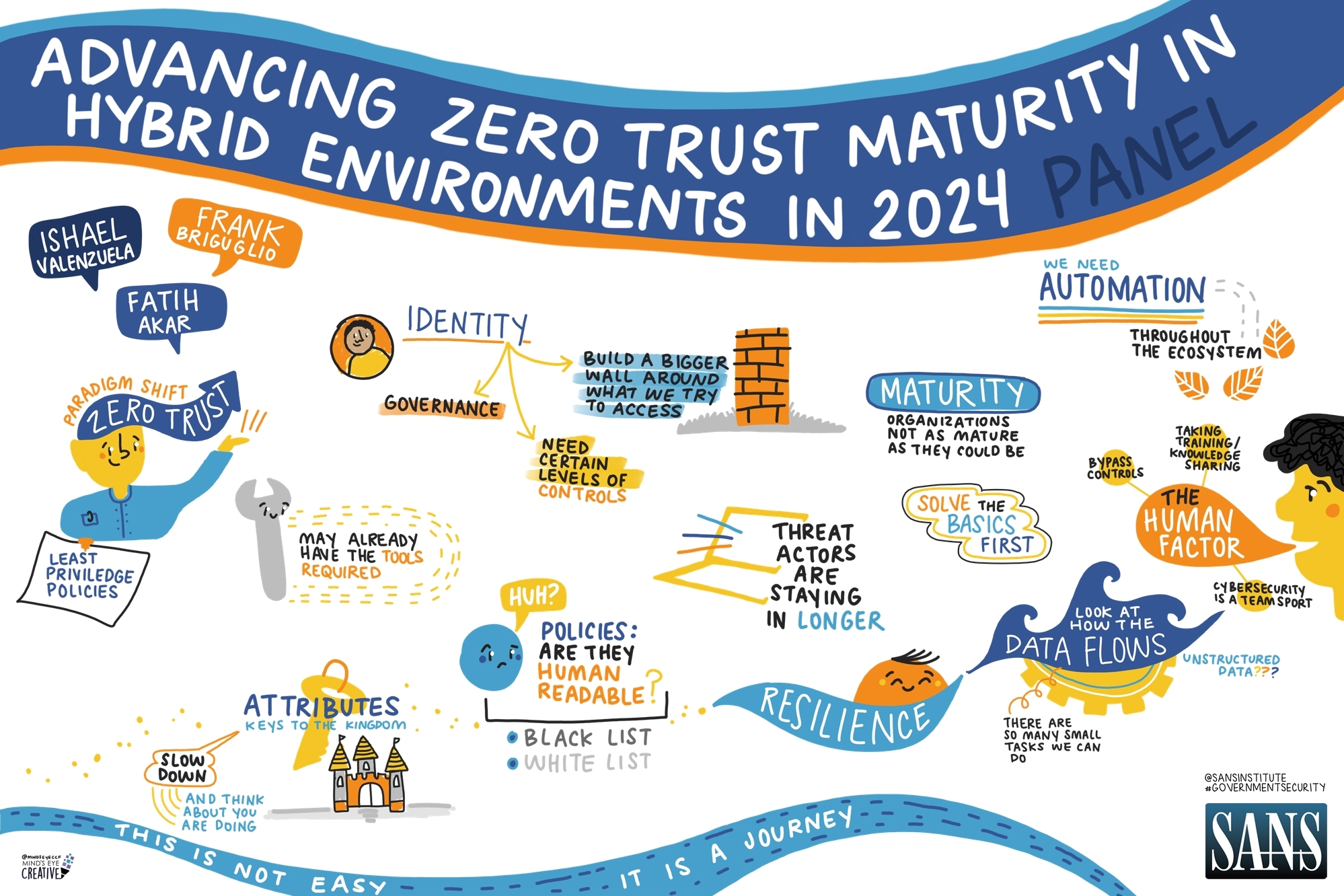
During the session “Zero Trust Implementation Strategies,” experts explored the growing challenges security professionals face with emerging technologies and provided key insights into building a robust Zero Trust framework.

As new technologies rapidly emerge, security professionals face increasing challenges in keeping pace, especially with the integration of on-prem environments and the cloud. A key principle of Zero Trust is the enforcement of least privilege policies, which requires a shift in how identity management is applied. This begins with strong governance to ensure the accuracy and reliability of policies and attributes.

Building a comprehensive security framework also involves implementing contextual authorization through micro-segmentation, considering factors like device, location and time to create a robust protective barrier. Furthermore, integrating identity management with Endpoint Detection and Response (EDR) tools is becoming increasingly important for tracking authorized processes and addressing the extended presence of threat actors who exploit admin identities to execute malware.

One of the biggest challenges in managing security policies is their complexity. Many security policies lack human readability due to their intricate structure, making automation essential for managing actions and enforcing compliance. The National Security Administration’s (NSA) recent Zero Trust guide emphasizes automation as a key pillar, highlighting its importance in responding to data flow deviations and maintaining security.

Despite the advanced systems in place, human error continues to be a major vulnerability. Employees can unknowingly compromise security through phishing attacks or by interacting with malicious links. To mitigate this, organizations must prioritize improving employee awareness and addressing the human factor as a critical component of cybersecurity.

Explore how Carahsoft’s Zero Trust portfolio can help Government implement a comprehensive Zero Trust strategy, strengthening organization’s security and protecting critical assets.
Carahsoft SANS Government Security Solutions Forum Blog CMMC Image 2024

Achieving CMMC Compliance

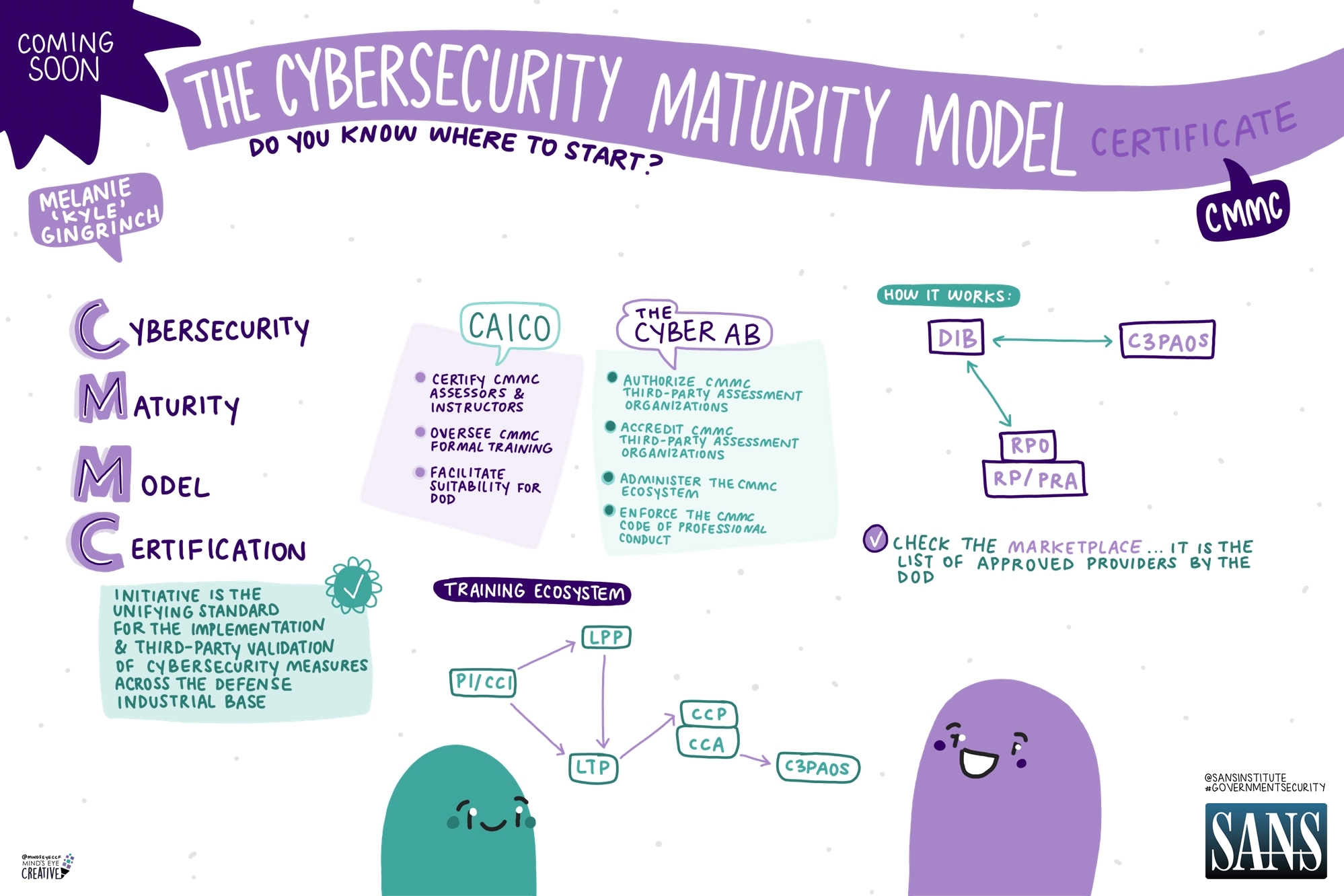
The session “Navigating Supply Chain Security and CMMC Compliance” provided valuable insights into the upcoming implementation of the CMMC framework and its implications for Defense Industrial Base (DIB) organizations. This certification will ensure that DIB organizations meet stringent cybersecurity standards through third-party assessments and will soon be mandatory for both prime contractors and subcontractors working with the Department of Defense (DoD).

CMMC consists of multiple certification levels, with Level 1 covering basic practices for Federal Contract Information (FCI) and Level 2 addressing 110 practices based on NIST 800-171, extending to around 320 actions. To prepare, organizations should work with Registered Practitioner Organizations (RPOs) to assess their readiness. These RPOs employ Certified CMMC Professionals (CCPs) and Certified CMMC Assessors (CCAs), who are trained and certified by the Cybersecurity Assessor and Instructor Certification Organization (CAICO), a subsidiary of Cyber AB, which oversees the curriculum and training programs.

After preparation, organizations will undergo an official assessment by a CMMC Third-Party Assessment Organization (C3PAO), which hires CCPs and CCAs to evaluate the cybersecurity measures in place. As the CMMC rule takes effect, organizations must ensure they work with certified professionals listed on the Cyber AB marketplace, as uncertified entities will not be recognized by the DoD.

Given the complexity of CMMC and the fact that preparation for certification can take at least six months, organizations are encouraged to start early to meet the new requirements.

Carahsoft is proud to be part of the CMMC ecosystem, with around 800 employees focused on cybersecurity and partnerships with over 150 vendors. By closely tracking policies and industry trends, Carahsoft aligns customer needs with relevant technologies, promoting “better together” integrations to maximize the value of existing investments. Carahsoft works with vendors that address every CMMC maturity level and capability domain, guiding customers through the complex decision-making process to ensure that they select the most suitable technologies to fill security gaps effectively and efficiently. Explore Carahsoft’s CMMC portfolio.
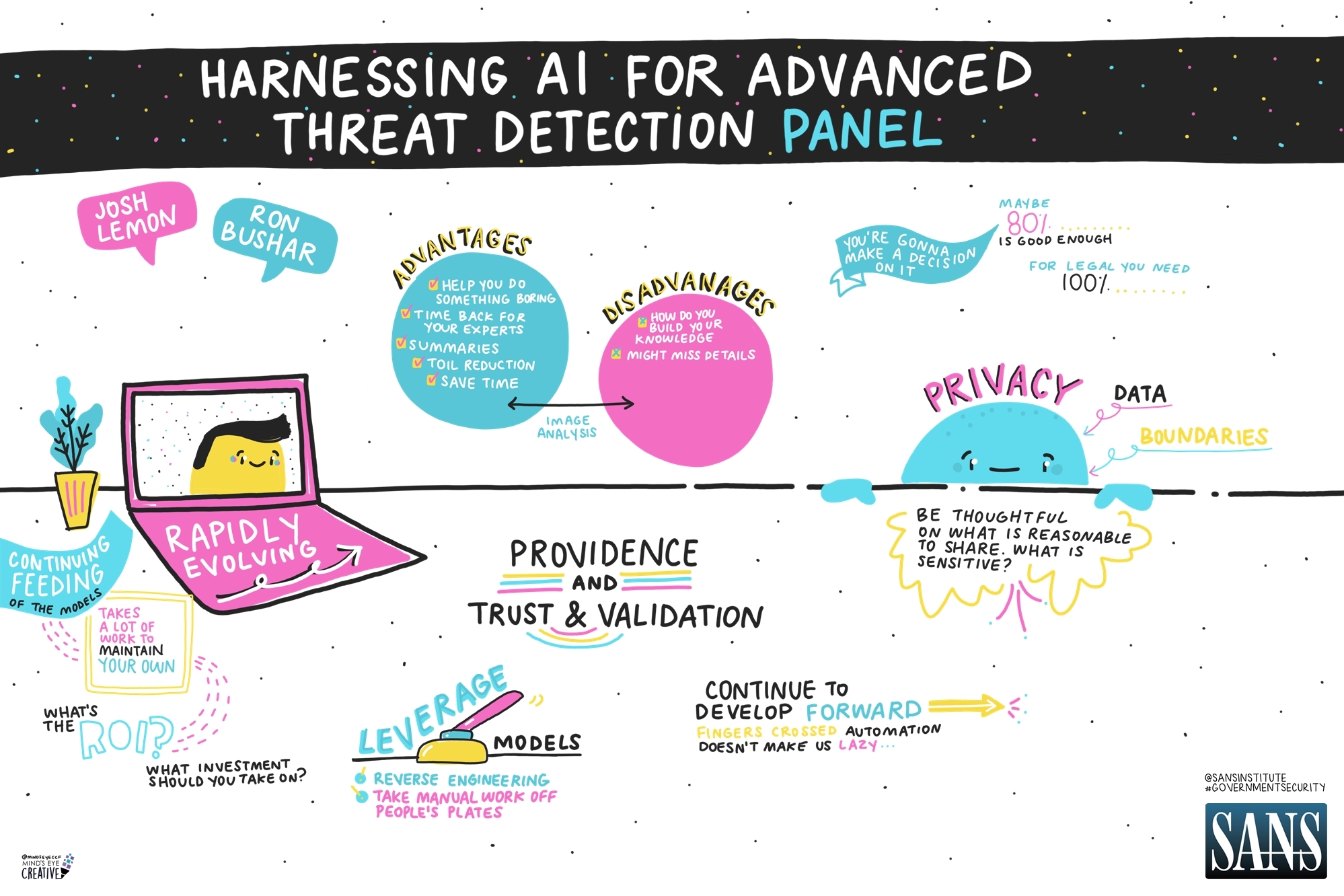
Carahsoft SANS Government Security Solutions Forum Blog AI Image 2024

Harnessing AI

Amid the complexities of cybersecurity, effective threat detection and response are increasingly reliant on advanced technologies like AI. The session “Harnessing AI for Advanced Threat Detection” explored the benefits and risks of integrating AI into security operations, highlighting key strategies for balancing automation with rigorous security practices.

“Advanced threat detection” spans various aspects of security operations, including the development and collection of threat intelligence. AI offers significant benefits in early threat detection, helping organizations quickly identify and respond to malicious activity. However, its use must be approached cautiously across the entire security chain.

With the rise of generative AI, industries are applying AI to automate time-consuming tasks. A key benefit is AI’s ability to condense information quickly. Tasks like threat searching or intelligence analysis, which once took hours, can now be completed in minutes, freeing experts to focus on higher-level tasks. This “toil reduction” is vital, as AI automates routine work and creates immediate efficiencies with minimal effort.

While AI brings advantages, there are inherent risks in implementing AI models and infrastructure. It is crucial to approach AI from two perspectives: using it to enhance security while ensuring the security of AI itself.

Organizations must also consider how they can trust AI-generated information. Trust and validation are essential. Provenance—knowing the source of data and models—is key to building confidence. While AI can handle most of the work, experienced engineers and analysts are still needed to verify and analyze the results so security teams can focus on more complex matters.

The siloed nature of work within security operations may limit intelligence sharing. Maintaining control of input data is critical, especially with public models hosted by technology vendors. If training data enters public models, organizations may compromise sensitive information. In regulated environments, private models offer safer options, allowing companies train AI while retaining control.

When integrating AI into security operations, organizations should build trust by validating each use case, allowing AI to be operationalized while ensuring accuracy. Experimentation is key to identifying where AI can provide a return on investment. However, implementing AI requires careful consideration of security models, AI safety and governance, particularly as organizations scale AI into operations.

Unlock the potential of AI to drive innovation and efficiency in Government organizations with Carahsoft’s AI and machine learning portfolio.

Frank Briguglio, Federal CTO at SailPoint, and Fatih Akar, Security Product Manager at VMRay, led the discussion on Zero Trust. Melanie ‘Kyle’ Gingrich, Interim Executive Director at The Cyber AB, provided guidance on navigating CMMC compliance. Josh Lemon, Director of Managed Detection and Response at Uptycs, and Ron Bushar, Managing Director of Mandiant Solutions at Google Public Sector, explored the role of AI in advanced threat detection.

Explore more insightful sessions on how Public Sector cybersecurity teams are strengthening their security posture by watching the SANS 2024 Government Security Forum in partnership with Carahsoft.

The Role of Identity Governance in the Implementation of DoD Instruction 8520.04

On September 3, 2024, The Department of Defense (DoD) released Instruction 8520.04, titled “Access Management for DoD Information Systems,” that serves as a foundational policy guiding the secure and efficient management of access to DoD information systems. The instruction mandates protocols for managing access across various environments, including military networks and systems used by both person entities (PEs) and non-person entities (NPEs) such as devices, applications, and automated processes. At the core of this policy is the principle of identity governance, which is essential for ensuring that access to sensitive systems and data is granted, monitored, and revoked based on verified identity attributes and defined security policies.

In the dynamic cybersecurity landscape, the concept of identity governance refers to the frameworks and processes that manage the lifecycle of digital identities. This includes the creation, management, and deletion of user accounts as well as the provisioning and de-provisioning of access rights based on a combination of user attributes, roles, and organizational policies. Identity governance is critical for compliance with the DoD’s Zero Trust Architecture, as outlined in the DoD Zero Trust Strategy. It emphasizes least privilege, continuous verification, and dynamic access control, all of which are key components of DoD Instruction 8520.04​.

The policy serves as maturation of the departments ICAM initiatives over the past few years and highlights some key concepts that need to be adopted across the departments ecosystem. Here are some key examples of how identity governance aligns with and strengthens this policy:

1. Access Control and Provisioning

One of the primary elements of identity governance is the effective provisioning and de-provisioning of access. This aligns with Section 4 of DoD Instruction 8520.04, which mandates that access to systems be carefully controlled through explicit or dynamic mechanisms. Explicit access involves manually provisioning access rights to specific users, which must be meticulously documented and approved by system or resource owners. On the other hand, dynamic access relies on real-time attribute verification to grant or deny access based on the most current information available, such as the user’s role, location, or security clearance​.

SailPoint Identity Governance for the DoD Blog Embedded Image 2024

Identity governance solutions play a crucial role in these processes by automating provisioning and de-provisioning based on predefined policies. When a user’s role changes or they leave the organization, governance systems automatically adjust access rights, ensuring compliance with de-provisioning requirements. This automatic adjustment helps prevent orphaned accounts—user accounts that are no longer needed or authorized—which can pose serious security risks if left unmanaged.

2. Authoritative Attribute Services

DoD Instruction 8520.04 emphasizes the importance of authoritative attribute services (AAS) in maintaining the accuracy, integrity, and security of identity attributes used in dynamic access decisions. Identity governance frameworks are designed to integrate with these authoritative services, ensuring that identity attributes such as security clearance levels, employment status, and role-based entitlements are accurate and up-to-date. This enables the DoD to enforce dynamic access control based on real-time identity data​.

For example, a DoD system that relies on dynamic access might check a user’s current security clearance, job function, or location in real time before granting access to a sensitive file or system, or assign a critical role. These checks are enabled by robust identity governance systems that pull data from authoritative attribute services and apply organizational policies to ensure that access is only granted to those who are fully authorized and meet the predefined criteria.

3. Least Privilege and Separation of Duties (SoD)

The concept of least privilege—granting users the minimum level of access necessary to perform their duties—is another foundational principle of both identity governance and DoD Instruction 8520.04. In Section 4.2 of the instruction, system and IT resource owners are required to document and implement explicit access policies that adhere to least privilege standards. Furthermore, systems must implement SoD controls to prevent a single user from having conflicting roles, such as both creating and approving financial transactions​.

Identity governance frameworks are uniquely equipped to manage SoD by automating the assignment of roles and enforcing policies that prevent users from being granted conflicting privileges. Governance solutions continuously monitor user access and provide alerts if SoD violations occur. By integrating these capabilities with the DoD’s access management protocols, identity governance helps ensure that users cannot escalate their privileges or circumvent access controls, thereby reducing the risk of insider threats and security breaches.

4. Continuous Auditing and Compliance

Continuous auditing and monitoring of user access is a critical requirement under DoD Instruction 8520.04, particularly for privileged users. Identity governance solutions enable DoD components to implement robust audit trails that track every access request, change in privileges, and system interaction. This is particularly important for IT privileged users—those with elevated access to critical systems and sensitive data—who require enhanced monitoring to detect and respond to suspicious activity​.

Through the use of identity governance tools, DoD organizations can enforce periodic access reviews, as mandated by the instruction, to ensure that users only have the access they need and that privileged access is justified and properly documented. These reviews are automated and documented within governance systems, reducing the manual workload on administrators and enhancing the overall security posture by ensuring compliance with regulatory requirements.

5. Integration with Zero Trust Architecture

The DoD Zero Trust Strategy emphasizes the need for continuous verification of users and devices as they request access to systems and data, rather than assuming trust based on their presence inside the network perimeter. Identity governance systems are integral to the implementation of Zero Trust principles within the DoD, as they enable real-time verification of identity attributes and ensure that access is granted only after all conditions are met​.

For instance, an identity governance system might check not only a user’s identity but also their security status, the network they are using, and the time of the access request before enabling access to sensitive data. This multi-layered approach to access control ensures that even if one security measure is compromised, others are in place to protect critical resources.

In Conclusion

Identity governance is a foundational element of the DoD’s efforts to secure access to information systems under DoD Instruction 8520.04. By providing a structured approach to managing digital identities, provisioning access, enforcing least privilege and separation of duties, and maintaining continuous auditing and compliance, identity governance systems enable the DoD to meet the stringent security requirements laid out in the instruction. Furthermore, identity governance is a critical enabler of the DoD’s shift toward a Zero Trust Architecture, ensuring that access to sensitive systems is dynamically controlled based on real-time identity attributes and organizational policies.

As cyber threats continue to evolve, the integration of identity governance with access management protocols like those found in DoD Instruction 8520.04 will be crucial in maintaining the security and integrity of the DoD’s information systems and the data they protect.

For a details of how SailPoint Identity Security supports the departments current ICAM and Zero Trust initiatives, and specifically how the capabilities of the platform align with the requirements of the policy, please download the report here.

Google and Okta Partner to Modernize Identity Management in Higher Education

Online collaboration is an essential part of the workplace and the educational sphere. To ensure this collaboration is done securely, Okta and Google have partnered to enhance and automate identity management at scale.

Okta is a neutral, AI powered, extensive platform that puts identity at the heart of any IT stack. No matter the industry, use case or level of support needed, Okta facilitates Identity Access Management (IAM) while keeping security at the core of the integration. Google Workspace is a collection of collaboration tools, and with more than three billion users, it aims to meaningfully connect users to facilitate partnerships and growth. While identity management can be complex, it does not need to be. Together, this partnership makes the path towards modern identity management as neutral, simple, secure and straightforward as possible.

With their recent partnership, customers can now:

  • Automate identity processes at scale
  • Unlock productivity with optimal security
  • Collaborate with each other, seamlessly and securely
  • Use their Google credentials across over 7,500 different apps
  • Gain cross-platform login privileges across Google Workspace and Okta
  • Access accounts with new, simplified user permissions and automated access management

Every organization strives to modernize and adopt cloud technology. This is also true within the higher education market, which is continuing to refine the trend of remote and hybrid learning following the pandemic. The applications and resource solutions that Google provides to higher education, along with the integration of Okta’s IAM capabilities, is immensely beneficial to the agency’s journey in adapting modern cloud technology and security.

Leading the Modernization of Identity Management in Education

Okat Google Higher Education Partnership Blog Embedded Image 2024

With the influx of hybrid and online learning, higher educational institutions are still learning how to orient solutions towards online learning and teaching. From an IAM perspective, higher education is one of the most complex environments with regards to the vast array of users. Within one network, an institution has faculty, staff, professors and a yearly lifecycle of students that range from applicants to alumni. The process of onboarding and offboarding students and faculty can be time consuming and requires multiple digital programs to facilitate. Okta provides a frictionless onboarding and offboarding experience for administrations that deal with changes in the student body. There are also external users such as partners, contractors and subcontractors, such as medical centers and food providers, that universities must consider. Okta’s open, neutral and independent identity platform can integrate with technologies commonly used by institutions, such as Enterprise Resource Planning (ERP) and Student Information System (SIS), allowing universities to build off of software they are already using. Depending on the role of the individual accessing the software, the identity gains access to personalized experiences.

Okta offers the capability to combine and manage various groups and processes in a single, secure platform. The partnership between Okta and Google enhances the student experience from their perspective, too. Okta’s single platform can solve student-specific challenges, such as managing multiple accounts and logins across an array of learning tools, enabling smoother daily operations and access. With cross platform log in, students can securely access Google Chatroom and Classroom features with IAM capabilities. By implementing Google Cloud capabilities into daily functions, higher education institutions can create a more modern experience for students while reducing costs. For example, artificial intelligence (AI) virtual agents are used to answer student questions and direct them to services, and mobile apps are utilized for mental health check-ins and other well-being services.

How Okta and Google uphold Zero Trust and Cybersecurity

Identity is one of the key pillars within the Cybersecurity and Infrastructure Security Agency (CISA)’s Zero Trust Architecture (ZTA). Okta upholds Zero Trust principles by ensuring that through methods such as multi factor authentication, the person gaining access is who they say they are. By only allowing access to devices that are up to date, Okta prevents bad actors from hacking older systems with commonly known security vulnerabilities. By sustaining a strong ZTA baseline, Google and Okta establish a secure experience for students, staff and faculty.

Okta gives customers a neutral, powerful and extensible platform that puts identity at the heart of information technology (IT) stacks. No matter what industry, use case or level of support is needed, Okta has customers covered. Okta and Google integrate with technology partners, alliance partners and vendors to uphold and exemplify security principles. In doing so, they ensure that every user on campus networks are safe and secure.

To learn more about Okta and Google’s partnership and the benefits to cloud and IAM security, visit the Carahsoft-hosted webinar on the company’s newfound partnership: Securing Productivity with Google Workspace + Okta.

Contact our Okta solutions experts today to discover the power of Okta and Google together, and how these industry leading organizations can support your higher education initiatives.

Okta and ServiceNow: Modernizing Public Sector Operations

Federal, state, and local agencies and educational institutions are facing a surge in targeted cyberattacks. With increasing return-to-office mandates, they face further challenges balancing security with the need to deliver frictionless experiences for users and systems, both within and beyond the premises of agencies and campuses. Public sector organizations can lean further on industry partners to help them modernize operations to improve cybersecurity, support distributed workforces and users, remain compliant with audit and policy mandates, and, ultimately, better serve the public.

Roadblocks to Modernization

To modernize operations, agencies and institutions need to transition from legacy systems to cloud-based tools. Creating collaborative, seamless, and secure work environments that not only attract and retain top talent but also comply with key audit and policy mandates is necessary.

But building this kind of robust environment that can securely support mission-critical work isn’t easy.

Okta ServiceNow Modernizing Public Sector Operations Blog Embedded Image 2023

For one, as the public sector implements cloud-based tools that deliver modern, continuous digital services, they must also ensure the new technology works seamlessly alongside existing processes. And securing work environments both in-office and remotely has never been more challenging, with a 40% increase in cyberattacks against government and public service organizations from Q2 2023 to Q3 2023. Unfortunately, busy IT teams’ resources are too often spent completing manual work instead of implementing changes needed to focus on the high-value work that propels their missions.

How Okta and ServiceNow Solutions Help With Modernization and Automation

Okta and ServiceNow solutions enable agencies and institutions to overcome these obstacles by providing tools that enhance security, modernize operations, comply with strategic policies, and improve service delivery to meet critical mission goals.

Together, Okta and ServiceNow help with:

  • Identity and access management: A centralized Identity solution offers a complete view of users and phishing-resistant authentication to protect accounts from cyberattacks and least-privilege access. This gives users just the right access at the right time for the right purposes.
  • User lifecycle and workflow automation: Advanced algorithms and customizable templates streamline onboarding and offboarding for IT teams, reducing time-consuming work, eliminating manual, repetitive tasks, and increasing productivity.
  • Compliance and policy oversight: Detailed logs and refined reporting capabilities perform automated compliance checks, and policy enforcement mechanisms help reduce the risk of non-compliance.
  • No-code automation: No-code/low-code automation enables IT teams to quickly launch modern services while still adhering to Zero Trust integrations.
  • Risk management and monitoring: Advanced analytics and real-time reporting enable continuous visibility of all systems, improving service availability and accelerating incident response that can better protect the sensitive information of public sector organizations.
  • System integration: API management and middleware tools enable seamless integration with automated data exchange to improve communication and reduce errors.

Why Okta and ServiceNow are Better Together

These solutions combine ServiceNow’s expertise in policy and compliance management and internal and vendor risk management with Okta’s expertise in Identity and access management, such as single sign-on (SSO) and multi-factor authentication (MFA).

More specifically, with a rich, bidirectional integration, Okta and ServiceNow work seamlessly together, empowering public sector organizations to modernize and automate their services to support their evolving missions with:

  • Okta Integration Network (OIN)
  • ServiceNow Security Incident Module
  • StateRAMP Ready authorization
  • FedRAMP High authorization
  • Department of Defense Impact Level (IL) 4 and IL5 workloads

Contact our team today to learn more about about how, together, Okta and ServiceNow provide the public sector with an open, future-ready platform to automate, secure, orchestrate, and simplify their workflows.

Software, AI, Cloud and Zero Trust as Top Priorities for the Army and DoD at Large at TechNet Augusta 2023

Many of the major cybersecurity, data, DevSecOps and other trends from the past couple of years continue to grow and be top priorities for every segment of the Department of Defense (DoD). At TechNet Augusta 2023, Government and industry experts shared the specific needs of their organizations across those areas and solutions to help achieve their goals. The main theme of the event was “Enabling a Data-Centric Army” and expanding those principles and their mobilizing technologies to the entire DoD. For the Army in particular, the shift from hardware to software, the use of artificial intelligence (AI), cloud capabilities and Zero Trust were headlining topics at the conference.

Shifting from Hardware to Software

In an effort to increase agility and expand access to resources, the Army is transitioning its equipment from hardware to software. Amending its materiel release process to decouple software from hardware allows the Army to deploy software outside of the long hardware acquisition cycle. To mobilize this endeavor, the Army Futures Command (AFC), is modifying its software requirements to focus on high-level overviews that are then refined by operators. Alongside this shift, the Army and other departments requested that technology providers ensure that their software solutions integrate with each other. Going forward, the Army also asked industry to provide software that is not tied to specific hardware. This separation will be key to establishing data-centricity. Nearly every speaker echoed the importance of this shift for their departments.

Utilizing AI

With this major transition to a software-heavy environment, Army Chief Data and Analytics Officer David Markowitz believes it will be an ideal use case for generative AI in software development. Having a controlled environment in software development would make it easier to properly govern compared to the complexity of some of the other uses. As AI usage increases across the DoD, military leaders requested industry create AI platforms with layered complexity of features enabling users of any skill level to utilize the technology effectively. In regard to AI applications for data, Army CIO Leonel Garciga stated that additional guidance on “Data Use on Public/Commercial Platforms” would be released soon to clarify its policy. Overall, officials concurred that the DoD is not looking to become 100% reliant on AI aid but instead maximize AI’s strengths to augment human critical thinking and empower commanders to make data-driven decisions.

Enabling Cloud Capabilities

Over the past year, the Army has exponentially increased its cloud migration and virtualized capabilities. Housing information in the cloud optimizes data storage and simplifies ease of access particularly with the increase in data output, and the push for AI data analytics and data-driven decisions. Hybrid cloud solutions offer the readiness, adaptability and duplication of vital information necessary for military operations to continue smoothly in any situation. Currently, DoD leaders seek industry solutions for modernizing and moving applications to the cloud simultaneously. Acquiring technology with this ability would reduce both the security risk and the work required from the military to implement it.

Expanding Zero Trust

Overarching every aspect of the DoD is the critical need for cybersecurity. Garciga plans to emphasize Zero Trust implementation heavily in conjunction with improving user experience and cyber posture. While multi-factor authentication offers a great starting point, military leaders explained that it is not enough and that they look to partner with industry to close virtualization vulnerabilities through continuous monitoring and regular red teaming. At the conference, the Army Cyber Command (ARCYBER) outlined seven principles for IT providers to follow for all capabilities they deliver:

  • Rapidly Patch Software
  • Assess All Production Code for Security Flaws
  • Improve Security of Development Networks
  • Isolate Development Environments from the Internet and from the Vendor Business Network
  • Implement Development Network Security Monitoring
  • Implement Two-Factor Authentication (2FA) on Development Network and Testing Services
  • Implement Role-based Permissions on Development Network

Empowering DoD Success

A consistent thread woven throughout the event was the vital nature of open communication and partnership between the DoD and technology companies to achieve the established goals. Within each of these areas including the shift from hardware to software, use of AI, cloud capabilities and Zero Trust, the DoD looks to innovate and explore new methods and solutions to stay ahead on the world platform. Together through collaboration, industry can have a vital role in keeping American citizens safe one technology update at a time.


Explore our Federal Defense Technology Solutions Portfolio to learn how Carahsoft can support your organization through innovative, agile defense resources and IT capabilities.

*The information contained in this blog has been written based off the thought-leadership discussions presented by speakers at TechNet Augusta 2023.*

Three Strategies for Minimizing Insider Threats

Insider threats (alternatively known as careless or untrained insiders) continue to be a problem for the public sector. According to SolarWinds 2023 Public Sector Cybersecurity Survey, 68% of respondents cited careless or untrained employees as one of the highest sources of security threats, second only to foreign governments.

Insider threats have continued to increase over the past few years. Mobile work has become commonplace, and more employees have begun using unsanctioned applications, leading to incidents of shadow IT. Meanwhile, hackers have become adept at targeting government employees through phishing and ransomware attacks, which succeed due to human error.

Educating your employees about the dangers of these attacks and putting in proper safeguards to prevent them is critical. Here are three strategies to help employees become more aware of threats and build a better security posture from the inside.

Understand while not everyone is a trained security expert, everyone can play their part

SolarWinds Cybersecurity Against Insider Threats Blog Embedded Image 2023

Some organizations tend to say, “Everyone is responsible for cybersecurity,” which is not entirely true. An employee in charge of processing applications for social security benefits is in charge of processing applications for social security benefits, not protecting the agency from a cyber attack.

However, there are little things everyone can do to prevent threats–they just need to know what those things are. It’s more than not opening emails from unknown senders or clicking on suspicious-looking attachments. It’s being vigilant, even when someone is feeling overworked. It’s also knowing who to report these incidents to if and when they occur and how and when to share information with colleagues about potentially suspicious activity.

Other things you can do to help employees protect your agency include:

  • Implementing company-wide password protocols, including two-factor authentication
  • Mandating employees to change their passwords every few months
  • Adding context to communications around cybersecurity to help employees understand the ramifications of cybersecurity incidents (for example, illustrating how a breach could impact employees’ jobs)

While rigorous training isn’t necessary, you can aim to make safe security practices a part of your day-to-day efforts. For example, periodic email reminders, replete with simple and easy-to-follow best practices and sent from the CIO or security team, can help improve your organization’s security posture.

Conduct simulations to help employees understand how to respond to possible threats

Email reminders are important, but nothing beats practicing what to do in the event of a threat. Which is where Breach and Attack Simulations (BAS) come in.

BASs can be used to simulate just about any type of attack your employees might be exposed to, including phishing, malware, and more. Employees are asked to spot, respond to, and prevent an attack in a simulation. Managers can assess employees’ responses and reactions and discover where more education is needed.

Simulated attacks are also great for increasing employee vigilance and education. The more employees are exposed to simulated threats, the more knowledgeable they become about those threats–and the less likely they will be to fall prey to them.

Build a zero-trust foundation that is secure by design

While employees should always be your first line of defense against cyberattacks, no defense is ever foolproof, even those that have been adequately trained and prepared. Implementing a secure by design zero-trust cybersecurity environment can ensure weaknesses aren’t exploited.

In a secure-by-design environment, security is inherent in every aspect of the organization. Employees are aware of possible cybersecurity risks and know how to prevent them. Security is baked into the agency’s technology infrastructure and software development processes, and all technologies an agency procures have security as a standard feature, not an add-on.

Security by design goes hand-in-hand with zero trust. Zero-trust cybersecurity models are based on an “assume breach” mentality, where every request to access information could pose a threat. Therefore, all requests must be carefully verified, and all employees should only have access to the information they need.

Remember: while employees can be your agency’s best defenders, they’re also human. They can and will make mistakes. It’s essential to put in place safeguards to mitigate those mistakes. Education is important, but so is having a backup plan in case something fails. By covering all angles you’ll have a better chance of preventing the next employee-centric cyberattack.

For more guidance on how to better enhance your agency’s cybersecurity posture, visit SolarWinds’ Secure by Design resource center.

Securing the Digital Workplace: Microsoft 365 Identity Management for Public Sector Leaders

Zero Trust is a critical focus for public sector organizations as they navigate today’s evolving digital workplace and cybersecurity landscape. But one issue is emerging as increasingly troublesome: insider threats.

The 2022 Cost of Inside Threats: Global Report found incidents involving insider threats surged 44% over the past two years. While some of these threats may be malicious insiders, seeking to misuse their authorized access for personal gain or harm, many are the result of cybercriminals exploiting vulnerabilities in identities to enter your environment. These criminals use tactics like compromised credentials – the leading cause of data breaches – as well as phishing scams and social engineering to impersonate identities and gain unauthorized access.

To effectively counter these increasingly sophisticated threats, organizations must strengthen identity management. When executed properly, identity management not only enhances the security of your digital workplace but enables a Zero Trust strategy.

Let’s discuss what identity management is, how to build a comprehensive strategy in Microsoft 365, and how it can fortify your Zero Trust deployment.

What is Identity Management?

AvePoint Identity Management Blog Embedded Image 2023

Identity management establishes and manages the digital identities of anyone entering your environment – from employees and contractors to guest users. Identities could refer to people, but they could also be services or devices entering your environment.

Identity management enables organizations to implement robust access controls, granting privileges based on roles – which is why identity management is an integral piece of Zero Trust. Without it, you will have no way to verify users and devices are who they say they are, let alone establish proper privileges and access, which are key Zero Trust principles.

When done effectively, identity management provides the right access to the right individuals at the right time for the right reason. This process not only improves your security posture, but can streamline user access, reduce administrative overhead, and help you better meet your compliance obligations.

Building Identity Management in Microsoft 365

When building your identity management strategy in Microsoft 365, remember these three basic elements: identify, authenticate, and authorize.

Here’s how to get started:

  • Identify: The backbone of identity management in Microsoft 365 is Azure Activity Directory (Azure AD). Azure AD provides a cloud identity for users, groups, and resources. It is where you build out your users’ identities and control access to internal and external resources – like your intranet or even Microsoft Teams. The solution will recognize users (based on Microsoft’s powerful machine learning and AI’s understanding of typical user and tenant behavior) and flag risks that fall outside of normal behavior, triggering the next steps of the process.
  • Authenticate: Multi-factor authentication (MFA) is today’s gold standard for authenticating identities. There are a variety of ways to do this, from smart cards to one-time passwords, that add layers of protection to your security. Microsoft’s Authenticator App helps implement MFA across your applications in a convenient and easy way for users, allowing them to verify their and their devices’ identities from their phones.
  • Authorize: It’s critical to grant access privileges based on the conditions specific to your organization. Conditional Access policies take a two-phased approach: first, it collects information about the person (their device, IP address, etc.) and then enforces any policies you have in place. This could mean if it detects a new device, it may enforce multi-factor authentication (MFA) or request the user sign in again. It could also prohibit access under certain conditions, like if a user is attempting access from a mobile device. These policies provide granular control over access while reducing the risk of authorized access.

By following this framework, you can easily begin using the powerful tools Microsoft offers to build your identity management strategy, ensuring only authorized individuals have access to critical systems.

Three Ways to Take a More Proactive Approach to Identity Management

Once you’ve taken the initial steps to start building your identity management approach, take it to the next level to enhance your security:

  • Right-size your policies: Strict, one-size-fits-all rules can hinder productivity; if security is in the way of getting the job done, users will find a way around it. Customizing your policies to specific users, workspaces, or even content creates a more tailored approach to access control, striking a balance between security and productivity.
  • Implement lifecycles: Identities should not permanently exist in your environment. People switch jobs or upgrade their devices. Establish a process to evaluate and recertificate identities – whether users (both external and internal) or devices – to ensure they still require access to your content and workspaces.
  • Monitor your environment: Even with the best-laid security plans, things can still fall through the cracks. That’s why it’s critical to monitor your environment – including users, devices, locations, and behavior – to identify any anomalies or suspicious activities that should be addressed.

These strategies can help you build a more proactive identity management approach that actively reduces risks and attack surfaces, allowing you to go beyond verifying identity to create a secure and efficient digital workplace.

Build a Secure Digital Workplace with Zero Trust

While identity management is an important aspect of building your secure digital workplace, ensuring only authorized individuals have access to your systems, it is not enough to protect your data or the workspaces where it lives in today’s ever-evolving cyber threat landscape.

Public sector organizations must embrace a comprehensive Zero Trust security framework to effectively build a secure digital workplace. To do so, you must combine identity management best practices with other robust security measures, like role-based access controls, workspace governance policies, lifecycle management processes, and risk assessments. Together, these strategies can enhance the protection of your digital environment and minimize your risk of data breach or unauthorized access.

Download the free AvePoint guide, “How to Achieve Zero Trust Standards Without Limiting Collaboration in Microsoft 365,” for more information about protecting your digital collaboration workspaces with a Zero Trust framework.

Transforming Digital Services and Modernizing Risk Posture in Colorado

Throughout Colorado State and Local departments, utilizing emerging technology is imperative to combating cyber threats and improving efficiency. At the Carahsoft Digital Transformation Roadshow in Denver, Colorado, Government IT and industry leaders engaged in dynamic discussions around transforming Colorado through technology.

Transforming Technology in Government

Reducing technical debt is a pivotal step in transforming the way Colorado responds to citizens and facilitates digital services. Modernization contributes to building a streamlined constituent experience, enabling data integration for better decision-making and lowering the cost of ownership. That further requires top technology talent to redesign aging technology systems and deliver better outcomes for the state.

The Digital Government strategic plan gathered over 2,000 Coloradans to understand their experience with Digital Government. The group heard from citizens requesting easier forms and more accessible Government services. From that survey, administration learned that State and Local departments can make an impact through three initiatives: expanding broadband access, making Government accessible by reducing burden of access for constituents and reducing poverty.

Carahsoft Florida Colorado State and Local Roadshow Blog Embedded Image 2023Change and increased needs seem to be the only constants in today’s world. Workloads are ever increasing and requirements from new and unexpected sources are creating backlogs that are becoming critical. This can put an incredible burden on plans, resources and personnel. The next step is looking at how technology and innovation can improve these new processes and address new demands through live chats, Artificial Intelligence (AI) modeling, etc. There is immense opportunity for Local agencies in Colorado to use this technology to make workflows more efficient, learn about their citizens and offer that instant gratification that customers have come to expect.
One of the biggest challenges Local Government faces is the interoperability across departments to share resources and capabilities. By focusing on utilizing new technologies to encourage that interoperability and optimize through data, user experience improves. There also must be a balance when handling sensitive data within these departments, as well as an effort to avoid technology sprawl and cost complexity. Automation and AI is foundational when it comes to daily operations and best practices as innovative technical solutions continue to make access from the edge easier, more transparent and secure.

The Role of Emerging Technologies in Digital Government

By eliminating legacy systems and investing in emerging enterprise technologies, agencies are generating cost savings, increasing security and accessibility and providing a more holistic, human-centered Government experience for Colorado.

Understanding how Colorado is securing the remote workforce in light of the telework and deployment explosion is important to connect where those emerging technologies can improve communication and networking issues. It is important that the state gets broadband access to its most rural and underserved communities to expand high-speed internet and 5G to increase citizen engagement with Government services. By utilizing endpoint detection, multi-factor authentication and mobile device management, Colorado protects citizens’ data and gains an understanding of user behavior to protect the data from any cyber threats.

The emerging technology approach is also about an innovative mindset to use tools in a better way that improves citizens’ digital experience. Colorado has been modernizing its approach to citizen-facing services by consolidating into simple, quick and more digital interactions to ease how citizens access essential services and programs with the state.

Technology acceleration takes center stage as part of Colorado’s Digital Government Strategic Plan. For the City and County of Denver, collaboration is imperative for coordinating technology deployment across the State and Local Government and within communities, at speeds capable of meeting the plan’s timelines. With these modernization efforts and changes across the state, agencies must invest in change management by preparing citizens for more digitized services. This includes walking residents through new processes and applications as incremental changes occur.

Combating Cyber Threats in Government

As their communities increasingly become targets of hackers and other cyber criminals, State and Local agencies must stand united to prevent and recover from cyberattacks. Cybersecurity risks range from data exploitation, insider threats, third-party practices as outsourcing increases, ransomware, identity theft and fraudulent access to State Government services.

Risk tolerance and risk posture must factor in human risk, application risk, physical security risk, datacenter risk and cloud risk to comprehensively assess cyber threats. As a result of the COVID-19 pandemic, the workforce access changed overnight, creating an even greater need for multi-factor authentication, password management, cloud security and Zero Trust compliance.

Data integrity attacks include unauthorized insertion, deletion or modification of data to Government information such as emails, employee records, financial records and citizen data. Public facing identity is a big aspect going forward for Colorado agencies.

The safeguards in use today ensure data is secure, protected and effectively backed up, yet readily available when needed. Lifecycle management is critical to making sure users have the right level of access to the right applications. Today, most agencies are in a position where if someone logs in, they make an identity claim with a username and password and a one-time code. The agency should then know what application that user accessed, and the process stops there; however, with the diversity in endpoints, more information needs to be acquired. Agencies can then make better risk-based decisions on who is allowed to log in, thereby protecting their environment, detecting and remediating threats while continuing to modernize their risk posture.

Emerging technologies and new digital services provide State and Local agencies more opportunities to easily connect with their citizens and make sure the user experience is as smooth as possible. As increased access to applications and Government data continues, agencies must continuously improve their risk posture to protect citizens’ sensitive information by upholding Zero Trust best practices.


Visit our roadshow resource hub to learn more about the State and Local Roadshow Series: Digital Transformation.

4 Steps to Applying Zero Trust to Content Security

As organizations adopt zero trust architectures, there’s one key area that seems to be overlooked: the content layer. And yet, security vulnerabilities at this layer pose significant, and extremely common threats. In fact, research reveals that a large portion of companies share sensitive content with over 2,500 third parties and use multiple tools for content communications.

Given the vulnerable nature of content exchange, it’s important to extend zero trust principles right down to the emails, documents, and files that we all share every day. But there are reasons why organizations do not do this regularly. For example, enforcing access rights can be tricky, especially in large organizations or companies with significant turnover. Tracking and monitoring every file type is impossible, as is adequately classifying every type of content.

Forcepoint Kiteworks Collaboration Zero Trust Blog Embedded Image 2024

Forcepoint’s new partnership with Kiteworks, a leader in data privacy and compliance for sensitive content communications, changes everything. Together, we’ve developed the industry’s most powerful solution for true zero trust security at the content layer. It combines Forcepoint’s Content Disarm & Reconstruction (CDR) and Data Loss Prevention (DLP) solutions with Kiteworks’ Private Content Network (PCN).

This combination allows organizations to take a highly effective four-step approach to zero trust content security by:

  1. Making all content untrusted by default – Applying zero trust at the content layer entails assuming that all data is malicious until proven otherwise. Ensuring content is secure and delivered safely requires deconstructing—and reconstructing—the information that’s being sent. Forcepoint’s Zero Trust CDR extracts information from files, verifies that the information is secure, and builds new, functional files to carry the information to its ultimate destination.
  2. Enforcing least-privilege content access – Least-privilege access management is a core tenet of zero trust security; our solution extends this practice to the content layer. It applies access control for applications to all content assets and allows organizations to assess who is sending, sharing, receiving, viewing, altering, or saving content. Companies can also monitor from where and to that content is being sent.
  3. Monitoring content for potential vulnerabilities – Most organizations employ some form of network monitoring and have done so for years. Effective content monitoring employs the same principles of complete, real-time visibility and unified control. Our joint solution consolidates content communication channels for easy management and closely monitors each asset to ensure content is free of vulnerabilities.
  4. Integrating policy management tracking and controls for data loss prevention – Tracking and monitoring content collaboration and communications is essential to prevent sensitive content from falling into the wrong hands. Our solution allows organizations to discover, classify, monitor, and protect data, track and control sensitive content, and audit user behavior—mitigating data loss.

This “trust no content” approach addresses all content security gaps. It provides organizations with assurances that the content their users are reading, sharing, and using is well-protected and free of malware.

Moreover, it makes implementing and managing zero trust content security an easy, frictionless experience for both administrators and users alike. Admins have everything they need to manage content security from a central location, and users will not experience any delays or inhibitions in their ability to collaborate or communicate.

Contact a member of our team today to learn more about Forcepoint’s and Kiteworks’ new solution and schedule a demo to start taking the steps necessary to bring zero trust security to your content.

Cybersecurity Initiatives from TechNet Cyber 2023

The global prominence of technology, cyber power and cybersecurity is vital to U.S. political and economic success. At TechNet Cyber 2023, a conference held in Baltimore, Maryland, Government, industry and academic partners discussed solving global security needs. This year’s conference, which took place May 2-4, focused on numerous topics including Zero Trust, multicloud and defense strategies against bad actors.

Thunderdome: The New Zero Trust Framework

Thunderdome is the new Zero Trust framework to improve cyber security and posture, created by the Defense Information Systems Agency (DISA), a combat support agency that provides information technology and communications support. Lieutenant General Robert Skinner, the director of DISA, attests that Thunderdome meets 131 of 153 key standards that were laid out by the Department of Defense (DoD) as a part of its strategy for Zero Trust. With that and further growth, Thunderdome is well on its way to being a vital part of Zero Trust cybersecurity.

Carahsoft TechNet Tradeshow Blog Embedded Image 2023However, Thunderdome is not a one size fits all solution, as its scalability and modularity will require ongoing assessment. At the event, Lieutenant General Skinner highlighted three key components to understanding where Thunderdome fits into agencies. They are known as the “three Ps:” posture, position and partnerships. The first part, posture, evaluates where an agency stands with its technology and processes in relation to its cyber posture. The second element, position, is the utilization of these resources to achieve the best results. And lastly, partnerships form the cornerstone of maximizing business capabilities. In relationships with allies and partners, all participants can help each other and ensure that they are all on the same page.

Much of this manifests in Thunderdome’s process of improving agency posture with regards to the workforce. Through education, the right training, retention and hiring those with the right skillsets, agencies can improve their industry posture. Lieutenant General Skinner stressed that to support the current workforce, it is vital for agency leaders to “know and understand what their capabilities are to move them in the right place.”

The Pentagon’s MultiCloud Environment

The Pentagon’s multicloud environment is designed to give practitioners access to the best of technology. However, the complexity of the multicloud environment can lead to issues if not managed correctly. To combat this, Armon Dadgar, HashiCorp’s CTO and Co-founder, recommends forming a consistent way for practitioners to set up cybersecurity infrastructure on other platforms. As agencies seek to decomplexify systems, one way to achieve this in both the public and commercial sector is by establishing a consistent approach to the multicloud. Agencies should be intentional about instituting abstraction layers and begin by defining a central platform team to create a common blueprint across environments. This way, there is an organized standard for future processes.

Threats to Cybersecurity

Wanda Jones, a principal cyber advisor of the U.S. Air Force, discussed how to protect against hackers with evolving threats. Bad actors are aggressive, always moving and attacking industry’s weak spots. The best way to defend capabilities is to detect threats early on and respond in a timely manner. Agencies must always be monitoring and improving to stay on the offensive. A solid start to improving the Zero Trust is improving security architecture and providing access to those with known identities within the agency.

With the continued focus on cybersecurity, the Federal Government maintains the public’s safety and security.


To learn more about the topics discussed at TechNet Cyber, View the full Fed Gov Today episode co-sponsored by Carahsoft.

*The information contained in this blog has been written based off the thought-leadership discussions presented by speakers at TechNet Cyber 2023.*