
Medical practices are quickly entering an age where Artificial Intelligence (AI) is growing and expanding to help improve user and patient experience, as well as increase automation in the work environment. During the Becker’s Health IT + Digital Health + RCM conference, healthcare and IT leaders came together to discuss how to adapt to the latest trends in the field, including telehealth, cybersecurity, diversity and the simplification of healthcare through AI.
The implementation of AI in the medical world is increasing as doctors and researchers explore ways to make healthcare as seamless as possible for both doctors and patients. Telehealth, the ability to meet with a healthcare provider virtually rather than in-person, is an important process that doctors are utilizing as the patient population and their needs continue to grow. Doctors and medical staff will soon be able to:
- Use AI for administrative tasks to increase healthcare staff efficiency
- Continue to consolidate electronic medical records (EMR) onto a singular platform, making it easier for providers across a health system to access up-to-date patient information
- Close the access gap in more rural and underserved areas to collect data and maximize face time with patients
- Utilize technology to focus on holistic health and increase discussion about behavioral nudges, for example a smart watch mentioning that it is ‘time to stand’
- Improve the digital experience for patients of all demographics through easy access medical records and utilization of telehealth for older populations
Diversity in Telehealth Technology
 With the progression of AI and telehealth, hearing diverse voices on the implementation of these tools cannot be overlooked as medical professionals change the way they utilize technology. It is imperative that new technology is working to make medical support and processes simple for communities that may not have as many resources when it comes to telehealth and digital medical records. For example, a chat box that pops up on a medical practice’s website may have been created to help patients, but non-English speaking patients do not benefit if the box is not programmed to display and understand other languages.
Skillset diversity must also be considered when doing research. Instead of finding medical staff and researchers based only on a certain educational background, it is beneficial to consider candidates with a range of experience as well. Inviting different voices into the medical field can only benefit the way healthcare progresses and provides better outcomes to patients.
A Platform-First Approach: Creating Maximum Value for Enterprises
It is important for medical companies to create maximum value within the applications and systems that they are paying for. Technology is evolving at such a rapid pace that often, by the time a new technology has been implemented by an enterprise, it is already basically obsolete and needs to be replaced. This is where the platform-first approach comes into play. With this approach, companies prioritize getting the most value from existing applications that are already purchased and installed in the enterprise. For example, ensuring that there is no overlap between the use cases of multiple apps a company is paying for.
The platform-first approach includes:
- Leveraging platforms that are already currently in use
- Adding features that are easy to use with easily accessible interfaces
- Focusing less on training and more on hands-on experience
- Being selective in what tools and platforms are implemented
- Being agile and looking at a platform strategy instead of individualistic needs
- Ensuring that what an organization already has makes sense in regard to the bigger picture and is not being underutilized
Moving Forward: Maximizing Every Tool and Every Person
Even with today’s fast-paced changes, there are processes and elements of healthcare that AI cannot replace. AI is rapidly growing and evolving, but it cannot take away the qualities of being a human, especially in the medical field. If a bot can do a simple task, such as filing paperwork, it is best to let the bot do it, and allow doctors to spend more personalized time with patients. It is ideal to offer digital opportunities in the workplace, but not to the extent that it hinders user experience. Technology can alleviate pressures and remove friction from a workforce, but at the end of the day, AI cannot replace the personal human element of care that a doctor provides to a patient.
AI is not something to fear, but rather something to embrace in the areas where it meets providers and patients’ needs. It is also important that every voice is heard while technology advances, and minority groups are not left behind in the fast-moving AI path. Companies and researchers are focusing on where the demand is and either changing or providing additional technology as frictionless and simple as possible.
Visit Carahsoft’s Healthcare Solutions Portfolio to learn more information and key insights for the IT and Healthcare industries.
*The information contained in this blog has been written based off the thought-leadership discussions presented by speakers at the Becker’s Healthcare Summit 2023.*
 Analytics Innovations Draw a Complete Data Picture
 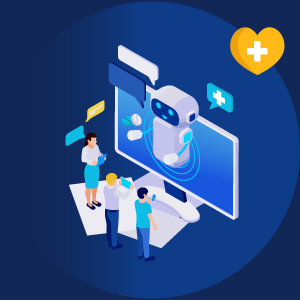 AI can significantly reduce the administrative burden for medical providers by automating routine tasks and increasing bandwidth for front line staff to complete other medical duties. A hallmark capability for AI is analyzing data which it can aggregate from wide pools of information to suggest electronic health record (EHR)-based interventions, predict possible future patient ailments and offer a more unified, comprehensive picture. In a post-COVID-19 world, AI healthcare data applications offer the extremely relevant and desired ability of anticipating future public health crises through research and analytics. These AI forecasts can accelerate understanding for policy creation, reinforce healthcare resources and provide precision public health.
 Next Steps for the MHS
 USSF Supra Coders Utilize DevSecOps for Innovation
 The primary focus of AI is to use data and computations to aid in decision-making. Generative AI can create text responses, videos, images, code, 3D products and more. AI as a Service, cloud-based offerings of AI, helps experts get work done more efficiently by advancing infrastructure at a quicker pace. In contrast, AI is also commonly used by the general public as a toy, since its responses can sometimes be entertaining. The comfort users have with AI and wide range of inputs introduces risk, and these risks can proliferate exponentially.
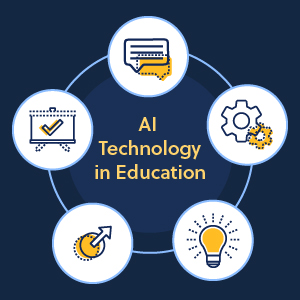 In all learning environments, students and teachers rely on modern technologies to enhance their experiences to be as informational, productive and efficient as possible. In recent years, hybrid learning and collaborative digital spaces became essential components of education for both K-12 and higher education organizations. With this development, education technology has evolved and expanded to include new and more advanced AI systems inside and outside the classroom.
 Innovative trends in education technology have made it possible for students and staff to stay connected, whether through remote online learning or collaborative learning in the classroom. AI tools like
  For teachers, implementing AI can help automate repetitive daily tasks like grading tests and quizzes, and catching minor mistakes within written essays. This way they have more freedom and time to focus on in-depth feedback, creating comprehensive lesson plans and spending one-on-one time with their students. Additionally, AI tools can give students instant feedback on their work, allowing them to be more independent in identifying inaccuracies and recognizing successful projects.[
 Augmented reality (AR) and virtual reality (VR) are becoming increasingly more popular in students’ everyday lives, so using these technologies as a learning tool is familiar and compelling for them to gain valuable experiences in the classroom. Immersive technologies can simulate real-world scenarios for students to gain hands-on experience with low risk, like medical simulations and technical experiments. It also can allow students to break the barrier between their physical space and complex concepts like observing the planets up close or enlarging and examining something microscopic.[
 Throughout a student’s education, data is continually collected to better understand and predict their developing needs and most effective learning strategies. AI technologies can quickly and automatically analyze and report on this data, allowing teachers and professors to evaluate trends in an individual student’s or an entire class’s performance. Empowered with this knowledge, educators can tailor their lesson plans and take a more proactive approach to supporting students’ needs, ultimately increasing academic improvement for all.[
 Student’s learning styles can vary depending on many factors. For example, some students learn best through more visual and interactive experiences, while others may learn best through memorization and flashcards. Analyzing data collected by AI can help teachers be more informed and prepared educators for different kinds of learners. By applying the insights gathered from AI algorithms, educators can create personalized tracks for individual students, including aspects like adjusting the types of content, working with their comfortability, tailoring to their pace of learning and understanding their comprehension of learning objectives.[