Applications of Technology in Higher Education at EDUCAUSE

Technology advancement has resulted in many potential usages for university students and faculty, educational and research institutions and Government agencies. For agencies focused on higher education, taking advantage of new technology can help bolster security and ease student and faculty daily procedures. Industry and education experts joined together at the EDUCAUSE Annual Conference for an immersive experience that facilitated collaboration and discussion to promote the advancement of higher education by using information technology (IT).

Leveraging Security Technology Against Ransomware

With the increasing technology usage in everyday life, many higher education agencies are susceptible to cybersecurity threats like ransomware. The education sector is no exception, with attacks ranging from exploited vulnerabilities, to compromised credentials, malicious emails, phishing attempts, brute force attacks and malicious downloads. As ransomware comes with financial loss, it is important for higher education agencies to invest accordingly in cybersecurity. According to industry statistics, 70% of organizations have successfully recovered data using backup mechanisms. This data recovery is not only much simpler than paying the ransom, but it also removed the attack incentive since paying the ransom encourages bad actors to continue attacks. Higher education institutions own and maintain a significant amount of intellectual property as a source of data wealth and research. To protect this information and ensure the safety and financial success of educational institutions, higher education must focus on creating backups and position IT security staff as trusted advisors, fortify their cybersecurity infrastructure and foster a vigilant culture amongst students and faculty.

Digital Services in Education

Carahsoft EDUCAUSE Recap 2023 Blog Embedded Image 2024With a strong cybersecurity base, universities can reap the benefits of both external and internal digital services. External market data can be used to predict internal performance. Data can help define popular markets, from student demand for majors, future employment opportunities and university competitor information. Educational institutions can utilize technology to analyze data and make millions of calculations in a minimal amount of time. With these predictive analytics, education administrations can make informed decisions when forecasting program sizes, enrollment numbers, scholarships and revenue margins.

Universities can utilize digital applications to offer user-friendly functions to support faculty and students with daily tasks such as helping locate class schedules, campus maps, facility wait times, task notifications and other essential remedies for success. Digital applications with collaboration tools and platforms can connect peers and faculty members in a simple and pragmatic way, facilitating communication on projects and learning objectives. On the administrative side, digital services can reduce time spent by automating functions such as credit transfers and transcript evaluations. Institutions can also utilize digital applications to offer automated aid for student requested services, which reduces call center wait times, manual processing errors and delayed accommodations.

The Varied Applications of AI

In the educational space, AI has a multitude of use cases:

  • AI can detect cyber threats and vulnerabilities, thus protecting student, faculty and stakeholder sensitive information.
  • By facilitating the automation of routine security tasks, patches and system updates, AI can free up more time for cybersecurity professionals to focus on more complex initiatives, thus creating a more robust security infrastructure.
  • Schools can utilize AI’s advanced authentication mechanism to prevent unauthorized access to sensitive data and provide seamless account access for students, faculty and staff.
  • Institutions are currently using AI to understand the best methods for student retention, a common concern in higher education. Methods such as text-based chat apps are designed to send encouraging messages, tutoring or counseling to students who have been identified as needing additional resources. Text applications can also be used to connect students to enrollment services, tutoring or counseling.
  • AI’s use of data analytics can facilitate customized learning experiences based on each student’s strengths, weaknesses and learning pace. This includes tailored content, question and answer chatbots and virtual assistants.
  • Adaptive learning platforms powered by AI can assess individual student performance and deliver tailored content, allowing students to grasp complex concepts at their own pace. This personalized approach enhances student engagement and motivation, ultimately leading to improved academic outcomes.

Since AI will always contain human bias, it is important to apply AI as an additional tool, and not a standalone operation. In maintaining the priority for equality and privacy in the educational sphere, each individual institution must find where AI best fits into their respective organization.

Technology can be utilized to enhance cybersecurity infrastructure, detect compromised systems, analyze data to improve common educational institution functions and improve student performance and morale. By partnering with the IT industry, higher education institutions can posture students and faculty to lead the way to success for the next generation of learners.

To learn more about utilizing IT for education initiatives, view Carahsoft’s Education Technology Solutions Resources.


About Carahsoft in the Education Market 

Carahsoft Technology Corp. is The Trusted Education IT Solutions Provider™. 

Together with our technology manufacturers and reseller partners, we are committed to providing IT products, services and training to support Education organizations. 

Carahsoft is a leading IT distributor and top-performing E&I Cooperative Services, Golden State Technology Solutions, Internet2, NJSBA, OMNIA Partners and The Quilt contract holder, enhancing student learning and enabling faculty to meet the needs of Higher Education institutions. 

Learn more at http://www.carahsoft.com/education

EdTech Talks: Exploring the Impact of Technology on Student Growth and Development

Schools and universities strive every day to give their students an effective, fulfilling, successful personal growth and academic learning experience. Harnessing technology innovations can pave the way to achieving those goals. During Carahsoft’s annual EdTech Talks Summit, experts in education and the IT industry discussed how existing and emerging solutions such as observability, the ‘secure by design’ approach and analytics can enhance education to personalize experiences, provide developmental insights on learning approaches and achieve maximum support for all students.  

Addressing Post-Pandemic Digital Transformation with Observability 

Following the COVID-19 pandemic, there were many education challenges including a rapid shift to remote learning, the need to adapt quickly to new technologies and evolving cybersecurity threats. Schools and universities play a major role in the nation’s critical infrastructure along with the transportation sector, water and pipeline management, utilities and more making them vulnerable to cyberattacks. Bolstering the strength of cybersecurity infrastructure is a key component of the student experience as schools are responsible for safeguarding student’s educational, health and personal identification records.  

Carahsoft EdTech Talks Summit Blog Series-Part 2 Student Growth and Development Blog Embedded Image 2023One step towards achieving cybersecurity is observability. In a time when education leaders are asked to do more with less, observability allows institutions to understand what is happening within their networks and why. Observability should be used to empower education IT teams and in conjunction with active monitoring platforms, which will help them understand the full scope of the data in their network management systems to then apply actionable intelligence to solve issues. When exploring this data, IT staff should consider these questions: 

  • Is the network following the proper compliance rules that are in place? If not, what change was made to take the network out of compliance?  
  • What is the user experience like right now?  
  • What vulnerabilities are there within the network? 
  • Are students able to reliably access what they need and are those systems performing correctly?  
  • Are the internal safeguards working as efficiently as external safeguards? 
  • Do students have proper online safety awareness to aid in avoiding potential risks? 

Implementing observability best practices can boost the security and manageability of schools’ network infrastructures, leading to improved experiences for students, faculty and cross-campus communities. 

Secure by Design for Education 

One of the leading ways manufacturers, developers and education institutions can ensure their products are safe and efficient for students and staff is to create and utilize products that are secure by design. This holistic approach establishes that each product code, solution bundle and packages is tested and validated before an end user receives them, and therefore, contains a built-in cybersecurity insurance policy. In the future, this will save schools time and costs by decreasing the number of cyber threats they face. Students and faculty will experience an increased learning capacity. For example, these solutions help keep students in schools and experiencing less interruption and downtime because of ransomware attacks. This approach empowers faculty to seamlessly adopt and integrate the use of secure solutions into their curriculum and lesson plans. With secure by design solutions, educators and students can rely on the fact that their data will be protected by modernized products tailored with them in mind. 

The Importance of Analytics in Higher Education 

Data plays a crucial role in educational infrastructure, offering valuable insights into the ever-evolving trends in learning. Most schools have siloed data in multiple areas such as learning management systems, enrollment systems and alumni engagement systems. Some colleges and universities within the Public Sector are only able to perform localized, descriptive analytics such as running spreadsheets and creating dashboards to see enrollment and graduation rates. The key to valuable, actionable and intelligent analytics is being able to discern how data intersects and correlates for more predictive and prescriptive analytics across the various digital spaces where institution data is stored. To do this, schools can leverage the power of automation through artificial intelligence (AI) and machine learning to augment data and use the insights gained to improve analytic maturity, helping faculty and administrators better serve students and their education missions.  

From increased security through observability and intentional technology designs to data-driven insights, the impact of these solutions on student growth is reshaping the educational landscape and creating an environment where students can thrive both academically and personally. 


Visit the EdTech Talks Conference Resource Center to view panel discussions and other innovative insights surrounding security, AI and student success from Carahsoft and our partners. 


About Carahsoft in the Education Market  

Carahsoft Technology Corp. is The Trusted Education IT Solutions Provider 

Together with our technology manufacturers and reseller partners, we are committed to providing IT products, services and training to support Education organizations.  

Carahsoft is a leading IT distributor and top-performing E&I Cooperative Services, Golden State Technology Solutions, Internet2, NJSBA, OMNIA Partners and The Quilt contract holder, enhancing student learning and enabling faculty to meet the needs of Higher Education institutions.  

Learn more at http://www.carahsoft.com/education. 

Okta and ServiceNow: Modernizing Public Sector Operations

Federal, state, and local agencies and educational institutions are facing a surge in targeted cyberattacks. With increasing return-to-office mandates, they face further challenges balancing security with the need to deliver frictionless experiences for users and systems, both within and beyond the premises of agencies and campuses. Public sector organizations can lean further on industry partners to help them modernize operations to improve cybersecurity, support distributed workforces and users, remain compliant with audit and policy mandates, and, ultimately, better serve the public.

Roadblocks to Modernization

To modernize operations, agencies and institutions need to transition from legacy systems to cloud-based tools. Creating collaborative, seamless, and secure work environments that not only attract and retain top talent but also comply with key audit and policy mandates is necessary.

But building this kind of robust environment that can securely support mission-critical work isn’t easy.

Okta ServiceNow Modernizing Public Sector Operations Blog Embedded Image 2023

For one, as the public sector implements cloud-based tools that deliver modern, continuous digital services, they must also ensure the new technology works seamlessly alongside existing processes. And securing work environments both in-office and remotely has never been more challenging, with a 40% increase in cyberattacks against government and public service organizations from Q2 2023 to Q3 2023. Unfortunately, busy IT teams’ resources are too often spent completing manual work instead of implementing changes needed to focus on the high-value work that propels their missions.

How Okta and ServiceNow Solutions Help With Modernization and Automation

Okta and ServiceNow solutions enable agencies and institutions to overcome these obstacles by providing tools that enhance security, modernize operations, comply with strategic policies, and improve service delivery to meet critical mission goals.

Together, Okta and ServiceNow help with:

  • Identity and access management: A centralized Identity solution offers a complete view of users and phishing-resistant authentication to protect accounts from cyberattacks and least-privilege access. This gives users just the right access at the right time for the right purposes.
  • User lifecycle and workflow automation: Advanced algorithms and customizable templates streamline onboarding and offboarding for IT teams, reducing time-consuming work, eliminating manual, repetitive tasks, and increasing productivity.
  • Compliance and policy oversight: Detailed logs and refined reporting capabilities perform automated compliance checks, and policy enforcement mechanisms help reduce the risk of non-compliance.
  • No-code automation: No-code/low-code automation enables IT teams to quickly launch modern services while still adhering to Zero Trust integrations.
  • Risk management and monitoring: Advanced analytics and real-time reporting enable continuous visibility of all systems, improving service availability and accelerating incident response that can better protect the sensitive information of public sector organizations.
  • System integration: API management and middleware tools enable seamless integration with automated data exchange to improve communication and reduce errors.

Why Okta and ServiceNow are Better Together

These solutions combine ServiceNow’s expertise in policy and compliance management and internal and vendor risk management with Okta’s expertise in Identity and access management, such as single sign-on (SSO) and multi-factor authentication (MFA).

More specifically, with a rich, bidirectional integration, Okta and ServiceNow work seamlessly together, empowering public sector organizations to modernize and automate their services to support their evolving missions with:

  • Okta Integration Network (OIN)
  • ServiceNow Security Incident Module
  • StateRAMP Ready authorization
  • FedRAMP High authorization
  • Department of Defense Impact Level (IL) 4 and IL5 workloads

Contact our team today to learn more about about how, together, Okta and ServiceNow provide the public sector with an open, future-ready platform to automate, secure, orchestrate, and simplify their workflows.

5 Essential Applications of AI Technology in Education

When growing up and sitting through math class, students often heard teachers say that students should not rely on a calculator to do their math for them. After all, they would never have a calculator in their pockets. Today, that statement could not be farther from the truth. Now, many students have an entire computer in their pockets with a calculator just a click of a button away. The growth of artificial intelligence (AI) has increased exponentially within the last few decades, and students and educators alike must embrace the latest in AI and education technology to keep up with the pace.

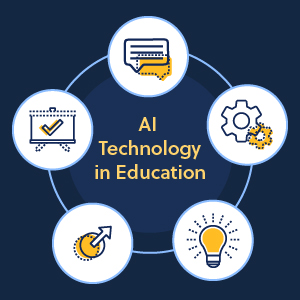
Carahsoft AI in EdTech Blog Embedded Image 2023In all learning environments, students and teachers rely on modern technologies to enhance their experiences to be as informational, productive and efficient as possible. In recent years, hybrid learning and collaborative digital spaces became essential components of education for both K-12 and higher education organizations. With this development, education technology has evolved and expanded to include new and more advanced AI systems inside and outside the classroom.

The needs of students are always changing, and educators must constantly adapt to progressive ways of teaching and learn different technologies or platforms that can assist with their daily lessons. With the implementation of AI and numerous benefits of digital learning, all students and instructors can achieve a more wholistic and innovative education. These five topics demonstrate how AI is an essential tool in the learning process for various types of learners across K-12 and higher education.

  • Communication

Carahsoft AI in EdTech Blog Icon 5 Image 2023Innovative trends in education technology have made it possible for students and staff to stay connected, whether through remote online learning or collaborative learning in the classroom. AI tools like SMS bots, predictive technology and ChatGPT can assist students in tasks such as navigating their school’s learning platforms, researching and preparing information for assignments and getting real-time answers to their questions. AI can also help teachers and professors orchestrate discussion points between students and guide next steps within small group collaborative projects.[1]
  • Automation

Carahsoft AI in EdTech Blog Icon 4 Image 2023For teachers, implementing AI can help automate repetitive daily tasks like grading tests and quizzes, and catching minor mistakes within written essays. This way they have more freedom and time to focus on in-depth feedback, creating comprehensive lesson plans and spending one-on-one time with their students. Additionally, AI tools can give students instant feedback on their work, allowing them to be more independent in identifying inaccuracies and recognizing successful projects.[2]

  • Immersive Learning

Carahsoft AI in EdTech Blog Icon 3 Image 2023Augmented reality (AR) and virtual reality (VR) are becoming increasingly more popular in students’ everyday lives, so using these technologies as a learning tool is familiar and compelling for them to gain valuable experiences in the classroom. Immersive technologies can simulate real-world scenarios for students to gain hands-on experience with low risk, like medical simulations and technical experiments. It also can allow students to break the barrier between their physical space and complex concepts like observing the planets up close or enlarging and examining something microscopic.[3] Not only do AR and VR create expansive opportunities for students to view and understand concepts in new and captivating ways, but they also create an additional, interactive and collaborative avenue of learning for students who may not be as responsive to traditional tools like textbooks and study guides.[4]

  • Data-Driven Results

Carahsoft AI in EdTech Blog Icon 1 Image 2023Throughout a student’s education, data is continually collected to better understand and predict their developing needs and most effective learning strategies. AI technologies can quickly and automatically analyze and report on this data, allowing teachers and professors to evaluate trends in an individual student’s or an entire class’s performance. Empowered with this knowledge, educators can tailor their lesson plans and take a more proactive approach to supporting students’ needs, ultimately increasing academic improvement for all.[5]

  • Personalized Learning

Carahsoft AI in EdTech Blog Icon 2 Image 2023Student’s learning styles can vary depending on many factors. For example, some students learn best through more visual and interactive experiences, while others may learn best through memorization and flashcards. Analyzing data collected by AI can help teachers be more informed and prepared educators for different kinds of learners. By applying the insights gathered from AI algorithms, educators can create personalized tracks for individual students, including aspects like adjusting the types of content, working with their comfortability, tailoring to their pace of learning and understanding their comprehension of learning objectives.[6] Additionally, AI technologies can help teachers plan, schedule and produce suggested lesson ideas more efficiently so they can target instruction and reduce the time it takes to create activities that best support each student.[5]
As AI becomes more common in education, maintaining academic integrity and validity within assignments of any kind will remain top of mind for educators. While earlier AI systems are designed to help students achieve academic success, newer AI systems are intended to empower teachers to optimize the use of artificial intelligence for students and encourage positive, ethical engagement with AI technologies.[7] Fostering trust among educators to cultivate the most prosperous learning environment through the implementation of AI can further personal, social and educational growth for all students.

Explore Carahsoft’s education technology solutions to learn how your organization can work together with our top innovative EdTech vendors to bridge the digital divide and meet the demands of modern education.


Resources:

[1] Office of Ed Tech. “AI and the Future of Teaching and Learning: New Interactions, New Choices.” Medium, https://medium.com/ai-and-the-future-of-teaching-and-learning/ai-and-the-future-of-teaching-and-learning-new-interactions-new-choices-c726bcf03012

[2] Shonubi, Olufemi. “Council Post: AI in the Classroom: Pros, Cons and the Role of Edtech Companies.” https://www.forbes.com/sites/theyec/2023/02/21/ai-in-the-classroom-pros-cons-and-the-role-of-edtech-companies/?sh=2cb4a227feb4

[3] Dick, Ellysse. “The Promise of Immersive Learning: Augmented and Virtual Reality’s Potential in Education.” Information Technology and Innovation Foundation. https://itif.org/publications/2021/08/30/promise-immersive-learning-augmented-and-virtual-reality-potential/

[4] Dani, Vishal. “How Augmented Reality Creates Interactive and Engaging Classrooms.” Kitaboo, https://kitaboo.com/augmented-reality-creates-interactive-and-engaging-classrooms/

[5] Gururaj, Tejasri. “10 Examples of Artificial Intelligence Improving Education.” Interesting Engineering, https://interestingengineering.com/innovation/examples-how-artificial-intelligence-improving-education

[6] Dani, Vishal. “9 Trends in Education Technology That Will Have a Major Impact.” Kitaboo, https://kitaboo.com/trends-in-education-technology/

[7] Office of Ed Tech. “AI and the Future of Teaching and Learning: Engaging Educators.” Medium, https://medium.com/ai-and-the-future-of-teaching-and-learning/ai-and-the-future-of-teaching-and-learning-engaging-educators-141e90c5e29f

Higher Education All-In on Cloud-First

Is digital transformation in higher education possible without the cloud? Not likely. When that transformation is viewed as a journey, not a destination, the essential role of cloud-based resources as enabling and empowering infrastructure comes sharply into focus. Institutional performance, operational efficiencies, student success — the primary goals of digital transformation in higher education today — are only possible with the agility and scalability of cloud-based computing and resources.

Without a clear strategy in place, digital transformation and cloud migration can start to look like a game of whack-a-mole. As teams weigh where cloud solutions will take them next, understanding and articulating the need to include data-intensive computing, security, reporting, and analysis is imperative. That’s all the more true as students increasingly demand a level of personalization and engagement that can only be delivered through a robust analytics and data infrastructure. Download the guide to learn how to grow beyond today’s analytics programs and to mature them for endemic management and strategy.


IIE Campus Tech Higher Ed Cloud Embedded Image 2023Cloud Budgets Keep Growing

“‘As higher education institutions continue to pivot toward continuous modernization practices, the SaaS segment of the cloud is likely to see the most investment,’ noted Damien Eversmann, Chief Architect for Education at Red Hat. ‘Cloud resources provide the agility and flexibility needed to support the culture of change that continuous modernization demands. As long as security practices are properly maintained, cloud adoption is one of the best tools for academic institutions to stay ahead of the curve.’ All cloud categories are expected to see growth in 2023, according to Gartner, with the most significant anticipated growth in Cloud Management and Security Services and Cloud Application Infrastructure Services (PaaS).”

Read more insights from Damien Eversmann, Chief Architect for Education at Red Hat.


Accelerate Agility and Integrate Data

“Today, higher education IT professionals refer to “the new normal” when discussing the many modes of learning, research, and other day-to-day hybrid work now possible thanks to cloud computing. The monumental movement and general acceptance of the cloud within higher education happened nearly overnight, after years of hesitance and reluctance on the part of higher ed leaders who sought greater on-site control over data and operations. That reluctance transformed to trust as cloud-based operations proved their mettle, and institutions by and large today embrace a new way of working through the ongoing and continuous change of digital transformation. “That’s probably the biggest change — that change is the constant,” said Bill Greeves, an industry advisor for SAP who supports the organization’s education customers. As a former CIO and deputy county manager for Wake County, N.C., Greeves saw firsthand the overnight transformation to cloud-based workloads to keep government and citizen services up and running at the onset and throughout the pandemic.”

Read more insights from Bill Greeves, Industry Advisor for SAP.


Essentials for Navigating Cloud Implementations

“While the mission of higher education has never changed, the means of fulfilling that mission continue to swiftly evolve, particularly as a result of cloud computing technology and the migration of workloads, applications, storage — pretty much everything — to the cloud. Higher education research, in particular, enjoys many benefits from the cloud, including rapid provisioning of data and applications, or abstraction, which ensures non-technical users can readily deploy cloud resources and quickly get back to the real task at hand: research. Cloud is at the heart of institutions’ ongoing march to digital transformation, but that’s not all: Prompted by the pandemic, many colleges and universities have also embraced the rapid adoption of cloud capabilities in support of remote work and collaboration.”

Read more insights from Hunter Ely, Security Strategist at Palo Alto Networks, and Mathew Lamb, Manager, Pre-Sales Cloud Native Solutions at Palo Alto Networks.


Download the full report for more insights from these from these higher ed Cloud leaders as well as additional perspectives and industry research.

Supporting the Student Journey Through Digital Transformation

What Does it Mean to ‘Go Digital’?

Digital transformation is a critical topic for higher education institutions globally to help them become more innovative, agile and resilient to support their students. Keys to adopting digital can be categorized into four areas—pandemic, prediction, personalization and performance. The pandemic proved the need for reliable digital resilience so that schools can quickly pivot to online learning, meaning more flexibility, scalability and agility. Anticipating touch points for the general student journey from applications to graduation and alumni status allows institutions to better predict unique education tracks, and through data collection, create personalized experiences for students and faculty. With the right tools in place, both students and staff can have automated task management and digital performance throughout their higher education.

Delivering a Seamless Digital Experience

These capabilities and more are aspects of the education experience students have come to know and expect from their campuses. With the understanding of why digital transformation is important, here are three takeaways institutions can explore to deliver improved experiences and increase the overall quality of student engagement.

  • Adopting Cloud-based Solutions: The pandemic necessitated change across the entire education system to remote and hybrid learning environments. Moving to the cloud allows organizations to become more scalable and agile, ensuring students can access everything they need to be successful within one engagement system.
  • Utilize Artificial Intelligence Chat and SMS Bots: Whether through a website or mobile app, predictive technology like chat bots can assist students in completing specific touch points of their student journey. By anticipating what students are currently aiming to accomplish, providing helpful information with the click of a button and giving quick and easy direction to what is most relevant for them, an AI chat or SMS function can track and engage each of those touch points for institutions to best support their students daily.
  • Prioritize Student Digital Security: Before students arrive on campus, they often must create an account for submitting their college applications. Once they are immersed in the university’s various online learning tolls and processes, they typically must make multiple accounts with numerous different passwords. Implementing security measures such as multi-factor authentication and other 2-step security methods ensures only the right student is accessing their personal information and data.

Genesys Student Journey and Digital Transformation Blog Embedded Image 2023Integrating and Examining Data to Enhance Student Engagement
Implementing new strategies and technologies often comes with a significant amount of transition for any campus’ community, but starting with small integrations and building upon each success can slow the pressures of digital transformation. An institution that understands what capabilities and goals each of its department has allows it to create more successful implementation plans for new solutions. Change management, like valuable training and guidance for staff, plays an integral role in ensuring efficient progression of solution integrations into those individual departments. In addition, institutions must remain engaged with staff after new changes are incorporated to understand their pain points and strategize opportunities for fine-tuning.

No matter what stage students are at in their journey through higher education, securely and efficiently integrating their data into new technologies across campus empowers institutions to better understand individual learning tracks. Institutions should examine a student’s qualities and data from a holistic point of view to best engage with and support them, instead of attempting to piece each departments information together for a less comprehensive perspective.

Analyzing student data and activity also motivates institutions to revisit their digital operations and presence to find areas for improvement. It is imperative that websites, learning tools and accesses are functioning quickly and reliably to best serve the students utilizing them. For example, an institution may consider that lower application rates are due to how many students abandoned their application submission process after factors like an unsuccessful login, inability to create an account, errors when submitting, long wait times for tech support, etc. Understanding these barriers enables institutions to promptly address them and streamline the process for any new applicant.

Empowering Higher Education for Success

Increasing student engagement with a multitude of efficiently integrated solutions gives institutions the opportunity to better understand what their students need to be successful through their educational journey. Though there is much more to digital transformation, these key takeaways allow higher education professionals to strategically plan technology and solution implementations to improve their students’ experiences.


Together, Genesys and GTS are hosting a series of webinars to educate attendees on the most reliable and efficient solutions for their student experience and engagement challenges. Join these cloud, digital and AI technology experts for part 3 of their webinar series and learn how your organization can support the student journey.

EDUCAUSE 2022: Uniting IT and Education

The education landscape has continued to thrive following the aftermath of the COVID-19 pandemic. While stay-at-home orders have been lifted, education has maintained a digital component through online classes and remote-learning technology. Although online education has many benefits, it brings the concern of security breaches. To continue keeping student information secure, education leaders must adapt alongside the changes in technology. EDUCAUSE is a nonprofit association that provides a community for technology, academic, industry and campus leaders to collaborate and build together. The annual EDUCAUSE conference hosted several sessions that showcased ways to keep students engaged and secure in the new age of education.

Educational Institutions as a Hot Target for Cybercriminals

Cybersecurity deserves consistent attention within the education sector. While schools may be compliant with security standards, they can still be vulnerable. Higher education institutions are top targets as they connect thousands of staff, students and faculty members under one system.

There are several strategies IT professionals recommend that can help education systems defend against breaches:

  • Keep operating systems and software up to date
  • Employ multi-factor authentication
  • Maintain robust user training
  • Implement encryption
  • Create cloud back-ups for information
  • Maintain efficient detection and monitoring systems
  • Implement a quick incident response plan
  • Utilize external and cloud data storage

By following these steps, institutions can take the initiative toward deploying security measures for staff and students alike.

Carahsoft EDUCAUSE Education Blog Embedded Image 2023Robust Cybersecurity on a Budget

Since many academic institutions still face budget constraints due to COVID-19, their cyber posture may not be their first IT priority. To enhance cybersecurity, even on a budget, institutions should:

Know their external footprint: Through the employment of third-party devices that scan the internet for web service protocol solutions, agencies can see how much of their information is public.

Identify external login flaws: Since hackers can circumvent simple tools like automatic lockout policies, agencies should identify all login portals and check major input fields for automated controls.

Identify cloud security flaws: Agencies should switch to a multi-platformed and open-sourced cloud, since it enables security posture assessments and detection of security risks.

Implement phishing education and exercises: Phishing is one of the most common ways organizations are compromised. Institutions should ensure that all employees are educated on anti-phishing policies.

Clean up network share permissions and information: By utilizing credential scans, sensitive information can be restricted to the proper personnel. Implementing a zero trust framework ensures that each user will only gain the information that they are authorized to.

Limit the success of kerberoasting: Kerberoasting leverages the functionality of service principles to encrypt user’s passwords, which can later be retrieved offline for hacking. While it is impossible to completely prevent kerberoasting, agencies that implement detection capabilities limit the exposure and effectiveness of kerberoasting.

Prevent relay attacks: Software should avoid authentication systems that can be relayed or cracked. Responder tools can be used to analyze traffic and point out vulnerabilities.

Identify active directory misconfigurations: As active directory environments mature, built up misconfigurations can cause excessive access privileges. To prevent these being misused by bad actors, institutions should implement tools that check for vulnerable certificates.

Strengthen password security: Agencies should ban easy to guess passwords, enable multi factor authentication and disable old accounts.

Avoid flat networks and lack of network segmentation: Access should be limited to those that need to know; student and faculty accounts should reside on different domains.

Fostering a Sense of Belonging for Online Students

By meeting students where they are comfortable, educational institutions can readily share information. For example, since students are familiar with their phones, when universities utilize phone apps it can help provide a unified, digital experience for higher education students to reduce complexity, fuel career readiness and stoke student success. When creating an app for an institution, some helpful features to include are:

  • Tailored experiences with custom events depending on the user
  • Information unique to students, such as a marketplace to buy and sell goods like dormitory furniture or textbooks
  • IT toolkits
  • Self-assessment tools for COVID-19 or the flu
  • Campus features such as desk or study center reservations, transit routes, dining schedule or university maps
  • In-app messaging that can be directed to groups, such as students or faculty or personal messages
  • Feedback surveys to inspire improvement

Higher Education’s Top IT Issues for 2023

As students have become accustomed to hybrid and virtual learning, their expectations for new and elevated digital experiences have increased. There are many ways to achieve this modernization, but it requires intentional effort and technology updates from education administrators. Challenges to consider when implementing technology into learning are to:

  • Ensure IT has a “seat at the table” so they can weigh in on decisions
  • Ensure privacy and cybersecurity by training students and faculty to avoid scams, shift to data minimization, address cloud migration risks and leverage contracts with cybersecurity experts and investments
  • Adapt to students’ interests and products familiar to them
  • Create a seamless and enriching student experience
  • Utilize student data to update technology to better empower students
  • Pursue next-generation IT support to expand and reimagine digital campus abilities

Promoting Independence Through IT

A school’s duty is to prepare students for their futures in the workforce. Oftentimes, many careers require extensive knowledge of an array of technologies. Students should show proficiency in these areas to take advantage of more opportunities in various fields. By implementing technology into everyday use, educational institutions can promote confidence in technology, problem-solving skills, time management skills and collaboration between peers.

Diversity, equity and inclusion are also vital to university standards from both a legal and moral lens. IT intersects with diversity to make enrollment and education accessible to all by analyzing existing data to revamp hiring rubrics or utilizing cross-team conferences to create inclusive policies. With these inclusions, schools can emphasize transparency and accountability.

The pandemic revealed the importance of campus communication systems expanding beyond traditional parameters. Education departments had to shift to a remote work environment that a traditional phone system could not easily support. Universities should leverage communications software to reduce costs, provide additional flexible phone capabilities and accommodate all students regardless of where they live.

Through the inclusion of technology, educational institutions can reach new heights in their accessibility and connection with students. By enhancing security and offered digital features, educators can prepare students for an ever-changing workforce.


To learn more about utilizing IT for education initiatives, visit Carahsoft’s EDUCAUSE resource hub to schedule a meeting and speak to a representative today.

*The information contained in this blog has been written based off the thought-leadership discussions presented by speakers at EDUCAUSE 2022.*