Innovation in Cybersecurity: Technology Modernization and Improving Public Safety in Florida

From emergency response to IT teams, technology modernization plays a key role in improving cyber resiliency and efficiency in Florida’s state and local government agencies. At the Carahsoft Digital Transformation Roadshow in Tallahassee, Florida, Government IT and industry leaders engaged in dynamic discussions around transforming Florida through technology in three different sessions.

Leveraging Technology for Data-Driven Government

The use of emerging and innovative technologies is transforming legacy systems to better respond to citizens and facilitate digital services. Using cloud-ready architectures, agile methods and data interoperability, Florida is tapping top technology talent to redesign aging technology systems and deliver better outcomes for Floridians. The governor of Florida established the Florida Digital Service with the goal to deliver better government services and transparency to Floridians through design and technology. This goal expands the role of technology for delivering secure digital government services across the state.

When examining information technology at the Office of Inspector General, the key focuses are management, risk and internal audit. The inspector general community plays a critical role in offering assurance services for cybersecurity management, which was acknowledged by Florida governing bodies in 2021 with legislation requiring every inspector general to have a dedicated cybersecurity audit plan as part of their normal workflow. This expanded the focus from IT-specific audits to planning ahead with cybersecurity through an enterprise-wide audit.

Carahsoft Florida State and Local Roadshow Blog Embedded Image 2023Modernizing the procurement process has drastically changed the technology environment within the City of Tallahassee. By examining more than just business processes, identifying where to improve and how to implement those changes, agencies can set better standards, meet security compliance and improve overall efficiency. Investing in the correct tools allows agencies to leverage the interoperability of these solutions to improve communication and optimize performance. Whether that be a singular platform or different point solutions which are tied together, agencies need to find a solution that minimizes cost and maximizes output.

The ultimate goal for Florida agencies is to prioritize the modernization of their technology to leverage their hybrid environments while maintaining efficiency and combating cybersecurity attacks. Taking a hybrid approach builds up a level of comfort with the technology for agency teams as they tackle legacy modernization. With this approach, both internal teams and the public will gain understanding of these new systems all while scaling for future growth.

The Roadmap to Emergency Response through Technology

As natural disasters seem to be increasing in intensity and frequency, emergency response capabilities are critical to the safety of communities. Americans’ health, security and economic wellbeing are tied to climate and weather. In a state that often faces natural disasters such as hurricanes and flooding, recovery depends on fast, secure IT resources to match manpower and machinery with the locations most in need, while delivering fast and secure assistance to victims. The ability to collect, analyze and communicate data is critical for effective and efficient emergency management.

Throughout the pandemic, State and Local Government Agencies have leveraged new technologies and fast tracked their digital transformation. This journey of maturing technology quacking moving into smaller agencies in order to maximize their potential. The quality of video and efficiency for sharing photos and data within emergency management and first response has become a high priority for technology partners. The simplicity and frictionless aspect of video platforms have become critical for emergency management to provide transparency and safety to those individuals in the field.

AI, machine learning and voice recognition are just some of the technologies that can help improve the quality of communication and response time within emergency management. When dealing with phone calls, an agency can mature their voice recognition and AI to cut down the workload of call operators and encourage more people in the field to help with disaster response.

Combating Cyber Threats in Government

Federal, State and Local Agencies stand together in the fight to prevent and recover from cyberattacks, as their communities increasingly become targets of hackers and other cyber criminals. Cybersecurity risks range from data exploitation, insider threats and third-party practices as outsourcing increases ransomware, identity theft and fraudulent access to state government services.

Innovative policy and cyber resiliency have become some of the top priorities for public sector agencies. Over the past few years, agencies have seen how these bad actors are becoming more sophisticated, attacks are growing in scale and new techniques are being used to infiltrate Government systems. Wanting to prevent injuries and intrusions, cybersecurity teams have had to evaluate how to detect and respond quickly in this new hybrid workplace environment.

There is no more network perimeter as employees work from anywhere, so traditional on-prem technology has now had to expand to other point solutions, VPNs and mobile device management. Agencies now want to reach unified endpoint management in order to manage devices in the air, in office, on the field or at home. By leveraging automation and multiple cloud providers, agencies can improve security posture while eliminating manual effort which in turn cuts down cost and human error.

The massive migration to cloud and multicloud environments as well as computing from the edge to include the telecommuting and remote connected devices has fundamentally changed the way state and local agencies look at protecting their data. Taking on Zero Trust when it comes to identities, endpoints, applications, network data and infrastructure has become imperative for every government agency to move past perimeter-based security and into the future.


Learn more about Carahsoft’s experiences at the State and Local Roadshow Series: Digital Transformation at carah.io/slg-roadshow-series

*The information contained in this blog has been written based off the thought-leadership discussions presented by speakers at the Carahsoft Digital Transformation Roadshow.*

Okta and GovSlack Bring Digital-first Environment to Government

Digital transformation is all around us. From how we shop to where we work, digital-first environments are the new normal. While the private sector quickly adopted collaborative, digital workspaces, the pace is a bit slower for government agencies – and for good reason.

Higher levels of security and compliance are required in government work, yet agencies still feel limited by the legacy systems in place. To transform into a digital-first workspace that promotes collaboration and improves communication among agencies and contractors, government agencies need flexible, inclusive technology that doesn’t sacrifice cybersecurity.

Modernize with a digital command center

Okta + GovSlack Digital-first Environment to Government Blog Embedded Image 2023

Okta integrates with GovSlack to help the government modernize how work gets done. The centralized digital headquarters provides frictionless, secure access and helps agencies increase productivity, security, governance, and end-to-end workflows.

GovSlack was launched to allow for secure collaboration. Okta’s Identity and access management (IAM) policies throughout GovSlack meet the security and compliance needs of intra- and cross-functional government teams and contractors.

Top five reasons to modernize with Okta and GovSlack

Here are some of the top reasons agencies can benefit from the Okta and GovSlack solutions:

  1. Share information with external agencies and contractors in real time: Slack Connect allows agencies to extend the benefits of their centralized, digital workspace to both internal and external team members in real time. This helps reduce the need for meetings and follow-ups. Okta’s IAM capabilities throughout the platform remove siloed Identity security across the extended enterprise.
  2. Access growing library of integrations: Okta’s secure and seamless integration with GovSlack and a growing number of high-security versions of the most commonly used business applications protect the government’s highest-value assets.
  3. Meet strict compliance and security requirements: Okta’s FedRAMP Moderate Identity solution includes features and capabilities available throughout GovSlack that are designed to strengthen the security posture of government agencies. Okta’s trusted security capabilities meet Zero Trust architecture (ZTA) and the Cybersecurity and Infrastructure Security Agency’s (CISA’s) Identity pillar, helping agencies bridge on-premises assets to the cloud with a unified and automated Identity-driven access layer.
  4. Create a frictionless workforce experience: IAM tools from Okta, like phishing-resistant Multi-Factor Authentication (MFA) and biometrics, allow users to easily access the secure platform from any location or device. Granting permissions and access controls at scale is simple through GovSlack’s enterprise-grade admin dashboard.
  5. Launch into the future of modern work: With security measures offered by Okta and GovSlack, agencies can incorporate a secure, cloud-based digital headquarters into all aspects of their daily work. With a secure digital workspace in place, agencies can reduce time spent building on-premises solutions, breaking down information silos, improving collaboration internally and externally, and opening the door to more possibilities when all stakeholders have access to the same workspace.

Download our Solution Brief to learn more about Okta, the federal Identity solution for high-impact applications, and GovSlack, the designated “digital headquarters” for many government agencies.

The Pros and Cons of Low-code in Cybersecurity Environments

In the past, new technology solutions required highly experienced developers to compile certain coding languages, understand specific technologies and utilize specialized software. On top of these challenges, traditional development platforms limited innovation. Now, organizations have a new and improved development option, which can reduce time and costs while increasing customizability, automation and growth, known as low-code platforms.

Low-code can be implemented in various ways, but in the cybersecurity realm, it is often used to automate and streamline processes, such as cybersecurity operations. Low-code platforms allow digital teams to access capabilities and customizable technologies and tools that empower them to quickly produce valuable innovations, applications, and solutions with little to no limitations. Gartner predicts that 70% of new applications will use low-code or no-code technologies by 2025. As a result, application development will shift to allow teams to focus more on assembly and integration rather than development, resulting in improved efficiency, enhanced employee satisfaction and increased productivity.

For the Department of Defense (DoD) cybersecurity professionals, low-code presents an array of benefits and challenges. While it creates agility, simplification and innovation, low-code can also introduce cybersecurity risks and vulnerabilities.

Challenges of Low-Code in DoD Environments

When implementing any new process or platform, the DoD must pay attention to overall security and identify any potential risk factors that could infiltrate the environment. The DoD faces a unique challenge when considering low-code: supply chain management and ensuring the secure execution of low-code to avoid presenting new threats to its organization. For example, borrowing and leveraging unverified code from the internet can cause significant problems among an organization’s platforms. Copying and pasting code without testing it can lead to bugs, errors and inaccuracies that can slow down and harm an environment, creating further security issues.

Tychon Low-Code Cybersecurity Blog Embedded Image 2023For cybersecurity and zero trust professionals within the industry, this idea of obtaining and launching bad content is particularly challenging as they strive to protect their organization’s operations. These groups must also be prepared to identify insider threat and guarantee security when utilizing a truly limitless customization of content like low-code. Organizations must ensure new code is protected yet unrestricted. Otherwise, they run the risk of negating the purpose of a low-code platform. Ultimately, the sources and employees creating and executing new low-code must be trusted entities to avoid problems like data leaks, exploitation and cyber-attacks.

Benefits of Low-Code in Cybersecurity

While there are clear risks, the benefits to using low-code solutions continue to make it a desirable cybersecurity option. It offers the flexibility to stay ahead of emerging threats, while simultaneously saving on costs. Ultimately, low-code development enables organizations to keep pace with an ever-changing security landscape.

  • Respond immediately to emerging threats: Local platforms help an organization to become more agile. Customized low-code content enables organizations to respond quickly when existing security tools may not be able to support the software system and prevent or stop a threat.
  • Quickly create custom features: The flexibility of low-code within local platforms allows for the creation of features to match the immediate needs of an organization instead of waiting for the release of the latest software which may or may not solve the problem. The progression of low-code implementation increases the longevity and growth of an organization.
  • Build upon low-code and local platforms to save on costs: A low-code solution along with the implementation of a local platform should be able to fulfill multiple use cases and eliminate various other tools from an organization’s toolbox. Once a local platform is implemented, limitations can be lifted and advancements or replacements can be made to older legacy systems instead of purchasing multiple new tools. This saves costs for security and asset management teams.

Eliminating Risk in Low-Code Capabilities in Cybersecurity Today

The good news for cybersecurity organizations is that they can easily mitigate low-code risks and challenges with proper access controls and a simple deployment process. Any new code created for government customers or internal purposes should undergo rigorous and reliable testing through multiple levels of technical experts within an organization to ensure quality, validity and trustworthiness. Additionally, testing in a simulation of the customer’s intended environment for that code should only be a matter of minutes, ensuring a smooth production process once the code has been executed.

If purchasing a low-code solution from a third-party vendor, organizations should investigate their internal code reviews, Quality Assurance testing and delivery methods to ensure strict standards are being met. Features such as signed content, restricted third party binary executions, and more help ensure an organization can take advantage of the numerous benefits of a low-code platform without introducing risk and vulnerabilities.

The Future of Low-Code

Today’s advanced artificial intelligence-driven technology, combined with natural language processing, enables everyday employees to create complex code by simply asking a question. The local community base within organizations now has the power to heighten efficiency, productivity and creation for their deployments with quicker, more customized low-code content. Low-code and local platform capabilities provide the freedom to create innovative solutions facilitating the growth of their business.


Learn more about secure, low-code cybersecurity solutions like TYCHON at tychon.io.

How to get StateRAMP Ready Faster with Security Snapshot

Security is of utmost importance to government agencies because they have access to the sensitive information of millions of people. To ensure this information stays private, StateRAMP (State Risk and Authorization Management Program) offers several guidelines to help.

StateRAMP is a nonprofit launched in 2021 and modeled after FedRAMP, a government-wide program that promotes secure cloud usage across the Federal government. State and local governments created StateRAMP to extend this authorization to the relationships between cloud service providers (CSPs) and state and local governments to improve cybersecurity posture. As an independent  nonprofit organization, StateRAMP has created a process for continuous cybersecurity improvement to efficiently and cost-effectively verify the cybersecurity of cloud service providers.

Carahsoft StateRAMP Security Snapshot Blog Embedded Image 2023A main initiative is evaluating the data security capabilities of cloud solution providers that sell to state and local governments. StateRAMP ensures CSPs meet minimum security requirements and helps them obtain verification and achieve certification. These verification statuses were created by StateRAMP and must be certified by a third party. To simplify this certification process, StateRAMP has introduced “Security Snapshot.”

Hurdles to Attaining StateRAMP Verification

StateRAMP has had an Authorized Product List since 2021,updated at the end of every business day. This list is comprised of verified providers who meet the minimum security requirements and provide an independent audit conducted by a Third Party Assessment Organization (3PAO). StateRAMP recognizes three verified statuses:

  1. Ready: The product meets minimum requirements.
  2. Provisional: The product exceeds minimum requirements and has a government sponsor.
  3. Authorized: The product satisfies all requirements and has a government sponsor.

There are 38 cloud service offerings (CSOs), 4 local government agencies, 2 universities and 17 states that are qualified in the above three tiers.

A Simpler Future with Security Snapshot

After StateRAMP’s verification process was introduced, providers encountered several questions. For some CSPs, it wasn’t easy to know if they could achieve a StateRAMP-Ready approval. The fear that CSPs would be left with a public, poor StateRAMP score induced anxiety in starting the approval process. Many agencies were unsure if they were making progress in the right direction. To combat this, StateRAMP released a new solution in early January 2023—the “Security Snapshot.”

Security Snapshot provides detailed information on how companies can get StateRAMP-certified. The snapshot offers a preliminary numerical score that CSPs can share with prospective government clients, which will not appear on the CSP’s record.

This resource acts as an early-stage security maturity assessment tool for cloud products. The intent of the service is to provide a first step toward achieving StateRAMP security status. The criteria are designed to help agencies validate minimum requirements and provide controls and additional benchmarks that would further aid in certification.

The Security Snapshot also helps providers gain quality insight into security postures and third-party cloud solutions such as Software as a Service (SaaS), Infrastructure as a Service (IaaS) and Platform as a Service (PaaS) products. Ultimately, it provides insights for providers and the government branches they serve.

With the introduction of Security Snapshot, CSPs can ease their concerns, knowing they will receive detailed, personalized support to help them qualify for StateRAMP’s verification.


For more information on StateRAMP’s security approach, visit our StateRAMP resource hub and watch our Carahsoft briefing at carah.io/StateRAMP.

How CISOs Can Come to Grips With a New Priority – Securing the Supply Chain

Software supply chain hacks are now the most prevalent form of cyberattack. According to the latest Verizon Data Breach Investigations Report, 62% of system intrusion incidents came through a third-party, highlighting the difficulties that many organizations – including federal agencies – face in securing their supply chain. A recent flurry of legislative activity demands that CISOs step-up their supply chain due diligence – and fast.

Key among these directives and guidance is the Enduring Security Framework (ESF). Developed by NSA, ODNI, and CISA, and modeled on the NIST Secure Software Development Framework (SSDF), ESF aims to harmonize previously disparate Cyber Supply Chain Risk Management (C-SCRM) policies and procedures across the federal government. A key tenet of ESF – and also a requirement of a new White House Memo (M-22-18) – is vendor self-attestation to software developed in accordance with NIST standards.

Yet, despite directives from the highest levels of government, questions remain:

  • Does every ESF recommendation and control have to be met by software vendors?
  • Are some C-SCRM practices and standards a priority over others?
  • Will OMB require point-in-time or continual attestation?
  • When will the standardized self-attestation form be released?

Until we have answers, one thing is clear – software supply chain security can’t be solved by directives and guidelines alone. The reality is, a threat can only truly be mitigated through increased cooperation between the public and private sectors. As head of government affairs at SolarWinds here’s my take on how the agencies and industry can join forces to collaborate.

Cooperation Must Occur – CISO to CISO

SolarWinds Securing the Supply Chain Blog Embedded Image 2023

Typically, software purchases are one-time transactional exchanges. After all, the goal is to make procurement, installation, and deployment as quick and efficient as possible. In this model, relationships between the software vendor or supplier and the procuring agency aren’t nurtured. It’s an approach I believe needs to change.

To protect our shared infrastructure from evolving threats, federal security leaders must build lasting and meaningful relationships with software vendors.

Creating these partnerships is the future of C-SCRM in the federal government. Indeed, following the 2020 SUNBURST hack, we set out on a mission to lead the way to safer IT with our Secure by Design initiative. This effort included launching a new model for secure software development to strengthen the integrity of build environments.

Crucially, we also committed to establishing new standards in information-sharing and public-private partnerships. Government security leaders should communicate frequently and continuously with their industry counterparts about enterprise software security, the development process, and adherence to ESF standards. When it comes to their vendors, Federal CISOs must also have a dedicated person to call at any time – not just a toll-free number.

Screen Vendors in Seven Steps

Self-attestation may be mandated, but it won’t fix everything. After all, most agencies lack the resources to evaluate every software vendor’s self-declaration, opening the doors to abuse. The compliance framework may also seriously hinder the procurement process.

Until OMB issues further guidance, agencies can screen their suppliers’ security measures using a set of seven questions developed by our CISO, Tim Brown, and DHS CISO Ken Bible in the aftermath of the SUNBURST. Those questions are:

  • How do your vendors secure software code?
  • What type of environment do you build your software in?
  • Have they established secure software development framework roles and responsibilities?
  • Are they using automation and DevSecOps to automate developer and security toolchains?
  • What policies and measures do they have in place to prevent malicious or vulnerable software from affecting their customer base?
  • How are they monitoring risk in their own supply chain?
  • If a breach occurs, what’s their process for notifying customers?

Defending Together

Security is an ongoing journey with no finish line, but federal agencies and their vendor ecosystem can become smarter and more cyber resilient if they are transparent, collaborate, and learn from previous attacks.

Download our Whitepaper to learn more about how this model can be used to secure the software supply chain, or to learn more about SolarWinds Secure by Design initiative, SolarWinds’ recently launched Next-Generation Build System, a model for secure enterprise software development.

Ransomware Security Strategies

One of the first challenges in combatting ransomware is recognizing the imminence of an attack and the impact it could have on an individual’s personal organization. For 60% of companies surveyed by ActualTech Media and Ransomeware.org, they reported spending zero to four hours on ransomware preparedness per month.[1] Getting collective buy-in from administrators can be difficult since the cybersecurity measures put into place cannot show their full value without being hit by a ransomware attack; however, when compared to the number and scale of attacks occurring, greater attention to cybersecurity is imperative. The NIST Cybersecurity Framework (CSF) provides a guiding set of principles that inform strategies for mitigating ransomware risk. Addressing ransomware starts with identification of a security program followed by protection, prevention, detection, recovery and then security improvements. Ideally companies would follow this CSF outline but in reality, for most organizations the path looks different. Due to feasibility and order of highest critical priority, many companies first establish detection and recovery methods followed by protection, prevention, and security improvement.

RANSOMWARE DETECTION AND RECOVERY

When ransomware hits an organization, the biggest immediate concern is finding the problem and returning to business operations as usual. Many resources exist to assist with this endeavor including asset management tools that automatically inventory all devices on the network and monitor for potential ways malware can get in. Implementing edge detection allows companies to be alerted and quickly identify early on if the network has been compromised and which accounts and devices require isolation and additional measures to prevent the further spread to other servers, accounts and storage units. Anti-virus programs are also helpful to monitor endpoints for indicators of compromise or malware. By achieving early detection, companies can contain the malware and reduce data loss.[2] It also aids in preventing extended downtime which is very costly for operations and business reputation. Apart from the actual ransom, the downtime alone caused by cyberattacks in 2020 cost $20.9 billion to American businesses.[1]

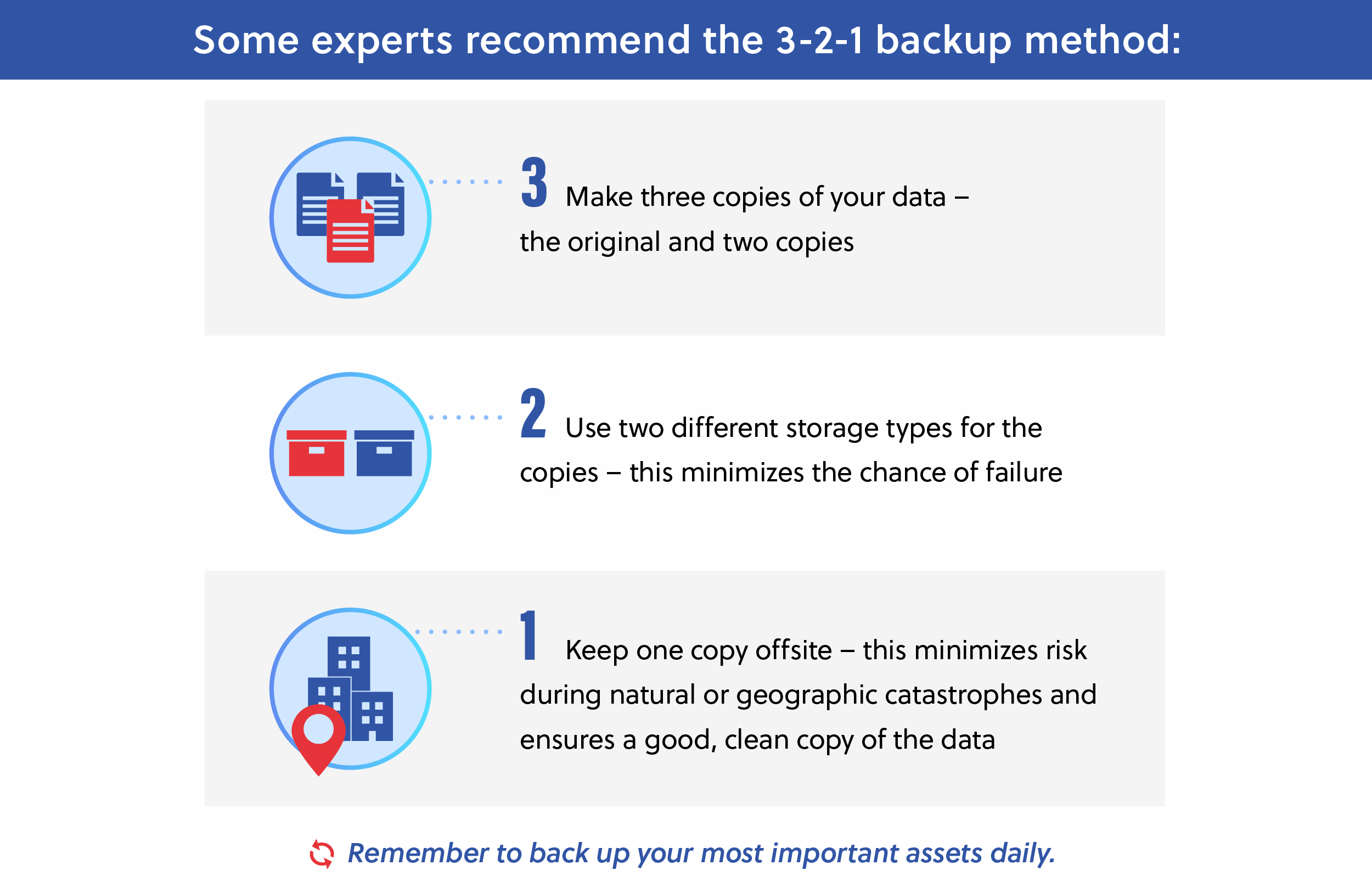
Once malware has been detected, a company’s recovery plan and preparation are put to the test. IT specialists and company administrators need to have an emergency plan in place so there are straightforward steps to recovery. Backups not only need to be created and stored off-site, but also updated on a regular basis and tested to ensure that they are a solid base for a system restoration. With most traditional backup systems, the data cannot be recovered fast enough to neutralize the ransomware’s impact on operations. Instead, a new strategy must be adopted that shifts from 200,000 files taking eight plus hours to restore via the traditional backups, to millions of files being recovered in minutes. Granular, immutable, verifiable snapshots are required to successfully recover all of an organization’s data.[2]

Carahsoft Ransomware Cybersecurity Blog Series Blog 3 Infographic Image 2023

The Sophos “State of Ransomware” report indicated that 77% of healthcare organizations that did not experience a ransomware attack in 2021 attributed it to efforts such as backups and cyber insurance, which help with remediation but not prevention. This exposed an ongoing misunderstanding within the industry on cybersecurity methods.[3] Obtaining cyber-insurance does not prevent future attacks; however, instituting proper security strategies does decrease the susceptibility to ransomware. Recovery tools and insurance provide support during post-breach response but ultimately, in conjunction, organizations should strive to prevent the attack in the first place which requires implementing protection and prevention. According to the Government Accountability Office (GAO), cyber-insurance is a valuable resource to employ but noted that it is increasingly harder to acquire, due to the massive volume of cyberattacks, a higher bar of entry and more requirements to gain coverage and receive payouts. This leaves organizations who do not have sufficient security or insurance to face the recovery process and expensive remediation costs alone.[4]

RANSOMWARE PROTECTION AND PREVENTION

While most organizations invest in attack detection and recovery strategies, the protection aspect of the NIST CSF is equally important and an essential element to reduce the amount of recovery needed. Protection and prevention of ransomware attacks begins with establishing system routines and measures that make it more difficult for hackers to infiltrate. Through implementing Zero Trust user principles such as Multi-Factor Authentication (MFA), institutions and agencies can protect themselves by verifying the identity of employees. Poor password hygiene is one of the leading gateways to malware infiltration, making thorough employee training and password management software a baseline to reduce risk. The average user has access to over 20 million corporate files, making each employee a critical part of keeping the network safe and a huge liability if they are not vigilant and following best practices.[2] Segmentation of the network to provide user-specific access to data and system resources also creates safety barriers, so in the event of an attack the entire network is not automatically compromised. Around 80% of critical infrastructure companies without Zero Trust policies experience an $1.17 million increase in breach costs bringing to an average of $5.4 million per attack in 2022.[5]

Comprehensive Zero Trust authentication and data access control to limit complete access to the entire company’s files is a first step in this process. File indexing, which classifies the level of sensitivity of information contained, allows companies to better allocate resources to prioritize their protection of the most important or confidential files.[2] When processes are automated through these and other resources, it eases IT teams’ responsibilities and reduces the chance of error. Incorporating artificial intelligence (AI) and machine learning (ML) also expedites the identification of confidential information with metadata tags, along with advanced detection of suspicious network and user activity, and thereby minimizes inefficiencies.[6]

Organizations must rigorously search for security gaps and proactively work to close them. Some other measures to incorporate include:

  • Filtering for phishing emails and providing awareness training to minimize the possibility of a user accidentally clicking a malicious link
  • Utilizing firewalls to block unusual network traffic and segment the network to impede malware system communications
  • Monitoring software licenses to ensure they are updated and systems are adequately patched
  • Removing expired and extraneous user credentials and unused legacy technology
  • Tracking vulnerabilities on devices like IoTs, OTs, and employees’ personal devices used for work (BYODs) throughout the entire connection lifecycle
  • Implementing Zero Trust cloud security with container scanning and proxies like a Cloud Access Security Broker (CASB) and Zero Trust Network Access (ZTNA)

RANSOMWARE SECURITY IMPROVEMENT

Following an attack, companies have the opportunity to grow and improve from the situation as well as share resources with other public and private sector companies to strengthen defenses. Incident reporting is a key strategy to prevent future ransomware incidents and a top priority for the Cybersecurity and Infrastructure Security Agency (CISA). Agencies and organizations must support each other to defend against these cyber threats that affect every industry.[7]

To support this greater focus on information sharing, the Cyber Incident Reporting for Critical Infrastructure Act of 2022 took effect in March requiring a more stringent timeline and adherence to disclosing cybersecurity attacks and ransomware payments to the government. CISA also now has the authority to subpoena critical infrastructure organizations if they do not report any cybersecurity incidents within 72 hours of a cyberattack and 24 hours of a ransom payment.[8]

This threat information sharing requirement along with other recent rules on reporting attack incidents strengthen organizations’ security posture and reduce the success rates of cyberattacks. Through these joint efforts and public-private partnerships, companies can recover faster, resume normal operations and support other businesses in the defense of their industry and the nation.[9]

To assist with incorporating these cybersecurity best practices, Congress passed the Infrastructure Investment and Jobs Act Public Law 117–58 which offers $2 billion to “modernize and secure federal, state, and local IT and networks; protect critical infrastructure and utilities; and support public or private entities as they respond to and recover from significant cyberattacks and breaches.”[10]

RANSOMWARE RISK MITIGATION

Tech modernization, while crucial to agencies and organizations’ survival and growth, also presents unique challenges in protecting those technologies.[11] In their journey to securing their legacy and updated systems, companies must take the time to honestly evaluate their cybersecurity standing across the ransomware cycle and ensure their readiness to handle an attack. Utilizing NIST CSF security strategies and other resources help organizations to mitigate risk and empower other companies to learn and protect their systems. By implementing best practices and technologies to address cyber hacks and data breaches, companies are valuing both their customers and their own bottom line. Proactive cybersecurity measures are key for all companies to stem the tide of ransomware attacks and protect the continued growth of their organizations.


Learn about the current state of ransomware and its impact across sectors in our Ransomware Series. Visit our website to learn how Carahsoft and its partners are providing solutions to assist in the fight against ransomware.


Resources:

[1] “Everything You Need to Know About Ransomware,” Ransomware.org, https://ransomware.org/

[2] “Protect, Detect & Recover: The Three Prongs of a Ransomware Defense Strategy for Your Enterprise Files,” Nasuni, https://media.erepublic.com/document/Whitepaper-_A_Three_Prong_Ransomware_Strategy_-_Nasuni.pdf

[3] “The State of Ransomware in Healthcare 2022,” Sophos, https://news.sophos.com/en-us/2022/06/01/the-state-of-ransomware-in-healthcare-2022/

[4] “Healthcare data breach costs reach record high at $10M per attack: IBM report,” Fierce Healthcare, https://www.fiercehealthcare.com/health-tech/healthcare-data-breach-costs-reach-record-high-10m-attack-ibm-report

[5] “Cyber Attacks Against Critical Infrastructure Quietly Increase,” Government Technology, https://www.govtech.com/blogs/lohrmann-on-cybersecurity/cyber-attacks-against-critical-infrastructure-quietly-increase

[6] “Four Best Practices for Protecting Data Wherever it Exists,” Dell Technologies and Carahsoft, https://www.carahsoft.com/2nd-page/dell-4-best-practices-federal-data-security-protection-report-2022#page=4

[7] “Ransomware Hackers Will Still Target Smaller Critical Infrastructure, CISA Director Warns,” Nextgov, https://www.nextgov.com/cybersecurity/2022/07/ransomware-hackers-will-still-target-smaller-critical-infrastructure-cisa-director-warns/374953/

[8] “DHS Convenes Regulators, Law Enforcement Agencies on Cyber Incident Reporting,” Nextgov, https://www.nextgov.com/cybersecurity/2022/07/dhs-convenes-regulators-law-enforcement-agencies-cyber-incident-reporting/374968/

[9] “Ransomware Attacks on Hospitals Have Changed,” AHA Center for Health Innovation, https://www.aha.org/center/cybersecurity-and-risk-advisory-services/ransomware-attacks-hospitals-have-changed

[10] “FACT SHEET: Top 10 Programs in the Bipartisan Infrastructure Investment and Jobs Act That You May Not Have Heard About.” The White House, https://www.whitehouse.gov/briefing-room/statements-releases/2021/08/03/fact-sheet-top-10-programs-in-the-bipartisan-infrastructure-investment-and-jobs-act-that-you-may-not-have-heard-about/

[11] “Global Data Protection Index 2021,” Dell Technologies, https://www.dell.com/en-us/dt/data-protection/gdpi/index.htm#pdf-overlay=//www.delltechnologies.com/asset/en-us/products/data-protection/industry-market/global-data-protection-index-key-findings.pdf

Infographic Resources:

“Ransomware and Energy and Utilities,” AT&T Cybersecurity, https://cybersecurity.att.com/blogs/security-essentials/ransomware-and-energy-and-utilities

3 Ways DoD Can Strengthen Network Security and Resilience

In October 2022, CISA (Cybersecurity and Infrastructure Security Agency) revealed that multiple hackers had compromised a defense industrial base organization, gaining long-term access to the environment and exfiltrating sensitive data. And those threats are increasing. Since, 2015 the DoD has experienced over 12,000 cyber incidents.

SolarWinds DoD Network Security and Resilience Blog Preview Embedded 2023Strong, resilient next-generation networks that protect sensitive data and DoD missions and functions have never been more critical. But, with a complex interconnected information environment, how can federal IT teams strengthen cybersecurity and become proactive instead of reactive? Army leaders have spent much time discussing resilient next-generation networking, but action needs to be taken soon.

To achieve greater network resilience, here are three steps that federal IT leaders can take to prepare for an unpredictable future and safeguard its networks – and those of its contractors – from malicious cyber activity.

  1. Progress the DoD’s “defend forward” strategy

The DoD’s “defend forward” strategy is nothing new. First outlined in the 2018 DoD Cyber Strategy, the initiative is designed to “disrupt malicious cyber activity at its source.” This refers to any device, network, organization, or adversary nation that poses a threat to U.S. networks and institutions or is actively attacking them.

Notably, the strategy shifts DoD and U.S. Cyber Command’s cybersecurity program from reactive to proactive. Rather than detect and remediate threats as they arise, defend forward actively seeks out threats and eliminates them.

U.S. Cyber Command restated its pledge to “defend forward” in October 2022, but it’s principles and standards must be extended across the defense industrial base – the networks and systems that contribute to U.S. military advantages.

Government contractors are held accountable for their cybersecurity practices and choices, but for true resilience, DoD security leaders must establish new standards for information sharing with their private sector counterparts.

In addition to standing by DoD’s pledge to share indications and warnings of malicious cyber activity, DoD must continue to move beyond transactional vendor relationships. Toll-free numbers are not enough for federal CISOs – they need a dedicated, trusted, point of contact within each defense contractor. Someone with whom they can have frequent and honest conversations, conduct deliberate planning, and oversee collaborative training that enables mutually supporting cyber activities.

  1. Embrace AIOps: The next big thing in networking

Powered by artificial intelligence (AI) and machine learning, AIOps is a relatively new approach to network monitoring that boosts resilience by reducing the time it takes to discover issues, detect anomalies, and gives network engineers the context they need to remediate – before a threat materializes.

AIOps-powered observability works by automating the complex task of collecting and analyzing network data across the vast DoD network infrastructure and turning that data into actionable intelligence. With this insight, teams can proactively address network or cyber issues and even predict certain situations – such as signs of network intrusion. A key advantage of AIOps is that it observes remedial action taken and uses these observations to automatically respond to future problems without the need for IT’s involvement – thereby ensuring a more resilient, autonomous network.

  1. Layer in multipath monitoring

Enterprise networks have traditionally been comprised of multiple hub and spoke topologies with linear routing paths and clearly defined traffic flows. But hybrid IT, hyperconverged infrastructure, and modern networking have created complex multipath network environments – any given packet can take any number of different routes, all of which are changing at any moment.

Unfortunately, these multipath topographies can’t easily be visualized using traditional network monitoring tools. There’s simply not enough time in the day to diagram the network, let alone proactively monitor the application traffic and hardware links that comprise it.

The answer lies in finding a network performance monitoring tool that combines multipath monitoring with traditional infrastructure monitoring for greater visibility into network security.  Having this insight will allow federal network pros to proactively manage multiple networks, identify issues, and fix them before they get out of hand.

A smarter and more collaborative defense

Network resiliency can be achieved at scale, but it will take a concerted effort. Through greater collaboration between the DoD and private sector, as well as the adoption AIOps-powered observability, the DoD will be better prepared to manage and secure increasingly complex, dynamic military network environments.


To learn more about SolarWinds’ AIOps-powered Hybrid Cloud Observability Solution, click here.

Ransomware in Healthcare and Utilities

Carahsoft Ransomware Cybersecurity Blog Series Blog 2 Embedded Image 2023

The past two years have seen relentless cyberattacks employed by hostile nations to disrupt American security, public health and the economy. The current U.S. administration has announced its emphasis on fighting ransomware particularly within these critical infrastructures. New regulations are underway for 4 of the 16 sectors including healthcare and water, which is a part of the utilities sector.[1] In anticipation of the coming changes, here is a look into the current state of ransomware in healthcare and utilities, both of which have experienced some of the worst cyberattacks in recent years. By understanding the challenges in these fields, IT administrators can work to evaluate their individual organizational cybersecurity status and start to resolve issues before the enforcement of the new regulations begin.

USE CASE: HEALTHCARE

Unlike ransomware attacks on other sectors, cyberattacks within healthcare are threat-to-life crimes instead of economic crimes because they impede hospital operations and critical patient care. Ransomware attacks by foreign cybercriminals on hospitals are analogous to military strikes against healthcare facilities, which violate international warfare laws. Because of this, it is not only an IT system concern but a healthcare-wide risk that must be addressed with grave importance.

Recent Attacks

In 2020, Universal Health Services network was hacked by the Ryuk variant of ransomware resulting in all its IT systems shutting down and operations stopping at 250 hospitals. According to a Department of Health and Human Services (HHS) report, the incident ultimately cost $67 million in lost revenue and recovery although $26 million was covered by cyber insurance.[2]

The devastating ransomware attack against Scripps Health in May 2021 cost the company $112.7 million with over a month of cleanup and extensive revenue loss. [2]  In light of this rise in attacks, the Federal Bureau of Investigation (FBI), Cybersecurity and Infrastructure Security Agency (CISA) and HHS all issued admonitions that hospitals and health systems be on alert and strengthen their ransomware protection and emergency plans.[3]

Impact

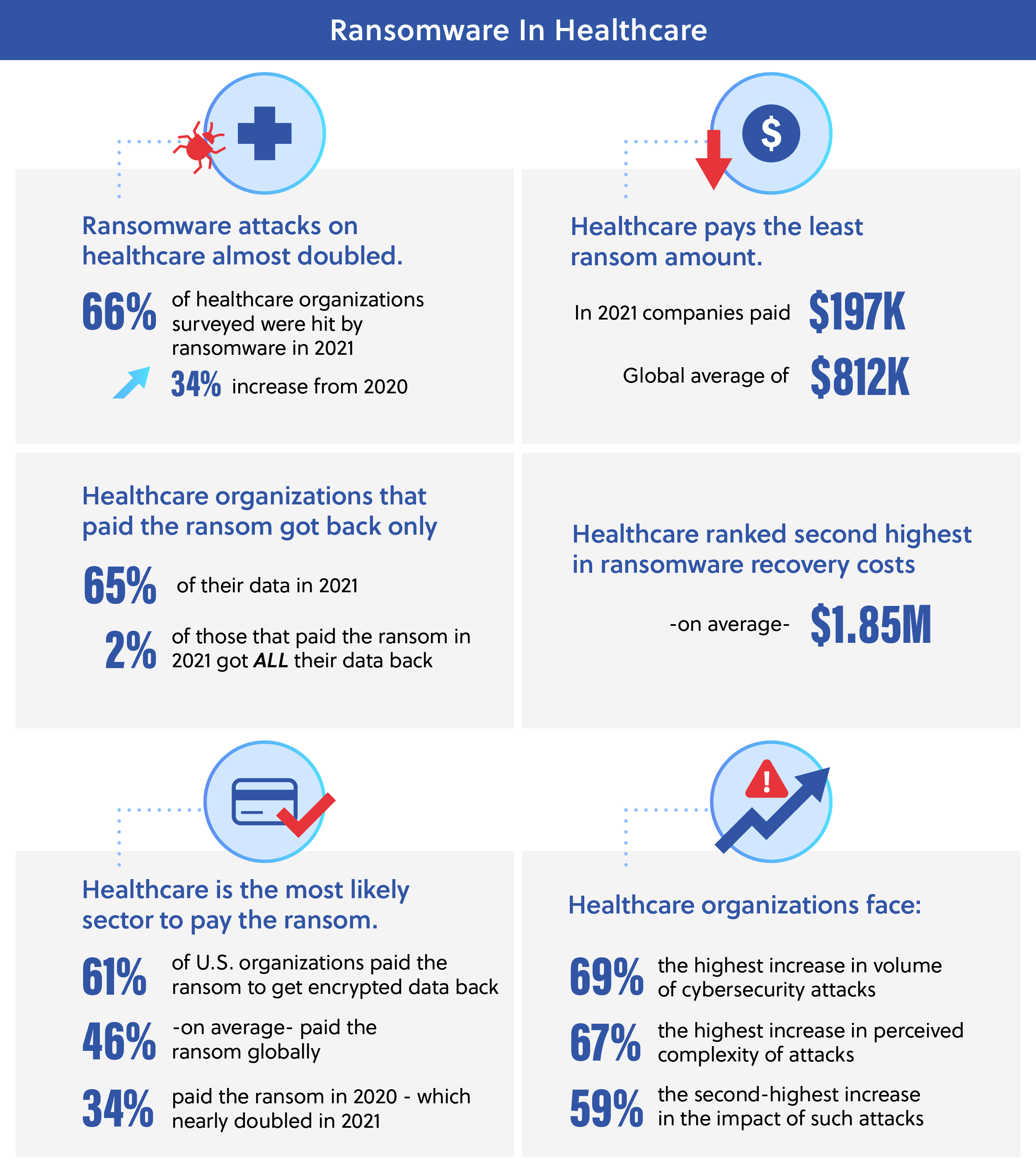
On average, the HHS reported that each healthcare cyberattack cost $10.10 million including the ransom, business loss and remediation costs, ranking it as the most expensive sector for cyberattacks across all industries.[4] This is 41.6% higher than in 2020.[2]  Often, criminals target the healthcare sector because of the quantity and sensitivity of data available. Hospitals are also particularly susceptible due to the complexity of the IT infrastructure, 24/7 operations and the strong repercussions to the reputation of the organization, making them more likely to pay the ransom if an attack happens. Many healthcare organizations also employ a lot of legacy equipment and software as well as perform extensive amounts of file-sharing with many vulnerable endpoints. These areas are a security concern but some of these older systems are also imperative for regular operations and certain medical software to run.[4]

In addition to the immediate disturbance of operations, all of these hacks expose millions of patient records. For the general population, these healthcare breaches have tripled in their impact between 2018 and 2021, with 14 million people affected to now over 45 million. According to the HHS, healthcare institutions faced 373 ransomware attacks from January to July 2022.[2]  Cyber disruptions’ impact through delayed care in areas with poorer healthcare is magnified even more. Northwell Health’s Senior Vice President and Chief Quality Officer Mark Jarrett says: “Clinicians in general tend to think of this as an information technology issue, and it really isn’t. It’s a patient safety issue.”[5]
Carahsoft Ransomware Cybersecurity Blog Series Blog 2 Infographic Image 2023

Post-Attack Measures

Because of the unfortunate success of ransomware within healthcare, many institutions are seeking cyber insurance to offset the cost. The high number of incidents, however, has made it more difficult to obtain coverage until substantial cyber security defenses are in place.[6] While 79% of healthcare organizations possess cyber insurance, nearly all of them have had to improve their cybersecurity strategies to maintain coverage including incorporating new technologies, more employee training and other system process changes.[6]

The Censinet and the Ponemon Institute report, “The Impact of Ransomware on Healthcare During COVID-19 and Beyond,” noted that most healthcare institutions budget 3-4% of IT spending towards cybersecurity while financial firms spend an average of 6-14% to combat cybercrimes.[7] When healthcare systems invest in more cyber defenses, the overall impact of ransomware is dramatically lessened. For institutions with fully deployed cyber security measures, an IMB Security’s annual breach report discovered a 65.2% reduction in average breach cost and 74-day shorter detection and containment cycle versus companies without. This decreased the cost from $6.20 million to $3.15 million for those with security and a breach lifecycle of 323 days down to 249.[2] These results speak to the importance of implementing comprehensive cybersecurity protection and remediation tools in the healthcare sector.

USE CASE: UTILITIES

Similar to healthcare, ransomware attacks to the utilities sector are not just costly and inconvenient, they also impede critical infrastructure and have a wide impact radius to public health, safety and the companies’ bottom line. Utilities also underscore every aspect of daily life through electricity, oil, water and natural gas.

Recent Attacks

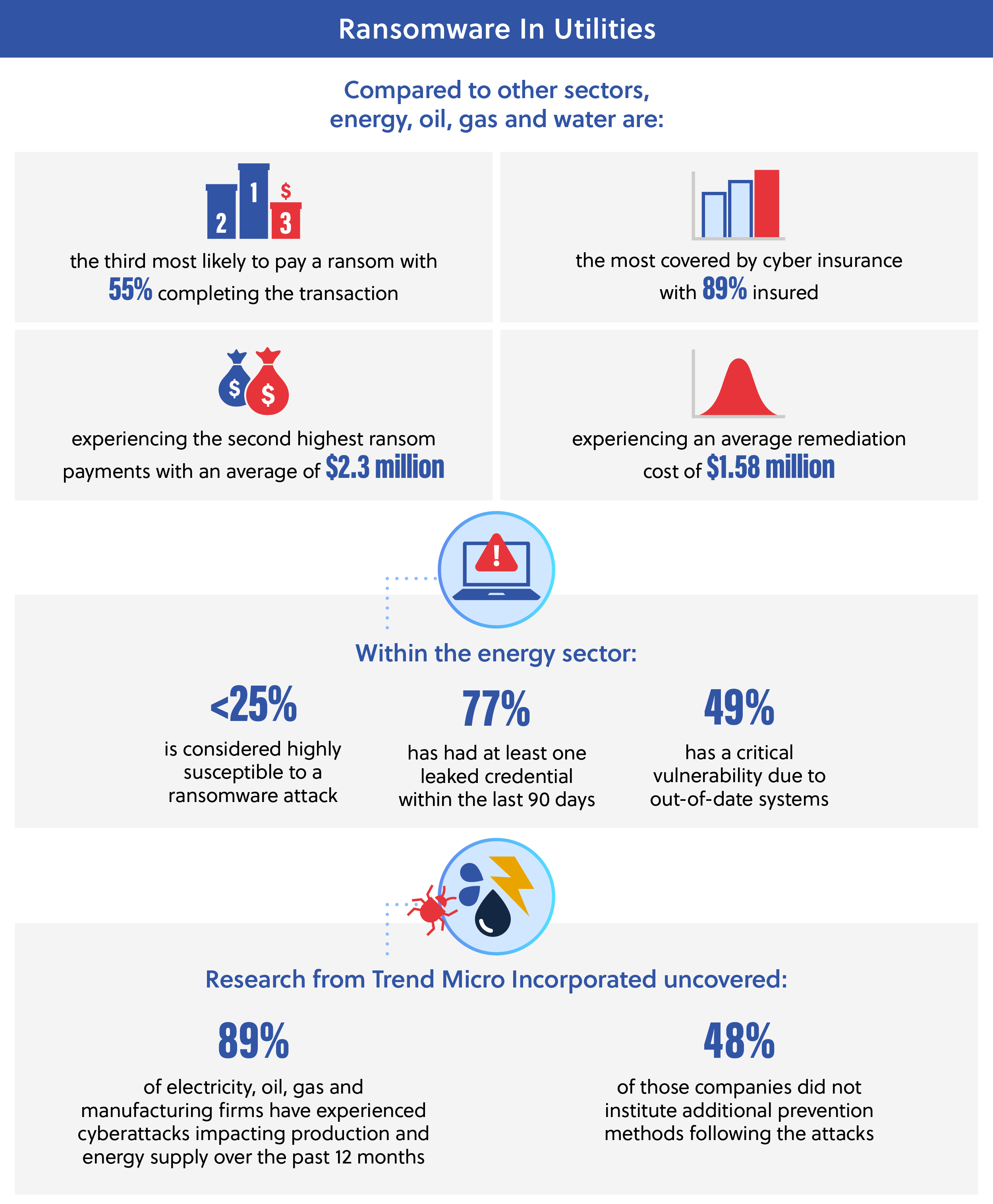
In May 2021, the Colonial Pipeline attack brought ransomware in utilities to the forefront of the public eye. The incident affected 45% of the fuel supply used on the U.S. East Coast, which generated a steep price increase and public panic.[8] Within two hours of access, the cyber criminals immobilized 100GB of critical data. As a result, the 5,500-mile pipeline system was closed for six days until the company paid $4.4 million in cryptocurrency as ransom. Reuters lists this cyber event as the most disruptive ransomware attack on record.[9]

Following the Colonial Pipeline hack, Congress issued a strong cybersecurity measure requiring critical infrastructure organizations to report an attack in three days and any payment of the ransom within one day. The goal is to increase information sharing and better equip the government to assist in these situations.[10]

Another large cyberattack in 2021 occurred in Florida when cybercriminals infiltrated the water treatment facility’s network through dormant software and spiked the sodium hydroxide level to 100 times its usual amount. Although the attack was detected and neutralized, the event unveiled a huge vulnerability in U.S. water systems due to minimal IT budgets, staffing shortages causing maintenance delays, outdated cybersecurity systems and other factors, making it easier for cybercriminals to breach the system unnoticed. Shortly after the news of the Florida water hack, three additional water treatment plant attacks across the country that had not been reported came to the surface.[11] Research indicates that this situation represents a consistent trend. Although large attacks on well-known businesses are often featured more in the news, small businesses experience more ransomware attacks but they commonly go unreported.[12] The limited resources available often make smaller local government and enterprises a preferred target for ransomware because it is more difficult for them to recover from an attack, thus making them more likely to pay the ransom quickly.[13]

Impact
Carahsoft Ransomware Cybersecurity Blog Series Blog 2-2 Infographic Image 2023

These major attacks in 2021 followed an already heightened evaluation of utilities’ security due to Executive Order 13636, which initiated the National Institute of Standards and Technology (NIST) Cyber Security Framework of 2014,[14a] and the America’s Water Infrastructure Act of 2018,[14b] which required water systems threat risk and resilience assessments to be completed between March 2020 and June 2021.

Post-Attack Measures

Utilities companies often rely on a data backup strategy that replicates the system to a second data center if the primary server fails. This setup works well for natural disasters, but companies must be aware that the infection can also be duplicated on non-segmented backup copies which hackers prioritize attacking as well.

Within the electric power sector, operational technology (OT) is widely spread across data centers’ locations and connected through dedicated cables which allows additional control over networking. This however, increases the attack surface and restricts the network’s ability to adapt and reroute traffic to another safe location in the event of a cyberattack, because the system is hardwired to be isolated.[15] Companies must be careful not to assume the direct lines would be inherently secure and should continue to conduct system monitoring especially as these networks start connecting to other systems. In addition to geographical and system complexities, many utility organizations also have decentralized cybersecurity leadership, which can contribute to post-attack confusion and a lack of clarity on the recovery plan.[16]

While demonstrating the return on investment (ROI) of cybersecurity strategies can be a challenge until an attack has occurred, experts highlight the value of these measures by pointing out the impact that a compromised system can have on a company and the general public.[9]  With cybersecurity, success is ultimately demonstrated by the absence of cyber incidents. In the past, this led to a reluctance to invest in necessary cyber measures; however, this awareness is shifting as more companies are joining the initiative to secure their systems and networks.

In July 2022, national security advisors announced additional cybersecurity requirements will be instituted soon by the Environmental Protection Agency (EPA) to defend national water systems from hackers.[17] To prepare for these new guidelines, companies within the utilities sector must evaluate their systems and work to improve their defenses and recovery plans now in the face of ransomware attacks.

LOOKING AHEAD

Critical infrastructure across the country has been overwhelmed by the influx of ransomware and data breaches. Looking at the data projections for the coming years reveals that these intrusions will continue to grow at an alarming rate. While legislation develops to address the current cybersecurity gaps, sectors like healthcare and utilities must actively take initiative to address system weaknesses and make it more difficult for cybercriminals to infiltrate. Investing in the necessary changes and updates is crucial for U.S. critical infrastructure organizations before their individual institutions become the next target. Now more than ever is the time to modernize infrastructure, get ahead of cyber requirements and build resilience against the threat landscape.


Learn about steps to address these cybersecurity concerns whether in healthcare and utilities or across all sectors in our Ransomware Security Strategies Blog. Find our full Ransomware Series here.


Resources

[1] “FACT SHEET: Biden-⁠Harris Administration Delivers on Strengthening America’s Cybersecurity,” The White House, https://www.whitehouse.gov/briefing-room/statements-releases/2022/10/11/fact-sheet-biden-harris-administration-delivers-on-strengthening-americas-cybersecurity/

[2] “Healthcare data breach costs reach record high at $10M per attack: IBM report,” Fierce Healthcare, https://www.fiercehealthcare.com/health-tech/healthcare-data-breach-costs-reach-record-high-10m-attack-ibm-report

[3] “Ransomware attacks on hospitals could soon surge, FBI warns,” CNET, https://www.cnet.com/news/privacy/fbi-warns-imminent-wave-of-ransomware-attacks-hitting-hospitals/

[4] “Ransomware 101 For Healthcare,” Forbes, https://www.forbes.com/sites/forbestechcouncil/2022/08/16/ransomware-101-for-healthcare/?sh=3bb3ca785b86

[5] “The pandemic revealed the health risks of hospital ransomware attacks,” The Verge, https://www.theverge.com/2021/8/19/22632378/pandemic-ransomware-health-risks

[7] “Ransomware in healthcare: it’s a matter of life and death,” NTT, https://services.global.ntt/en-us/insights/blog/ransomware-in-healthcare

[8] “Everything You Need to Know About Ransomware,” Ransomware.org, https://ransomware.org/

[9] “Ransomware Attacks in the Energy Industry,” CDW, https://www.cdw.com/content/cdw/en/articles/security/ransomware-attacks-energy-industry.html

[11] “The Critical Need to Protect Critical Infrastructure: Spotlight on Utilities,” Spy Cloud, https://spycloud.com/protect-critical-infrastructure-utilities-ransomware-ato/

[12] “How Utilities Can Reduce the Risk of Ransomware Attacks,” Energy Central, https://energycentral.com/c/pip/how-utilities-can-reduce-risk-ransomware-attacks

[13] “Ransomware Hits U.S. Electric Utility,” Trend Micro, https://www.trendmicro.com/vinfo/us/security/news/cybercrime-and-digital-threats/ransomware-hits-u-s-electric-utility

[14a] “NIST Releases Cybersecurity Framework Version 1.0,” NIST, https://www.nist.gov/news-events/news/2014/02/nist-releases-cybersecurity-framework-version-10#:~:text=In%20February%202013%2C%20President%20Obama,help%20organizations%20manage%20cyber%20risks

[14b] “What Does the New American’s Water Infrastructure Act (AWAI) of 2018 Mean to You?” Crawford, Murphy & Tilly, Inc., https://www.cmtengr.com/2019/08/20/americans-water-infrastructure-act/

[15] “How energy and utility companies can recover from ransomware and other disasters using infrastructure as code on AWS,” AWS, https://aws.amazon.com/blogs/industries/how-energy-and-utility-companies-can-recover-from-ransomware-and-other-disasters-using-iac-on-aws/

[16] “Ransomware and Energy and Utilities,” AT&T Business https://cybersecurity.att.com/blogs/security-essentials/ransomware-and-energy-and-utilities

[17] “White House Official: EPA to Issue Cybersecurity Rule for Water Facilities,” Nextgov, https://www.nextgov.com/cybersecurity/2022/07/epa-issue-cybersecurity-rule-water-facilities-white-house-official/375098/

Infographic Resources:

[6] “The State of Ransomware in Healthcare 2022,” Sophos, https://news.sophos.com/en-us/2022/06/01/the-state-of-ransomware-in-healthcare-2022/

[10] “Looking Back at the Colonial Pipeline Ransomware Incident,” Government Technology, https://www.govtech.com/blogs/lohrmann-on-cybersecurity/looking-back-at-the-colonial-pipeline-ransomware-incident

“The 2021 Ransomware Risk Pulse: Energy Sector,” Black Kite, https://blackkite.com/wp-content/uploads/2021/09/The-2021-Ransomware-Risk-Pulse-_-Energy-Sector.pdf


The Open Source Revolution in Government

Open source technology accounts for a significant portion of most modern applications, with some estimates going as high as 90%, and it is the foundation of many mainstream technologies. Its strength lies in the fact that a vibrant ecosystem of developers contribute to and continually improve the underlying code, which keeps the software dynamic and responsive to changing needs. Enterprise open source software further augments these community-driven projects by providing enterprise-grade support and scalability, while retaining the innovation and flexibility driven by the open source development model. By providing the best of both worlds, such solutions represent a powerful arsenal of tools for addressing government’s most pressing challenges. In a recent pulse survey of FCW readers, 93% of respondents said they were using open source technology. And more than half of respondents to FCW’s survey see open source as an integral resource for strengthening cybersecurity. That number reflects a positive trend toward a better understanding of open source software’s intrinsic approach to security. The power of enterprise open source technologies lies in a combination of collaboration, transparency and industry expertise. As agencies expand their use of such technologies, they maximize their ability to achieve mission success in the most secure, agile and innovative way possible. Learn how the combined power of community-driven innovation and industry-leading technical support is expanding the government’s capacity for transformation in Carahsoft’s Innovation in Government® report.


Why Open Source is a Mission-Critical Foundation  

IIG FCW Open Source Revolution November Blog Embedded Image 2022“Open source transforms the way agencies manage hybrid and multi-cloud environments. The most critical technology in the cloud, across all providers, is Linux. Everything is built on top of that foundation — both the infrastructure of the cloud and cloud offerings. Given the right partner, the promise of Linux is that it provides a consistent technology layer for agencies across all footprints, including multiple cloud providers, on-premises data centers and edge environments. From that foundation, agencies and their partners can build portable architectures that leverage other open source technologies. Portability gives organizations the ability to use the same architectures, underlying technologies, monitoring and security solutions, and human skills to manage mission-critical capabilities across all footprints.”

Read more insights from Christopher Smith, Vice President and General Manager of the North America Public Sector at Red Hat.


How Open Source is Expanding its Mission Reach

“The real power of open source technologies was revealed when they cracked the code on being highly powered, mission-specific, distributed systems. That’s how we are able to get insights out of data by being able to hold it and query it. Today, open source innovation is being accelerated by the cloud, and the conversation is still changing, with people now demanding that their open source companies be cloud-first platforms. Along the way, the open source technologies that start in the community and then receive a boost of commercial innovation have matured. The most powerful ones are expanding their ability to address more of the government’s mission needs. They are staying interoperable and keeping the data interchange non-proprietary, which is important for government agencies.”

Read more insights from David Erickson, Senior Director of Solutions Architecture at Elastic.


The Open Source Community’s Commitment to Security  

“A central tenet of software development is visibility and traceability from start to finish so that a developer can follow the code through development, testing, building and security compliance, and then into the final production environment. Along the way, there are some key activities that boost collaboration and positive outcomes, starting with early code previews, where developers can spin up an application for stakeholders to review. Other activities include documented code reviews by peers to ensure the code is well written and efficient. In addition, DevOps components such as open source, infrastructure as code, Kubernetes as a deployment mechanism, automated testing, and better platforms and capabilities have helped developers move away from building ecosystems and instead focus on innovation.”

Read more insights from Joel Krooswyk, Federal CTO at GitLab.


The Limitless Potential of an Open Source Database

“One of the most important elements of any database migration is ensuring that proper planning and due diligence have been performed to ensure a smooth and successful deployment. In addition, there are some key considerations agencies should keep in mind when moving to open source databases. It is essential to start with a clear understanding of the business case and objectives for adopting an open source approach. Agencies also need to decide how the database should function and what it should do to support their digital transformation. Then they must choose the optimal method to deploy the database.”

Read more insights from Jeremy A. Wilson, CTO of the North America Public Sector at EDB.


Modernizing Digital Services with Open Source

“A composable, open source digital experience platform (DXP) enables agencies to overcome those challenges. Open source technology is continuously contributed to by a community of developers to reflect a wide array of needs across organizations in varying industries and of varying sizes. A composable approach allows agencies to assemble a number of solutions for a fast, efficient system that is tailored to their needs. When agencies combine a composable DXP with open source technology, they have access to best-of-breed software and the ability to customize the assembly to suit their requirements. An enterprise DXP will enable agencies to achieve a 360-degree view of how constituents are engaging with their digital services and gain valuable data to understand how to enhance their experience. Finally, a composable, open source DXP provides a proactive approach to protecting against security and compliance vulnerabilities.”

Read more insights from Tami Pearlstein, Senior Product Marketing Manager at Acquia.


Creating Secure Open Source Repositories

“Protecting the software supply chain requires looking at every single thing that might come into an agency’s environment. To understand that level of visibility, I like to use the analogy of a refrigerator. All the ingredients necessary to make a cake or pie are in the refrigerator. We know they are of good quality, and other teams can use them instead of having to find their own. At Sonatype, our software equivalent of a refrigerator is the Nexus Repository Manager. A second aspect of our offering, called Lifecycle, allows us to evaluate the open source components in repositories at every stage of the software development life cycle. One piece of software can download a thousand other components. How do we know if one of those components is malicious?”

Read more insights from Maury Cupitt, Regional Vice President of Sales Engineering at Sonatype.


Better Data Flows for a Better Customer Experience

“A more responsive and personalized customer experience isn’t much different from the initial problem set that gave birth to Apache Kafka. When people interact with agencies, they want those agencies to know who they are and how they’ve interacted in the past. They don’t want to be asked for their Social Security number three times on the same phone call. They also expect that the information or service they receive will be the same whether they are accessing it over the phone, via a mobile app and on a website. To elevate the quality of their service, agencies must be able to stream information in a low-friction way so different systems are consistent with one another and up-to-date at all times, regardless of the communication channel an individual uses. President Joe Biden’s executive order about transforming the federal customer experience is based on this capability. The most successful companies across industries have figured out how to do it, and for the most part, they’ve done it with open source software.”

Read more insights from Jason Schick, General Manager of Confluent US Public Sector.


An Open Source Approach to Data Analytics

“For the past 40 years, agencies have used data warehouses to collect and analyze their data. Although those warehouses worked well, they were limited in what they could do. For instance, they could only handle structured data, but by some estimates, 90% of agencies’ data is unstructured and in the form of text, images, audio, video and the like. Furthermore, proprietary data warehouses can show agencies what has happened in the past but can’t predict what might happen in the future. To achieve the government’s goal of evidence-based decision-making, agencies need to be able to tap into all their data and predict what might come next.”

Read more insights from Howard Levenson, Regional Vice President at Databricks.


Download the full Innovation in Government® report for more insights from these open source thought leaders and additional industry research from FCW.

EDUCAUSE 2022: Uniting IT and Education

The education landscape has continued to thrive following the aftermath of the COVID-19 pandemic. While stay-at-home orders have been lifted, education has maintained a digital component through online classes and remote-learning technology. Although online education has many benefits, it brings the concern of security breaches. To continue keeping student information secure, education leaders must adapt alongside the changes in technology. EDUCAUSE is a nonprofit association that provides a community for technology, academic, industry and campus leaders to collaborate and build together. The annual EDUCAUSE conference hosted several sessions that showcased ways to keep students engaged and secure in the new age of education.

Educational Institutions as a Hot Target for Cybercriminals

Cybersecurity deserves consistent attention within the education sector. While schools may be compliant with security standards, they can still be vulnerable. Higher education institutions are top targets as they connect thousands of staff, students and faculty members under one system.

There are several strategies IT professionals recommend that can help education systems defend against breaches:

  • Keep operating systems and software up to date
  • Employ multi-factor authentication
  • Maintain robust user training
  • Implement encryption
  • Create cloud back-ups for information
  • Maintain efficient detection and monitoring systems
  • Implement a quick incident response plan
  • Utilize external and cloud data storage

By following these steps, institutions can take the initiative toward deploying security measures for staff and students alike.

Carahsoft EDUCAUSE Education Blog Embedded Image 2023Robust Cybersecurity on a Budget

Since many academic institutions still face budget constraints due to COVID-19, their cyber posture may not be their first IT priority. To enhance cybersecurity, even on a budget, institutions should:

Know their external footprint: Through the employment of third-party devices that scan the internet for web service protocol solutions, agencies can see how much of their information is public.

Identify external login flaws: Since hackers can circumvent simple tools like automatic lockout policies, agencies should identify all login portals and check major input fields for automated controls.

Identify cloud security flaws: Agencies should switch to a multi-platformed and open-sourced cloud, since it enables security posture assessments and detection of security risks.

Implement phishing education and exercises: Phishing is one of the most common ways organizations are compromised. Institutions should ensure that all employees are educated on anti-phishing policies.

Clean up network share permissions and information: By utilizing credential scans, sensitive information can be restricted to the proper personnel. Implementing a zero trust framework ensures that each user will only gain the information that they are authorized to.

Limit the success of kerberoasting: Kerberoasting leverages the functionality of service principles to encrypt user’s passwords, which can later be retrieved offline for hacking. While it is impossible to completely prevent kerberoasting, agencies that implement detection capabilities limit the exposure and effectiveness of kerberoasting.

Prevent relay attacks: Software should avoid authentication systems that can be relayed or cracked. Responder tools can be used to analyze traffic and point out vulnerabilities.

Identify active directory misconfigurations: As active directory environments mature, built up misconfigurations can cause excessive access privileges. To prevent these being misused by bad actors, institutions should implement tools that check for vulnerable certificates.

Strengthen password security: Agencies should ban easy to guess passwords, enable multi factor authentication and disable old accounts.

Avoid flat networks and lack of network segmentation: Access should be limited to those that need to know; student and faculty accounts should reside on different domains.

Fostering a Sense of Belonging for Online Students

By meeting students where they are comfortable, educational institutions can readily share information. For example, since students are familiar with their phones, when universities utilize phone apps it can help provide a unified, digital experience for higher education students to reduce complexity, fuel career readiness and stoke student success. When creating an app for an institution, some helpful features to include are:

  • Tailored experiences with custom events depending on the user
  • Information unique to students, such as a marketplace to buy and sell goods like dormitory furniture or textbooks
  • IT toolkits
  • Self-assessment tools for COVID-19 or the flu
  • Campus features such as desk or study center reservations, transit routes, dining schedule or university maps
  • In-app messaging that can be directed to groups, such as students or faculty or personal messages
  • Feedback surveys to inspire improvement

Higher Education’s Top IT Issues for 2023

As students have become accustomed to hybrid and virtual learning, their expectations for new and elevated digital experiences have increased. There are many ways to achieve this modernization, but it requires intentional effort and technology updates from education administrators. Challenges to consider when implementing technology into learning are to:

  • Ensure IT has a “seat at the table” so they can weigh in on decisions
  • Ensure privacy and cybersecurity by training students and faculty to avoid scams, shift to data minimization, address cloud migration risks and leverage contracts with cybersecurity experts and investments
  • Adapt to students’ interests and products familiar to them
  • Create a seamless and enriching student experience
  • Utilize student data to update technology to better empower students
  • Pursue next-generation IT support to expand and reimagine digital campus abilities

Promoting Independence Through IT

A school’s duty is to prepare students for their futures in the workforce. Oftentimes, many careers require extensive knowledge of an array of technologies. Students should show proficiency in these areas to take advantage of more opportunities in various fields. By implementing technology into everyday use, educational institutions can promote confidence in technology, problem-solving skills, time management skills and collaboration between peers.

Diversity, equity and inclusion are also vital to university standards from both a legal and moral lens. IT intersects with diversity to make enrollment and education accessible to all by analyzing existing data to revamp hiring rubrics or utilizing cross-team conferences to create inclusive policies. With these inclusions, schools can emphasize transparency and accountability.

The pandemic revealed the importance of campus communication systems expanding beyond traditional parameters. Education departments had to shift to a remote work environment that a traditional phone system could not easily support. Universities should leverage communications software to reduce costs, provide additional flexible phone capabilities and accommodate all students regardless of where they live.

Through the inclusion of technology, educational institutions can reach new heights in their accessibility and connection with students. By enhancing security and offered digital features, educators can prepare students for an ever-changing workforce.


To learn more about utilizing IT for education initiatives, visit Carahsoft’s EDUCAUSE resource hub to schedule a meeting and speak to a representative today.

*The information contained in this blog has been written based off the thought-leadership discussions presented by speakers at EDUCAUSE 2022.*