DoDIIS Takeaways: Future DoD and IC Initiatives for AI, ML and the Cloud

This blog series focuses on the Department of Defense (DoD) and Intelligence Community (IC) initiatives for 2023 and beyond. Part one covered future plans regarding IT workforce development and retention, partnerships, interoperability and data management. Part Two continues the discussion of the intertwining initiatives and technologies in AI, ML and cloud computing to provide a more complete picture of the current DoD and IC landscape in connection with their vision for the future.

While data is the lifeblood for the digital transformation, artificial intelligence (AI) and machine learning (ML) are what make digesting the information possible. Cloud allows for this data to be hyperscaled, more agile and more efficient for operations. All of these elements and technologies work together to propel the DoD and IC to the next level and achieve mission goals.
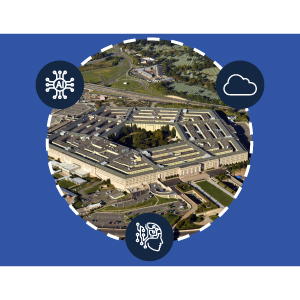
Carahsoft DoDIIS AI ML and Cloud Part 2 Blog Embedded Image 2023AI and ML

To properly understand AI and ML’s role in the future of the DoD and IC, some standard definitions must be established. While the private sector mostly utilizes AI for emergency response, healthcare, finance, agriculture and human resources, the military’s most common uses include cyber defense, swarming, vulnerability scanning and data filtration. This creates a stark difference in understanding and terms. For the purposes of this blog, the terms AI and ML will reflect the terms used during the live DoDIIS speeches and discussions.

With AI and ML, one of the biggest hurdles for the IC is explainability. Before new data can be incorporated from other sources, existing data must be processed. CTOs and Directors of the CIA, DIA, National Media Exploitation Center (NMEC) and Virtualitics explained that if current data holdings are not sorted and understood during the data cataloging processes, it will be difficult to utilize AI and understand the results later. Data governance and data strategy are foundational to this effort. All parties involved also need to understand the ethical implications of AI and have a strong grasp of data analysis and machine learning to harness all of these technologies’ true powers. Other safeguards must be put in place to properly introduce the use of AI and ML within their intended contexts. AI testing and evaluation (T&E) is different than for other tech, since AI capabilities should not be set and left without monitoring and a way to update a model in the field. Instead, the models should continue to be supervised over time by system creators and end users across academia, industry and government to preserve accuracy and high precision. The baseline within the hierarchy of needs is ensuring quality data results, which requires clear understanding of the algorithmic approaches being employed for the models. Vendor technology that provides clear AI explainability is particularly sought after in the DoD and IC since it can be used to back tactical life or death decisions. One solution the DoD is pursuing to address this challenge is the machine-as-a-teammate (MaaT) capability which automates data transformation to significantly increase velocity and precision while remaining explainable.

The DoD has begun focusing heavily on ethical AI frameworks including starting toolkits to assess pipeline or model bias and building a Responsible AI (RAI) foundation to ensure responsible, equitable, traceable, reliable and governed use of data. The DoD hopes industry will continue to adopt RAI principles ahead of future requirements and expand on practical ways to attain these best practices. In addition, the DoD established an AI Council to discuss aligning their RAI framework with AI regulations in other European countries as they seek to integrate systems and open the door for efficient data sharing.

Through initializing use of AI and ML, the DoD and IC have already discovered several benefits. AI has offered enhanced workflows and reduced burden on analysts, advanced filtering techniques on large data sets, open-source scanning for improved product reports and optimized data rates for information transfer. DoD ML pilots achieved 100x increase in quality review and 10x increase in pre-decision error/anomaly detection, among other successes. DoD and IC leaders look to AI as gateway to better identify vulnerabilities in military systems, improve the identification of targets or locations and increase accuracy and speed of retrieving battle damage assessments. While the technology exists to perform these tasks, the policies and permissions are not yet complete to fully implement AI and ML.

Handling the massive quantities of data is a huge undertaking; however, processing the information through AI and ML has proven the worth of the endeavor tenfold and delivered clear mission impact. By focusing on the infrastructure first, the DoD and IC can leverage AI and ML for maximum impact to let machines and humans each do what they do best and then team up to solve the problems in between.

While there are some risks to implementing AI completely such as data set accuracy, vulnerabilities to adversarial influence, legal ramifications and expectations of data use tech, DoD and IC officials confidently endorse the transition to incorporating more AI. They recommend several key steps such as creating a common international policy that addresses ethical concerns, technological advancement and dual use; defining AI for policy given the dynamic and changing nature of technology; and identifying definitions and strategies around non-lethal options, hardening systems and mission enhancement. The DIA’s AI strategy aims to achieve AI readiness in the near term, AI competitiveness in the mid-term and AI dominance in the long-term.

The Cloud

According to Dr. Raj G. Iyer, former CIO for Information Technology Reform, Office of the Secretary of the Army, cloud is an absolute necessity to move large amounts of data across the globe. The concept of data-centricity shifting within the Army from theory to doctrine, has precipitated other essential changes including the migration to cloud. Dr. Iyer stated that the new data goals are no longer owned by just “tech folks”, but by every warfighter, which places a new level of priority on technology like cloud. The new Army initiative includes achieving a distributed command and control (C2) structure for the Army to provide more mobility and less centralization both with C2 and the data. This will be attained through the adoption of its Hybrid Cloud of the Future to hide data “in plain sight” and avoid systems that are uniquely military in nature. When the military leverages a commercial platform, it can process data in a way where adversaries cannot differentiate sensitive information from other commercial processes.

Across the rest of the DoD and IC, agencies vary in their level of cloud migration. For the NGA, business applications and analytics are already in the cloud, the next step is to move to a hybrid multicloud with resources that need to be on hardware available at Joint Regional Edge Nodes. The NSA hopes to avoid a lift-and-shift approach, and instead be precise with their cloud investments through initiatives such as Hybrid Cloud Compute, Eagle Crossing, and a Human Capital Management System. DISA has brought cloud programs together for the DoD under their Host and Compute Center (HACC) through the Joint Warfighting Cloud Capability (JWCC) contract.

For agencies which have not migrated, the DoD and IC recommend preparing for cloud deployment and utilizing this time before switching to cloud to eliminate bad practices that exist on-prem and focus on relevance, resourcing and complete system readiness. As other technologies and strategies take effect, DoD and IC officials reminded of the importance of prioritizing cloud first, cloud native and Zero Trust baked in throughout every aspect regardless of cloud migration stage.

Some challenges DoD and IC officials presented to industry were how to maintain service if an outage occurs in regional data centers from a classified perspective and how to maintain and optimize the network from a unified comm perspective considering its sensitivity to latency. Overall, leaders inquired how to preserve reliability and redundancy to overcome potential distrust of the cloud. As the DoD and IC collaborate with industry to innovate and resolve these issues, it continues to unlock new doors of potential. Dr. Iyer stated that the network is no longer an enabling function, and these digital technologies are now changing how the DoD and IC fundamentally view warfighting.

As the DoD and IC seek to accomplish these IT goals and prepare the way for future modernization, industry, academia and other government agencies must come together to solve current challenges, innovate new solutions and support mission initiatives. Government leaders noted the importance of these modernization efforts and that the technologies and strategies developed in the next 5-10 years will be the foundation of operations for the next generation.


Check out our Fast Facts and Future Initiatives of the DoD and IC Resource for more information and key insights for the IT industry.

*The information contained in this blog has been written based off the thought-leadership discussions presented by speakers at DoDIIS 2022.*
How to get StateRAMP Ready Faster with Security Snapshot

Security is of utmost importance to government agencies because they have access to the sensitive information of millions of people. To ensure this information stays private, StateRAMP (State Risk and Authorization Management Program) offers several guidelines to help.

StateRAMP is a nonprofit launched in 2021 and modeled after FedRAMP, a government-wide program that promotes secure cloud usage across the Federal government. State and local governments created StateRAMP to extend this authorization to the relationships between cloud service providers (CSPs) and state and local governments to improve cybersecurity posture. As an independent  nonprofit organization, StateRAMP has created a process for continuous cybersecurity improvement to efficiently and cost-effectively verify the cybersecurity of cloud service providers.

Carahsoft StateRAMP Security Snapshot Blog Embedded Image 2023A main initiative is evaluating the data security capabilities of cloud solution providers that sell to state and local governments. StateRAMP ensures CSPs meet minimum security requirements and helps them obtain verification and achieve certification. These verification statuses were created by StateRAMP and must be certified by a third party. To simplify this certification process, StateRAMP has introduced “Security Snapshot.”
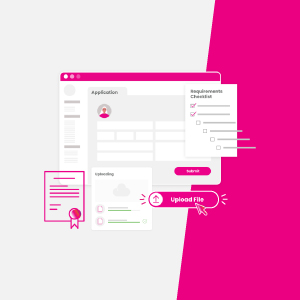

Hurdles to Attaining StateRAMP Verification

StateRAMP has had an Authorized Product List since 2021,updated at the end of every business day. This list is comprised of verified providers who meet the minimum security requirements and provide an independent audit conducted by a Third Party Assessment Organization (3PAO). StateRAMP recognizes three verified statuses:

  1. Ready: The product meets minimum requirements.
  2. Provisional: The product exceeds minimum requirements and has a government sponsor.
  3. Authorized: The product satisfies all requirements and has a government sponsor.

There are 38 cloud service offerings (CSOs), 4 local government agencies, 2 universities and 17 states that are qualified in the above three tiers.

A Simpler Future with Security Snapshot

After StateRAMP’s verification process was introduced, providers encountered several questions. For some CSPs, it wasn’t easy to know if they could achieve a StateRAMP-Ready approval. The fear that CSPs would be left with a public, poor StateRAMP score induced anxiety in starting the approval process. Many agencies were unsure if they were making progress in the right direction. To combat this, StateRAMP released a new solution in early January 2023—the “Security Snapshot.”

Security Snapshot provides detailed information on how companies can get StateRAMP-certified. The snapshot offers a preliminary numerical score that CSPs can share with prospective government clients, which will not appear on the CSP’s record.

This resource acts as an early-stage security maturity assessment tool for cloud products. The intent of the service is to provide a first step toward achieving StateRAMP security status. The criteria are designed to help agencies validate minimum requirements and provide controls and additional benchmarks that would further aid in certification.

The Security Snapshot also helps providers gain quality insight into security postures and third-party cloud solutions such as Software as a Service (SaaS), Infrastructure as a Service (IaaS) and Platform as a Service (PaaS) products. Ultimately, it provides insights for providers and the government branches they serve.

With the introduction of Security Snapshot, CSPs can ease their concerns, knowing they will receive detailed, personalized support to help them qualify for StateRAMP’s verification.


For more information on StateRAMP’s security approach, visit our StateRAMP resource hub and watch our Carahsoft briefing at carah.io/StateRAMP.

AvePoint Adds Governance, Management, Data Protection and Migration Support for Microsoft Power Platform

Carahsoft partner AvePoint Public Sector recently announced its support for the governance, management, migration and data protection of Microsoft Power Platform environments. As more organizations adopt Power Platform to automate processes, build digital solutions, analyze data and create virtual agents, IT leaders need strategies that support their unique governance, security and compliance requirements.

AvePoint’s support for Power Platform helps organizations:

  • Provide scalable management and governance: Access management and risk assessments allow organizations to quickly drive impactful collaboration and sustainable Power Platform adoption. Best practices and productivity can be achieved through automated governance and policies, enforcing proper control of data access and functionality.
  • Protect critical workspaces, apps and flows: AvePoint’s automated backup for Power BI workspaces, Power Apps and flows makes it seamless to avoid accidental data deletion, user error or ransomware. This way, organizations can ensure they’re protected, compliant and prepared for business continuity when using Power Platform.
  • Seamlessly migrate data: Building on AvePoint’s award-winning migration capabilities, organizations can now migrate apps from an environment within the same tenant or between tenants – giving organizations more opportunities to successfully use Power Platform.
AvePoint and Microsoft Integration Blog Embedded Image 2023

Some organizations are already taking advantage of the AvePoint’s Power Platform support. “AvePoint’s support for Power Platform has helped us empower employees to safely build solutions that will enhance their work,” Mike Fettner, Principal Office 365 Engineering at Regeneron, said. “As an organization, this allows us to continue taking smart risks because we know robust governance solutions will put the right guardrails in place, and data protection will ensure none of our data or workflows are lost.”

Register today to join AvePoint and Microsoft for Power Platform Workshop: A Framework to Manage and Govern Power Platform at Scale, coming to a city near you later this Spring.

Connecting Customers with AvePoint and Industry Solutions

It has never been easier to count on Carahsoft and AvePoint. We can help your agency with:

  • Quick quote turnaround and smart spending
  • Industry-expert cloud computing product recommendations
  • 24/7 live assistance to get you up and running faster

Contact a member of the Carahsoft and AvePoint Public Sector team today and discover how we can support your organization.

Modernizing Licensing and Regulatory Processes with Thentia Cloud

To ensure they are continuously meeting high standards and engaging in ongoing learning in their fields, licensed professionals must renew their license at regular intervals with the applicable regulatory body. Due to the diversity of licenses across industries, licensing agencies manage their processes in a variety of ways. However, across the board, it is important to meet people where they are comfortable: online. Thentia Cloud, an industry-leading, full-service platform for licensing and permitting, provides the perfect solution for regulatory agencies.

Efficient licensing requires shift from manual to digital processes

As the IT landscape continuously changes, industries work to change with it. One recent impactful industry shift has been the switch from paper-based to digitized licensing processes. Previously these manual processes caused long wait times for licensees, which, in extreme cases, prevented them from practicing. On the regulatory side, this often created a large backlog and increased workload for staff, which prevented them from focusing on other important tasks. The inefficiency was heightened especially during the COVID-19 pandemic. With such a large backlog of license applications and renewals, it could take days, or even weeks, for licensees to resolve issues with their applications or receive approval.

Thentia Cloud’s secure online portal makes licensing easier for both regulatory staff and licensees

Thentia Cloud Blog Embedded Image 2023

Licensing services are more efficient when processed digitally. Agencies should move to transform manual licensing into secure, cloud-based services that can be easily utilized by both regulatory staff and licensed professionals. Through Thentia Cloud’s secure and convenient online portal, both parties can manage licensing processes more smoothly. On the licensee-facing side, practitioners can easily make payments and view their invoices, track continuing education requirements, and submit documents related to their license application or renewal. They can also use the web-based portal to securely see all their personal information—such as their name, address, contact information and license status — and make changes if necessary. This eradicates the need for physically mailing forms, payments and documents back and forth, which can add unnecessary time and costs to the process. Another added benefit is that licensees receive an estimated response time. On the agency side, all licensee information is easily accessible and complete. Rather than relying on an annual paper form, all vital information is securely saved in a portal system. This eliminates the need to resubmit the same information, which bogs down staff time.

Thentia Cloud’s powerful data virtualization capabilities enable better reporting and performance measurement

As key performance indicators vary from agency to agency, performance expectations will vary. For some regulatory agencies, the highest priority may be license application turnaround time. For others, it may be how complaints are handled between processing and resolution. Currently, many agencies are limited by their technological maturity. When regulators rely entirely on paper-based processes, their reports tend to be time-consuming, coarsely written, not machine-ready, or completely incompatible with reports from external organizations. Agencies with discrete databases will all face a variety of difficulties generating reports. The process of pulling and analyzing data from multiple different data sets can be tedious and time consuming.

This can be alleviated with data virtualization, which can greatly reduce the time and cost needed to gain information. With licensing solutions, regulators’ comprehensive reporting capabilities can instantly be used to pull new types of queries and export the data from these queries.

Thentia Cloud can also help agencies measure their success. The platform’s powerful analytics and reporting tools can virtualize information from whatever existing database the agency uses, compile information on different queries, and then convert it from discrete data sets into a singular language. With cloud licensing, all agencies need to do is scan and digitize their information. Solutions with reporting capabilities add an additional benefit of robust analytical reports. Thentia Cloud offers 35 custom reports, as well as customer service providers who can help agencies utilize the software to create their own structured query language. This allows regulators to create reports that are specialized to their unique requirements.

Thentia Cloud enables easy communication and information-sharing

Thentia’s cloud-based solution facilitates easy communication and information sharing between government agencies, education providers, licensees and the public. Cloud virtualization allows several groups to meet and collaborate to keep up with changing regulatory requirements. These licensing solutions can perform a variety of functions to aid this, such as schedule meetings, provide reminders, allow areas for documentation, etc. A proper cloud solution removes the difficulties in organizing these elements and provides an easy place for stakeholders to access the information. This can encourage a data-driven decision-making approach for all parties involved. Features such as predictive analytics can help stakeholders avoid potential harm by ensuring licensees are properly tracked, trained and licensed.

Thentia Cloud provides an all-in-one solution to streamline key regulatory processes

With Thentia Cloud, stakeholders have a one-stop location to complete all their licensing needs. Thentia’s cloud-based solution helps regulatory agencies digitize and streamline key regulatory processes, from license registration and renewals, to payments and finance, to analytics and reporting, and more. With the changing expectations of agencies and regulators, Thentia Cloud can maintain pace by providing limitless configurations, automated workflows, centralized data and extensive insights.

Fill out the form to access Thentia’s informative brochure, “Thentia Cloud: Cloud-based licensing and permitting software designed exclusively for regulators, by regulators,” to learn how Thentia can support your organization’s cloud journey.

Overcoming Data Challenges With Virtualization

Despite the variation in their individual mandates, all regulatory agencies have one main objective: to protect the public. However, there are hurdles to this goal. There are heavy costs associated with data warehousing, as large projects require extensive telecommunication and server space. This can be both expensive and time-consuming. Luckily, by implementing data virtualization tools, agencies can overcome these constraints and provide more effective services.

What is Data Virtualization?

Data virtualization is an approach to data management that helps organizations accelerate the turnaround time for converting data into digestible information. These data sources can range from a variety of locations, including distributions and data stores and any documents, emails or spreadsheets an agency has. With such a wide array of data, accessing and understanding all vital information can be both time-consuming and overwhelming. Data virtualization is necessary to streamline access to the answers and information agencies and users require.

Thentia Data Virtualization Blog Embedded Image 2022How It Works

Data virtualization software begins by creating a layer over or around all existing data sources in an organization. Through its complementary interface, the software outputs the needed information. This process saves an abundance of time that is otherwise spent reading labels and searching for a single piece of information.

Another major benefit is that data virtualization software creates a layer of abstraction between the data source and what the user ultimately sees. The software arranges heterogeneous data from all the different sources across an organization, and then quickly presents it to the user. By properly interacting with the data sources, data virtualization software ensures that all data sources are correctly represented. This way, users can receive sufficient context behind the information they are accessing.

Boons that Enhance Virtualizing Servers

Typically, data virtualization exists between the user and their vast array of data sources. Virtualizing tools have several benefits. They:

  • Reduce the processing time and cost
  • Provide the same opportunity to accomplish a variety of goals and objectives
  • Reduce expenses associated with data integration

In addition to these numerous advantages, virtualizing servers have the same security benefits that any other IT system has. For one, data servers exist on a single network, and are isolated from potential threats. Servers have network isolation and segmentation to prevent the unnecessary cross of information. With granular access control, users can implement micro-segmentation to further this boon. Lastly, by maintaining updates and new security patches, virtualizing servers can stay up to date with the latest cybersecurity practices. For a professional licensing agency, it is always beneficial and necessary to take steps to secure their software. Additional steps don’t need to be taken to protect virtualizing servers.

Choosing the right data virtualization software

The process of implementing data virtualization can be daunting at first. As each organization differs in the types of information it collects and how that information is categorized, data virtualization will also differ. However, there are a few elements that regulatory agencies should consider. First, regulators should determine the setup/layout of their existing organization structure. Questions to consider include:

  • What existing technology is owned?
  • What systems are being worked with?
  • What are the agency’s needs?
  • What are the agency’s top priorities?

All these factors contribute to how data virtualization is implemented. Once the respective regulator reaches a higher end of technological maturity, it should begin looking into fully implementing data virtualization. With the proper virtualization software, regulators can swiftly sift through information.

Data virtualization servers reduce time, resources and cost for regulators

For a variety of agencies, data virtualization can greatly streamline and improve their access to information. By transforming manual systems into a digital, accessible process, virtualization servers reduce time, resources and cost for regulators in their ongoing work to best utilize data to aid the public.

To learn more about Thentia’s data virtualization solutions, visit our website.

EDUCAUSE 2022: Uniting IT and Education

The education landscape has continued to thrive following the aftermath of the COVID-19 pandemic. While stay-at-home orders have been lifted, education has maintained a digital component through online classes and remote-learning technology. Although online education has many benefits, it brings the concern of security breaches. To continue keeping student information secure, education leaders must adapt alongside the changes in technology. EDUCAUSE is a nonprofit association that provides a community for technology, academic, industry and campus leaders to collaborate and build together. The annual EDUCAUSE conference hosted several sessions that showcased ways to keep students engaged and secure in the new age of education.

Educational Institutions as a Hot Target for Cybercriminals

Cybersecurity deserves consistent attention within the education sector. While schools may be compliant with security standards, they can still be vulnerable. Higher education institutions are top targets as they connect thousands of staff, students and faculty members under one system.

There are several strategies IT professionals recommend that can help education systems defend against breaches:

  • Keep operating systems and software up to date
  • Employ multi-factor authentication
  • Maintain robust user training
  • Implement encryption
  • Create cloud back-ups for information
  • Maintain efficient detection and monitoring systems
  • Implement a quick incident response plan
  • Utilize external and cloud data storage

By following these steps, institutions can take the initiative toward deploying security measures for staff and students alike.

Carahsoft EDUCAUSE Education Blog Embedded Image 2023Robust Cybersecurity on a Budget

Since many academic institutions still face budget constraints due to COVID-19, their cyber posture may not be their first IT priority. To enhance cybersecurity, even on a budget, institutions should:

Know their external footprint: Through the employment of third-party devices that scan the internet for web service protocol solutions, agencies can see how much of their information is public.

Identify external login flaws: Since hackers can circumvent simple tools like automatic lockout policies, agencies should identify all login portals and check major input fields for automated controls.

Identify cloud security flaws: Agencies should switch to a multi-platformed and open-sourced cloud, since it enables security posture assessments and detection of security risks.

Implement phishing education and exercises: Phishing is one of the most common ways organizations are compromised. Institutions should ensure that all employees are educated on anti-phishing policies.

Clean up network share permissions and information: By utilizing credential scans, sensitive information can be restricted to the proper personnel. Implementing a zero trust framework ensures that each user will only gain the information that they are authorized to.

Limit the success of kerberoasting: Kerberoasting leverages the functionality of service principles to encrypt user’s passwords, which can later be retrieved offline for hacking. While it is impossible to completely prevent kerberoasting, agencies that implement detection capabilities limit the exposure and effectiveness of kerberoasting.

Prevent relay attacks: Software should avoid authentication systems that can be relayed or cracked. Responder tools can be used to analyze traffic and point out vulnerabilities.

Identify active directory misconfigurations: As active directory environments mature, built up misconfigurations can cause excessive access privileges. To prevent these being misused by bad actors, institutions should implement tools that check for vulnerable certificates.

Strengthen password security: Agencies should ban easy to guess passwords, enable multi factor authentication and disable old accounts.

Avoid flat networks and lack of network segmentation: Access should be limited to those that need to know; student and faculty accounts should reside on different domains.

Fostering a Sense of Belonging for Online Students

By meeting students where they are comfortable, educational institutions can readily share information. For example, since students are familiar with their phones, when universities utilize phone apps it can help provide a unified, digital experience for higher education students to reduce complexity, fuel career readiness and stoke student success. When creating an app for an institution, some helpful features to include are:

  • Tailored experiences with custom events depending on the user
  • Information unique to students, such as a marketplace to buy and sell goods like dormitory furniture or textbooks
  • IT toolkits
  • Self-assessment tools for COVID-19 or the flu
  • Campus features such as desk or study center reservations, transit routes, dining schedule or university maps
  • In-app messaging that can be directed to groups, such as students or faculty or personal messages
  • Feedback surveys to inspire improvement

Higher Education’s Top IT Issues for 2023

As students have become accustomed to hybrid and virtual learning, their expectations for new and elevated digital experiences have increased. There are many ways to achieve this modernization, but it requires intentional effort and technology updates from education administrators. Challenges to consider when implementing technology into learning are to:

  • Ensure IT has a “seat at the table” so they can weigh in on decisions
  • Ensure privacy and cybersecurity by training students and faculty to avoid scams, shift to data minimization, address cloud migration risks and leverage contracts with cybersecurity experts and investments
  • Adapt to students’ interests and products familiar to them
  • Create a seamless and enriching student experience
  • Utilize student data to update technology to better empower students
  • Pursue next-generation IT support to expand and reimagine digital campus abilities

Promoting Independence Through IT

A school’s duty is to prepare students for their futures in the workforce. Oftentimes, many careers require extensive knowledge of an array of technologies. Students should show proficiency in these areas to take advantage of more opportunities in various fields. By implementing technology into everyday use, educational institutions can promote confidence in technology, problem-solving skills, time management skills and collaboration between peers.

Diversity, equity and inclusion are also vital to university standards from both a legal and moral lens. IT intersects with diversity to make enrollment and education accessible to all by analyzing existing data to revamp hiring rubrics or utilizing cross-team conferences to create inclusive policies. With these inclusions, schools can emphasize transparency and accountability.

The pandemic revealed the importance of campus communication systems expanding beyond traditional parameters. Education departments had to shift to a remote work environment that a traditional phone system could not easily support. Universities should leverage communications software to reduce costs, provide additional flexible phone capabilities and accommodate all students regardless of where they live.

Through the inclusion of technology, educational institutions can reach new heights in their accessibility and connection with students. By enhancing security and offered digital features, educators can prepare students for an ever-changing workforce.


To learn more about utilizing IT for education initiatives, visit Carahsoft’s EDUCAUSE resource hub to schedule a meeting and speak to a representative today.

*The information contained in this blog has been written based off the thought-leadership discussions presented by speakers at EDUCAUSE 2022.*