Securing Systems Through Segmentation and Zero Trust

Zero Trust is a cybersecurity strategy that recognizes trust as a vulnerability that may potentially allow malicious actors to exploit system environments. Traditionally, systems operated by granting permissions, visibility and trust to a user once they gain access. Rather than minimize trust and opportunity for breaches, Zero Trust eliminates trusted packets, systems and users altogether.

Implementing Zero Trust’s Fundamental Design Concepts

While breaches are inevitable, agencies can equip themselves with a Zero Trust framework to prevent successful cyber-attacks. Zero Trust encompasses identity, access permissions and micro segmentation, per the National Institute of Standards and Technology (NIST) architecture. All three enforcement points are required to complete the Zero Trust model. While security products are a component of Government agency’s implementation of Zero Trust, it is a strategy that requires proper planning.

To successfully implement Zero Trust, agencies must understand its fundamental design concepts.

  • Focus on business outcomes: Determine key agency objectives and design strategies with those in mind.

  • Design security strategies from the “inside out”: Typically, networks are designed from the “outside in,” beginning with the software and moving onto data. This can introduce vulnerabilities. By designing software accessibility around data and assets that need to be protected, agencies can personalize security and minimize vulnerabilities.

  • Determine who or what needs to have access: Individuals should default with the least amount of privilege, having additional access granted on a need-to-know basis.

  • Inspect and log all traffic: Multiple factors should be considered to determine whether to allow traffic, not just authentication. Understanding what traffic is moving in and out of the network prevents breaches.

Fundamentally, Zero Trust is simple. Trust is a human concept, not a digital concept. Once agencies understand the basics of Zero Trust, they can decide which tactics they will use to help them deploy it across their network.

Breaking Up Breaches with Segmentation

Illumio Microsegmentation Zero Trust Blog Embedded Image 2024

In other security strategies, security is implemented on perimeters or endpoints. This places IT far from the data that needs monitoring. The average time between a breach and its discovery is 277 days and is usually discovered by independent third parties. With flat, unsegmented surfaces, once breachers gain access to a network, they can take advantage of the entire system. Zero Trust alleviates this by transforming a system’s attack surface into a “protect surface.” Through proper segmentation, systems make the attack surface as small as possible, then places users adjacent to the attack surface to protect it. This area then becomes a more manageable surface for agencies to monitor and protect, eliminating the time gap between breach and discovery.

Once the strategy method is chosen, agencies must decide which tactics and tools they will use to deploy Zero Trust. Here is a simple, five-step process for deploying Zero Trust.

1. Define the protect surface: It is important to start with knowing what data needs protection. A great first step is to follow the DAAS element—protect data, assets, applications and services. Segmentation can help separate these four elements and posit each on its own protect surface, giving IT employees a manageable surface to monitor.

    2. Map transaction flows: With a robust protect surface, agencies can begin tailoring their Zero Trust environment. Understanding how the entire system functions together is imperative. With visibility into transaction flow mapping, agencies can build and architecture the environment around the protect surface.

    3. Architect a Zero Trust environment: Agencies should personalize their security to best fit their protect surface. That way, Zero Trust can work for the agency and its environment.

    4. Create policy: It is important to ask questions when creating policy, as Zero Trust is a set of granular allowance rules. Who should be allowed access and via what application? When should access be enabled? Where is the data located on the protect surface? Why is the agency doing this? These questions help agencies map out their personalized cybersecurity strategy.

    5. Monitor and maintain the protect surface: By creating an anti-fragile system, which increases its capability after exposure to shocks and violations, agencies can adapt and strengthen from stressors.

    Segmentation is vital to the theory of Zero Trust. Through centralized management, agencies can utilize segmentation to their benefit, positing IT adjacent to the specialized surface they protect. Zero Trust can be a learning curve. By implementing each protect surface individually, agencies can avoid becoming overwhelming. Building from the foundation up allows agencies to control their networks. Additional technologies, such as artificial intelligence (AI) and machine learning (ML), help give defenders the advantage by enabling them to focus on protect surfaces. Through a personalized and carefully planned Zero Trust strategy, agencies can stop breaches and protect their network and data.

    Illumio & Zero Trust

    Zero Trust often incorporates threat-hunting solutions, to detect a problem and then try to block or remove it. But no solution will ever be 100% and it must be assumed that eventually a threat will slip through, undetected. Undetected threats will eventually move between workloads, further compromising the network. Illumio, a cloud computing security company that specializes in Zero Trust micro segmentation, can future-proof agencies against malware.

    While threat-hunting tools focus on the workload, Illumio focuses on the segment, which means that Illumio enforces the Protect Surface via the vectors used by any and all threats that try to breach it. Any complex AI-generated malware which will appear in the near future will also want to move across segments, and Illumio will protect the environment today against threats which will appear tomorrow.

    To learn more about Zero Trust and Segmentation, visit Illumio’s webinar, Segmentation is the Foundation of Zero Trust.

    FedRAMP Rev. 5 Baselines are Here, Now What?

    The FedRAMP Joint Authorization Board (JAB) has given the green light to update to FedRAMP Rev. 5. With this revision, FedRAMP baselines are now updated in line with the National Institute of Standards and Technology’s (NIST) SP 800-53 Rev. 5 Catalog of Security and Privacy Controls for Information Systems and Organizations and SP 800-53B Control Baselines for Information Systems and Organizations. This transformation brings opportunities and challenges for all stakeholders involved, including Cloud Service Providers (CSP), Third Party Assessment Organizations (3PAOs), and Federal Agencies. But worry not – with RegScale, we have your back! Let’s dive in and understand the impact and how to prepare for the coming changes.

    Decoding the Transition

    The transition has been in the works for a very long time, and FedRAMP has updated many of their controls to accurately reflect updates in technology since Rev. 4 was published in 2015. FedRAMP Rev. 5 brings with it significant updates to the security controls to meet emerging threats, including new families such as supply chain risk management, and places a greater emphasis on privacy controls. FedRAMP continues to strongly encourage package submission in NIST Open Security Controls Assessment Language (OSCAL) format to accelerate review and approval processes. To aid with a clear comprehension of the updates, FedRAMP has also released a Rev. 4 to Rev. 5 Baseline Comparison Summary. There are more than 250 controls with significant changes, including several whole new families of controls.

    In the coming weeks, FedRAMP plans to release a series of updated OSCAL baseline profiles, resolved profile catalogs, System Security Plan (SSP), Security Assessment Plan (SAP), Security Assessment Report (SAR), and Plans of Action and Milestones (POA&;ampM) templates as well as supporting guides for each of these.

    What is OSCAL, You Ask?

    RegScale FedRAMP Rev. 5 Baselines Blog Embedded Image 2023

    OSCAL is a set of standards for digitizing the authorization package through common machine-readable formats developed by NIST in conjunction with the FedRAMP PMO and industry. NIST defines it as a “set of hierarchical, formatted, XML- JSON- and YAML-based formats that provide a standardized representation for different categories of security information pertaining to the publication, implementation, and assessment of security controls.” OSCAL makes it easier to validate the quality of your FedRAMP packages and expedites the review of those packages.

    The Impact on CSPs

    FedRAMP has published the CSP Transition Plan, providing a comprehensive roadmap and tool for CSPs to identify the scope of the Rev. 5 controls that require testing and offering support for everyone based on their stage in the FedRAMP authorization process. Timelines for the full transition range from immediate to 12-18 months. You should find a technology partner to assist you regardless of your FedRAMP stage so that you can quickly and completely adapt from Rev. 4 to Rev. 5 baselines as well as update, review, and submit your packages in both human-readable (Word, Excel) and machine-readable (OSCAL) formats.

    If you are a CSP just getting started with your FedRAMP journey…

    As of May 30, 2023, CSPs in the “planning” stage of FedRAMP authorization must adopt the new Rev. 5 baseline in their controls documentation and testing and submit their packages in the updated FedRAMP templates as they become available. You are in the planning phase if you are:

    • Applying for FedRAMP or are in the readiness review process
    • Have not partnered with a federal agency prior to May 30, 2023
    • Have not contracted with a 3PAO for a Rev. 4 assessment prior to May 30, 2023
    • Have a JAB prioritization but have not begun an assessment after the release of the Rev. 5 baselines and templates

    If you are a CSP in the “Initiation” phase

    CSPs in the initiation phase will complete an Authority to Operate (ATO) using the Rev. 4 baseline and templates. By the latest of the issuance of your ATO or September 1, 2023, you will identify the delta between your Rev. 4 implementation and the Rev. 5 requirements, develop plans to address the differences, and document those plans in the SSP and POA&;ampM. You are in the initiation phase if any of the following apply prior to May 30, 2023:

    • Prioritized for the JAB and are under contract with a 3PAO or in 3PAO assessment
    • Have been assessed and are working toward P-ATO package submission
    • Kicked off the JAB P-ATO review process
    • Partnered with a federal agency and are:
      • Currently under contract with a 3PAO
      • Undergoing a 3PAO assessment
      • Have been assessed and have submitted the package for Agency ATO review

    If you are a Fully Authorized CSP

    You are in the “continuous monitoring” phase if you are a CSP with a current FedRAMP authorization. By September 1, 2023, you need to identify the delta between your current Rev. 4 implementation and the Rev. 5 requirement, develop plans to address the differences and document those plans in the SSP and POA&;ampM. By October 2, 2023; you should update plans based on any shared controls.

    If your latest assessment was completed between January 2 and July 3, 2023, you have a maximum of one year from the date of the last assessment to complete all implementation and testing activities for Rev. 5. If your annual assessment is scheduled between July 3 and December 15, 2023, you will need to complete all implementation and testing activities no later than your next, scheduled annual assessment in 2023/2024.

    A Complete Technology and Transition Partner

    The transition to FedRAMP Rev. 5 is not just about meeting the new requirements but doing so in the most efficient and seamless manner. You should focus on your core business while technology like RegScale handles the intricacies of the compliance transition.

    Beyond compliance documentation, RegScale serves as a comprehensive FedRAMP compliance technology and transition partner. Our platform assists with mapping your security controls against FedRAMP and NIST SP 800-53 baselines for Rev. 4 and Rev. 5, supports gap analysis, provides remediation support, and enables continuous monitoring and improvement. The platform currently includes FedRAMP support and tools to develop human-readable and OSCAL-formatted content for Catalogs, Profiles, SSPs, Components, SAPs, SARs, POAMs and Asset Inventory. To help eliminate the friction and confusion of where to begin with OSCAL, RegScale provides an intuitive Graphical User Interface (GUI) to build artifacts using our wizards and then easily export them as valid OSCAL. By automating the creation of audit-ready documentation and allowing direct submission to the FedRAMP Project Management Office (PMO) through OSCAL and/or Word/Excel templates, RegScale provides a seamless transition experience to Rev. 5, reducing complexities and saving you valuable time and resources.

    In closing, it is crucial for all CSPs and stakeholders to review the new mandates and the CSP Transition Plan and begin planning to address the updated templates. Let RegScale help make the shift to FedRAMP Rev. 5 a streamlined, efficient, and effective process with minimum costs and business disruptions.

    This post originally appeared on Regscale.com and is re-published with permission.

    View our webinar to learn more about the low-cost approaches for handling the transition to Rev 5.

    How Palantir Meets IL6 Security Requirements with Apollo

    Building secure software requires robust delivery and management processes, with the ability to quickly detect and fix issues, discover new vulnerabilities, and deploy patches. This is especially difficult when services are run in restricted, air-gapped environments or remote locations, and was the main reason we built Palantir Apollo.

    With Apollo, we are able to patch, update, or make changes to a service in 3.5 minutes on average and have significantly reduced the time required to remediate production issues, from hours to under 5 minutes.

    For 20 years, Palantir has worked alongside partners in the defense and intelligence spaces. We have encoded our learnings for managing software in national security contexts. In October 2022, Palantir received an Impact Level 6 (IL6) provisional authorization (PA) from the Defense Information Systems Agency (DISA) for our federal cloud service offering.

    IL6 accreditation is a powerful endorsement, recognizing that Palantir has met DISA’s rigorous security and compliance standards and making it easier for U.S. Government entities to use Palantir products for some of their most sensitive work.

    The road to IL6 accreditation can be challenging and costly. In this blog post, we share how we designed a consistent, cross-network deployment model using Palantir Apollo’s built-in features and controls in order to satisfy the requirements for operating in IL6 environments.

    What are FedRAMP, IL5, and IL6?

    With the rise of cloud computing in the government, DISA defined the operating standards for software providers seeking to offer their services in government cloud environments. These standards are meant to ensure that providers demonstrate best practices when securing the sensitive work happening in their products.

    DISA’s standards are based on a framework that measures risk in a provider’s holistic cloud offering. Providers must demonstrate both their products and their operating strategy are deployed with safety controls aligned to various levels of data sensitivity. In general, more controls mean less risk in a provider’s offering, making it eligible to handle data at higher sensitivity levels.

    Palantir IL6 Security Requirements with Apollo Blog Embedded Image 2023

    Impact Levels (ILs) are defined in DISA’s Cloud Computing SRG as Department of Defense (DoD)-developed categories for leveraging cloud computing based on the “potential impact should the confidentiality or the integrity of the information be compromised.” There are currently four defined ILs (2, 4, 5, and 6), with IL6 being the highest and the only IL covering potentially classified data that “could be expected to have a serious adverse effect on organizational operations” (the SRG is available for download as a .zip from here).

    Defining these standards allows DISA to enable a “Do Once, Use Many” approach to software accreditation that was pioneered with the FedRAMP program. For commercial providers, IL6 authorization means government agencies can fast track use of their services in place of having to run lengthy and bespoke audit and accreditation processes. The DoD maintains a Cloud Service Catalog that lists offerings that have already been granted PAs, making it easy for potential user groups to pick vetted products.

    NIST and the Risk Management Framework

    The DoD bases its security evaluations on the National Institute of Standards and Technology’s (NIST) Risk Management Framework (RMF), which outlines a generic process used widely across the U.S. Government to evaluate IT systems.

    The RMF provides guidance for identifying which security controls exist in a system so that the RMF user can assess the system and determine if it meets the users’ needs, like the set of requirements DISA established for IL6.

    Controls are descriptive and focus on whole system characteristics, including those of the organization that created and operates the system. For example, the Remote Access (AC-17) control is defined as:

    The organization:

    • Establishes and documents usage restrictions, configuration/connection requirements, and implementation guidance for each type of remote access allowed;
    • Authorizes remote access to the information system prior to allowing such connections.

    Because of how controls are defined, a primary aspect of the IL6 authorization process is demonstrating how a system behaves to match control descriptions.

    Demonstrating NIST Controls with Apollo

    Apollo was designed with many of the NIST controls in mind, which made it easier for us to assemble and demonstrate an IL6-eligible offering using Apollo’s out-of-the box features.

    Below we share how Apollo allows us to address six of the twenty NIST Control Families (categories of risk management controls) that are major themes in the hundreds of controls adopted as IL6 requirements.

    System and Services Acquisition (SA) and Supply Chain Risk Management (SR)

    The System and Services Acquisition (SA) family and related Supply Chain Risk Management (SR) family (created in Revision 5 of the RMF guidelines) cover the controls and processes that verify the integrity of the components of a system. These measures ensure that component parts have been vetted and evaluated, and that the system has safeguards in place as it inevitably evolves, including if a new component is added or a version is upgraded.

    In a software context, modern applications are now composed of hundreds of individual software libraries, many of which come from the open source community. Securing a system’s software supply chain requires knowing when new vulnerabilities are found in code that’s running in the system, which happens nearly every day.

    Apollo helped us address SA and SR controls because it has container vulnerability scanning built directly into it.

    Figure 1: The security scan status appears for each Release on the Product page for an open-source distribution of Redis

    When a new Product Release becomes available, Apollo automatically scans the Release to see if it’s subject to any of the vulnerabilities in public security catalogs, like MITRE’s Common Vulnerabilities and Exposure’s (CVE) List.

    If Apollo finds that a Release has known vulnerabilities, it alerts the team at Palantir responsible for developing the Product in order to make sure a team member updates the code to patch the issue. Additionally, our information security teams use vulnerability severity to define criteria for what can be deployed while still keeping our system within IL6 requirements.

    Figure 2: An Apollo scan of an open-source distribution of Redi shows active CVEs

    Scanning for these weak spots in our system is now an automatic part of Apollo and a crucial element in making sure our IL6 services remain secure. Without it, mapping newly discovered security findings to where they’re used in a software platform is an arduous, manual process that’s intractable as the complexity of a platform grows, and would make it difficult or impossible to accurately estimate the security of a system’s components.

    Configuration Management (CM)

    The Configuration Management (CM) group covers the safety controls that exist in the system for validating and applying changes to production environments.

    CM controls include the existence of review and approval steps when changing configuration, as well as the ability within the system for administrators to assign approval authority to different users based on what kind of change is proposed.

    Apollo maintains a YML-based configuration file for each individual microservice within its configuration management service. Any proposed configuration change creates a Change Request (CR), which then has to be reviewed by the owner of the product or environment.

    Changes within our IL6 environments are sent to Palantir’s centralized team of operations personnel, Baseline, which verifies that the Change won’t cause disruptions and approves the new configuration to be applied by Apollo. In development and testing environments, Product teams are responsible for approving changes. Because each service has its own configuration, it’s possible to fine-tune an approval flow for whatever’s most appropriate for an individual product or environment.

    Figure 3: An example Change Request to remove a Product from an Environment

    A history of changes is saved and made available for each service, where you can see who approved a CR and when, which also addresses Audit and Accountability (AU) controls.

    When a change is made, Apollo first validates it and then applies it during configured maintenance windows, which helps to avoid the human error that’s common in managing service configuration, like introducing an untested typo that interrupts production services. This added stability has made our systems easier to manage and, consequentially, easier to keep secure.

    Incident Response (IR)

    The Incident Response (IR) control family pertains to how effectively an organization can respond to incidents in their software, including when its system comes under attack from bad actors.

    A crucial aspect to meeting IR goals is being able to quickly patch a system, quarantine only the affected parts of the system, and restore services as quickly as is safely possible.

    A major feature that Apollo brings to our response process is the ability to quickly ship code updates across network lines. If a product owner needs to patch a service, they simply need to make a code change. From there, a release is generated, and Apollo prepares an export for IL6 that is applied automatically once it’s transferred by our Network Operations Center (NOC) team according to IL6 security protocols. Apollo performs the upgrade without intervention, which removes expensive coordination steps between the product owner and the NOC.

    Figure 4: How Apollo works across network lines to an air-gapped deployment

    Additionally, Apollo allows us to save Templates of our Environments that contain configuration that is separate from the infrastructure itself. This has made it easy for us to take a “cattle, not pets” approach to underlying infrastructure. With secrets and other configuration decoupled from the Kubernetes cluster or VMs that run the services, we can easily reapply them onto new infrastructure should an incident ever pop up, making it simple to isolate and replace nodes of a service.

    Figure 5: Templates make it easy to manage Environments that all use the same baseline

    Contingency Planning (CP)

    Contingency Planning (CP) controls demonstrate preparedness should service instability arise that would otherwise interrupt services. This includes the human component of training personnel to respond appropriately, as well as automatic controls that kick in when problems are detected.

    We address the CP family by using Apollo’s in-platform monitoring and alerting, which allows product or environment owners to define alerting thresholds based on an open standard metric types, including Prometheus’s metrics format.

    Figure 6: Monitors configured for all of the Products in an Environment make it easy to track the health of software components

    Apollo monitors our IL6 services and routes alerts to members of our NOC team through an embedded alert inbox. Alerts are automatically linked to relevant service logging and any associated Apollo activity, which has drastically sped up the remediation process when services or infrastructure experience unexpected issues. The NOC is able to address alerts by following runbooks prepared for and linked to within alerts. When needed, alerts are triaged to teams that own the product for more input.

    Because we’ve standardized our monitors in Apollo, we’ve been able to create straightforward protocols and processes for responding to incidents, which means we are able to action contingency plans quicker and ensure our systems remain secure.

    Access Control (AC)

    The Access Control (AC) control family describes the measures in a system for managing accounts and ensuring accounts are only given the appropriate levels of permissions to perform actions in the system.

    Robustly addressing AC controls includes having a flexible system where individual actions can be granted based on what a user needs to be able to do within a specific context.

    In Apollo, every action and API has an associated role, which can be assigned to individual users or Apollo Teams, which are managed within Apollo and can be mirrored from an SSO provider.

    Roles necessary to operating environments (e.g. approving the installation of a new component) are granted to our Baseline team, and are restricted as needed to a smaller group of environment owners based on an environment’s compliance requirements. Team management is reserved for administrators, and roles that include product lifecycle actions (e.g. recalling a product release) are given to development teams.

    Figure 7: Products and Environments have configurable ownership that ensures the right team is monitoring their resources

    Having a single system to divide responsibilities by functional areas means that our access control system is consistent and easy to understand. Further, being able to be granularly assign roles to perform different actions makes it possible to meet the principle of least privilege system access that underpins AC controls.

    Conclusion

    The bar to operate with IL6 information is rightfully a high one. We know obtaining IL6 authorization can feel like a long process — however, we believe this should not prevent the best technology from being available to the U.S. Government. It’s with that belief that we built Apollo, which became the foundation for how we deploy to all of our highly secure and regulated environments, including FedRAMP, IL5, and IL6.

    Additionally, we recently started a new program, FedStart, where we partner with organizations just starting their accreditation journey to bring their technology to these environments. If you’re interested in working together, reach out to us at fedstart@palantir.com for more information.

    Get in touch if you want to learn more about how Apollo can help you deploy to any kind of air-gapped environment, and check out the Apollo Content Hub for white papers and other case studies.

    This post originally appeared on Palantir.com and is re-published with permission.

    Download our Resource, “Solution Overview: Palantir—Apollo” to learn more about how Palantir Technologies can support your organization.

    Ransomware Security Strategies

    One of the first challenges in combatting ransomware is recognizing the imminence of an attack and the impact it could have on an individual’s personal organization. For 60% of companies surveyed by ActualTech Media and Ransomeware.org, they reported spending zero to four hours on ransomware preparedness per month.[1] Getting collective buy-in from administrators can be difficult since the cybersecurity measures put into place cannot show their full value without being hit by a ransomware attack; however, when compared to the number and scale of attacks occurring, greater attention to cybersecurity is imperative. The NIST Cybersecurity Framework (CSF) provides a guiding set of principles that inform strategies for mitigating ransomware risk. Addressing ransomware starts with identification of a security program followed by protection, prevention, detection, recovery and then security improvements. Ideally companies would follow this CSF outline but in reality, for most organizations the path looks different. Due to feasibility and order of highest critical priority, many companies first establish detection and recovery methods followed by protection, prevention, and security improvement.

    RANSOMWARE DETECTION AND RECOVERY

    When ransomware hits an organization, the biggest immediate concern is finding the problem and returning to business operations as usual. Many resources exist to assist with this endeavor including asset management tools that automatically inventory all devices on the network and monitor for potential ways malware can get in. Implementing edge detection allows companies to be alerted and quickly identify early on if the network has been compromised and which accounts and devices require isolation and additional measures to prevent the further spread to other servers, accounts and storage units. Anti-virus programs are also helpful to monitor endpoints for indicators of compromise or malware. By achieving early detection, companies can contain the malware and reduce data loss.[2] It also aids in preventing extended downtime which is very costly for operations and business reputation. Apart from the actual ransom, the downtime alone caused by cyberattacks in 2020 cost $20.9 billion to American businesses.[1]

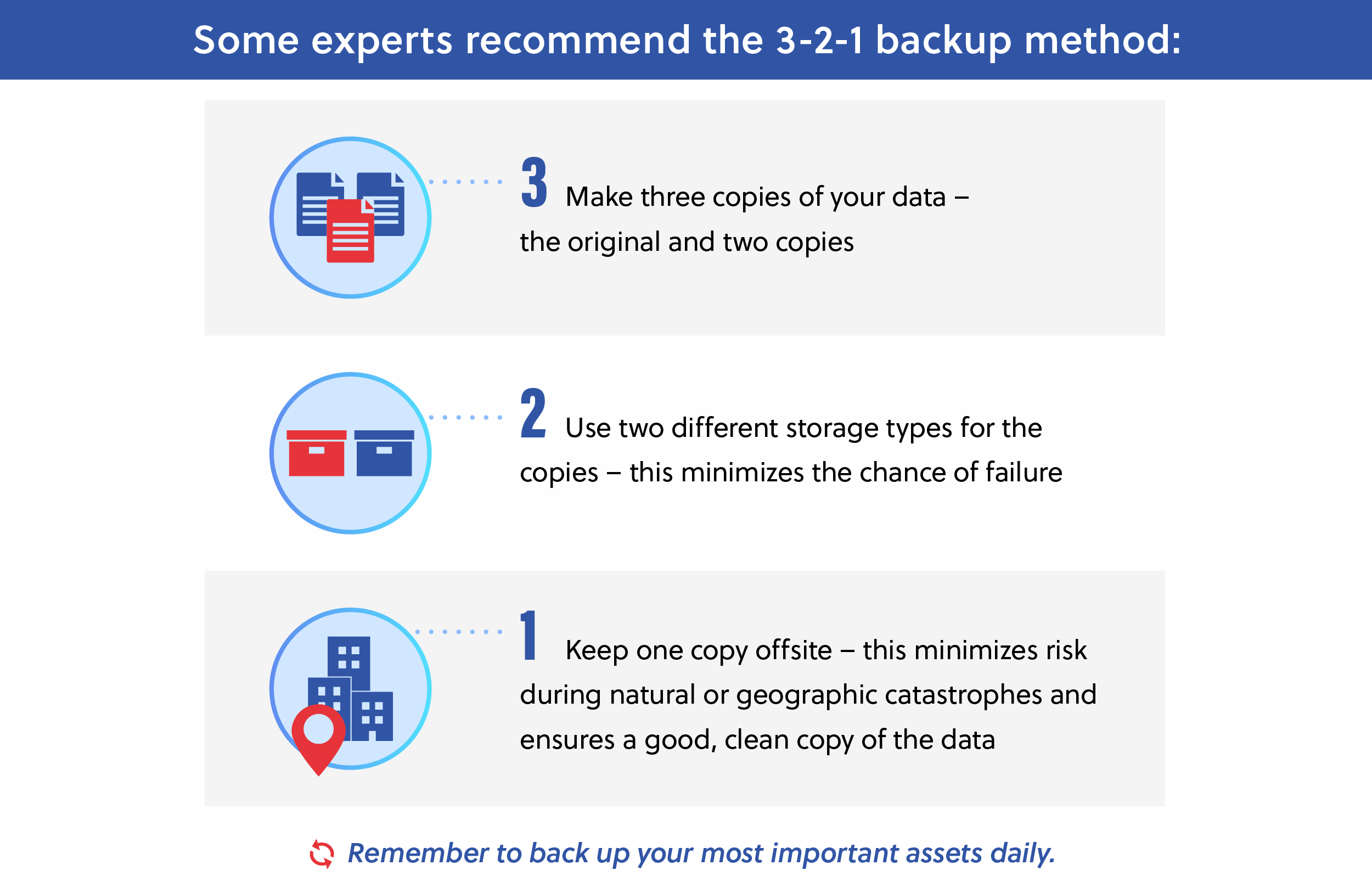
    Once malware has been detected, a company’s recovery plan and preparation are put to the test. IT specialists and company administrators need to have an emergency plan in place so there are straightforward steps to recovery. Backups not only need to be created and stored off-site, but also updated on a regular basis and tested to ensure that they are a solid base for a system restoration. With most traditional backup systems, the data cannot be recovered fast enough to neutralize the ransomware’s impact on operations. Instead, a new strategy must be adopted that shifts from 200,000 files taking eight plus hours to restore via the traditional backups, to millions of files being recovered in minutes. Granular, immutable, verifiable snapshots are required to successfully recover all of an organization’s data.[2]

    Carahsoft Ransomware Cybersecurity Blog Series Blog 3 Infographic Image 2023

    The Sophos “State of Ransomware” report indicated that 77% of healthcare organizations that did not experience a ransomware attack in 2021 attributed it to efforts such as backups and cyber insurance, which help with remediation but not prevention. This exposed an ongoing misunderstanding within the industry on cybersecurity methods.[3] Obtaining cyber-insurance does not prevent future attacks; however, instituting proper security strategies does decrease the susceptibility to ransomware. Recovery tools and insurance provide support during post-breach response but ultimately, in conjunction, organizations should strive to prevent the attack in the first place which requires implementing protection and prevention. According to the Government Accountability Office (GAO), cyber-insurance is a valuable resource to employ but noted that it is increasingly harder to acquire, due to the massive volume of cyberattacks, a higher bar of entry and more requirements to gain coverage and receive payouts. This leaves organizations who do not have sufficient security or insurance to face the recovery process and expensive remediation costs alone.[4]

    RANSOMWARE PROTECTION AND PREVENTION

    While most organizations invest in attack detection and recovery strategies, the protection aspect of the NIST CSF is equally important and an essential element to reduce the amount of recovery needed. Protection and prevention of ransomware attacks begins with establishing system routines and measures that make it more difficult for hackers to infiltrate. Through implementing Zero Trust user principles such as Multi-Factor Authentication (MFA), institutions and agencies can protect themselves by verifying the identity of employees. Poor password hygiene is one of the leading gateways to malware infiltration, making thorough employee training and password management software a baseline to reduce risk. The average user has access to over 20 million corporate files, making each employee a critical part of keeping the network safe and a huge liability if they are not vigilant and following best practices.[2] Segmentation of the network to provide user-specific access to data and system resources also creates safety barriers, so in the event of an attack the entire network is not automatically compromised. Around 80% of critical infrastructure companies without Zero Trust policies experience an $1.17 million increase in breach costs bringing to an average of $5.4 million per attack in 2022.[5]

    Comprehensive Zero Trust authentication and data access control to limit complete access to the entire company’s files is a first step in this process. File indexing, which classifies the level of sensitivity of information contained, allows companies to better allocate resources to prioritize their protection of the most important or confidential files.[2] When processes are automated through these and other resources, it eases IT teams’ responsibilities and reduces the chance of error. Incorporating artificial intelligence (AI) and machine learning (ML) also expedites the identification of confidential information with metadata tags, along with advanced detection of suspicious network and user activity, and thereby minimizes inefficiencies.[6]

    Organizations must rigorously search for security gaps and proactively work to close them. Some other measures to incorporate include:

    • Filtering for phishing emails and providing awareness training to minimize the possibility of a user accidentally clicking a malicious link
    • Utilizing firewalls to block unusual network traffic and segment the network to impede malware system communications
    • Monitoring software licenses to ensure they are updated and systems are adequately patched
    • Removing expired and extraneous user credentials and unused legacy technology
    • Tracking vulnerabilities on devices like IoTs, OTs, and employees’ personal devices used for work (BYODs) throughout the entire connection lifecycle
    • Implementing Zero Trust cloud security with container scanning and proxies like a Cloud Access Security Broker (CASB) and Zero Trust Network Access (ZTNA)

    RANSOMWARE SECURITY IMPROVEMENT

    Following an attack, companies have the opportunity to grow and improve from the situation as well as share resources with other public and private sector companies to strengthen defenses. Incident reporting is a key strategy to prevent future ransomware incidents and a top priority for the Cybersecurity and Infrastructure Security Agency (CISA). Agencies and organizations must support each other to defend against these cyber threats that affect every industry.[7]

    To support this greater focus on information sharing, the Cyber Incident Reporting for Critical Infrastructure Act of 2022 took effect in March requiring a more stringent timeline and adherence to disclosing cybersecurity attacks and ransomware payments to the government. CISA also now has the authority to subpoena critical infrastructure organizations if they do not report any cybersecurity incidents within 72 hours of a cyberattack and 24 hours of a ransom payment.[8]

    This threat information sharing requirement along with other recent rules on reporting attack incidents strengthen organizations’ security posture and reduce the success rates of cyberattacks. Through these joint efforts and public-private partnerships, companies can recover faster, resume normal operations and support other businesses in the defense of their industry and the nation.[9]

    To assist with incorporating these cybersecurity best practices, Congress passed the Infrastructure Investment and Jobs Act Public Law 117–58 which offers $2 billion to “modernize and secure federal, state, and local IT and networks; protect critical infrastructure and utilities; and support public or private entities as they respond to and recover from significant cyberattacks and breaches.”[10]

    RANSOMWARE RISK MITIGATION

    Tech modernization, while crucial to agencies and organizations’ survival and growth, also presents unique challenges in protecting those technologies.[11] In their journey to securing their legacy and updated systems, companies must take the time to honestly evaluate their cybersecurity standing across the ransomware cycle and ensure their readiness to handle an attack. Utilizing NIST CSF security strategies and other resources help organizations to mitigate risk and empower other companies to learn and protect their systems. By implementing best practices and technologies to address cyber hacks and data breaches, companies are valuing both their customers and their own bottom line. Proactive cybersecurity measures are key for all companies to stem the tide of ransomware attacks and protect the continued growth of their organizations.


    Learn about the current state of ransomware and its impact across sectors in our Ransomware Series. Visit our website to learn how Carahsoft and its partners are providing solutions to assist in the fight against ransomware.


    Resources:

    [1] “Everything You Need to Know About Ransomware,” Ransomware.org, https://ransomware.org/

    [2] “Protect, Detect & Recover: The Three Prongs of a Ransomware Defense Strategy for Your Enterprise Files,” Nasuni, https://media.erepublic.com/document/Whitepaper-_A_Three_Prong_Ransomware_Strategy_-_Nasuni.pdf

    [3] “The State of Ransomware in Healthcare 2022,” Sophos, https://news.sophos.com/en-us/2022/06/01/the-state-of-ransomware-in-healthcare-2022/

    [4] “Healthcare data breach costs reach record high at $10M per attack: IBM report,” Fierce Healthcare, https://www.fiercehealthcare.com/health-tech/healthcare-data-breach-costs-reach-record-high-10m-attack-ibm-report

    [5] “Cyber Attacks Against Critical Infrastructure Quietly Increase,” Government Technology, https://www.govtech.com/blogs/lohrmann-on-cybersecurity/cyber-attacks-against-critical-infrastructure-quietly-increase

    [6] “Four Best Practices for Protecting Data Wherever it Exists,” Dell Technologies and Carahsoft, https://www.carahsoft.com/2nd-page/dell-4-best-practices-federal-data-security-protection-report-2022#page=4

    [7] “Ransomware Hackers Will Still Target Smaller Critical Infrastructure, CISA Director Warns,” Nextgov, https://www.nextgov.com/cybersecurity/2022/07/ransomware-hackers-will-still-target-smaller-critical-infrastructure-cisa-director-warns/374953/

    [8] “DHS Convenes Regulators, Law Enforcement Agencies on Cyber Incident Reporting,” Nextgov, https://www.nextgov.com/cybersecurity/2022/07/dhs-convenes-regulators-law-enforcement-agencies-cyber-incident-reporting/374968/

    [9] “Ransomware Attacks on Hospitals Have Changed,” AHA Center for Health Innovation, https://www.aha.org/center/cybersecurity-and-risk-advisory-services/ransomware-attacks-hospitals-have-changed

    [10] “FACT SHEET: Top 10 Programs in the Bipartisan Infrastructure Investment and Jobs Act That You May Not Have Heard About.” The White House, https://www.whitehouse.gov/briefing-room/statements-releases/2021/08/03/fact-sheet-top-10-programs-in-the-bipartisan-infrastructure-investment-and-jobs-act-that-you-may-not-have-heard-about/

    [11] “Global Data Protection Index 2021,” Dell Technologies, https://www.dell.com/en-us/dt/data-protection/gdpi/index.htm#pdf-overlay=//www.delltechnologies.com/asset/en-us/products/data-protection/industry-market/global-data-protection-index-key-findings.pdf

    Infographic Resources:

    “Ransomware and Energy and Utilities,” AT&T Cybersecurity, https://cybersecurity.att.com/blogs/security-essentials/ransomware-and-energy-and-utilities