Planyway for Jira
Planyway for Jira is an enterprise planning solution that brings portfolio roadmaps, resource capacity planning, time tracking, and reporting directly into Jira. It gives organizations one tool at one price to support project planning and management across different levels of the organization — from C-level leadership to individual executors.
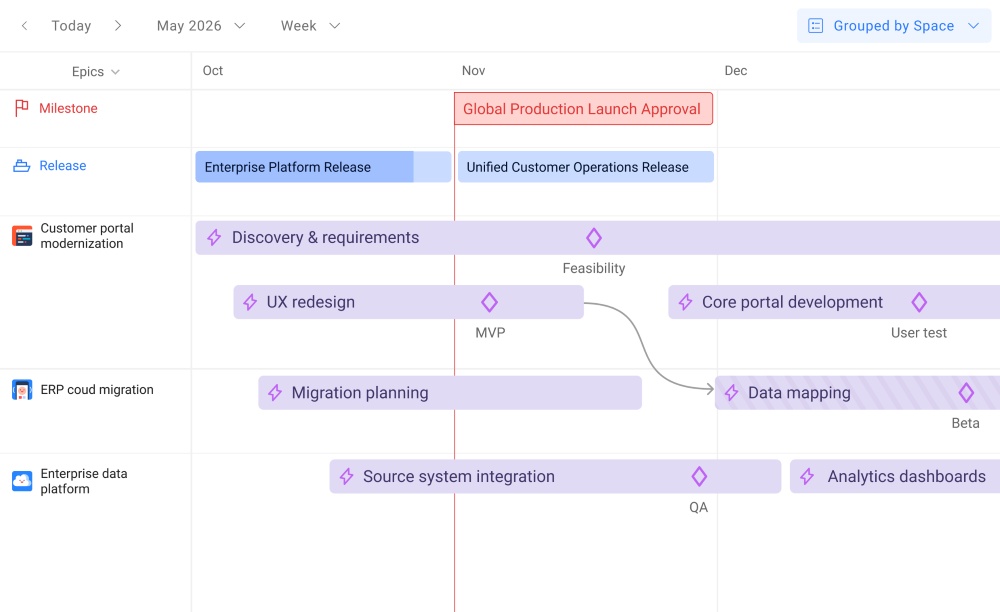
Project Portfolio Roadmap
Jira users already manage execution data in Jira, but enterprise leadership often lacks a clear portfolio-level view across projects, teams, and strategic initiatives. They need to see what is planned, what is in progress, where key milestones stand, which work is delayed or at risk, and how the overall portfolio is progressing. Planyway for Jira gives organizations a live project portfolio roadmap built directly from Jira data, helping managers replace static Excel reports with an always-current view for leadership and stakeholders. With cross-project roadmap planning, shared portfolio views, milestones, and releases, Planyway helps teams align delivery plans, track progress, and communicate status with greater clarity.
Benefits:
- Enterprise-wide visibility across projects and teams
- Real-time portfolio tracking based on live Jira data
- Faster executive decision-making with clear roadmap transparency
- Improved alignment of milestones, releases, and strategic priorities
Team Capacity Management
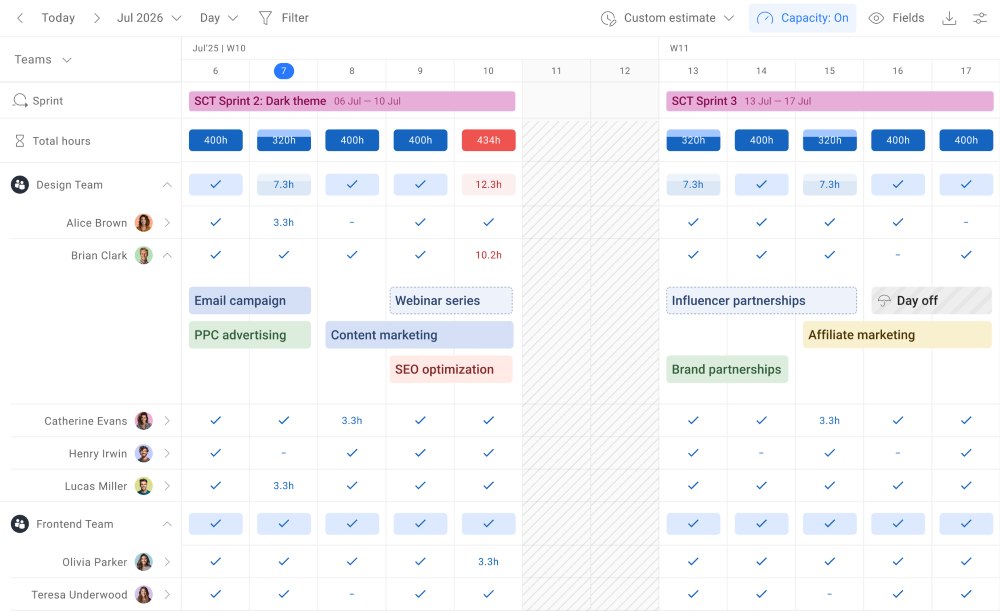
Planyway supports team-level capacity planning for organizations that need high-level resource visibility across multiple projects and initiatives. Managers can plan work against the available capacity of entire teams before assigning specific individuals, helping organizations validate whether delivery plans are realistic at an early stage. By comparing planned work against available team bandwidth, leadership can identify resource gaps, prevent overcommitment, and make more informed staffing decisions.
Benefits:
- High-level resource forecasting across teams and programs
- Early identification of capacity gaps and delivery risks
- Better portfolio planning before detailed task assignment
- Improved coordination between business priorities and team availability
User Capacity Management
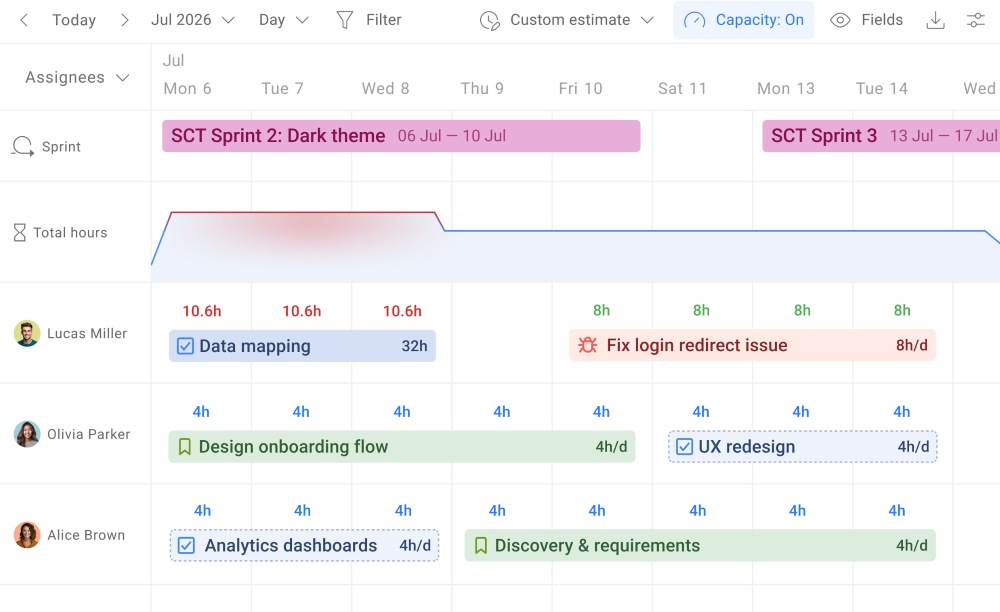
Planyway also provides detailed user-level capacity planning based on each employee’s actual availability. Managers can account for part-time schedules, vacations, holidays, and custom availability settings to create more realistic delivery plans. Workload calculations are based on task estimates, duration, and individual capacity, helping teams detect overloads before they impact delivery timelines.
Benefits:
- Accurate workload planning based on real user availability
- Early detection of employee overload and scheduling conflicts
- Balanced task distribution across teams and individuals
- More predictable project delivery and resource utilization
Time Tracking
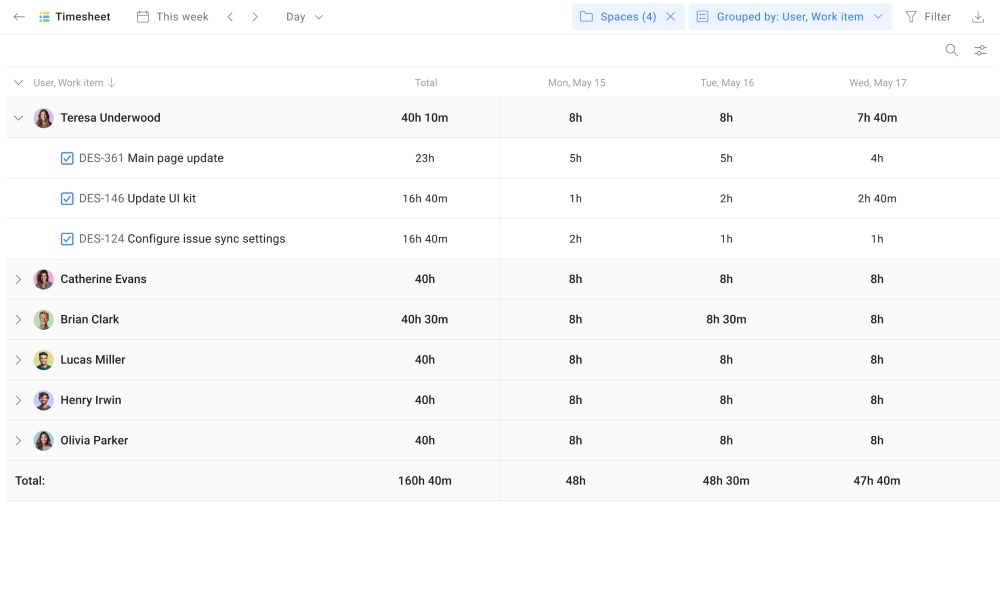
Planyway includes built-in time tracking to help organizations connect resource planning with actual effort. Users can log work directly from Jira issues, dedicated time tracking views, or timesheets, with data synchronized back to Jira. This gives teams a consistent way to capture time spent across projects, people, and work items. As a result, managers can monitor actual effort, understand resource utilization, and maintain more accurate delivery records.
Benefits:
- Centralized time tracking connected with Jira
- Multiple ways to log work depending on team workflows
- Better visibility into actual effort across projects and users
- More accurate resource utilization and delivery tracking
Reports
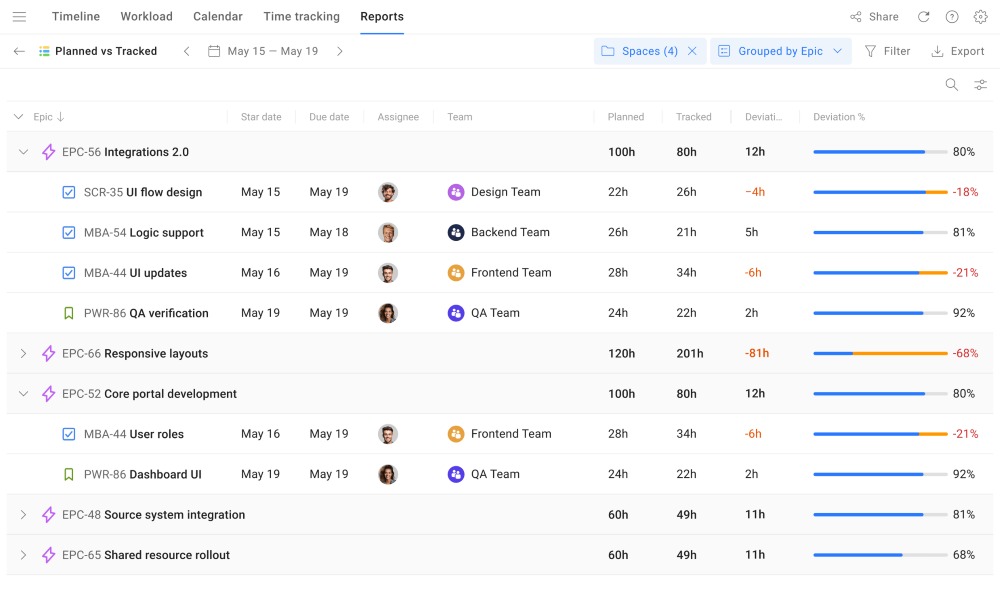
Planyway turns tracked time and planning data into customizable reports for operational and leadership analysis. Customers can analyze data by project, person, team, issue, or time period, depending on their reporting needs. Planyway also provides planned versus actual reporting, helping teams compare original estimates with real effort spent. This gives organizations a clearer understanding of planning accuracy, delivery performance, and areas where execution differs from the original plan.
Benefits:
- Customizable reporting by project, user, team, issue, or period
- Clear comparison of planned work versus actual time spent
- Better insight into planning accuracy and delivery performance
- Data-driven decisions for future capacity and portfolio planning