Deviniti - Requirements and Test Management
Provides a structured, end-to-end framework for managing software requirements and test cases directly within Jira for full traceability.
Requirements and Test Management for Jira
Requirements and Test Management (RTM) for Jira is a management app that organizes and tracks testing efforts within any Jira Cloud Project. This intuitive app helps you to systematize testing process and improve the quality of the final product. RTM brings the whole software project from requirements to production right inside the Atlassian suite. It’s based on Jira native functionalities that help seamlessly integrate testing with requirements, development, and reporting. With RTM app user is able to create Requirements and associate them with Test Cases. Both Requirements and Test Cases are included in Test Plans and can be executed by Test Execution. RTM app supports also a Defect, which can be defined as a failure or incident that occurred during Test Case Execution.
Benefits:
- Optional issue types: Functional Requirement, UI Requirement, Non-functional Requirement, Business Requirement, Test Case, Test Plan, Test Execution, Defect
- Built-in requirements management, Detailed Test Case creation and maintenance mechanism
- Reusable Test Plan templates, Easy Test Execution
- Basic automated testing support (REST API)
End-to-end requirements & test management, without the complexity of enterprise QA tools.
RTM brings requirements, test cases, plans, executions, and defects together in a clean, Jira-native structure. Built for engineering, regulated, and cross-functional teams who need structure and traceability. Complete version history to track what changed, when, and by whom.
Benefits:
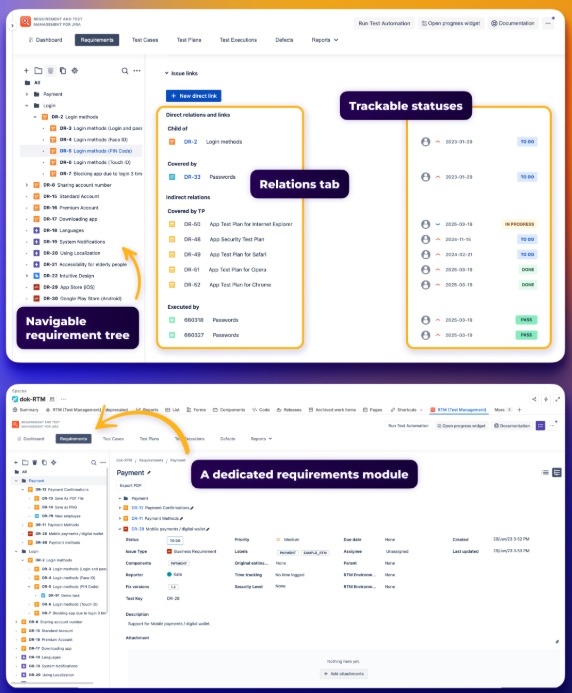
- A structured, Jira-native home for requirements: A clear, navigable requirement tree
- Transparent direct & indirect links (visible in a dedicated Relations tab)
- The ability to link issues and create connections between them
- Attachments, discussions, and reviews. Confluence-readable short-form requirement lists.
Reusable test cases that scale with every release
RTM’s customers run anywhere from 75 to 800+ manual tests per release. They need consistency, not duplication.
Benefits:
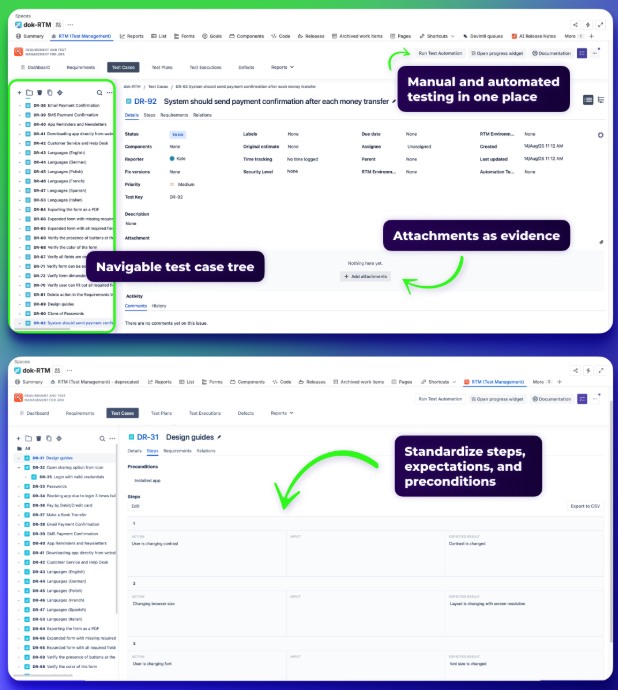
- Ability to build a clean, reusable test library. Organize tests by module, product, or release.
- Maintain multi-team consistency without extra admin
- Reuse test cases across different releases, Fix Versions, or environments
- Standardize steps, expectations, and preconditions
Manual test execution that captures real evidence
Many Jira users test manually — due to hardware constraints, integration complexity, or limited automation coverage. RTM supports this reality.
Benefits:
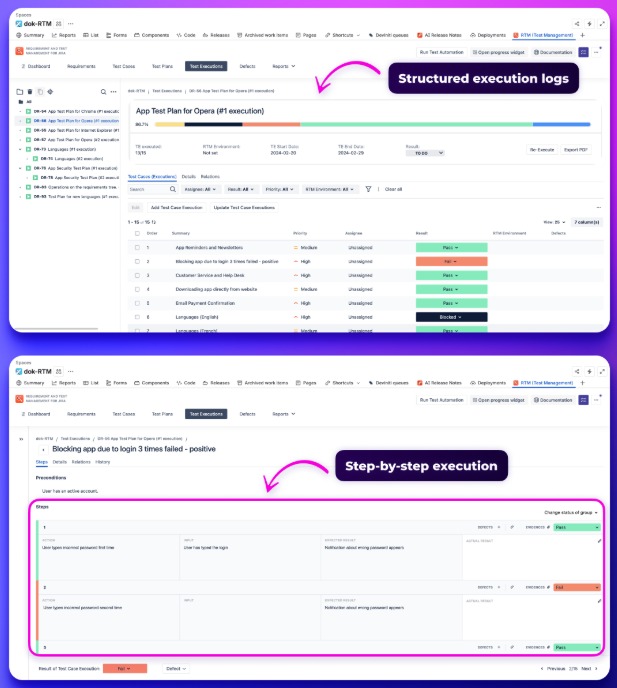
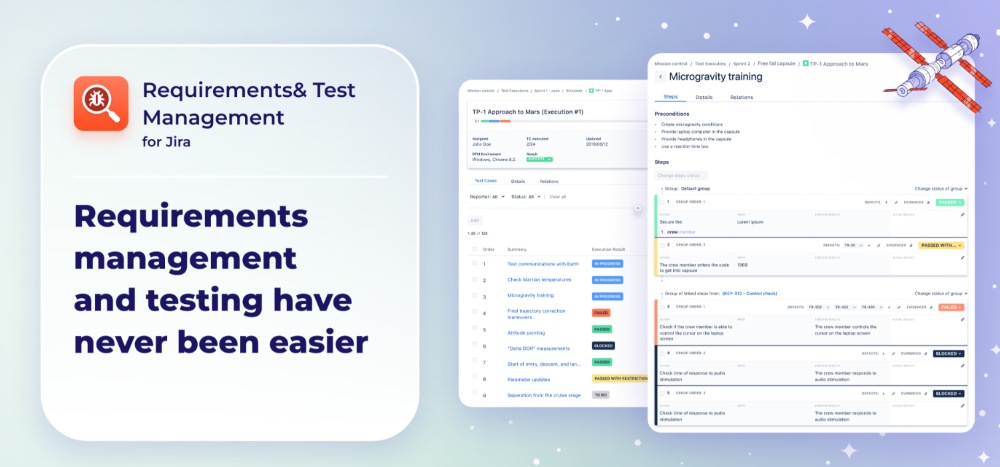
- Step-by-step execution. Notes, screenshots, attachments as evidence.
- Automatic linking to requirements and defects.Clear ownership and tester assignment.
- Side-by-side QA + UAT workflows. CI imports for JUnit/NUnit and automated pipelines.
- Your execution logs are structured, consistent, and ready for engineering or audit review.
Full end-to-end traceability for release confidence and compliance
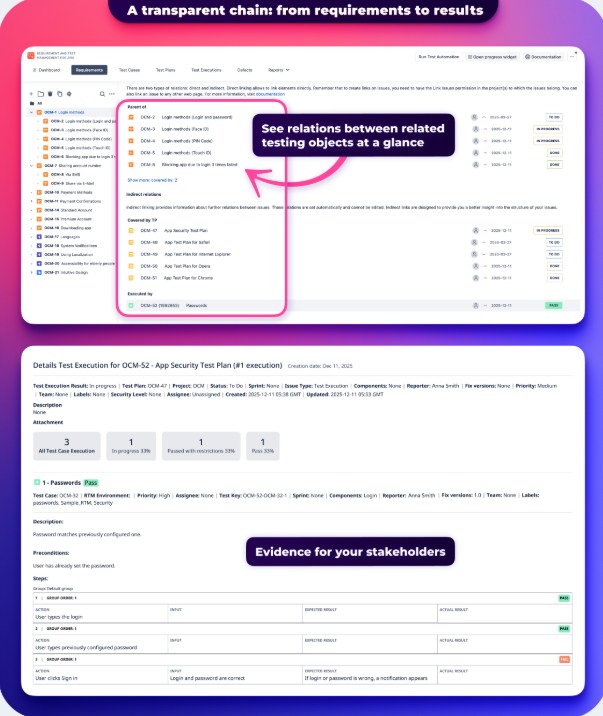
RTM creates a complete, transparent chain: Requirement → Test Case → Execution → Defect → Result. This means: You can answer compliance-critical questions instantly: “Where is this requirement tested?” “What failed?” “Is this release fully covered?”
Benefits:
- Validating coverage. Spotting gaps before they cause release risk.
- Supporting V-model workflows.
- Producing evidence for customers, auditors, and regulators. Performing fast impact analysis when requirements change
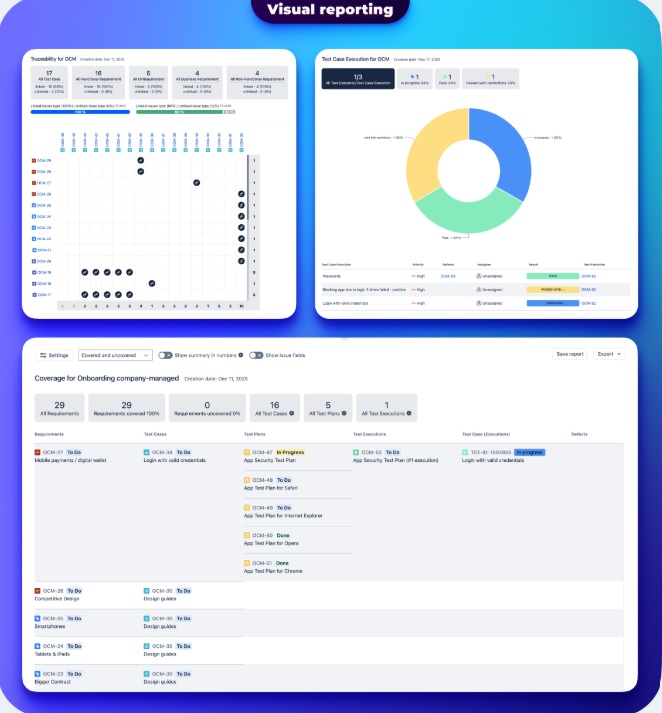
- Compliance verification at a glance using the visual Traceability Matrix and Coverage Reports
Reporting and dashboards that keep everyone aligned
Engineering, QA, product, regulatory, and customer stakeholders need shared visibility. This means: No more status meetings where every team shows a different picture. Everyone sees the same truth.
Benefits:
- Traceability and coverage report
- Test Execution summary
- Readiness dashboards
- Ability to export and save reports externally