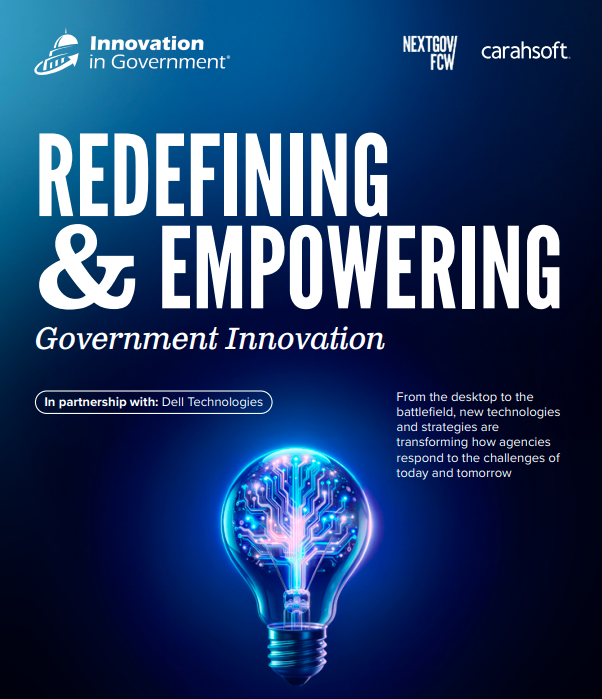
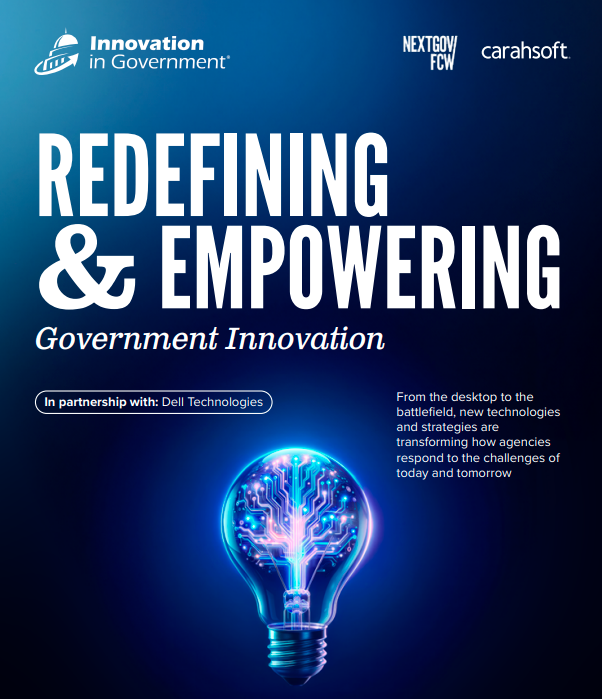
Redefining and Empowering Government Innovation
Artificial intelligence has taken the spotlight with its rapid evolution, but multicloud, zero trust security and edge computing are also helping agencies tackle challenges related to operational efficiency and security while trying to keep pace with the public’s expectations for digital interactions. Meanwhile, agencies face ongoing difficulties related to budget constraints, unwieldy procurement regulations and out-of-date hiring and management processes.
In the meantime, AI continues to transform the workplace, and for many activities across the Federal Government, AI PCs are becoming an attractive option. Such devices, which typically contain a neural processing unit that accelerates AI tasks, put AI at the fingertips of employees at a time when the technology is driving many of the improvements in Federal operations and services. In addition, by shifting AI workloads from the cloud to the PC, privacy is enhanced and work can be completed with the speed and depth that only AI can provide. AI PCs are also helpful in situations where internet connectivity is unavailable (disaster situations or remote locations) or inadvisable (military or defense operations).
Knowing when to keep humans in the loop and when to let autonomous systems act on their own is integral to the trustworthy use of the technology, and those decisions are particularly vital now that AI has moved onto the battlefield. In conflicts around the world, autonomous technologies are redefining warfare, and AI has become a crucial tool in the arsenals of aggressors and defenders.
To be successful, agencies need layered solutions that incorporate the best offerings of multiple innovators into a comprehensive whole, which means partnerships among established industry leaders and emerging game-changers are crucial. Although Federal systems integrators might be more visible, their effectiveness is often made possible by smaller companies that specialize in a particular slice of technology or area of focus. When industry leaders pull together all the elements of a successful solution, it requires fewer Government resources to organize and manage.
Read the latest insights from thought leaders at Dell Technologies, including:
· John Roose, Global CTO and Chief AI Officer at Dell Technologies, discusses how agencies are delving deeper into all that artificial intelligence has to offer and how that’s good news for Government operations.
· Eric Barnes, Regional Sales Director at Dell Technologies, explains how AI PCs put personal assistants on every endpoint to boost productivity, improve security and support AI policy compliance.
· Chris Thomas (CT), Technical Director at Dell Technologies’ Global Office of the CTO, details how as the Government applies AI to its most sensitive data, maintaining control over security and resiliency is paramount.
· John Garrett, Vice President of Department of War at Dell Technologies, notes that winning in today’s complex environments requires a commitment to innovation from both Government and industry leaders.
· John Griffin, Vice President of Federal Channels and Systems Integrators at Dell Technologies, breaks down how a dedicated partner ecosystem is essential for building trusted solutions that Federal agencies can deploy quickly and efficiently.
Read more insights from Carahsoft and partner Dell Technologies when you download the full report: